This Act mandates sanctions against Iranian individuals and organizations found to be issuing or amplifying religious decrees that incite violence against U.S. and Israeli leaders.
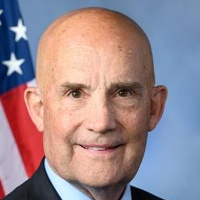
Keith Self
Representative
TX-3
The Tehran Incitement to Violence Act targets Iranian clerics and organizations that have issued religious decrees (fatwas) calling for violence against U.S. and Israeli leaders. This bill mandates that the President determine which specific individuals and entities are involved in issuing or amplifying these threats for the imposition of mandatory sanctions. Sanctions include blocking property and rendering those individuals inadmissible to the United States.
Tehran Incitement to Violence Act Mandates Sanctions on Iranian Leaders for Assassination Threats and $20 Million Bounties
Congress is moving to turn the heat up on Iranian officials following reports of religious decrees, or fatwas, calling for the assassination of President Donald Trump and Israeli Prime Minister Benjamin Netanyahu. The Tehran Incitement to Violence Act targets specific clerics and regime-aligned figures who have allegedly labeled these leaders as 'hostile infidels' whose lives are no longer protected by law. The bill specifically highlights a website, THAAR.IR, which claims to have raised over $20 million through crowdfunding to carry out these hits. While the bill is focused on high-level international friction, it marks a significant shift in how the U.S. handles state-sponsored threats by going after the religious and ideological infrastructure that fuels them.
The Financial and Travel Freeze
If this bill moves forward, the President has 180 days to determine if 18 specific individuals and organizations—including the Qom Seminary and the Islamic Republic of Iran Broadcasting (IRIB)—are involved in promoting these violent decrees. For those who make the list, the consequences are immediate: any property or assets they have in the U.S. (or that come under the control of a U.S. person) will be frozen under the International Emergency Economic Powers Act (IEEPA). Additionally, these individuals will be barred from entering the U.S., and any existing visas they hold will be revoked instantly. For a regular person working in finance or international trade, this means a new, high-stakes compliance list to watch; accidentally processing a transaction for a sanctioned entity could lead to heavy federal penalties.
Loopholes and Long-Term Stakes
While the bill is designed to be tough, it includes some notable 'fine print.' There is a broad exception for the 'importation of goods,' meaning the flow of physical products like medicine or materials isn't necessarily cut off by these specific sanctions (Section 3). The President also holds a 'get out of jail free' card in the form of a national security waiver, allowing them to bypass sanctions if they tell Congress it’s in the country’s best interest. This creates a bit of a gray area—the bill sets a hard line, but the executive branch still has the flexibility to use these sanctions as a bargaining chip in broader diplomatic negotiations.
When Does the Pressure End?
These sanctions aren't necessarily forever, but the exit ramp is steep. The restrictions only disappear 30 days after the President certifies to Congress that Iran is no longer a state sponsor of terrorism. For the average citizen, this bill represents a formal escalation in the digital and ideological 'cold war' with Iran. It’s a move to protect U.S. leadership by hitting the Iranian regime where it hurts—their ability to move money and travel internationally—while attempting to avoid a total shutdown of trade for basic goods. The challenge will be in the implementation: ensuring these targeted strikes don't accidentally catch regular people or humanitarian efforts in the crossfire.