Legislative Activity
Track Eugene's sponsored bills, co-sponsored legislation, and voting record
The Improper Payments Transparency Act requires the President's budget to include details on improper payment amounts, reasons for these payments, and corrective action plans for programs at executive agencies.
Rudy Yakym
Representative
IN
Rudy Yakym
Representative
IN
The Improper Payments Transparency Act requires the President's budget to include detailed information on improper payment amounts and rates for programs at executive agencies, including explanations for these payments and trends over the past three years. It also requires information on incomplete corrective actions and future steps to address improper payment issues.
This bill amends the Robert T. Stafford Disaster Relief and Emergency Assistance Act to include algal blooms as a condition for disaster relief.
Byron Donalds
Representative
FL
Byron Donalds
Representative
FL
The "Harmful Algal Bloom Disaster Relief Act" amends the Stafford Act to include algal blooms as a condition in which disaster relief and emergency assistance can be given. This change will allow states to receive federal assistance in the event of an algal bloom.
This bill amends the Public Health Service Act to enhance and expand funding for the treatment, prevention, and research of sickle cell disease and other heritable blood disorders.
John James
Representative
MI
John James
Representative
MI
The "Sickle Cell Disease and Other Heritable Blood Disorders Research, Surveillance, Prevention, and Treatment Act of 2025" aims to improve the treatment and prevention of sickle cell disease and its complications. It amends the Public Health Service Act to broaden the scope of activities and increase funding for these efforts through grants, contracts, or cooperative agreements. The Act authorizes $8,205,000 annually from 2025 to 2029 and emphasizes the need for further research into heritable blood disorders.
The "Safe Schools Improvement Act" amends the Elementary and Secondary Education Act of 1965, requiring states to establish policies that prevent and prohibit bullying and harassment in schools based on protected characteristics, ensuring a safe and inclusive learning environment for all students.

Linda Sánchez
Representative
CA
Linda Sánchez
Representative
CA
The Safe Schools Improvement Act aims to reduce bullying and harassment in schools by requiring states to establish policies prohibiting such conduct based on various characteristics, including race, sex, religion, and disability. It mandates annual notifications, data collection on incidents, biennial evaluations of programs, and regular reports to Congress to ensure accountability and effectiveness. This act does not infringe on existing nondiscrimination laws or freedom of speech but seeks to create a safer, more inclusive learning environment for all students.
Makes permanent the exclusion of employer student loan payments from an employee's gross income.
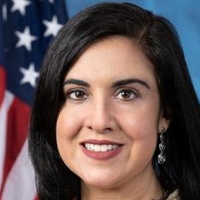
Nicole Malliotakis
Representative
NY
Nicole Malliotakis
Representative
NY
The "Employer Participation in Repayment Act" permanently extends the tax exclusion for employer-provided student loan repayment assistance. This allows employers to contribute to their employees' student loan debt without the contribution being considered taxable income for the employee. This provision was previously set to expire before January 1, 2026, but is now a permanent part of the tax code. The change is applicable for payments made after the enactment of this law.
Excludes certain federally subsidized loan repayments for dental school faculty from taxable income and requires a report on the Dental Faculty Development and Loan Repayment Program.
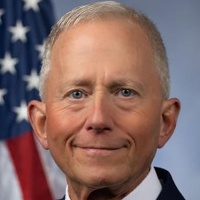
Jefferson Van Drew
Representative
NJ
Jefferson Van Drew
Representative
NJ
The "Dental Loan Repayment Assistance Act of 2025" excludes federally subsidized loan repayments for dental school faculty from taxable income, specifically those from programs under section 748(a)(2) of the Public Health Service Act. This exclusion aims to encourage dentists to serve as faculty. The Comptroller General will also report to Congress on the participation and retention of dental providers and faculty in the Dental Faculty Development and Loan Repayment Program.
The EARLY Minds Act supports state-level mental health prevention and early intervention programs for children and adolescents.
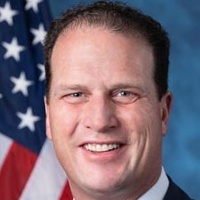
August Pfluger
Representative
TX
August Pfluger
Representative
TX
The "EARLY Minds Act" amends the Public Health Service Act to emphasize early intervention for mental health by requiring states to outline prevention strategies in their plans. States can use up to 5% of their funding to support these programs. The Secretary must report to Congress biennially on state prevention and early intervention activities, including outcomes and demographics.
Permanently allows individuals with health savings accounts (HSAs) to utilize telehealth services without needing to meet their deductible.
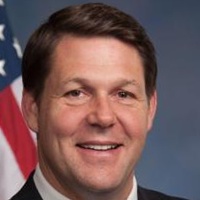
Jodey Arrington
Representative
TX
Jodey Arrington
Representative
TX
The "Telehealth Expansion Act of 2025" permanently allows individuals with Health Savings Accounts (HSAs) to access telehealth services without needing to meet their deductible first, starting after December 31, 2024. This removes a barrier to accessing telehealth services for HSA holders.
The "Community News and Small Business Support Act" supports local journalism and small businesses through tax credits for advertising in local media and for employing local news journalists.
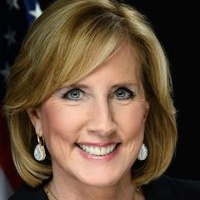
Claudia Tenney
Representative
NY
Claudia Tenney
Representative
NY
The "Community News and Small Business Support Act" introduces two tax credits aimed at supporting local news and small businesses. First, it provides a tax credit for small businesses that advertise in local media outlets, such as newspapers and broadcast stations. Second, it establishes a payroll tax credit for local news organizations to help them employ local news journalists. Both credits are designed to alleviate financial burdens and promote investment in local journalism and small business advertising, with specific limitations and eligibility requirements. The provisions of this act will be in place for 5 years.
The Rural Veterans Transportation to Care Act expands transportation grants to include rural areas, broadens eligible recipients, increases grant amounts, and removes funding limits to improve healthcare access for veterans.

Marie Gluesenkamp Perez
Representative
WA
Marie Gluesenkamp Perez
Representative
WA
The Rural Veterans Transportation to Care Act expands the Department of Veterans Affairs' transportation grant program to include rural areas, not just highly rural ones. It broadens the range of eligible grant recipients to include county veterans service organizations and tribal organizations. The bill also increases the maximum grant amount to $60,000, with a possible increase to $80,000 for vehicle purchases needed to comply with the Americans with Disabilities Act and authorizes necessary funding by removing the previous funding limit.
This bill creates a tax credit for investments in innovative agricultural technology, such as precision and controlled environment agriculture, to encourage advancements in specialty crop production.
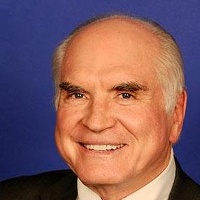
Mike Kelly
Representative
PA
Mike Kelly
Representative
PA
The Supporting Innovation in Agriculture Act of 2025 introduces a tax credit for investments in innovative agricultural technology, aiming to boost the production, storage, and processing of specialty crops through precision and controlled environment agriculture. This credit covers 30% of qualified investments in projects using technologies like precision agriculture and controlled environment agriculture, effective for construction starting after January 1, 2025, and includes options for direct payment or transfer of the credit.
The "Grown in America Act of 2025" establishes a tax credit for businesses that use domestically produced agricultural commodities in their products, aiming to incentivize the use of American-grown ingredients.
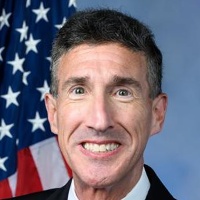
David Kustoff
Representative
TN
David Kustoff
Representative
TN
The "Grown in America Act of 2025" introduces a tax credit for businesses that use domestic agricultural commodities in their products for human consumption. This credit, capped at $100,000,000, aims to incentivize the use of U.S.-produced agricultural inputs by offering a tax benefit based on the percentage of domestic agricultural commodities used. The percentage of domestic inputs required to receive the full credit increases over time, with the Secretary of Agriculture maintaining a list of agricultural commodities that cannot be produced domestically. These provisions will be effective for taxable years starting after December 31, 2025.
This bill extends the tax credit deadline for quality fuel cell property construction starting after 2024 from 2025 to 2033.
Claudia Tenney
Representative
NY
Claudia Tenney
Representative
NY
The Technology for Energy Security Act extends the tax credit deadline for "quality fuel cell property" from January 1, 2025, to January 1, 2033. This extension applies only to fuel cell property where construction begins after December 31, 2024. The bill aims to promote energy security by incentivizing the development of fuel cell technology.
The SAFE Act of 2025 amends existing law to include equines (horses) in the prohibition of slaughtering animals for human consumption.

Vern Buchanan
Representative
FL
Vern Buchanan
Representative
FL
The SAFE Act of 2025 amends existing legislation to explicitly prohibit the slaughter of horses for human consumption, reinforcing protections for these animals. This bill seeks to prevent the inhumane treatment of American equines by closing loopholes that allow their slaughter and export for human consumption.
The PAST Act of 2025 significantly strengthens the Horse Protection Act by increasing penalties, banning specific action devices, and mandating licensed inspectors to combat the practice of horse soring.
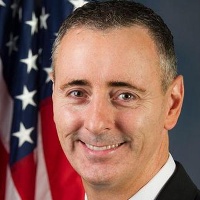
Brian Fitzpatrick
Representative
PA
Brian Fitzpatrick
Representative
PA
The PAST Act of 2025 significantly strengthens the Horse Protection Act to combat the painful practice of soring in specific horse breeds. This bill increases penalties for violations, establishes stricter licensing and oversight for inspectors, and explicitly bans the use of "action devices" designed to cause unnatural gaits. The legislation aims to enhance enforcement, ensure fairer competition, and hold violators accountable through increased fines and disqualifications.
This bill amends the Social Security Act to eliminate consideration of a spouse's income and resources when determining SSI eligibility and benefits for married individuals with intellectual or developmental disabilities.
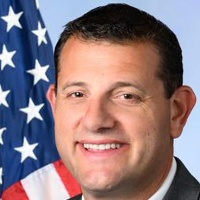
David Valadao
Representative
CA
David Valadao
Representative
CA
The "Eliminating the Marriage Penalty in SSI Act" amends the Social Security Act to revise eligibility rules for Supplemental Security Income (SSI) for individuals with intellectual or developmental disabilities. It ensures these individuals are eligible for SSI regardless of their spouse's income and resources. This change allows eligible individuals to receive the standard individual SSI rate, reduced only by their own income.
This bill provides increased benefits to surviving spouses of veterans who die from ALS and requires a report on other service-connected disabilities that should receive similar treatment.
Brian Fitzpatrick
Representative
PA
Brian Fitzpatrick
Representative
PA
The Justice for ALS Veterans Act of 2025 provides increased dependency and indemnity compensation to surviving spouses of veterans who die from ALS, regardless of the duration of the illness. To be eligible, the surviving spouse must have been married to the veteran for at least eight years, and the veteran must have died on or after October 1, 2025. Additionally, the bill requires the Secretary of Veterans Affairs to submit a report to Congress identifying other service-connected disabilities that should receive similar treatment as ALS under existing compensation guidelines.
This bill officially renames the Robert E. Lee Memorial as the Arlington House National Historic Site.
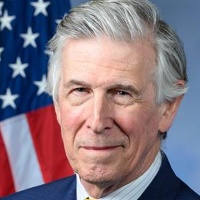
Donald Beyer
Representative
VA
Donald Beyer
Representative
VA
This bill officially redesignates the site currently known as the Robert E. Lee Memorial as the "Arlington House National Historic Site." It mandates that all official U.S. records, maps, and documents be updated to reflect this new name and repeals the previous joint resolutions that established the former designation.
The APLUS Act loosens restrictions on market agencies' financial ties to smaller meatpacking companies, provided they disclose these ties to livestock sellers, while maintaining the Secretary's authority to enforce fair practices.
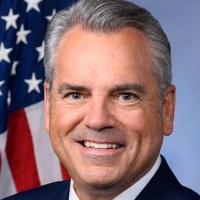
Mark Alford
Representative
MO
Mark Alford
Representative
MO
The APLUS Act directs the Secretary of Agriculture to update regulations, permitting market agencies to have financial interests in smaller meatpacking companies, defined by specific slaughter capacities. These market agencies must disclose these financial ties to livestock sellers. The Act does not reduce the Secretary's authority to enforce rules protecting producers, competition, and market integrity under existing law.
The "Rebuild America’s Health Care Schools Act of 2025" expands Medicare coverage to include all direct and indirect costs hospitals incur for nursing and allied health education programs, ensuring better funding and preventing recoupment of previously covered costs.
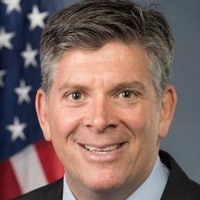
Darin LaHood
Representative
IL
Darin LaHood
Representative
IL
The "Rebuild America’s Health Care Schools Act of 2025" updates how Medicare reimburses hospitals for the costs of running nursing and allied health education programs. It broadens the definition of "reasonable costs" to include both direct and indirect expenses, regardless of whether they are incurred directly by the hospital or through related entities. The Act also requires the Secretary of Health and Human Services to issue rules implementing these changes and to refund hospitals for past cost reductions that would now be allowable. This aims to provide greater financial support for these crucial healthcare education programs.