Legislative Activity
Track Eugene's sponsored bills, co-sponsored legislation, and voting record
The SERVE Act aims to boost military recruitment by increasing recruiter access to high schools, expanding JROTC opportunities, establishing a pilot program to recognize military-friendly schools, and granting priority consideration to applicants from high-performing enlistment schools.
Jennifer Kiggans
Representative
VA
Jennifer Kiggans
Representative
VA
The SERVE Act addresses the military's severe recruiting challenges by increasing recruiter access to high schools, formalizing JROTC partnership options, and establishing incentives for schools that promote military service. Key provisions mandate regular recruiter visits, allow students to join nearby JROTC programs, and create a pilot program to recognize "Military-Friendly schools." Furthermore, the bill grants priority consideration in service academy admissions to graduates from high schools with above-average enlistment rates.
The Better CARE for Animals Act of 2025 strengthens the enforcement of the Animal Welfare Act by expanding investigative authority, establishing new civil penalties up to \$10,000 per day, and explicitly granting the Attorney General power to file civil actions, including seeking seizure and forfeiture of animals.
Nicole Malliotakis
Representative
NY
Nicole Malliotakis
Representative
NY
The Better CARE for Animals Act of 2025 significantly strengthens enforcement of the Animal Welfare Act by clarifying definitions and expanding the scope of investigations. It grants the Attorney General explicit authority to file civil actions seeking penalties up to $10,000 per day, and mandates that collected fines help cover temporary animal care costs. The bill also requires the Secretary of Agriculture and the Attorney General to establish a formal agreement for coordinated enforcement.
This Act establishes a new program to provide technical assistance and training grants to organizations that help rural entities secure and implement broadband deployment through Department of Agriculture programs.
David Taylor
Representative
OH
David Taylor
Representative
OH
The Rural Broadband Assistance Act establishes a new program to provide technical assistance and training for rural broadband projects. This initiative allows the Secretary to award grants to qualified organizations that will help eligible rural entities prepare applications, secure funding, and manage broadband facilities. The goal is to streamline the process of bringing high-speed internet access to underserved rural communities.
The ReConnecting Rural America Act of 2025 overhauls federal funding to prioritize grants and loans for building high-speed, 100/100 Mbps broadband infrastructure in underserved rural areas.
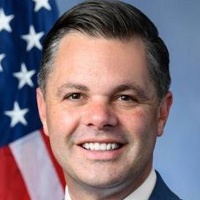
Zachary (Zach) Nunn
Representative
IA
Zachary (Zach) Nunn
Representative
IA
The ReConnecting Rural America Act of 2025 significantly overhauls federal funding to expand high-speed internet access in underserved rural areas. This legislation prioritizes grants and loans for projects delivering at least 100 Mbps symmetrical speeds, focusing heavily on communities currently lacking adequate service. The bill sets strict buildout timelines, mandates participation in affordability programs, and establishes specific priority criteria for funding distribution through 2030.
This bill directs the Secretary of Health and Human Services to establish a dedicated Office of Rural Health within the CDC to focus on research, policy, and outreach for rural health challenges.
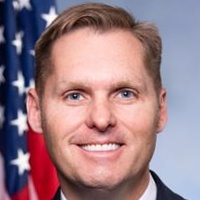
Michael Guest
Representative
MS
Michael Guest
Representative
MS
This bill directs the Secretary of Health and Human Services to establish a dedicated Office of Rural Health within the Centers for Disease Control and Prevention (CDC). This new office will serve as the central point for coordinating research, developing best practices, and sharing information to address the unique public health challenges facing rural communities. Its mission is to improve health outcomes and access to care for rural populations across the nation.
This bill bans the manufacture, sale, and transfer of specific semiautomatic assault weapons and large-capacity ammunition feeding devices while grandfathering existing possessions and establishing new transfer requirements.
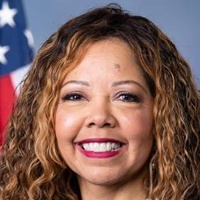
Lucy McBath
Representative
GA
Lucy McBath
Representative
GA
The Assault Weapons Ban of 2025 comprehensively defines and bans the manufacture, sale, and transfer of specific semiautomatic assault weapons and large capacity ammunition feeding devices. The bill grandfathers existing weapons but imposes new requirements for their secure storage and mandates dealer involvement for future private transfers. It also allows federal grant money to be used by states for buy-back programs targeting these banned items.
This Act officially designates the POW/MIA Memorial and Museum in Jacksonville, Florida, as the National POW/MIA Memorial and Museum, establishing reporting requirements for its future operation.
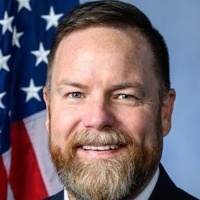
Aaron Bean
Representative
FL
Aaron Bean
Representative
FL
This bill officially designates the memorial and museum currently under construction in Jacksonville, Florida, as the **National POW/MIA Memorial and Museum**. The legislation recognizes the museum's crucial role in honoring and educating the public about service members who were prisoners of war or remain missing in action. To maintain this designation, the museum must submit a comprehensive operational report to Congress within 90 days of enactment. Failure to open satisfactorily within five years or submit the required report will result in the loss of this official federal title.
This Act extends the required renewal periods for certain Medicaid home and community-based services waivers to provide greater stability for states administering these programs.
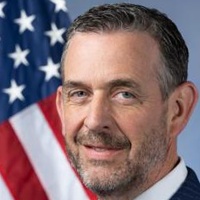
Michael Rulli
Representative
OH
Michael Rulli
Representative
OH
The Medicaid Empowerment Act of 2025 aims to provide greater stability for state-run home and community-based services (HCBS) programs. This legislation extends the required renewal periods for certain Medicaid waivers offering community care services. By allowing longer cycles between mandatory reviews, the Act offers states more consistency in administering these vital services.
The RESEARCHER Act establishes new federal guidelines to address the financial instability of graduate and postdoctoral researchers by improving stipends, benefits, and support services, while mandating new data collection and studies on the issue.
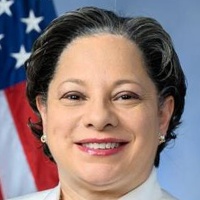
Jennifer McClellan
Representative
VA
Jennifer McClellan
Representative
VA
The RESEARCHER Act establishes new federal guidelines to address the financial instability faced by graduate and postdoctoral researchers supported by federal funding. It mandates agencies to improve stipends, healthcare access, and support for housing and family care for these essential researchers. Furthermore, the bill requires comprehensive data collection and studies by the National Academies and GAO to assess and report on the effectiveness of these new financial support measures.
The Equality Act comprehensively prohibits discrimination based on sex, sexual orientation, and gender identity across key areas including public accommodations, employment, housing, credit, and jury service.
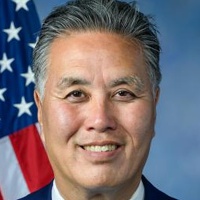
Mark Takano
Representative
CA
Mark Takano
Representative
CA
The Equality Act comprehensively expands federal civil rights protections against discrimination based on sex, sexual orientation, and gender identity across key areas of American life. It amends existing laws to prohibit discrimination in public accommodations, housing, credit, employment, and federal funding. The purpose of the bill is to provide consistent, explicit, and comprehensive remedies for individuals facing bias in these essential sectors.
This Act mandates that hotels and short-term rentals must clearly display the total, all-inclusive price upfront in all advertisements to prevent hidden fees.
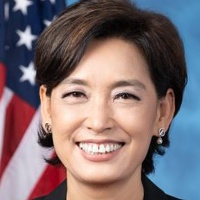
Young Kim
Representative
CA
Young Kim
Representative
CA
The Hotel Fees Transparency Act of 2025 mandates that hotels and short-term rentals must prominently display the total, all-inclusive price upfront in all advertisements, excluding only government taxes and optional fees. This new federal standard is designed to eliminate hidden fees by requiring the advertised price to reflect the base rate plus all mandatory service charges. The Federal Trade Commission (FTC) and State Attorneys General will enforce these rules against deceptive pricing practices.
This Act authorizes the President to impose sanctions, including asset freezes and visa bans, on foreign individuals involved in violence, property destruction, or displacement in the West Bank.
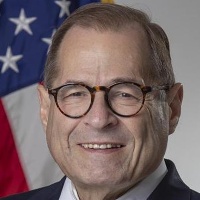
Jerrold Nadler
Representative
NY
Jerrold Nadler
Representative
NY
The West Bank Violence Prevention Act of 2025 declares extreme settler violence and displacement in the West Bank a threat to U.S. national security interests. This Act mandates the President to impose sanctions, including asset freezes and visa bans, on foreign individuals responsible for undermining peace and stability in the region. The Treasury Department must report to Congress on the implementation of these sanctions every 90 days.
The SAFE Act of 2025 authorizes key USDA and trade officials to proactively negotiate agreements with export markets to mitigate trade disruptions caused by animal disease outbreaks.
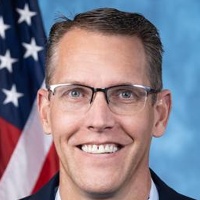
Randy Feenstra
Representative
IA
Randy Feenstra
Representative
IA
The Safe American Food Exports Act of 2025 (SAFE Act) authorizes key agricultural and trade officials to proactively negotiate agreements with major export markets. These negotiations aim to establish disease control zones in advance of animal disease outbreaks. The goal is to minimize disruptions to U.S. livestock and animal product exports should an outbreak occur.
This bill prohibits businesses from claiming tax deductions for expenses related to advertising certain prescription drugs directly to the public.
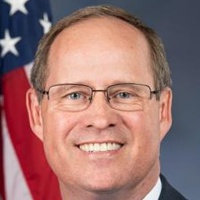
Gregory Murphy
Representative
NC
Gregory Murphy
Representative
NC
The No Handouts for Drug Advertisements Act prohibits businesses from taking a federal tax deduction for expenses related to direct-to-consumer advertising of certain prescription drugs. This measure specifically targets costs associated with advertising aimed at the general public via television, radio, or digital platforms. The goal is to disallow tax write-offs for these promotional activities, with an exception for ads placed in professional medical journals.
This Act establishes a federal right for beneficiaries of Holocaust-era insurance policies to sue in federal court, overriding prior federal foreign policy preemption of state disclosure laws.
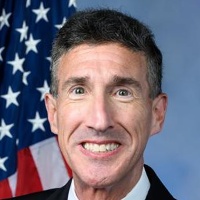
David Kustoff
Representative
TN
David Kustoff
Representative
TN
The Holocaust Insurance Accountability Act of 2025 restores the ability of states to enforce laws requiring insurers to disclose information about Holocaust-era policies. This Act creates a new federal right for beneficiaries to sue in federal court to collect on these policies, overriding previous federal preemption claims. Furthermore, it establishes a uniform 10-year statute of limitations for filing such claims under both state and federal law.
This Act establishes the "Combating Invasive Species Semipostal Stamp" to raise dedicated funds for federal programs fighting invasive species.
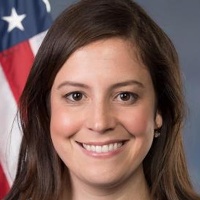
Elise Stefanik
Representative
NY
Elise Stefanik
Representative
NY
The Stamp Out Invasive Species Act mandates the creation and sale of a special "Combating Invasive Species Semipostal Stamp" by the U.S. Postal Service for a two-year period. Proceeds from the extra cost of this stamp will be equally divided between the Department of the Interior and the Department of Agriculture. This funding is specifically dedicated to supporting federal programs aimed at combating the significant ecological and economic damage caused by invasive species.
This act updates federal law to specifically prohibit the taking or transmitting of video of national defense information, treating it the same as photographic material.
Jennifer Kiggans
Representative
VA
Jennifer Kiggans
Representative
VA
The Drone Espionage Act updates federal law to specifically prohibit the unauthorized taking or transmission of **video** of national defense information. This amendment modernizes existing statutes, ensuring that capturing sensitive material via video is treated the same as capturing it via photographs or negatives. The bill aims to strengthen protections against the illicit sharing of defense secrets using modern recording technology.
This Act establishes a 30% tax credit for businesses investing in qualifying on-site or municipal water reuse projects to encourage the use of recycled water.
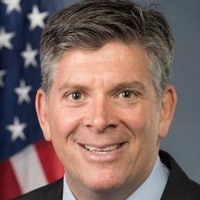
Darin LaHood
Representative
IL
Darin LaHood
Representative
IL
The Advancing Water Reuse Act establishes a new "qualifying water reuse project credit" to incentivize businesses to recycle water. This credit offers a 30% tax break on qualified investments in on-site water recycling systems or infrastructure that supports industrial or commercial water reuse. The tax incentive is designed to encourage the adoption of water conservation technologies until the end of 2032.
The Fight Fentanyl Act strengthens federal efforts against fentanyl trafficking by mandating detailed reporting from HIDTA programs, increasing their funding and purpose to target fentanyl interdiction, and requiring the Attorney General to assign additional prosecutors to these cases.
David Taylor
Representative
OH
David Taylor
Representative
OH
The Fight Fentanyl Act strengthens federal efforts to combat the fentanyl crisis by updating the High Intensity Drug Trafficking Areas (HIDTA) program. This legislation mandates increased reporting on fentanyl investigations, sets dedicated funding levels through 2030, and expands HIDTA purposes to prioritize fentanyl interdiction. Furthermore, it requires the Attorney General to ensure sufficient prosecutorial resources are dedicated to fentanyl trafficking cases through temporary AUSA assignments.
This Act authorizes the Secretary of the Interior to enter into Memoranda of Understanding with foreign countries to cooperatively map critical mineral and rare earth element reserves to secure U.S. supply chains.
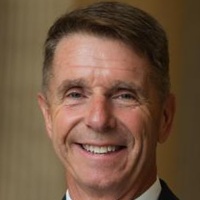
Robert Wittman
Representative
VA
Robert Wittman
Representative
VA
The Finding Opportunities for Resource Exploration Act, or Finding ORE Act, authorizes the Secretary of the Interior, through the USGS, to enter into Memoranda of Understanding with foreign partners. These agreements focus on cooperatively mapping critical mineral and rare earth element reserves in partner countries. The goal is to secure supply chains by prioritizing development opportunities for U.S. and allied companies, while ensuring data security.