Legislative Activity
Track Eugene's sponsored bills, co-sponsored legislation, and voting record
This Act establishes a temporary, phased-out advanced manufacturing production tax credit for components used in fusion energy systems.
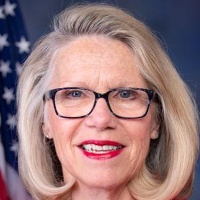
Carol Miller
Representative
WV
Carol Miller
Representative
WV
The Fusion Advanced Manufacturing Parity Act amends the existing advanced manufacturing production credit to specifically include components used for fusion energy. This provides a temporary 25% tax credit on the sale price of qualifying fusion energy components, beginning after 2025. The credit is scheduled to phase out completely by the end of 2034. The bill also expands the list of eligible materials qualifying for the broader advanced manufacturing credit.
This bill mandates key federal agencies to coordinate housing research and submit a joint report to Congress outlining policy solutions for improving housing affordability and availability.
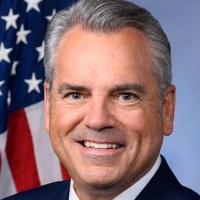
Mark Alford
Representative
MO
Mark Alford
Representative
MO
The Saving the American Dream Act mandates that key federal housing agencies collaborate to share research and data through a formal agreement. This legislation requires these agencies to jointly submit a comprehensive report to Congress outlining policy solutions for improving housing finance coordination, reducing mortgage costs, and addressing barriers to new home construction. The goal is to ensure federal housing policy is based on coordinated, evidence-based analysis.
This Act ensures the automatic continuation of pay for active duty military personnel and essential civilian support staff if Congress fails to pass a budget for fiscal year 2026.
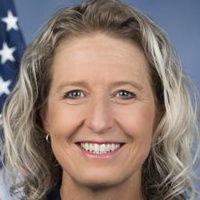
Jennifer Kiggans
Representative
VA
Jennifer Kiggans
Representative
VA
The Pay Our Troops Act of 2026 ensures that active duty military personnel and essential civilian support staff continue to receive their pay if Congress has not yet passed the full budget for fiscal year 2026. This act provides automatic continuing appropriations from the Treasury to prevent a lapse in military salaries due to budget delays. The funding automatically terminates once a new budget or continuing resolution is passed, or on January 1, 2027, whichever comes first.
The FAMILY Act establishes a national paid family and medical leave insurance program administered by the Social Security Administration, providing benefits for caregiving related to serious health conditions or victims of violence.
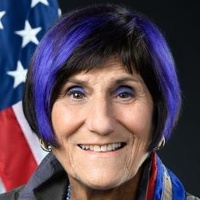
Rosa DeLauro
Representative
CT
Rosa DeLauro
Representative
CT
The FAMILY Act establishes a national Paid Family and Medical Leave Insurance program administered by a new office within the Social Security Administration. This program provides monthly benefits to eligible individuals who take time off for qualified caregiving reasons, including serious health conditions or victims of violence. The Act also sets forth detailed eligibility requirements, benefit calculation formulas, and job protection guarantees for employees utilizing the leave. Finally, it creates a funding mechanism to support existing state-level paid leave programs that meet federal standards.
The Dam Assessment and Mitigation Support Act updates the National Dam Safety Program by standardizing risk-based dam priority setting, removing an outdated rehabilitation rule, and extending federal funding authorization through 2031.
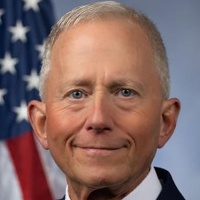
Jefferson Van Drew
Representative
NJ
Jefferson Van Drew
Representative
NJ
The Dam Assessment and Mitigation Support (DAMS) Act updates the National Dam Safety Program by removing an outdated rule for dam rehabilitation and standardizing how states prioritize repairs for high-hazard dams. This legislation requires states to adopt the federal risk-based system if they lack their own, and it extends federal funding authorization for the program through 2031.
This resolution formally recognizes and celebrates the 180th anniversary of the United States Naval Academy, honoring its history, distinguished alumni, and enduring mission to develop leaders for the Navy and Marine Corps.
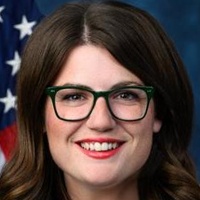
Sarah Elfreth
Representative
MD
Sarah Elfreth
Representative
MD
This resolution formally recognizes and celebrates the 180th anniversary of the United States Naval Academy. It honors the institution's history, its mission to instill honor and courage in future leaders, and the significant achievements of its distinguished alumni. Congress reaffirms its commitment to supporting the Academy as it continues to prepare leaders for the Navy and Marine Corps.
The TRAVEL Act of 2025 authorizes the VA to assign existing physicians as traveling doctors to provide essential healthcare services to veterans in U.S. territories and possessions, while also extending certain pension payment limits.
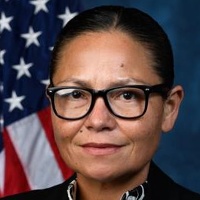
Kimberlyn King-Hinds
Representative
MP
Kimberlyn King-Hinds
Representative
MP
The Territorial Response and Access to Veterans’ Essential Lifecare (TRAVEL) Act of 2025 authorizes the Department of Veterans Affairs to assign existing physicians as traveling doctors to provide essential healthcare services in U.S. territories and possessions for up to one year. These traveling physicians will receive special relocation or retention bonuses in addition to their regular salary. Furthermore, the bill extends the expiration date for certain limits on veterans' pension payments until December 31, 2032.
This bill authorizes the Secretary of Veterans Affairs to implement a new, cloud-based inventory management system for VHA medical facilities after submitting a comprehensive modernization report, and it extends the expiration date for certain veteran pension payment limits.
Jennifer Kiggans
Representative
VA
Jennifer Kiggans
Representative
VA
This bill authorizes the Secretary of Veterans Affairs to acquire or build a new, cloud-based inventory management system for VHA medical facilities. Before implementation, a pilot program must be conducted, and a detailed modernization report must be submitted to Congress. Additionally, the Act extends the expiration date for certain limits on veterans' pension payments until the end of 2032.
This bill mandates the VA to offer timely employment contracts to Health Professionals Scholarship Program graduates and institutes a comprehensive ban on smoking and vaping within all Veterans Health Administration facilities.
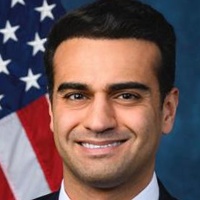
Abraham Hamadeh
Representative
AZ
Abraham Hamadeh
Representative
AZ
The Health Professionals Scholarship Program Improvement Act of 2025 aims to strengthen the VA's healthcare workforce by mandating that the VA offer full-time clinical employment contracts to scholarship graduates within 90 days of their qualification. Additionally, this Act establishes a comprehensive, property-wide ban on all smoking and the use of electronic nicotine delivery systems within Veterans Health Administration facilities. The VA must also report regularly to Congress on the success of these new placement timelines.
This bill allows authorized VA healthcare professionals to prescribe and dispense controlled medications to veterans via telemedicine under specific conditions.
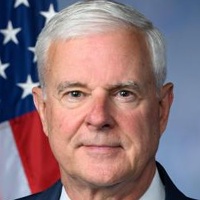
Steve Womack
Representative
AR
Steve Womack
Representative
AR
The Protecting Veteran Access to Telemedicine Services Act of 2025 allows authorized Department of Veterans Affairs (VA) healthcare professionals to prescribe and dispense controlled medications to eligible veterans via telemedicine. This provision removes the prior requirement for an initial in-person visit before prescribing these medications remotely. The VA is required to establish specific regulations detailing the process for this telemedicine delivery while ensuring compliance with existing federal drug control laws.
This bill establishes a pilot program to provide specialized, long-term development loans up to $100,000 with low-interest rates and mandatory management training for beginning farmers and ranchers.
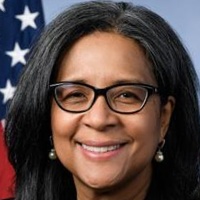
Marilyn Strickland
Representative
WA
Marilyn Strickland
Representative
WA
The Capital for Beginning Farmers and Ranchers Act of 2025 establishes a new pilot loan program to address the unique upfront capital needs of new farmers and ranchers. This program offers specialized development loans, up to $100,000, with flexible repayment terms (3-10 years) for long-term business investments. Borrowers must also receive mandatory training in farm and ranch management.
The AWARE Act directs the FTC to create educational guides for families on the safe and responsible use of AI chatbots by minors.
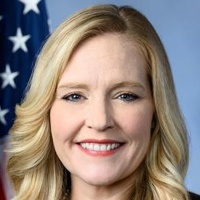
Erin Houchin
Representative
IN
Erin Houchin
Representative
IN
The AI Warnings And Resources for Education (AWARE) Act directs the Federal Trade Commission (FTC) to develop and release educational materials for families about the safe and responsible use of AI chatbots by minors. These resources must clearly explain safety risks, data privacy concerns, and offer best practices for parental supervision. The FTC is required to model these new guides after their existing "Youville" educational program.
This Act mandates a comprehensive review of liquid cooling technologies for data centers to address growing energy demands driven by AI.
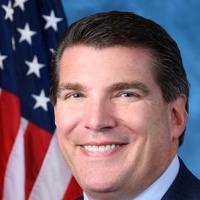
Jay Obernolte
Representative
CA
Jay Obernolte
Representative
CA
The Liquid Cooling for AI Act of 2025 addresses the rapidly growing energy demands of AI data centers by mandating a comprehensive review of liquid cooling technologies. This review, conducted by the GAO, will assess the costs, benefits, and market readiness of systems like direct-to-chip and immersion cooling. Ultimately, the bill seeks to establish federal standards and recommendations to promote the efficient and secure deployment of advanced cooling solutions necessary for future high-performance computing.
This Act establishes a presumption of service connection for specific diseases developed by veterans exposed to toxins at the Pentagon Reservation following the September 11, 2001 attacks.
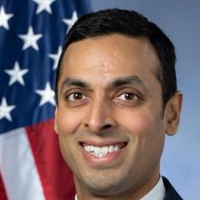
Suhas Subramanyam
Representative
VA
Suhas Subramanyam
Representative
VA
The Susan E. Lukas 9/11 Servicemember Fairness Act establishes a presumption of service connection for specific diseases developed by veterans who served at the Pentagon Reservation between September 11 and November 19, 2001. This provision simplifies the process for these veterans to receive VA disability benefits for listed conditions like asthma, cancer, and cardiovascular disease, linking them automatically to their toxic exposure following the 9/11 attacks. The Secretary is also empowered to add other related illnesses to this covered list.
This bill mandates that any unspent funds from the Members Representational Allowance (MRA) must be returned to the U.S. Treasury to reduce the federal deficit, starting in fiscal year 2026.
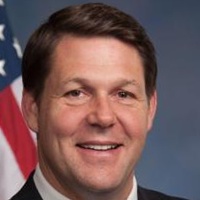
Jodey Arrington
Representative
TX
Jodey Arrington
Representative
TX
The Congressional Money Returned to America Act mandates that any unspent funds remaining in the House of Representatives' Members Representational Allowance (MRA) at the end of the fiscal year must be returned to the U.S. Treasury. This returned money will be specifically used for reducing the federal deficit or debt. This requirement takes effect starting in fiscal year 2026.
This bill posthumously awards a Congressional Gold Medal to honor the groundbreaking civil rights achievements of Constance Baker Motley and authorizes the production and sale of bronze duplicates.
Rosa DeLauro
Representative
CT
Rosa DeLauro
Representative
CT
This bill, the Congressional Tribute to Constance Baker Motley Act of 2025, posthumously awards the Congressional Gold Medal to the pioneering civil rights attorney and federal judge, Constance Baker Motley. The legislation recognizes her historic achievements, including her role in *Brown v. Board of Education* and her service as the first African-American woman appointed as a federal judge. The Secretary of the Treasury is authorized to strike the medal, and provisions are made for selling bronze duplicates to cover production costs.
The RESULTS Act reforms how Medicare determines payment rates for clinical diagnostic laboratory tests by mandating the use of comprehensive, real-world private payor claims data collected from an independent entity.
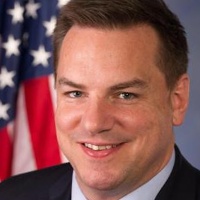
Richard Hudson
Representative
NC
Richard Hudson
Representative
NC
The Reforming and Enhancing Sustainable Updates to Laboratory Testing Services Act of 2025 (RESULTS Act) aims to improve Medicare payment rates for clinical lab tests by mandating the collection of more accurate, real-world payment data directly from large, independent private insurance claims databases. This legislation updates definitions, collection timelines, and calculation methods to ensure Medicare payments for widely available tests reflect current market rates. It also establishes default payment rules if sufficient private payor data cannot be secured.
This bill centralizes the authority to establish and approve all federal manufactured home construction and safety standards, including energy efficiency, with the Secretary of Housing and Urban Development.
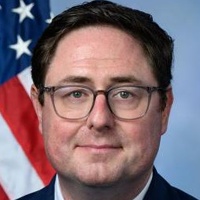
Mike Flood
Representative
NE
Mike Flood
Representative
NE
This bill centralizes the authority for establishing federal manufactured home construction and safety standards under the Secretary of Housing and Urban Development (HUD). It requires any other federal agency to obtain the Secretary's explicit approval before implementing new or updated standards. The Secretary can reject proposed standards based on cost concerns or conflicts with existing safety regulations.
This Act prohibits the knowing distribution of materially deceptive AI-generated audio or visual media of federal candidates near an election, with exceptions for legitimate news coverage and satire.
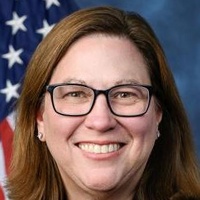
Julie Johnson
Representative
TX
Julie Johnson
Representative
TX
The Protect Elections from Deceptive AI Act prohibits the knowing distribution of materially deceptive, AI-generated audio or visual media of federal candidates close to an election with the intent to influence the outcome. This ban includes exceptions for legitimate news reporting, satire, and parody, provided proper disclosures are made. Candidates whose likeness is used deceptively can sue for immediate removal of the content and damages.
The Weather Act Reauthorization Act of 2025 comprehensively updates and funds federal weather research, modernizes forecasting infrastructure, integrates commercial data, and improves public communication to enhance severe weather preparedness and mitigation across the nation.

Frank Lucas
Representative
OK
Frank Lucas
Representative
OK
The Weather Act Reauthorization Act of 2025 aims to significantly enhance U.S. weather forecasting, research, and public safety measures across five years. It mandates the modernization of critical infrastructure, including radar systems and data processing, while prioritizing the integration of commercial technology and social science research into actionable, impact-based warnings. The bill focuses on improving predictions for severe events like tornadoes, hurricanes, and droughts, and overhauls how NOAA acquires and utilizes private sector weather data. Ultimately, this legislation seeks to deliver faster, clearer, and more reliable hazard information to protect American lives and property.