Legislative Activity
Track Eugene's sponsored bills, co-sponsored legislation, and voting record
This Act prohibits the knowing distribution of materially deceptive AI-generated audio or visual media of federal candidates near an election, with exceptions for legitimate news coverage and satire.
Julie Johnson
Representative
TX
Julie Johnson
Representative
TX
The Protect Elections from Deceptive AI Act prohibits the knowing distribution of materially deceptive, AI-generated audio or visual media of federal candidates close to an election with the intent to influence the outcome. This ban includes exceptions for legitimate news reporting, satire, and parody, provided proper disclosures are made. Candidates whose likeness is used deceptively can sue for immediate removal of the content and damages.
This bill reauthorizes funding for programs supporting the mental health and treatment of officers in crisis for an additional five years, from 2025 through 2029.
Guy Reschenthaler
Representative
PA
Guy Reschenthaler
Representative
PA
The Reauthorizing Support and Treatment for Officers in Crisis Act of 2025 extends crucial federal funding for programs supporting law enforcement officers in crisis. This bill specifically reauthorizes existing support and treatment initiatives for an additional five years, running from 2025 through 2029. It ensures continued resources are available for officers needing mental health and wellness assistance.
The PART Act establishes new federal requirements for marking catalytic converters, creates a grant program for VIN stamping, tightens record-keeping for used parts dealers, and increases criminal penalties for theft and trafficking of catalytic converters.
James Baird
Representative
IN
James Baird
Representative
IN
The PART Act aims to combat catalytic converter theft by requiring new vehicles to have traceable identifying markers on these parts. It establishes a federal grant program to help entities stamp identifying numbers onto existing converters. Furthermore, the bill imposes strict record-keeping requirements on businesses that buy used converters and creates new federal criminal penalties for stealing or trafficking stolen catalytic converters.
This bill excludes certain qualified payments received for wildfire-related losses and damages from gross income for federal tax purposes.
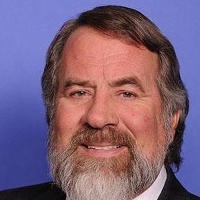
Doug LaMalfa
Representative
CA
Doug LaMalfa
Representative
CA
The Protect Innocent Victims of Taxation After Fire Extension Act ensures that certain qualified relief payments received by individuals for wildfire-related losses are excluded from their federal gross income. This provision applies to payments covering uninsured or underinsured expenses, damages, or lost wages resulting from federally declared forest or range fires. The tax exclusion is designed to prevent double benefits and is set to expire for payments received after December 31, 2032.
This bill formally integrates Puerto Rico into the federal Supplemental Nutrition Assistance Program (SNAP) structure, outlining a transition plan away from its current block grant system.
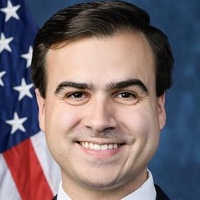
Pablo José Hernández Rivera
Representative
PR
Pablo José Hernández Rivera
Representative
PR
The Puerto Rico Nutrition Assistance Fairness Act aims to integrate Puerto Rico into the federal Supplemental Nutrition Assistance Program (SNAP) structure, aligning it with other territories like Guam. The bill mandates a transition period where Puerto Rico must submit a plan of operation to the Secretary of Agriculture for approval to join SNAP. During this transition, existing block grant funding may continue for up to five years while the territory moves toward full participation under federal SNAP rules.
This Act enables states to establish specialized Medicaid health homes for individuals with sickle cell disease, mandating dental and vision coverage for enrollees.
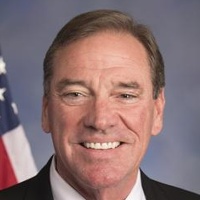
Neal Dunn
Representative
FL
Neal Dunn
Representative
FL
The Sickle Cell Disease Comprehensive Care Act enables states to establish specialized Medicaid health homes focused exclusively on individuals with sickle cell disease starting in 2026. If a state adopts this program, it must provide mandatory dental and vision coverage to enrolled patients, regardless of standard state Medicaid policies. States implementing these health homes will also be required to report on patient outcomes, access to care, and expenditures.
This resolution commemorates the indispensable service of the Marquis de Lafayette to the United States during the Revolutionary War and recognizes the bicentennial of his farewell tour.

Robert Wittman
Representative
VA
Robert Wittman
Representative
VA
This resolution formally commemorates the invaluable service of the Marquis de Lafayette to the United States during the Revolutionary War and recognizes the bicentennial of his farewell tour. It celebrates his military bravery, crucial diplomatic efforts that secured French support, and lifelong commitment to liberty. The bill serves as a formal expression of national gratitude for his foundational role in securing American independence.
This Act modernizes Medicare utilization requirements for rural facilities employing Physician Assistants and Nurse Practitioners by aligning their practice and oversight with state laws.
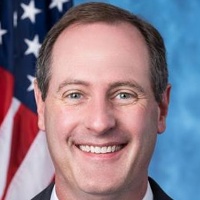
Tracey Mann
Representative
KS
Tracey Mann
Representative
KS
The Modernizing Rural Physician Assistant and Nurse Practitioner Utilization Act of 2025 updates Medicare payment requirements for facilities not directly directed by a physician. It mandates that these facilities must have formal arrangements with Physician Assistants (PAs) or Nurse Practitioners (NPs) whose practice adheres to state laws and regulations. These changes are set to take effect on January 1, 2027.
This act updates the population threshold defining an "urban area" to maintain eligibility for Rural Health Clinics under the Medicare program, effective January 1, 2027.
Tracey Mann
Representative
KS
Tracey Mann
Representative
KS
The Rural Health Clinic Location Modernization Act of 2025 updates the criteria for clinics to qualify as Rural Health Clinics (RHCs) under Medicare. This legislation revises the definition of an "urban area," setting a new population threshold of 50,000 people to determine eligibility. These changes to the location standards will take effect starting January 1, 2027.
This Act limits the sharing of consumer reports requested in connection with a residential mortgage loan to prevent unauthorized access to homebuyers' sensitive financial information.
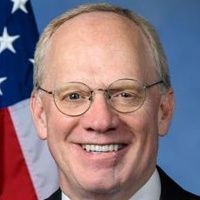
John Rose
Representative
TN
John Rose
Representative
TN
The Homebuyers Privacy Protection Act limits how consumer reporting agencies can share a consumer's report when it is requested in connection with a residential mortgage loan. Reports can only be shared with entities directly involved in the consumer's current mortgage or those providing a firm offer of credit or insurance. The Act also mandates a study by the GAO regarding the use and impact of "trigger leads" derived from credit checks.
This Act strengthens the cooperative management of National Scenic and Historic Trails by formally designating operational partners, clarifying roles, and establishing priority systems for land protection and visitor capacity planning.
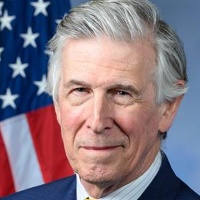
Donald Beyer
Representative
VA
Donald Beyer
Representative
VA
The Appalachian Trail Centennial Act officially recognizes the vital role of cooperative management, particularly volunteer partnerships, in maintaining National Scenic and Historic Trails. This bill formally designates operational partners, like the Appalachian Trail Conservancy, to share management responsibilities with federal agencies. It also establishes processes for prioritizing land protection and assessing the economic impact of these trails on local communities. Ultimately, the Act aims to strengthen the framework for long-term stewardship and development of the National Trails System.
This Act pauses scheduled Medicare home health payment reductions for 2026 and 2027 to ensure continued beneficiary access to services.
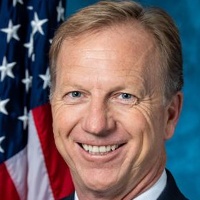
Kevin Hern
Representative
OK
Kevin Hern
Representative
OK
The Home Health Stabilization Act of 2025 aims to ensure continued access to Medicare home health services by pausing automatic payment reductions scheduled for 2026 and 2027. This is achieved by mandating a positive adjustment to the standard payment rate to fully offset proposed cuts. Furthermore, the bill clarifies that these temporary payment increases will not negatively impact future rate calculations for providers.
This act limits electric utility companies to requesting a retail rate increase only once per year.
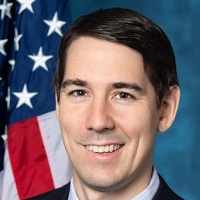
Josh Harder
Representative
CA
Josh Harder
Representative
CA
The Stop the Rate Hikes Act limits electric utilities to requesting a retail rate increase only once per year. This measure aims to provide consumers with greater stability by restricting how frequently utility companies can seek to raise electricity rates.
The ASPIRE Act establishes a new grant program to fund specialized, industry-partnered training programs designed to prepare and recruit skilled workers for the agriculture industry.
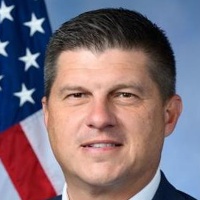
Brad Finstad
Representative
MN
Brad Finstad
Representative
MN
The Agriculture Skills Preparation for Industry Recruitment Efforts (ASPIRE) Act establishes a new grant program managed by the Secretary of Agriculture to fund specialized workforce training in agriculture. These grants will enable eligible schools to partner with industry to develop hands-on programs, internships, and technical workshops. The goal is to enhance the agricultural workforce by ensuring training directly meets industry needs and supports worker recruitment.
This Act mandates the Bureau of Prisons to issue a REAL ID-compliant identification card, valid for at least 18 months, to all departing federal prisoners to facilitate access to essential federal services and state IDs.
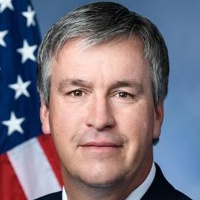
Barry Moore
Representative
AL
Barry Moore
Representative
AL
The BOP Release Card ID Act of 2025 mandates that the Bureau of Prisons issue a REAL ID-compliant photo identification card to all departing federal prisoners, valid for at least 18 months. This federal release card must be accepted for identity verification when accessing major federal benefits like Social Security, Medicaid, and SNAP. Furthermore, the BOP must establish agreements with states to help former inmates use this card to obtain standard state identification. The Attorney General will also issue guidance to states on creating similar release ID programs for state prisoners.
The Federal Receivership Fairness Act grants courts the authority to determine the tax liability of receivership estates, streamlining the resolution of tax issues during asset management.
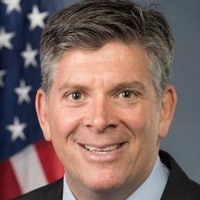
Darin LaHood
Representative
IL
Darin LaHood
Representative
IL
The Federal Receivership Fairness Act grants courts the authority to determine the tax liability of a receivership estate, streamlining the resolution of tax disputes during court-supervised asset management. This allows the appointing court to settle federal, state, and local tax issues owed by the estate, with specific exceptions for previously adjudicated matters. The bill outlines procedures for receivers to request tax determinations and clarifies the government's waiver of sovereign immunity regarding these rulings.
The FEMA Act of 2025 establishes FEMA as an independent, cabinet-level agency and enacts sweeping reforms across public assistance, individual aid, and mitigation programs to speed up recovery and increase transparency.
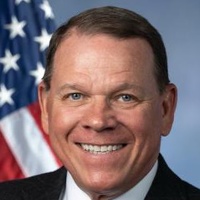
Sam Graves
Representative
MO
Sam Graves
Representative
MO
The FEMA Act of 2025 establishes the Federal Emergency Management Agency (FEMA) as an independent, cabinet-level agency to lead a unified, all-hazards approach to national emergency management. The bill enacts sweeping reforms across Public Assistance, Individual Assistance, and Mitigation programs to accelerate recovery, streamline funding, and reduce bureaucratic hurdles for disaster survivors and communities. Furthermore, it mandates significant new transparency measures, including public data reporting and GAO oversight, to ensure accountability for federal disaster spending.
This Act establishes a comprehensive U.S. policy to condemn China's repression of Uyghurs and other minorities in Xinjiang, demands international access to detention facilities, and directs the State Department to prioritize protecting their rights and combating transnational harassment.

Young Kim
Representative
CA
Young Kim
Representative
CA
The Uyghur Policy Act of 2025 formally condemns the People's Republic of China's repression and cultural erasure of Uyghurs and other minorities in the Xinjiang Uyghur Autonomous Region. It directs the U.S. government to prioritize protecting Uyghur identity, demanding immediate access to detention facilities, and coordinating international pressure to secure the release of political prisoners. Furthermore, the Act mandates strengthening State Department efforts, including Uyghur language training and public diplomacy funding, to counter transnational harassment and raise global awareness of these human rights abuses.
This bill establishes a USDA grant program to help specialty crop producers purchase and receive training for new automation and mechanization equipment.
David Valadao
Representative
CA
David Valadao
Representative
CA
This bill establishes a new grant program administered by the Secretary of Agriculture to help specialty crop producers become more competitive. These grants will assist eligible entities in purchasing advanced mechanized or automated equipment and providing necessary training for its use. Recipients must provide matching funds equal to at least 50 percent of the total project cost. The covered technology ranges widely, including harvesting tools, sorting machinery, traceability systems, and advanced IoT and robotic equipment.
The SkyFoundry Act of 2025 establishes a rapid development and mass-production program for small unmanned aircraft systems, featuring dedicated innovation and production hubs, expedited contracting, and domestic manufacturing support.
Pat Harrigan
Representative
NC
Pat Harrigan
Representative
NC
The SkyFoundry Act of 2025 establishes a new program managed by the Department of the Army to rapidly develop, test, and mass-produce small unmanned aircraft systems (drones). This initiative mandates the creation of an Innovation Hub for R&D and a Production Hub capable of manufacturing one million drones annually. The bill directs the use of expedited contracting methods and leverages domestic manufacturing through the Defense Production Act to ensure rapid fielding of these critical defense systems.