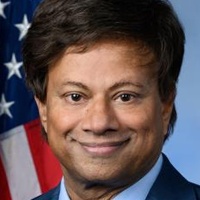
Legislative Activity
Track Shri's sponsored bills, co-sponsored legislation, and voting record
The "Safe Schools Improvement Act" amends the Elementary and Secondary Education Act of 1965, requiring states to establish policies that prevent and prohibit bullying and harassment in schools based on protected characteristics, ensuring a safe and inclusive learning environment for all students.

Linda Sánchez
Representative
CA
Linda Sánchez
Representative
CA
The Safe Schools Improvement Act aims to reduce bullying and harassment in schools by requiring states to establish policies prohibiting such conduct based on various characteristics, including race, sex, religion, and disability. It mandates annual notifications, data collection on incidents, biennial evaluations of programs, and regular reports to Congress to ensure accountability and effectiveness. This act does not infringe on existing nondiscrimination laws or freedom of speech but seeks to create a safer, more inclusive learning environment for all students.
The Triple-Negative Breast Cancer Research and Education Act of 2025 aims to improve research, public education, and healthcare provider awareness regarding triple-negative breast cancer, particularly concerning its prevalence and impact on minority women.
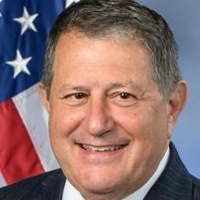
Joseph Morelle
Representative
NY
Joseph Morelle
Representative
NY
The Triple-Negative Breast Cancer Research and Education Act of 2025 aims to improve outcomes for individuals with triple-negative breast cancer by expanding research, increasing public education, and informing healthcare providers about the disease, particularly its prevalence and risk factors among minority women. The Act directs the National Institutes of Health (NIH) to expand and coordinate research programs, the Centers for Disease Control and Prevention (CDC) to develop and distribute public information, and the Health Resources and Services Administration to inform healthcare providers. It authorizes appropriations for these activities from fiscal years 2026-2031.
The "Public Health Funding Restoration Act" fully funds the Prevention and Public Health Fund at $2,000,000,000 annually to support public health programs and disease prevention.

Doris Matsui
Representative
CA
Doris Matsui
Representative
CA
The "Public Health Funding Restoration Act" aims to fully fund the Prevention and Public Health Fund at $2,000,000,000 annually beginning in 2026. This will restore investments in crucial public health programs focused on preventing diseases, injuries, and chronic conditions. By ensuring consistent funding, the act seeks to improve healthcare, quality of life, and preparedness for future health crises.
This bill officially renames the Robert E. Lee Memorial as the Arlington House National Historic Site.
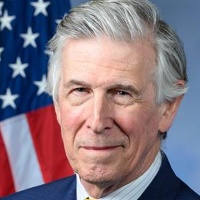
Donald Beyer
Representative
VA
Donald Beyer
Representative
VA
This bill officially redesignates the site currently known as the Robert E. Lee Memorial as the "Arlington House National Historic Site." It mandates that all official U.S. records, maps, and documents be updated to reflect this new name and repeals the previous joint resolutions that established the former designation.
This bill expands income-driven repayment options for parents who have federal student loans.
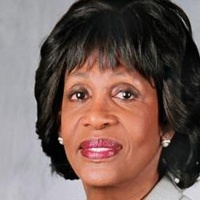
Maxine Waters
Representative
CA
Maxine Waters
Representative
CA
The "Affordable PLUS Repayment Options for Parents Act of 2025" expands income-contingent and income-based repayment options to parents who have taken out PLUS loans for their children's education. It removes restrictions that previously made PLUS loan borrowers ineligible for income-based repayment plans. The bill defines "partial financial hardship" based on a borrower's income and family size, ensuring more families can qualify for reduced payments. These changes apply to borrowers with outstanding PLUS loans or consolidation loans used to pay off PLUS loans, who are repaying their loans through income-driven repayment plans on or after the enactment date.
The Pell Grant Sustainability Act indexes Federal Pell Grants to inflation to help keep up with the rising costs of college for lower-income students.
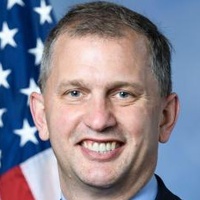
Sean Casten
Representative
IL
Sean Casten
Representative
IL
The Pell Grant Sustainability Act aims to increase the buying power of Pell Grants for lower-income students. It indexes the maximum Pell Grant award to inflation, starting with a \$1,060 increase for the 2024-2025 award year, and adjusts it annually based on the Consumer Price Index. This adjustment is added to the maximum Pell Grant specified in the latest appropriation act, ensuring Pell Grants keep pace with rising education costs. The bill also extends provisions of the Higher Education Act related to Pell Grants indefinitely.
This bill regulates large capacity ammunition feeding devices, making it illegal to import, sell, manufacture, transfer, or possess them, with certain exceptions for law enforcement and other entities, and allows for Byrne grants to be used for buy-back programs.

Diana DeGette
Representative
CO
Diana DeGette
Representative
CO
The "Keep Americans Safe Act" aims to regulate large capacity ammunition feeding devices by making it illegal to import, sell, manufacture, transfer, or possess magazines holding more than 15 rounds, with exceptions for law enforcement, government entities, and devices lawfully possessed before the law's enactment. It also permits the use of Byrne grants for buy-back programs of these devices and mandates that newly manufactured devices be marked with identifying information. Violators of this Act will face penalties under existing provisions of Title 18 of the U.S. Code.
This resolution reaffirms the Twenty-second Amendment’s two-term limit and explicitly declares that Donald Trump is constitutionally prohibited from serving a third term as president.

Dan Goldman
Representative
NY
Dan Goldman
Representative
NY
This resolution reaffirms the Twenty-second Amendment’s constitutional mandate that limits any individual to two terms as President of the United States. It specifically cites a series of public statements made by Donald Trump as evidence of a disregard for these term limits and formally declares that he is prohibited from seeking or serving an additional term.
The Social Security Expansion Act aims to increase Social Security benefits, change cost-of-living adjustments, extend eligibility, adjust payroll and self-employment taxes, tax investment gains, and establish a new Social Security Trust Fund.
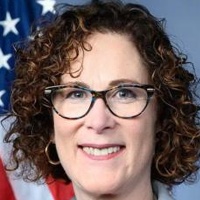
Valerie Hoyle
Representative
OR
Valerie Hoyle
Representative
OR
The Social Security Expansion Act aims to increase Social Security benefits, change cost-of-living adjustments to better reflect elderly consumers, and extend eligibility to student children. It also adjusts payroll and self-employment taxes for earnings above $250,000, increases taxes on investment gains, and establishes a new Social Security Trust Fund. These changes are intended to provide greater financial security for beneficiaries and ensure the long-term solvency of the Social Security system.
This resolution reaffirms the United States' commitment to Mexican sovereignty and condemns the use of unilateral military action in Mexico without the Mexican government's consent and explicit congressional authorization.
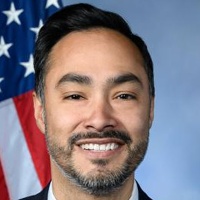
Joaquin Castro
Representative
TX
Joaquin Castro
Representative
TX
This resolution reaffirms the United States' commitment to respecting Mexico’s sovereignty and condemns the use of unilateral military action without Mexico's consent and explicit congressional authorization. It emphasizes that transnational criminal activities, such as drug trafficking, do not constitute an armed attack justifying military force under international or U.S. law. Ultimately, the bill advocates for continued bilateral cooperation to address shared security challenges rather than military intervention.
The BEST Act establishes a grant program to support states in creating and improving Seal of Biliteracy programs, which recognize students fluent in both English and another language, including Native American languages and American Sign Language.
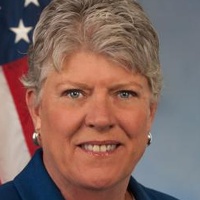
Julia Brownley
Representative
CA
Julia Brownley
Representative
CA
The Biliteracy Education Seal and Teaching (BEST) Act aims to establish a grant program that supports states in creating, improving, and running Seal of Biliteracy programs. These programs recognize students proficient in both English and another language, including Native American languages and American Sign Language. The Act allocates funds for administrative costs, public outreach, professional development, and testing subsidies, ensuring equal access for English learners and students with disabilities. Ultimately, the BEST Act seeks to promote and acknowledge the value of biliteracy among students nationwide.
The Health Equity and Rare Disease Act of 2025 aims to improve research, data collection, training, and awareness related to rare diseases, with a focus on addressing health inequities in minority populations.
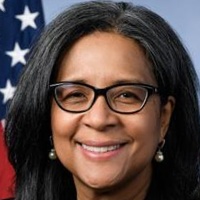
Marilyn Strickland
Representative
WA
Marilyn Strickland
Representative
WA
The Health Equity and Rare Disease Act of 2025, or HEARD Act of 2025, aims to improve health equity in the research, diagnosis, and treatment of rare diseases, particularly within minority populations. It directs the NIH and CDC to expand research, data collection, and awareness campaigns, while also promoting diversity in clinical trials and healthcare professions. The act also establishes grant programs for physician training and support for Tribal epidemiology centers, and requires reports to Congress on federal efforts and Medicare barriers. Finally, the act aims to address disparities in access to care and improve outcomes for individuals with rare diseases.
This act reinstates criminal penalties for individuals who charge unauthorized fees to veterans for assisting with claims for VA benefits.
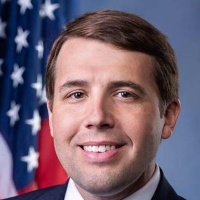
Chris Pappas
Representative
NH
Chris Pappas
Representative
NH
The GUARD VA Benefits Act establishes criminal penalties for individuals who charge veterans unauthorized fees for assisting with claims for benefits administered by the Department of Veterans Affairs. This legislation amends existing law to prohibit soliciting, contracting for, or receiving compensation for preparing or prosecuting VA benefit claims, except where explicitly authorized by other statutes.
The Humane Cosmetics Act of 2025 bans cosmetic animal testing in the U.S., restricts the use of animal testing data, and sets penalties for violations, while also preventing states from enacting conflicting regulations.
Donald Beyer
Representative
VA
Donald Beyer
Representative
VA
The Humane Cosmetics Act of 2025 bans cosmetic animal testing in the U.S. and restricts the use of animal testing data for cosmetic safety, with certain exceptions. It authorizes the Secretary of Health and Human Services to impose civil penalties for non-compliance and preempts states from enacting conflicting regulations. The Act defines key terms related to cosmetic animal testing and cosmetics.
The SAFE Act of 2025 amends existing law to include equines (horses) in the prohibition of slaughtering animals for human consumption.
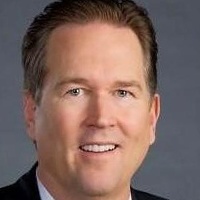
Vern Buchanan
Representative
FL
Vern Buchanan
Representative
FL
The SAFE Act of 2025 amends existing legislation to explicitly prohibit the slaughter of horses for human consumption, reinforcing protections for these animals. This bill seeks to prevent the inhumane treatment of American equines by closing loopholes that allow their slaughter and export for human consumption.
The MEME Act prohibits elected and high-ranking federal officials, as well as their families, from using their positions for personal financial gain by promoting or benefiting from financial instruments like stocks, commodities, and digital assets, with penalties including fines, imprisonment, and civil lawsuits.
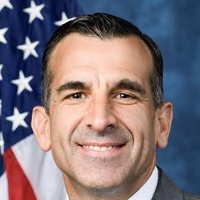
Sam Liccardo
Representative
CA
Sam Liccardo
Representative
CA
The MEME Act prohibits elected and other high-ranking federal officials, as well as their families, from promoting financial assets, including securities, commodities, and digital assets, for personal gain. It allows the Attorney General, private parties, and others to sue violators. Violators may face civil penalties up to $250,000, be required to return profits to the Treasury, and may face criminal penalties including fines and imprisonment. The Act aims to prevent public officials from using their positions for personal financial benefit, addressing bribery, insider trading, and corrupt foreign influence.
The PAST Act of 2025 significantly strengthens the Horse Protection Act by increasing penalties, banning specific action devices, and mandating licensed inspectors to combat the practice of horse soring.
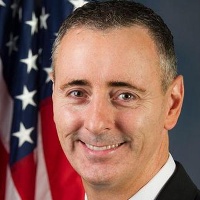
Brian Fitzpatrick
Representative
PA
Brian Fitzpatrick
Representative
PA
The PAST Act of 2025 significantly strengthens the Horse Protection Act to combat the painful practice of soring in specific horse breeds. This bill increases penalties for violations, establishes stricter licensing and oversight for inspectors, and explicitly bans the use of "action devices" designed to cause unnatural gaits. The legislation aims to enhance enforcement, ensure fairer competition, and hold violators accountable through increased fines and disqualifications.
The DOE and SBA Research Act directs the Department of Energy and the Small Business Administration to collaborate on joint research and development initiatives that leverage small business participation.
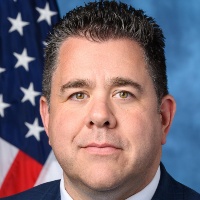
Nicolas LaLota
Representative
NY
Nicolas LaLota
Representative
NY
The DOE and SBA Research Act directs the Department of Energy and the Small Business Administration to establish a formal partnership to conduct joint research and development activities. This legislation encourages the inclusion of small businesses in these initiatives and requires a report to Congress on collaborative achievements and future opportunities. The Act is designed to be budget-neutral, requiring no additional federal funding for implementation.
The "Protect Veteran Jobs Act" allows wrongly terminated veteran civil service employees to be reinstated and requires executive agencies to report to Congress on veteran employee terminations.
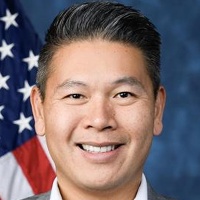
Derek Tran
Representative
CA
Derek Tran
Representative
CA
The Protect Veteran Jobs Act allows wrongly fired or dismissed veterans in civil service jobs between January 20, 2025, and the Act's enactment date to be reinstated to their previous position or a similar one. It mandates executive branch agencies to report to Congress every three months on all veteran employees who were fired or dismissed and the reasons for their termination, effective until January 20, 2029. The Act relies on existing U.S. Code definitions for key terms like "veteran" and "civil service."
This resolution condemns the Iranian regime’s terrorism and human rights abuses while affirming support for the Iranian people’s right to establish a democratic, secular, and non-nuclear republic.
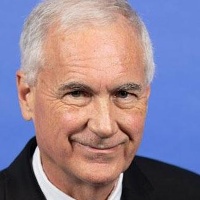
Tom McClintock
Representative
CA
Tom McClintock
Representative
CA
This resolution condemns the Iranian regime for its ongoing human rights abuses, state-sponsored terrorism, and regional instability. It expresses strong support for the Iranian people's struggle for a democratic, secular, and non-nuclear republic. Furthermore, the bill advocates for international accountability for the regime's crimes and calls for the protection of Iranian political refugees.