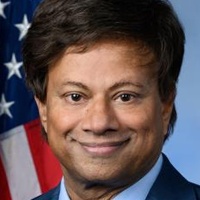
Legislative Activity
Track Shri's sponsored bills, co-sponsored legislation, and voting record
This bill establishes a dedicated section within the Department of Justice to enforce federal animal cruelty laws, enhance investigations and prosecutions, and improve inter-agency coordination.
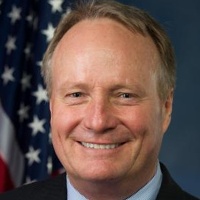
David Joyce
Representative
OH
David Joyce
Representative
OH
The Animal Cruelty Enforcement Act of 2025 establishes an Animal Cruelty Crimes Section within the Department of Justice to enforce federal animal cruelty laws, pursue investigations and prosecutions, and coordinate with other agencies. The section is required to submit an annual report to Congress regarding charges, convictions, and investigations. The bill recognizes the connection between animal cruelty and other crimes and aims to address the lack of dedicated enforcement of animal protection laws.
This bill amends the Civilian Health and Medical Program of the Department of Veterans Affairs (CHAMPVA) to extend eligibility for medical care to children until their 26th birthday, regardless of marital status.
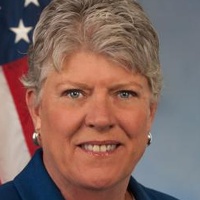
Julia Brownley
Representative
CA
Julia Brownley
Representative
CA
The CHAMPVA Children's Care Protection Act of 2025 amends the eligibility requirements for the Civilian Health and Medical Program of the Department of Veterans Affairs (CHAMPVA). This act increases the maximum age for eligible children to receive medical care under the program to 26 years old, regardless of their marital status. This change does not affect benefits for children incapable of self-support and takes effect for medical care provided on or after the enactment of this act.
The Poverty Line Act of 2025 updates the calculation of the federal poverty line to more accurately reflect the cost of basic needs and regional variations in cost of living, expanding eligibility for federal assistance programs.
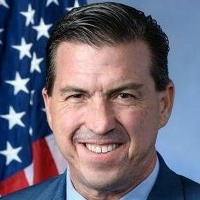
Kevin Mullin
Representative
CA
Kevin Mullin
Representative
CA
The Poverty Line Act of 2025 updates the calculation of the federal poverty line to more accurately reflect the true costs of basic needs such as housing, childcare, and healthcare, while also accounting for geographic variations and household spending norms. This updated calculation aims to expand eligibility for federal assistance programs. The Act requires regular evaluations and adjustments to the poverty line, ensuring it keeps pace with economic changes and accurately reflects the needs of households striving for economic mobility. It also mandates a report to Congress on necessary updates to federal laws and regulations that rely on the poverty line for program eligibility.
The bill modifies and extends funding for the World Trade Center Health Program, expands the types of healthcare providers who can certify mental health conditions, and requires a report to Congress on the program's budget.
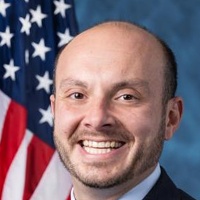
Andrew Garbarino
Representative
NY
Andrew Garbarino
Representative
NY
The 9/11 Responder and Survivor Health Funding Correction Act of 2025 amends the Public Health Service Act to improve the World Trade Center (WTC) Health Program by expanding the types of healthcare providers who can conduct mental health evaluations, modifying provider credentialing, clarifying enrollment calculations, and extending the time frame for adding health conditions for WTC responders. The act adjusts the funding formula for fiscal years 2026 through 2090 and requires the Secretary of Health and Human Services to report to Congress on the program's budget, including projected needs through 2090 and recommendations for changes to the funding formula. It also stipulates that remaining funds in the Supplemental Fund, Special Fund, and Pentagon-Shanksville Fund will revert to the Treasury.
The "Make American Flags in America Act of 2025" mandates that U.S. flags displayed on Federal property or bought by Federal agencies be made entirely in the U.S., and requires a study on country-of-origin labeling enforcement for flags.
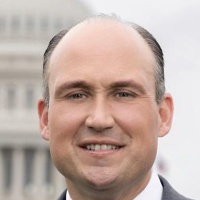
Nicholas Langworthy
Representative
NY
Nicholas Langworthy
Representative
NY
The "Make American Flags in America Act of 2025" mandates that U.S. flags displayed on Federal property or bought by Federal agencies be entirely manufactured in the U.S. using 100% U.S.-made materials, in accordance with international agreements. It also directs the Federal Trade Commission to study and report on country-of-origin labeling enforcement for U.S. flags, aiming to improve enforcement and deter violations.
The Secure Rural Schools Reauthorization Act of 2025 extends federal funding and program authorities for states and counties containing national forest land through 2026.
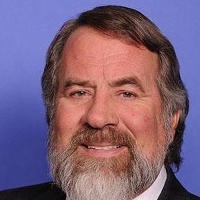
Doug LaMalfa
Representative
CA
Doug LaMalfa
Representative
CA
The Secure Rural Schools Reauthorization Act of 2025 extends critical federal funding for states and counties containing national forest land through 2026. This legislation ensures the continuation of essential community services and maintains the authority for resource advisory committees and local special projects.
This bill authorizes the creation of a Congressional Gold Medal to posthumously honor President Jimmy Carter for his dedicated service to the Nation, to be presented to the Carter Center.
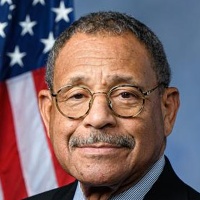
Sanford Bishop
Representative
GA
Sanford Bishop
Representative
GA
The "President Jimmy Carter Congressional Gold Medal Act" authorizes the posthumous presentation of a Congressional Gold Medal to former President Jimmy Carter in recognition of his dedicated service to the Nation. This medal, created by the Secretary of the Treasury, will be given to the Carter Center in Atlanta, Georgia, following the award ceremony. The Act also permits the creation and sale of bronze duplicates of the gold medal to the public and authorizes the United States Mint to use its Public Enterprise Fund to cover the costs of producing the medals.
The "More Homes on the Market Act" increases the tax exclusion for profit from the sale of a primary residence, incentivizing homeowners to sell and increasing housing supply.
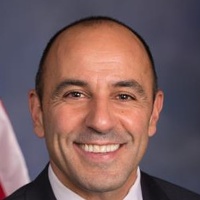
Jimmy Panetta
Representative
CA
Jimmy Panetta
Representative
CA
The "More Homes on the Market Act" increases the tax exclusion for profit from the sale of a primary residence, raising it to $500,000 for single filers and $1,000,000 for married couples filing jointly. These amounts will be adjusted for inflation starting in 2025. This change encourages homeowners to sell their properties, thereby increasing the availability of homes on the market.
The DRIVE Act of 2025 mandates that the VA increase veteran travel reimbursement rates to match the federal employee mileage rate and ensures veterans receive these payments within 90 days of submitting a complete claim.
Julia Brownley
Representative
CA
Julia Brownley
Representative
CA
The DRIVE Act of 2025 ensures that the Department of Veterans Affairs (VA) travel reimbursement rate for veterans' medical appointments will never fall below the standard federal employee mileage rate. This legislation mandates that the VA must process and pay these mileage allowances within 90 days of a veteran submitting a complete request. Essentially, the bill aims to increase equity and speed in compensating veterans for necessary travel to VA healthcare.
The Susan Muffley Act of 2025 ensures full pension benefits for eligible participants and beneficiaries under specific terminated pension plans, recalculating benefits, providing lump-sum payments for past-due amounts, and establishing a trust fund to cover increased benefit payments.
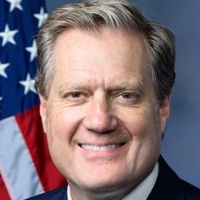
Michael Turner
Representative
OH
Michael Turner
Representative
OH
The Susan Muffley Act of 2025 ensures that eligible participants and beneficiaries under specific pension plans, like the Delphi and PHI retirement programs, receive their full vested benefits. It directs the Pension Benefit Guaranty Corporation (PBGC) to recalculate benefits, provide lump-sum payments for past-due amounts with interest, and establishes a trust fund within the Treasury to cover these increased payments. The act also includes provisions for the tax treatment of lump-sum payments, allowing recipients to spread the income over three years unless they elect otherwise.
The "Ending DOGE Conflicts Act" mandates financial disclosures for special government employees who own or lead companies contracting with the federal government, ensuring transparency and preventing conflicts of interest.
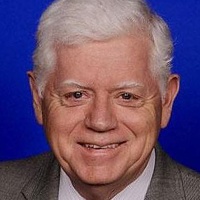
John Larson
Representative
CT
John Larson
Representative
CT
The "Ending DOGE Conflicts Act" mandates that special government employees with financial ties to companies contracting with the federal government must adhere to strict financial disclosure requirements. It requires the Director of the Office of Government Ethics to certify these employees' financial reports and prohibits them from performing official duties until compliance is confirmed.
The I CAN Act removes practice and billing barriers for Nurse Practitioners, CRNAs, and CNMs across Medicare and Medicaid while increasing transparency in federal health program coverage decisions.
David Joyce
Representative
OH
David Joyce
Representative
OH
The "I CAN Act" is comprehensive legislation designed to remove existing practice and billing barriers for various Advanced Practice Registered Nurses (APRNs)—including Nurse Practitioners, CRNAs, and CNMs—within Medicare and Medicaid. It aims to expand patient access to care by allowing these qualified professionals to supervise, order, and bill for services to the full extent of their state-defined scope of practice. Furthermore, the bill enhances transparency and accountability for Medicare's local coverage decisions affecting APRN services. Overall, this act seeks to integrate APRNs more fully into federal healthcare programs, improving efficiency and service delivery.
This resolution expresses Congressional opposition to imposing new performance fees or royalties on local radio stations and businesses for broadcasting or playing music.
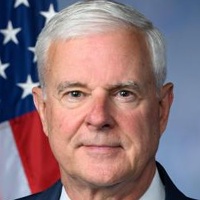
Steve Womack
Representative
AR
Steve Womack
Representative
AR
The Local Radio Freedom Act expresses Congressional opposition to imposing new performance fees, taxes, or royalties on local radio stations and businesses for playing music. It argues that the current system of free airplay provides essential promotional value to artists and that new fees would threaten the financial viability of local broadcasters and the vital community services they provide.
The "Black History Matters Act" directs the National Museum of African American History and Culture to study and report on the state of Black history education in public schools.
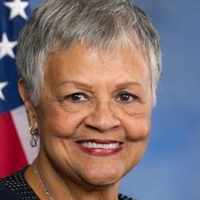
Bonnie Watson Coleman
Representative
NJ
Bonnie Watson Coleman
Representative
NJ
The Black History Matters Act directs the Director of the National Museum of African American History and Culture to study Black history education in public schools. The study will identify which states require Black history education, assess the quality of education, instructional materials, and analyze how schools assess students' knowledge. A report will then be submitted to Congress detailing the findings of the study.
The HEARTS Act of 2025 aims to reduce animal testing by promoting and funding alternative research methods, establishing a National Center for Alternatives, and requiring transparent reporting of animal use in federally funded research.
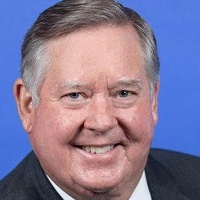
Ken Calvert
Representative
CA
Ken Calvert
Representative
CA
The HEARTS Act of 2025 aims to reduce animal use in research and testing by promoting and funding alternative methods. It mandates the evaluation and utilization of non-animal methods before animal research is approved and establishes a National Center for Alternatives to Animals in Research and Testing within the NIH to develop, promote, and fund these alternatives. The Act also requires federally funded research entities to report on animal use and develop plans to reduce animal numbers in research.
This bill establishes an Office of Gun Violence Prevention within the Department of Justice to coordinate gun violence prevention efforts, evaluate related programs and policies, recommend evidence-based strategies, and assist communities affected by gun violence.
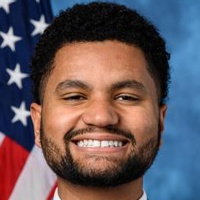
Maxwell Frost
Representative
FL
Maxwell Frost
Representative
FL
The "Office of Gun Violence Prevention Act of 2025" establishes an Office of Gun Violence Prevention within the Department of Justice, led by a Director appointed by the Attorney General, to coordinate gun violence prevention efforts, evaluate related laws and programs, and recommend evidence-based policies to Congress and the President. The Director will also convene an advisory council comprising various officials and at least 12 additional individuals representing gun violence survivors, community violence intervention service providers, and other relevant groups. The Office will also assist communities affected by gun violence with crisis response activities, such as providing access to mental health services and suicide prevention resources. Finally, the act authorizes the appropriation of necessary funds to carry out the provisions of the bill.
This proposed constitutional amendment establishes that constitutional rights apply only to natural persons and grants governments the authority to regulate political spending to ensure fair democratic participation.
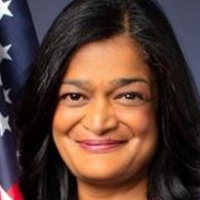
Pramila Jayapal
Representative
WA
Pramila Jayapal
Representative
WA
This proposed constitutional amendment establishes that constitutional rights belong exclusively to natural persons, not artificial entities like corporations. It further empowers governments to regulate campaign contributions and expenditures to ensure fair political participation, explicitly stating that spending money to influence elections is not protected as free speech. Finally, the amendment includes a specific provision to ensure these changes do not restrict the freedom of the press.
The "All Access Act of 2025" grants Members of Congress access to any public building during regular hours with their official ID and requires advance notice for access outside of those hours.
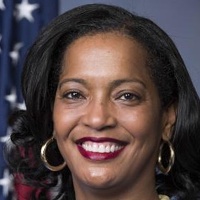
Jahana Hayes
Representative
CT
Jahana Hayes
Representative
CT
The "All Access Act of 2025" ensures Members of Congress can access any public building during regular hours by showing their official ID. Access outside of normal business hours requires a 12-hour advance notice to the building head. This act defines "Member of Congress" as a Representative or Senator.
The Honoring Our Fallen Heroes Act of 2025 expands public safety officer benefits to include disability and death coverage for certain cancers presumed to be caused by on-duty exposure to carcinogens, and clarifies "line of duty" definitions for first responder benefits.
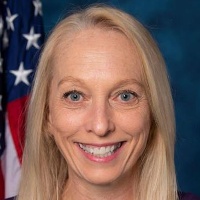
Mary Scanlon
Representative
PA
Mary Scanlon
Representative
PA
The Honoring Our Fallen Heroes Act of 2025 expands public safety officer benefits to include deaths and disabilities caused by exposure-related cancers, presuming that certain cancers diagnosed within 15 years of service are line-of-duty injuries if the officer served for at least 5 years. It defines "exposure-related cancer" and allows for updates to the list based on medical evidence, while also permitting individuals to petition for additions. The Act also clarifies "line of duty action" and applies retroactively to claims dating back to January 1, 2020, with a three-year window for filing claims based on these amendments.
This bill provides additional funding for scholarships to students at 1890 institutions, including both bachelor's and graduate programs, with mandatory funding starting in 2025.
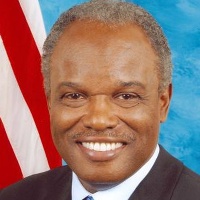
David Scott
Representative
GA
David Scott
Representative
GA
This bill amends the National Agricultural Research, Extension, and Teaching Policy Act of 1977 to expand scholarship opportunities at 1890 institutions to both bachelor's and graduate students. It provides mandatory funding of $15 million per fiscal year, starting in 2025, through the Commodity Credit Corporation, and makes discretionary funding available from fiscal year 2020 onward. The scholarships will be available each academic year that funding is available.