Legislative Activity
Track Jill's sponsored bills, co-sponsored legislation, and voting record
This resolution expresses the House's sense that paraprofessionals and education support staff deserve fair compensation, benefits, job security, and safe working conditions.
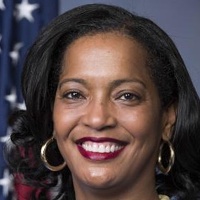
Jahana Hayes
Representative
CT
Jahana Hayes
Representative
CT
This resolution expresses the sense of the House of Representatives that paraprofessionals and education support staff deserve fair compensation, comprehensive benefits, and improved working conditions. It highlights the critical role these essential workers play in supporting millions of students nationwide. Ultimately, the bill calls for livable wages, job security, safe workplaces, and meaningful input into school policies for these staff members.
The Impact Aid Infrastructure Partnership Act establishes federal and local partnerships to provide formula and competitive grants for urgently needed facility repairs and modernization in federally impacted school districts.

John Garamendi
Representative
CA
John Garamendi
Representative
CA
The Impact Aid Infrastructure Partnership Act establishes a four-year, \$250 million federal partnership to address critical facility needs in school districts heavily impacted by federal land. This bill creates competitive and formula grants prioritized by facility condition and local financial capacity, aiming to repair or modernize aging and unsafe school buildings. Funds are designed to supplement local efforts, with specific rules governing matching requirements and payment schedules based on a district's ability to borrow money.
This Act overhauls federal firearm dealer regulations by mandating enhanced physical security, stricter inventory tracking, increased licensing fees, and new oversight for online firearm facilitators.
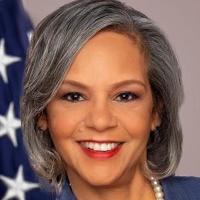
Robin Kelly
Representative
IL
Robin Kelly
Representative
IL
The Federal Firearm Licensee Act significantly overhauls federal regulation of gun dealers by mandating enhanced physical security, stricter inventory tracking, and increased record-keeping requirements. The bill repeals outdated restrictions on the ATF, increases licensing fees, and establishes new regulations for online firearm transfer facilitators. Furthermore, it strengthens enforcement by increasing penalties for compliance failures and mandating more frequent inspections for high-risk dealers.
The American Innovation Act authorizes significant, inflation-adjusted funding increases through 2036 for key federal science and innovation agencies, exempting these appropriations from sequestration.
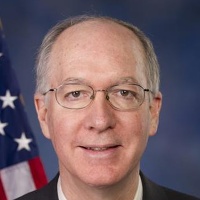
Bill Foster
Representative
IL
Bill Foster
Representative
IL
The American Innovation Act establishes significant, multi-year funding authorizations through fiscal year 2036 for key federal science and innovation agencies, including the NSF, DOE Office of Science, DoD, NIST, and NASA. These appropriations are protected from future budget sequestration and are set to automatically adjust for inflation starting in fiscal year 2036. The bill ensures these dedicated innovation funds remain available until expended.
The IDEA Full Funding Act establishes mandatory, increasing funding levels for the Individuals with Disabilities Education Act (IDEA) from 2026 through 2035, contingent upon offsetting budget cuts.
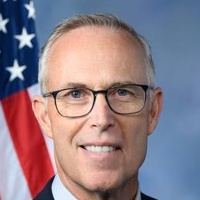
Jared Huffman
Representative
CA
Jared Huffman
Representative
CA
The IDEA Full Funding Act establishes mandatory, increasing funding levels for the Individuals with Disabilities Education Act (IDEA) programs through fiscal year 2035. This legislation sets specific appropriation targets based on student counts and national average spending to ensure greater financial support for special education services. Furthermore, the bill requires that these new IDEA appropriations adhere to "cut-as-you-go" budget offset rules.
This Act prohibits the State Department from implementing any reorganization without specific statutory authorization from Congress and the submission of a detailed plan outlining the impact of the changes.

Sydney Kamlager-Dove
Representative
CA
Sydney Kamlager-Dove
Representative
CA
The Defending American Diplomacy Act prohibits the Secretary of State from implementing any reorganization of the State Department without specific statutory authorization from Congress and the submission of a detailed plan. This plan must thoroughly analyze the impact on foreign policy goals, operations, and personnel. If the Secretary proceeds without authorization, specific funding restrictions against the Department of Government Efficiency and official travel for high-level appointees will take effect.
This Act establishes the New Producer Economic Security Program to fund community-led projects that provide land, capital, and market access to new and disadvantaged farmers, ranchers, and forest owners.
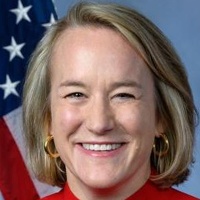
Nicole (Nikki) Budzinski
Representative
IL
Nicole (Nikki) Budzinski
Representative
IL
The New Producer Economic Security Act establishes a new federal program to fund community-led projects that help new and disadvantaged farmers, ranchers, and forest owners gain access to land, capital, and markets. Run by the USDA's Farm Service Agency, the initiative aims to ensure the long-term economic viability and security of these producers. Eligible entities will apply for grants to provide direct assistance, technical support, and financial tools to qualified beneficiaries. Priority will be given to projects that offer direct financial aid, support land affordability, and involve strong local partnerships.
This bill prohibits the use of federal funds for the removal of 3 percent or more of the Department of Health and Human Services (HHS) employees or any of its sub-agencies within any 60-day period.
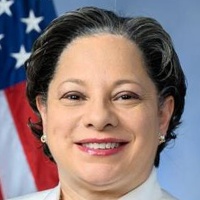
Jennifer McClellan
Representative
VA
Jennifer McClellan
Representative
VA
This bill restricts the use of federal funds to carry out large-scale removals of employees within the Department of Health and Human Services (HHS). Specifically, it prohibits using federal money for terminations if 3% or more of the total HHS workforce, or 3% or more of any individual sub-agency's staff, are removed within a 60-day period. This measure aims to prevent sudden, mass layoffs across the department and its major divisions.
This Act mandates the Department of Labor to establish and enforce comprehensive workplace violence prevention standards for healthcare and social service workers, while also tying compliance to Medicare funding for certain facilities.
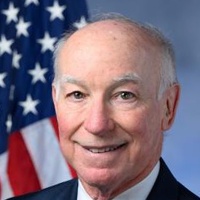
Joe Courtney
Representative
CT
Joe Courtney
Representative
CT
This Act mandates the Secretary of Labor to establish an interim and then a final standard requiring comprehensive workplace violence prevention plans for employers in the healthcare and social service sectors. These plans must be developed with employee input and detail risk assessments, hazard controls, reporting procedures, and annual training. Furthermore, the bill amends the Social Security Act to require Medicare-funded hospitals and skilled nursing facilities not covered by OSHA to comply with these new federal workplace violence prevention standards. The legislation also establishes clear definitions for workplace violence and includes strong anti-retaliation protections for employees who exercise their rights under the Act.
This bill reauthorizes funding for lifespan respite care through fiscal year 2029 and updates the definition of a family caregiver.
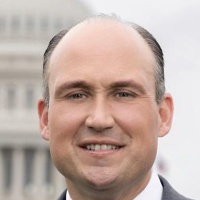
Nicholas Langworthy
Representative
NY
Nicholas Langworthy
Representative
NY
The Lifespan Respite Care Reauthorization Act of 2025 updates the definition of a family caregiver to include any unpaid individual providing care. Crucially, this bill extends the federal funding authorization for lifespan respite care programs through fiscal years 2025 through 2029. This ensures continued support for caregivers needing temporary relief.
This Act imposes sweeping, mandatory sanctions, tariffs, and investment prohibitions on the Russian Federation and its affiliates until Russia negotiates a lasting peace with Ukraine.
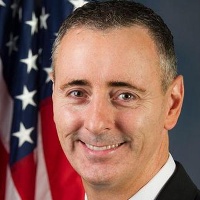
Brian Fitzpatrick
Representative
PA
Brian Fitzpatrick
Representative
PA
The Sanctioning Russia Act of 2025 imposes sweeping economic penalties on the Russian Federation in response to its aggression against Ukraine. This legislation mandates severe, immediate sanctions against key Russian officials, financial institutions, and energy sector entities, including asset freezes and trade prohibitions. Furthermore, the Act dramatically increases import duties on Russian goods and requires the President to review and reimpose these measures until Russia negotiates a lasting peace with Ukraine.
The Taiwan Allies Fund Act establishes a fund to provide financial assistance to nations facing pressure from the PRC for maintaining ties with Taiwan, while also encouraging deeper U.S. support for Taiwan's international presence.
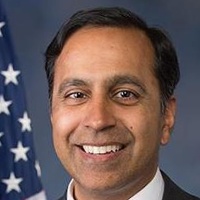
Raja Krishnamoorthi
Representative
IL
Raja Krishnamoorthi
Representative
IL
The Taiwan Allies Fund Act establishes a dedicated fund to support countries that maintain relationships with Taiwan despite pressure from the People's Republic of China (PRC). This fund authorizes up to $40 million annually for fiscal years 2026 through 2028 to help eligible nations counter PRC coercion. Aid will focus on strengthening democratic partnerships, supporting Taiwan's international participation, and offering alternatives to PRC economic influence. The Secretary of State will manage the fund, coordinating with Taiwan, and must report annually to Congress on the fund's activities and Taiwan's matching contributions.
The Reentry Act of 2025 allows inmates to receive Medicaid assistance during the 30 days preceding their release and mandates a comprehensive report on healthcare standards within correctional facilities.
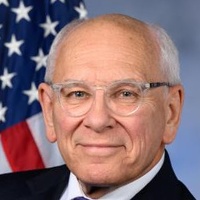
Paul Tonko
Representative
NY
Paul Tonko
Representative
NY
The Reentry Act of 2025 allows incarcerated individuals to receive medical assistance through Medicaid during the 30 days immediately preceding their release. This legislation also mandates a comprehensive report from MACPAC analyzing current healthcare standards within correctional facilities. The report will examine the impact of this coverage change and offer recommendations for improving healthcare access for those transitioning back into the community.
The Servicemembers and Veterans Empowerment and Support Act of 2025 aims to modernize support for MST survivors by studying digital trauma, streamlining disability claims with flexible evidence, and expanding access to sensitive health care for all components of the military.

Chellie Pingree
Representative
ME
Chellie Pingree
Representative
ME
The Servicemembers and Veterans Empowerment and Support Act of 2025 aims to significantly improve support and benefits for those who have experienced military sexual trauma (MST). The bill mandates a review of coverage for technology-related trauma and overhauls the disability claims process to be more sensitive and evidence-flexible. Furthermore, it expands access to VA health care for MST survivors, including those in reserve components, and ensures timely communication of available support services upon filing a claim.
The Hot Foods Act of 2025 lifts the general ban on purchasing ready-to-eat hot foods with SNAP benefits while imposing a sales cap on retailers that primarily sell such items.

Grace Meng
Representative
NY
Grace Meng
Representative
NY
The Hot Foods Act of 2025 removes the general federal ban on using Supplemental Nutrition Assistance Program (SNAP) benefits to purchase hot, ready-to-eat foods. This legislation clarifies that hot foods are now eligible for purchase with SNAP benefits, while also setting a new rule that limits SNAP-participating retailers to deriving no more than 50% of their gross sales from these ready-to-eat hot items. The act updates existing statutes to reflect this expanded purchasing power for recipients.
The Abortion Care Awareness Act of 2025 mandates a national public health campaign by HHS to educate the public on accessing abortion care, understanding related rights, and identifying misinformation.

Jasmine Crockett
Representative
TX
Jasmine Crockett
Representative
TX
The Abortion Care Awareness Act of 2025 mandates the creation of a national public health campaign by the Secretary of HHS to educate the public on accessing abortion and related health services legally and safely. This campaign must provide medically accurate information on care options, including telehealth and medication abortion, while also teaching people how to recognize disinformation and protect their health data. The effort must be culturally competent and accessible to underserved communities, explicitly prohibiting the promotion of misinformation or abstinence-only programs.
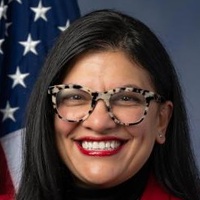
This joint resolution seeks to disapprove and block a proposed foreign military sale to Israel involving 1,000-pound bomb bodies and associated JDAM guidance kits.
Rashida Tlaib
Representative
MI
Rashida Tlaib
Representative
MI
This joint resolution seeks to disapprove and halt a specific proposed foreign military sale of defense articles and services to Israel. The blocked sale includes various 1,000-pound bomb bodies and associated Joint Direct Attack Munition (JDAM) guidance kits. This action uses congressional authority to stop the transfer outlined in Transmittal No. 2526.
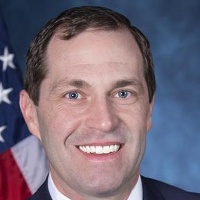
This act repeals the restriction on the IRS's use of funds to bring transparency to the political activity of certain nonprofit organizations for fiscal year 2025.
Jason Crow
Representative
CO
Jason Crow
Representative
CO
The End Dark Money Act repeals the restriction preventing the Internal Revenue Service (IRS) from using funds to bring transparency to the political activities of certain nonprofit organizations for Fiscal Year 2025. This action effectively removes limitations placed on the IRS regarding oversight of nonprofit political spending for that year.
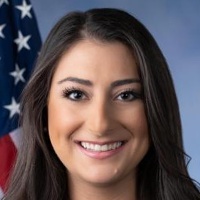
This resolution formally recognizes and supports the goals and ideals of the International Transgender Day of Visibility to honor the achievements and acknowledge the ongoing struggles of the transgender community.
Sara Jacobs
Representative
CA
Sara Jacobs
Representative
CA
This resolution formally recognizes and celebrates the International Transgender Day of Visibility. Congress acknowledges the achievements of transgender individuals while highlighting the ongoing discrimination and violence they face. The resolution encourages appropriate ceremonies and activities to observe the day and celebrate the community's leadership and fight for equality.
This bill expands eligibility for loans and financial services from Farm Credit Banks and Production Credit Associations to businesses that directly support the operating needs of aquatic product producers and harvesters.
Chellie Pingree
Representative
ME
Chellie Pingree
Representative
ME
The Fishing Industry Credit Enhancement Act of 2025 expands access to credit and financial services from Farm Credit Banks and Production Credit Associations. This legislation specifically allows these entities to offer loans to businesses that provide essential services directly supporting the operations of aquatic product producers and harvesters. The bill amends the Farm Credit Act of 1971 to include these vital support industries.