Legislative Activity
Track Rashida's sponsored bills, co-sponsored legislation, and voting record
This Act establishes and protects the right of tenants in federally assisted housing to organize, communicate concerns, and receive support for their participation in housing matters.
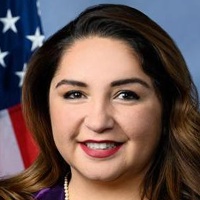
Delia Ramirez
Representative
IL
Delia Ramirez
Representative
IL
The Tenants’ Right to Organize Act establishes and protects the right of tenants receiving federal rental assistance, including Section 8 voucher holders and those in LIHTC projects, to form and participate in tenant organizations without fear of retaliation. The bill mandates that Public Housing Agencies and property owners must recognize these legitimate groups, consider their concerns, and respond to their feedback. Furthermore, it creates new enforcement mechanisms, allows tenants to sue for violations, and establishes funding for technical assistance and training for tenant groups.
This bill limits the Medicare coinsurance amount for certain ambulatory surgical center services to the annual inpatient hospital deductible, effective January 1, 2026.
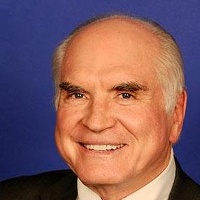
Mike Kelly
Representative
PA
Mike Kelly
Representative
PA
This bill amends Medicare rules to cap the out-of-pocket coinsurance amount beneficiaries must pay for certain services provided in an Ambulatory Surgical Center (ASC). If the standard ASC coinsurance exceeds the annual inpatient hospital deductible, the beneficiary's cost will be limited to that deductible amount. The Secretary will cover the difference owed to the ASC.
This bill limits the Social Security Administration's recovery of benefit overpayments to a maximum of 10 percent of a monthly benefit unless the recipient agrees to a higher withholding rate.
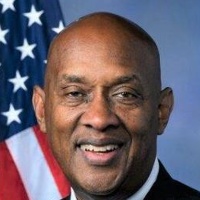
Dwight Evans
Representative
PA
Dwight Evans
Representative
PA
This bill amends the Social Security Act to limit the amount the Social Security Administration can withhold from a person's monthly benefit to recover an overpayment. Unless the individual agrees to a higher rate, the SSA can withhold no more than 10 percent of a monthly benefit payment to recoup accidental overpayments. This new limit applies to existing and future unrecovered overpayments under Title II benefits.
This Act establishes a dedicated position within the SBA to advise small businesses on setting up and maintaining Employee Stock Ownership Plans (ESOPs) and requires annual reporting to Congress on its activities.
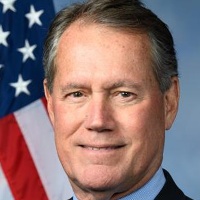
Ed Case
Representative
HI
Ed Case
Representative
HI
This bill establishes a new dedicated position within the Small Business Administration (SBA) to exclusively assist small businesses in setting up and navigating Employee Stock Ownership Plans (ESOPs). This expert will provide guidance on compliance, valuation, and resource connection for businesses interested in employee ownership. The Act also mandates annual reporting to Congress detailing the assistance provided and offering recommendations for improving the ESOP process. Funding is authorized as necessary, with a specific initial appropriation of $500,000 for the first fiscal year.
This resolution officially designates April 2025 as Community College Month to recognize the vital role over 1,000 community colleges play in providing accessible education, workforce training, and economic prosperity across the United States.
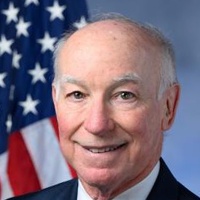
Joe Courtney
Representative
CT
Joe Courtney
Representative
CT
This resolution officially designates April 2025 as "Community College Month" to celebrate the vital role of over 1,000 community colleges nationwide. It recognizes these institutions for providing accessible, affordable higher education and critical workforce training. The bill highlights their significant economic contributions and commitment to local community needs.
This resolution expresses support for honoring Earth Day, recognizes past environmental achievements, warns against undermining current climate laws, and urges the President to issue a proclamation encouraging environmental action.

Doris Matsui
Representative
CA
Doris Matsui
Representative
CA
This resolution expresses strong support for honoring Earth Day and recognizes its historical importance in launching the modern environmental movement. It highlights ongoing challenges like climate change while celebrating recent landmark investments in clean energy and infrastructure. Ultimately, the bill urges the President to issue a proclamation recognizing Earth Day and encourages all Americans to take sustained action to protect the environment for future generations.
The Deafblind DATA Act mandates the Census Bureau to cross-reference existing survey data to produce annual, state-level demographic and economic statistics on the U.S. deafblind population.
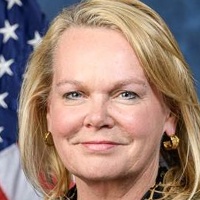
April McClain Delaney
Representative
MD
April McClain Delaney
Representative
MD
The Deafblind DATA Act aims to establish a more accurate count of Americans who are deafblind by directing the Census Bureau to cross-reference existing survey data. This new law mandates the annual publication of a public table detailing the demographic and economic characteristics of the deafblind population by state, starting in 2026. The goal is to provide essential data to ensure these individuals receive necessary support and resources.
This Act funds state systems to track real-time hospital bed capacity affecting emergency department wait times and mandates CMMI pilot programs to improve emergency care for older adults and those in psychiatric crisis.
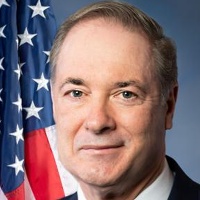
John Joyce
Representative
PA
John Joyce
Representative
PA
The ABC-ED Act of 2025 aims to alleviate emergency department boarding and crowding by modernizing public health data systems to track real-time hospital bed capacity. It also directs the Center for Medicare and Medicaid Innovation to pilot programs specifically improving emergency care for older adults and those in acute psychiatric crisis. Finally, the bill mandates a study on best practices for statewide, real-time capacity tracking systems and their impact on ER wait times.
The All-Americans Tax Relief Act of 2025 significantly revises the tax code by expanding credits, introducing new deductions for childcare, commuting, and tutoring, allowing non-itemizers to deduct medical expenses, excluding credit card interest and debt forgiveness from income, while simultaneously increasing the top capital gains tax rate, with most provisions taking effect after 2026.

Sheila Cherfilus-McCormick
Representative
FL
Sheila Cherfilus-McCormick
Representative
FL
The All-Americans Tax Relief Act of 2025 introduces sweeping changes to the federal tax code, primarily focused on providing financial relief to families and individuals. Key provisions include expanding the Earned Income Tax Credit and making the Child Tax Credit fully refundable. The Act also creates several new above-the-line deductions for expenses like daycare, tutoring, and credit card interest, while expanding the medical expense deduction to non-itemizers. These significant tax adjustments are generally scheduled to take effect for tax years beginning after December 31, 2026.
The STRONG Support for Children Act of 2025 establishes federal grant programs to fund data-driven strategies for preventing childhood trauma and to support trauma-informed care coordination for at-risk young children and their families.
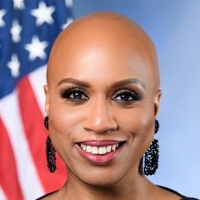
Ayanna Pressley
Representative
MA
Ayanna Pressley
Representative
MA
The STRONG Support for Children Act of 2025 establishes two new federal grant programs aimed at preventing and mitigating childhood trauma. The first program funds data-driven strategies to identify high-risk neighborhoods and implement community-based interventions for children aged 0-17. The second program provides Care Coordination Grants specifically for young children (0-5) and their caregivers to connect them with trauma-informed support services. Both initiatives emphasize using culturally responsive, strength-based approaches while strictly prohibiting the use of funds for individual case decisions or increased law enforcement surveillance.
This Act establishes a federal grant program for states, local governments, and eligible dealers to conduct gun buybacks using restricted smart prepaid cards, and criminalizes the use of those cards for firearm or ammunition purchases.

LaMonica McIver
Representative
NJ
LaMonica McIver
Representative
NJ
The Safer Neighborhoods Gun Buyback Act of 2025 establishes a federal grant program administered by the Bureau of Justice Assistance to fund state, local, and tribal governments, as well as eligible gun dealers, to conduct local gun buyback events. These buybacks must utilize specially designed "smart prepaid cards" that are technologically barred from purchasing firearms or ammunition. The bill also creates a new federal crime with significant penalties for anyone using or accepting these specific prepaid cards to illegally acquire or transfer a firearm or ammunition.
This resolution supports designating Black Maternal Health Week to highlight the urgent need to address the severe and preventable maternal health crisis disproportionately affecting Black women and birthing people in the United States.
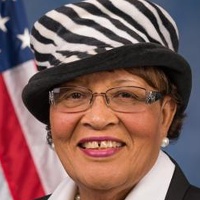
Alma Adams
Representative
NC
Alma Adams
Representative
NC
This resolution officially designates the week of April 11–17, 2025, as the eighth annual Black Maternal Health Week to raise national awareness of the severe maternal and reproductive health crisis facing Black women and birthing people. It highlights the unacceptable disparity where Black women are significantly more likely to die from pregnancy-related causes, emphasizing that most of these deaths are preventable. The bill calls for targeted investments, policy changes addressing systemic barriers, and the centering of Black women's voices in developing solutions to achieve equitable maternal health outcomes.
The Oligarch Act of 2025 establishes a new federal wealth tax on individuals and trusts based on their net worth above an annually adjusted threshold, with rates ranging from 2% to 8%.
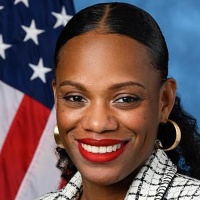
Summer Lee
Representative
PA
Summer Lee
Representative
PA
The Oligarch Act of 2025 establishes a new federal Wealth Tax applied annually to the net worth of high-net-worth individuals and trusts. This tax features progressive rates ranging from 2% to 8% based on the taxpayer's net worth relative to a dynamic threshold amount. The legislation mandates rigorous valuation rules and includes specific enforcement mechanisms, such as required audits and enhanced penalties for significant asset undervaluation.
The Vote at Home Act of 2025 mandates that states mail federal election ballots to all registered voters two weeks before the election, provides free postage for these ballots, and establishes automatic voter registration through motor vehicle departments.
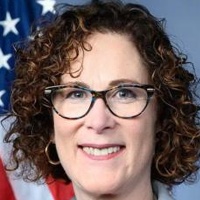
Valerie Hoyle
Representative
OR
Valerie Hoyle
Representative
OR
The Vote at Home Act of 2025 aims to expand access to federal elections by mandating that states mail ballots to all registered voters two weeks before election day and provide free return postage. It also modernizes voter registration by requiring motor vehicle departments to streamline registration forms and automatically register eligible citizens who provide proof of citizenship when obtaining or renewing a driver's license. These provisions are intended to increase voter turnout, reduce in-person lines, and lower administrative costs.
This Act mandates that federal agencies must adhere to specific employment classification standards and report immediately if they cannot meet required staffing levels.
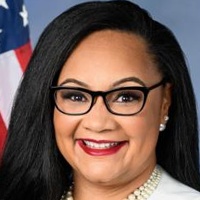
Nikema Williams
Representative
GA
Nikema Williams
Representative
GA
The Ensuring Agency Service Quality Act mandates that all Executive agencies and military departments must adhere strictly to federal job classification standards when hiring personnel. If an agency cannot meet its required staffing levels under these new rules, the agency head must promptly notify relevant Congressional committees within seven days with a detailed explanation. This legislation aims to standardize and enforce federal employment structures across key government bodies.
The SERVICE Act requires federal agencies to submit detailed reports to the GAO and Congress before implementing workforce reductions exceeding 5% and mandates a GAO review of those reports' completeness and credibility.
Nikema Williams
Representative
GA
Nikema Williams
Representative
GA
The SERVICE Act mandates that federal agencies must undergo a thorough review process before implementing significant workforce reductions. Agencies planning to cut staff by more than 5% must first submit a detailed report to the GAO analyzing the financial and mission impacts of the proposed layoffs. The GAO then reviews this report to ensure the analysis is complete and credible before the agency can proceed with the cuts after a mandatory waiting period.
The SEER Act of 2025 tightens ethics rules, increases financial transparency, and restricts conflicts of interest for "special Government employees," particularly those with significant outside financial ties.
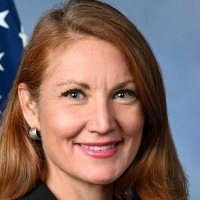
Melanie Stansbury
Representative
NM
Melanie Stansbury
Representative
NM
The SEER Act of 2025 aims to strengthen ethics enforcement by tightening conflict-of-interest rules for "special Government employees"—part-time or temporary federal workers. The bill mandates increased public transparency regarding these employees' financial disclosures and creates a public database tracking their service days. Furthermore, it restricts communications between certain high-impact special employees and agencies dealing with large companies in which they hold financial interests.
This act codifies Executive Order 13989 into federal law, making its directives permanent statutory requirements.
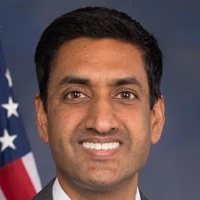
Ro Khanna
Representative
CA
Ro Khanna
Representative
CA
The Drain the Swamp Act officially codifies Executive Order 13989 into federal statute. This action elevates the directives and requirements of the Executive Order to the full force and effect of law passed by Congress. The bill essentially locks in the established rules, making them permanent federal law.
This Act establishes an Advisory Council to survey needs, identify best practices, and disseminate comprehensive resources for victims of all forms of gun violence.
Dwight Evans
Representative
PA
Dwight Evans
Representative
PA
The Resources for Victims of Gun Violence Act of 2025 establishes an Advisory Council, led by HHS, to assess the needs of gun violence victims and service providers. This Council will survey stakeholders, review existing support programs, and identify best practices for medical, financial, and mental health assistance. Its primary function is to compile and widely distribute a comprehensive list of available federal, state, and nonprofit resources to ensure victims can easily access necessary aid.
This Act improves early childhood nutrition programs by revising eligibility certification for proprietary centers, streamlining serious deficiency reviews, adjusting meal reimbursement limits, updating inflation calculations, and establishing an advisory committee to reduce paperwork burdens.
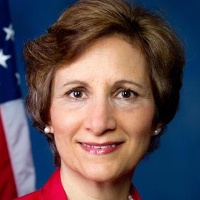
Suzanne Bonamici
Representative
OR
Suzanne Bonamici
Representative
OR
The Early Childhood Nutrition Improvement Act aims to strengthen federal nutrition programs for children by clarifying eligibility rules for for-profit childcare centers and mandating a comprehensive review of serious deficiency processes to ensure fairness and reduce unnecessary state-level burdens. The bill also adjusts meal reimbursement limits, updates inflation tracking for program costs, and establishes an advisory committee to drastically reduce paperwork and modernize administrative requirements for providers. These changes seek to streamline operations, improve consistency, and better support child care providers participating in federal meal programs.