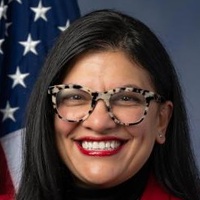
Legislative Activity
Track Rashida's sponsored bills, co-sponsored legislation, and voting record
This Act posthumously awards a Congressional Gold Medal to pioneering, barrier-breaking cyclist Marshall "Major" Taylor and authorizes the sale of duplicate bronze medals.
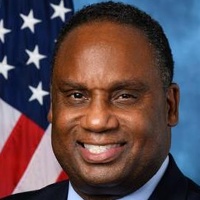
Jonathan Jackson
Representative
IL
Jonathan Jackson
Representative
IL
This bill posthumously awards a Congressional Gold Medal to Marshall "Major" Taylor, recognizing the pioneering Black cyclist for his historic achievements and his fight against racial prejudice. The medal will be struck by the Secretary of the Treasury and presented to Taylor's great-granddaughter. The Act also authorizes the sale of bronze duplicates to cover production costs.
This resolution reaffirms the importance of U.S. leadership in promoting the safety and well-being of refugees globally while criticizing recent administrative actions that restricted refugee admissions and asylum access.
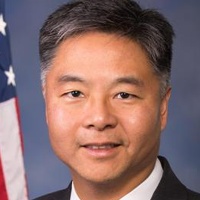
Ted Lieu
Representative
CA
Ted Lieu
Representative
CA
This resolution strongly reaffirms the United States' commitment to promoting the safety and well-being of refugees globally. It criticizes recent administrative actions that suspended refugee admissions and travel bans, arguing they violate U.S. and international law. The bill calls for the immediate restoration of the U.S. Refugee Admissions Program and demands federal agencies uphold due process for asylum seekers. Ultimately, it asserts that welcoming oppressed people is central to American values and legal obligations.
The Wall Street Tax Act of 2025 establishes a gradually increasing federal transaction tax on specific financial securities and derivatives traded on U.S. exchanges or involving U.S. persons, effective after December 31, 2025.
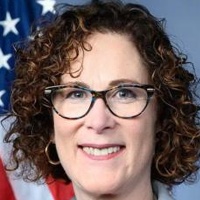
Valerie Hoyle
Representative
OR
Valerie Hoyle
Representative
OR
The Wall Street Tax Act of 2025 establishes a new federal tax on specific financial trading transactions involving securities and derivatives. This transaction tax begins at a rate of 0.02 percent in 2026 and gradually increases to 0.1 percent by 2030. The tax generally applies to trades executed on U.S. exchanges or those involving a U.S. person, excluding initial security offerings.
This resolution expresses Congressional support for designating June 2025 as "Black Music Month" to recognize the profound cultural impact and historical significance of music created by Black Americans.
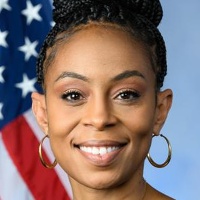
Shontel Brown
Representative
OH
Shontel Brown
Representative
OH
This resolution formally expresses Congressional support for designating June 2025 as "Black Music Month." It recognizes the profound and foundational cultural impact of Black artists across all American music genres, from spirituals to hip-hop. The bill encourages the nation to actively celebrate this rich heritage through educational programs and public acknowledgment. Ultimately, it honors the creators whose work reflects the American experience and promotes diversity through music.
The PHARA Act of 2025 mandates the immediate release of existing NIH grant funding, requires termination clauses in future agreements, and prohibits the NIH from ending funding solely due to shifting agency priorities.
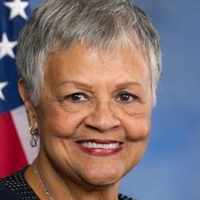
Bonnie Watson Coleman
Representative
NJ
Bonnie Watson Coleman
Representative
NJ
The PHARA Act of 2025 mandates the immediate release of all existing National Institutes of Health (NIH) grant funding and prohibits the cancellation of active research agreements. Moving forward, all new NIH grant agreements must include specific termination clauses requiring a 90-day notice and good-faith negotiation before ending the funding. Furthermore, this Act explicitly prevents the NIH from terminating agreements solely because the research no longer aligns with current agency goals or priorities.
This act mandates that public employees perform construction inspection services for certain federally funded highway projects, allowing temporary consultant use only when public staff shortages are documented and reported.

John Garamendi
Representative
CA
John Garamendi
Representative
CA
The Public Inspectors for Safe Infrastructure Act mandates that state and local agencies generally use their own public employees to perform construction inspection services for federally funded highway projects. Agencies may only use outside consultants for these critical inspection duties for a maximum of 12 months if they face documented staff shortages. Any use of this exception requires annual public reporting detailing the necessity for hiring external inspectors.
This bill establishes a comprehensive "Domestic Workers Bill of Rights" to extend federal labor protections, including overtime, paid sick leave, and anti-discrimination coverage, to domestic employees while creating a standards board to advise on future working conditions.
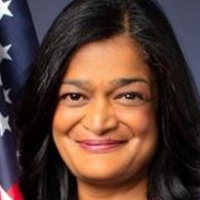
Pramila Jayapal
Representative
WA
Pramila Jayapal
Representative
WA
The Domestic Workers Bill of Rights Act seeks to significantly expand labor protections for domestic employees by bringing them under standard federal laws, including eligibility for overtime pay and mandated paid sick leave. The bill establishes written employment agreements, sets clear privacy boundaries for workers in private homes, and creates a Standards Board to recommend ongoing improvements to wages and benefits. Furthermore, it establishes enforcement mechanisms and temporarily increases federal Medicaid funding for in-home care services to help offset compliance costs.
This resolution expresses support for recognizing Father's Day on June 15, 2025, while urging Congress to support policies that strengthen fathers' roles in families.
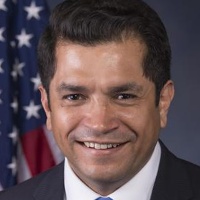
Jimmy Gomez
Representative
CA
Jimmy Gomez
Representative
CA
This resolution expresses strong support for recognizing the vital role fathers play in the well-being of children and communities across the United States. It highlights the positive impact of involved fathers and urges Congress to support policies like paid family leave and affordable childcare. Finally, the resolution officially designates Sunday, June 15, 2025, as Father's Day.
This act ensures that time spent receiving outpatient observation services in a hospital counts toward the required 3-day inpatient stay for Medicare coverage of skilled nursing facility services.
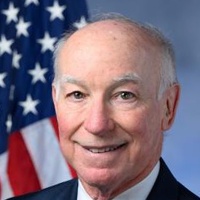
Joe Courtney
Representative
CT
Joe Courtney
Representative
CT
The Improving Access to Medicare Coverage Act of 2025 ensures that time spent receiving outpatient observation services in a hospital counts toward the required 3-day inpatient stay needed to qualify for Medicare coverage of skilled nursing facility (SNF) services. This change effectively removes a significant barrier to accessing post-hospital care for many Medicare beneficiaries. The Secretary of HHS is authorized to implement this rule immediately.
This resolution urges the establishment of a United States Commission on Truth, Racial Healing, and Transformation to acknowledge historical racial injustices and promote national healing and equity.

Jasmine Crockett
Representative
TX
Jasmine Crockett
Representative
TX
This resolution urges the establishment of a United States Commission on Truth, Racial Healing, and Transformation to formally acknowledge the nation's history of systemic racial injustice. The proposed commission would memorialize this history and serve as a catalyst for eliminating persistent racial inequities. It is intended to complement, not replace, efforts focused on reparations.
This Act establishes a comprehensive, federally funded grant program to support evidence-based violence prevention and trauma-informed support for high-risk youth in schools located in high-violence communities.
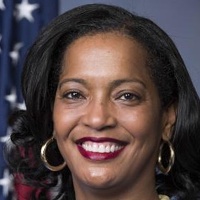
Jahana Hayes
Representative
CT
Jahana Hayes
Representative
CT
The School Violence Prevention Act establishes a new, comprehensive grant program to fund evidence-based violence prevention initiatives in high-risk communities. These grants will support partnerships between schools and community organizations to implement trauma-informed programs focused on youth development, social skills, and connecting students with mental health resources. The bill mandates rigorous evaluation of these programs to measure their impact on student success and overall community safety.
This resolution commemorates the nine-year anniversary of the Pulse nightclub shooting, honoring the victims, first responders, and the community's resilience while urging continued action on gun safety.
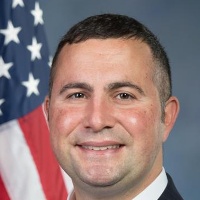
Darren Soto
Representative
FL
Darren Soto
Representative
FL
This resolution formally commemorates the ninth anniversary of the tragic Pulse nightclub shooting in Orlando, Florida, on June 12, 2016. It honors the lives lost, recognizes the bravery of first responders, and reaffirms community unity in the face of hate. Furthermore, the resolution calls for continued efforts to reduce gun violence and support those affected by this act of terrorism.
This Act allows disaster victims to elect to use their higher earned income and Social Security tax payments from the preceding year when calculating certain federal tax credits.
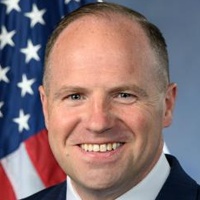
Timothy Kennedy
Representative
NY
Timothy Kennedy
Representative
NY
The Tax Fairness for Disaster Victims Act allows individuals affected by a federally declared disaster to elect to use their prior year's earned income or Social Security tax payments when calculating certain tax credits, such as the Earned Income Tax Credit. This "lookback rule" applies if their income or tax payments were lower during the disaster year. The provision aims to provide financial relief by ensuring disaster victims are not penalized when determining eligibility for these credits.
This bill repeals the Caesar Syria Civilian Protection Act of 2019.
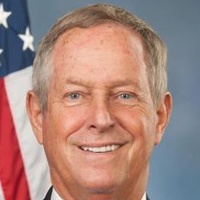
Joe Wilson
Representative
SC
Joe Wilson
Representative
SC
This bill proposes the complete repeal of the Caesar Syria Civilian Protection Act of 2019. By repealing this previous legislation, the bill removes all existing rules and requirements established under that Act.
The CLASS Act of 2025 prohibits mandatory arbitration in student enrollment agreements and stops colleges receiving federal aid from limiting students' right to sue them in court.
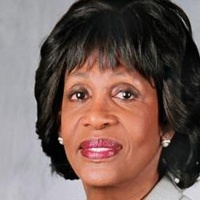
Maxine Waters
Representative
CA
Maxine Waters
Representative
CA
The CLASS Act of 2025 aims to protect students' rights in legal disputes with institutions of higher education. It prohibits mandatory arbitration clauses in student enrollment agreements and forbids colleges receiving federal aid from requiring students to waive their right to sue the institution. These provisions will take effect one year after the Act is officially enacted.
This Act permanently protects inventoried roadless areas within the National Forest System from new road construction and logging, upholding existing federal "Roadless Rule" prohibitions.
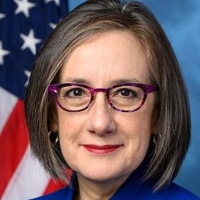
Andrea Salinas
Representative
OR
Andrea Salinas
Representative
OR
The Roadless Area Conservation Act of 2025 aims to provide lasting protection for inventoried roadless areas within the National Forest System. This legislation codifies existing federal regulations, known as the "Roadless Rule," which generally prohibits the construction of new roads or the cutting of timber in these sensitive zones. The purpose is to safeguard critical ecological benefits, clean water sources, and wildlife habitats while maintaining the Forest Service's multiple-use management mission.
The My Body, My Data Act of 2025 establishes strict limits on the collection, use, and sharing of personal reproductive and sexual health information, while granting individuals robust rights to access, correct, and delete their sensitive data.
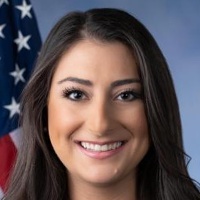
Sara Jacobs
Representative
CA
Sara Jacobs
Representative
CA
The My Body, My Data Act of 2025 establishes strict federal protections for personal reproductive and sexual health information held by regulated entities. This law limits data collection and sharing to only what is strictly necessary for providing requested services. It grants individuals the rights to access, correct, and delete this sensitive data, and requires clear public privacy policies detailing data handling practices. Finally, the Act prohibits retaliation against individuals who exercise these new privacy rights and grants enforcement authority to the FTC while allowing individuals to sue violators.
This act ensures and expands Medicare coverage for mental and behavioral health services provided through telehealth, effective retroactively to 2021.

Doris Matsui
Representative
CA
Doris Matsui
Representative
CA
The Telemental Health Care Access Act of 2025 updates Medicare rules to ensure comprehensive coverage for mental and behavioral health services delivered via telehealth. This legislation clarifies and expands the scope of telehealth coverage under Medicare for these essential services. Furthermore, it removes previous restrictions, making the expanded coverage effective retroactively to the Consolidated Appropriations Act of 2021.
This Act mandates that most private firearm transfers must go through a licensed dealer to ensure background checks are performed on all purchasers.
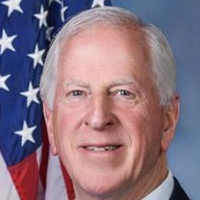
Mike Thompson
Representative
CA
Mike Thompson
Representative
CA
The Bipartisan Background Checks Act of 2025 aims to strengthen existing federal background check systems to prevent prohibited persons from acquiring firearms. This bill primarily mandates that most private firearm transfers must be facilitated through a licensed dealer who will conduct a background check. The legislation includes specific exceptions for family gifts, law enforcement, and temporary transfers under emergency circumstances.
This Act establishes new procedures for Federal Firearms Licensees when background checks are delayed, mandates reporting on delayed and denied transfers, and removes a specific time limit from existing background check law.
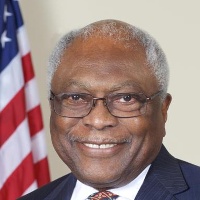
James Clyburn
Representative
SC
James Clyburn
Representative
SC
The Enhanced Background Checks Act of 2025 reforms federal firearm background check procedures, establishing a formal petition process for buyers when the system delays a decision beyond 10 business days. This bill removes the previous 10-day time limit on background checks under the Brady Act while mandating extensive reporting from the GAO and FBI on the effectiveness and outcomes of these delayed transfers. Furthermore, the Attorney General must report on the law's impact on domestic violence victims within 150 days of enactment.