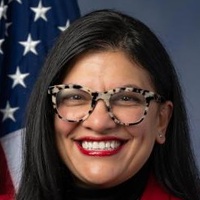
Legislative Activity
Track Rashida's sponsored bills, co-sponsored legislation, and voting record
The Fairness, Inclusion, Rehabilitation, and Expungement for Incarcerated Firefighters Act (FIRE Act) extends workplace safety and wage protections to incarcerated firefighters, provides grants for state compliance and reentry programs, and establishes a process for expunging certain past convictions.
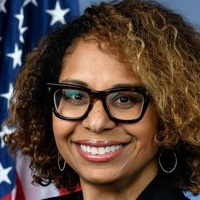
Sydney Kamlager-Dove
Representative
CA
Sydney Kamlager-Dove
Representative
CA
The Fairness, Inclusion, Rehabilitation, and Expungement for Incarcerated Firefighters Act (FIRE Act) ensures incarcerated firefighters receive workplace safety protections under OSHA and fair wage standards under the FLSA. The bill also establishes grant programs to help states implement these safety measures and support reentry services for former incarcerated firefighters. Finally, it creates a process for eligible individuals to petition the court to expunge certain past criminal convictions.
The MARSHALS Act restructures the U.S. Marshals Service, moving its organization and leadership entirely under the judicial branch, overseen by the Chief Justice and a new Board.
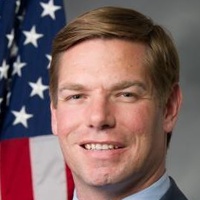
Eric Swalwell
Representative
CA
Eric Swalwell
Representative
CA
The MARSHALS Act fundamentally restructures the United States Marshals Service (USMS), moving its organization entirely into the judicial branch. This bill establishes that the Director and all U.S. Marshals will be appointed by the Chief Justice, subject to oversight from a new Board. The legislation also clarifies the USMS's authority to protect federal judicial personnel and outlines specific conditions under which the Service can assist the Department of Justice.
This Act restores the right to sue over disparate impact discrimination under Title VI, mandates equity compliance officers in federally funded schools, and establishes a Special Assistant for Equity and Inclusion within the Department of Education.
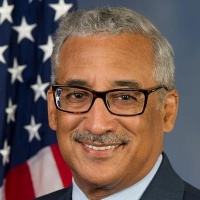
Robert Scott
Representative
VA
Robert Scott
Representative
VA
The Equity and Inclusion Enforcement Act of 2025 restores the right to sue for disparate impact violations under Title VI of the Civil Rights Act of 1964. It also mandates that all federally funded educational institutions designate an employee to coordinate Title VI compliance and publicly share their contact information. Finally, the Act establishes a new Special Assistant for Equity and Inclusion within the Department of Education to oversee and promote compliance efforts.
This Act eliminates the legal doctrine of qualified immunity, making it easier to sue government officials for violating constitutional rights.
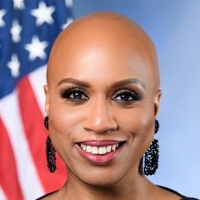
Ayanna Pressley
Representative
MA
Ayanna Pressley
Representative
MA
The Ending Qualified Immunity Act aims to restore accountability for government officials who violate constitutional rights. This bill eliminates the legal doctrine of qualified immunity, which currently shields officials from liability unless their actions violated a "clearly established" right. By removing this defense, the Act makes it easier for individuals to sue state and local officials for misconduct.
This bill officially revokes the twenty Medals of Honor awarded for actions during the Wounded Knee Massacre of 1890 while allowing recipients to keep the physical medals and associated benefits.
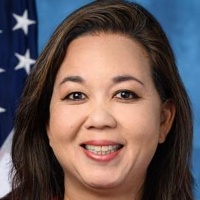
Jill Tokuda
Representative
HI
Jill Tokuda
Representative
HI
The Remove the Stain Act officially rescinds the 20 Medals of Honor awarded to U.S. soldiers for actions during the Wounded Knee Massacre of 1890. This legislation aims to preserve the integrity of the nation's highest military honor by voiding awards given for the killing of predominantly unarmed Native Americans. While the recognition is revoked and names will be removed from the official rolls, recipients will not be required to return the physical medal or forfeit any associated benefits.
This bill mandates immediate medical attention for individuals in federal custody displaying medical distress and establishes penalties for officials who negligently fail to provide it.
Ayanna Pressley
Representative
MA
Ayanna Pressley
Representative
MA
The Andrew Kearse Accountability for Denial of Medical Care Act of 2025 mandates that federal officials immediately provide or secure medical attention for individuals in federal custody displaying medical distress. Negligently failing to do so, resulting in unnecessary pain, injury, or death, is established as a federal crime punishable by fines or imprisonment. The bill also empowers State Attorneys General to sue federal officials over violations and requires mandatory training and confidential complaint mechanisms for agency staff.
The Strength in Diversity Act of 2025 authorizes competitive grants to states and districts to develop and implement plans that reduce racial and economic isolation in public schools.
Robert Scott
Representative
VA
Robert Scott
Representative
VA
The Strength in Diversity Act of 2025 establishes a competitive grant program to help states and districts address racial isolation and concentrated poverty in public schools. Funds will support the creation and implementation of plans designed to increase racial and economic diversity within covered schools. The law emphasizes performance measurement focused on both student outcomes and diversity metrics, while explicitly prohibiting federal control over local educational decisions.
This bill prohibits former government employees involved in Foreign Military Sales from immediately lobbying federal officials regarding those same sales after leaving office.
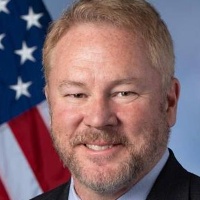
Warren Davidson
Representative
OH
Warren Davidson
Representative
OH
The No Revolving Doors in FMS Act of 2025 establishes new restrictions for former State Department and Department of Defense employees involved in Foreign Military Sales (FMS). This legislation prohibits these former officials from lobbying Congress or federal employees regarding the specific FMS programs they worked on within the three years prior to leaving federal service. The bill aims to prevent immediate conflicts of interest by closing the "revolving door" between government service and lobbying in the FMS sector.
The RUBIO Act prohibits the Secretary of State from simultaneously holding or carrying out the duties of any other Federal position and stops federal funding for any such dual roles.
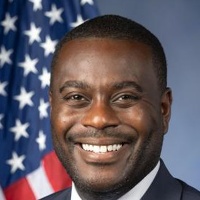
Gabe Amo
Representative
RI
Gabe Amo
Representative
RI
The Reaffirming Unified Boundaries for Integrity and Oversight Act (RUBIO Act) explicitly prohibits the Secretary of State from simultaneously holding or carrying out the duties of any other Federal position. This legislation ensures the Secretary's focus remains solely on their diplomatic responsibilities. Furthermore, the Act bars the expenditure of any federal funds for dual roles held by the Secretary of State.
The Save Our Forests Act of 2025 mandates increased staffing and reinstatement of former employees within the Forest Service while ensuring the continuation of all authorized Forest Service projects.
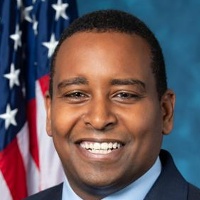
Joe Neguse
Representative
CO
Joe Neguse
Representative
CO
The Save Our Forests Act of 2025 aims to strengthen the management and health of the National Forest System. This legislation mandates the immediate hiring of additional Forest Service personnel and the reinstatement of recently departed employees. Furthermore, it ensures the continuation of all previously authorized and funded Forest Service projects under various existing laws.
The Fit to Serve Act prohibits discrimination against service members and recruits in the Armed Forces based on their gender identity.
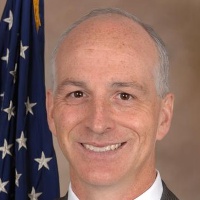
Adam Smith
Representative
WA
Adam Smith
Representative
WA
The Fit to Serve Act prohibits the U.S. Armed Forces from discriminating against service members based on their gender identity. This means military branches cannot set different standards, involuntarily discharge personnel, or deny medically necessary healthcare due to a service member's gender identity. The bill ensures equal opportunity for joining, serving, and receiving care regardless of one's internal sense of self.
This act establishes fixed, non-renewable 18-year terms for future Supreme Court Justices and outlines a staggered appointment schedule, while also creating a temporary mechanism for filling vacancies below the nine-justice quorum.
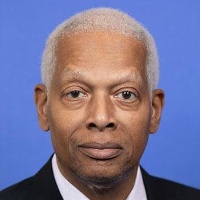
Henry Johnson
Representative
GA
Henry Johnson
Representative
GA
The Supreme Court Tenure Establishment and Retirement Modernization Act of 2025 establishes fixed, non-renewable 18-year terms for all future Supreme Court Justices, with appointments staggered every two years. This legislation also outlines a process for phasing out current Justices upon the confirmation of new appointees. Finally, it grants the Chief Justice the authority to temporarily fill sudden vacancies below the standard nine-justice level using a randomly selected retired Justice.
This bill protects striking and locked-out workers by preventing employers from terminating or altering their group health plan coverage during a labor dispute and establishes significant civil penalties for violations.
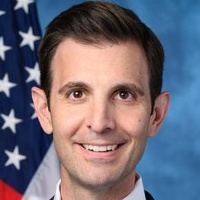
Chris Deluzio
Representative
PA
Chris Deluzio
Representative
PA
The Striking and Locked Out Workers Healthcare Protection Act ensures that employers cannot terminate or alter group health plan coverage for employees during a lawful strike or an employer-initiated lockout. This legislation aims to prevent employers from using health benefits as leverage during labor disputes. The bill also establishes significant civil penalties, including fines up to \$150,000 per violation, for employers who interfere with this coverage, and allows for individual liability for directors and officers involved in such violations.
This bill prohibits high-ranking government officials and their families from trading, profiting from, or controlling digital assets while in office to prevent conflicts of interest.
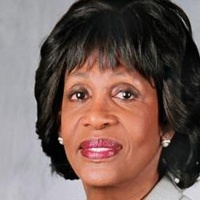
Maxine Waters
Representative
CA
Maxine Waters
Representative
CA
The Stop TRUMP in Crypto Act of 2025 prohibits covered government officials and their immediate families from trading, owning, or profiting from digital assets while in office. This legislation specifically bans insider trading of crypto and prevents officials from using intermediaries or complex ownership structures to bypass these restrictions. The Act aims to eliminate conflicts of interest by ensuring high-ranking officials cannot benefit financially from involvement with cryptocurrencies.
The Protect our Parks Act of 2025 mandates the immediate full staffing of the National Park Service, the rehiring of recently terminated employees, and the continuation of all authorized park improvement projects.
Joe Neguse
Representative
CO
Joe Neguse
Representative
CO
The Protect our Parks Act of 2025 mandates the Secretary of the Interior to immediately ensure the National Park Service is fully staffed to protect resources and enhance visitor safety. This legislation requires filling all maintenance positions and reinstating any NPS employees terminated since January 20, 2025. Furthermore, the Act ensures the continuation of all previously authorized and funded National Park Service projects.
This bill restricts the transfer of specific offensive military articles and defense services to Israel until Congress authorizes their use for specified purposes and Israel provides written assurances of compliance with international law.

Delia Ramirez
Representative
IL
Delia Ramirez
Representative
IL
This bill imposes significant restrictions on the transfer of specific defense articles and services to Israel. Transfers of listed military equipment, such as certain bombs and ammunition, are prohibited unless Congress first passes a law detailing their specific authorized use. Furthermore, Israel must provide satisfactory written assurances that the items will only be used for those stated purposes and in compliance with international law.
The College for All Act of 2025 establishes federal-state partnerships and grants to eliminate tuition and fees at public and tribal colleges, boosts Pell Grants, and increases funding for minority-serving institutions.
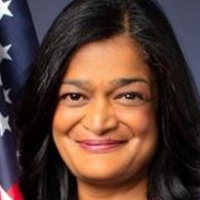
Pramila Jayapal
Representative
WA
Pramila Jayapal
Representative
WA
The College for All Act of 2025 establishes a Federal-State partnership to eliminate tuition and required fees at public and Tribal colleges for eligible students, while significantly increasing Federal Pell Grant maximum awards and expanding eligibility to include many "Dreamer students." The bill also creates new grant programs to cover tuition at private non-profit HBCUs and MSIs, and funds initiatives to improve student success and support for low-income and first-generation students. Finally, it increases overall appropriations for HBCUs, Tribal Colleges, and other Minority-Serving Institutions.
The DEFIANCE Act of 2025 establishes a federal civil right of action against the creation, possession with intent to share, or sharing of nonconsensual sexually explicit digital forgeries, or "deepfakes."
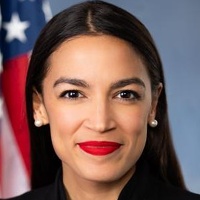
Alexandria Ocasio-Cortez
Representative
NY
Alexandria Ocasio-Cortez
Representative
NY
The DEFIANCE Act of 2025 establishes a federal civil cause of action against the creation, possession with intent to share, or sharing of nonconsensual intimate digital forgeries, often known as deepfakes. This legislation updates existing law to specifically address image-based sexual abuse created through AI or digital manipulation, regardless of whether the image is labeled as fake. Victims can sue for significant statutory damages, attorney's fees, and injunctive relief to stop the spread of the harmful content. The Act ensures that this new federal standard does not preempt or limit stronger existing State or Tribal laws.
The Real Education and Access for Healthy Youth Act of 2025 establishes federal grant programs to fund comprehensive, evidence-informed, and culturally responsive sex education and youth-friendly sexual health services, prioritizing underserved communities.
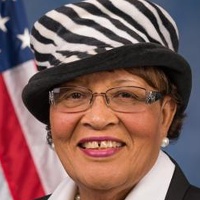
Alma Adams
Representative
NC
Alma Adams
Representative
NC
The Real Education and Access for Healthy Youth Act of 2025 aims to establish comprehensive, evidence-based, and culturally responsive sex education and health services for young people aged 10 to 29. The bill creates competitive grant programs to fund sex education in K-12 schools and higher education, support educator training, and improve access to youth-friendly sexual health services, especially for underserved communities. It explicitly mandates that all funded programs must be medically accurate, inclusive of all identities, and centered on principles of consent and reproductive justice. The Act authorizes $100 million annually and repeals prior funding streams dedicated to abstinence-only education.
This Act mandates the inclusion of Asian American, Native Hawaiian, and Pacific Islander history across federally supported K-12 American history and civics education programs and assessments.

Grace Meng
Representative
NY
Grace Meng
Representative
NY
This Act mandates the inclusion of Asian American, Native Hawaiian, and Pacific Islander (AANHPI) history across federally supported K-12 American history and civics education programs. It recognizes the vital, yet often omitted, contributions of AANHPI communities while addressing historical exclusion and systemic racism. The legislation directs educational programs to partner with the Smithsonian's Asian Pacific American Center to develop accurate and comprehensive curricula. This ensures AANHPI history is integrated into national assessments and teacher training.