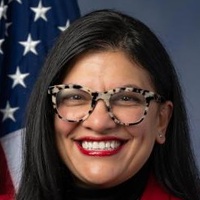
Legislative Activity
Track Rashida's sponsored bills, co-sponsored legislation, and voting record
This bill establishes a six-year pilot program for selected hospitals to provide medically tailored, home-delivered meals and nutrition therapy to high-risk Medicare patients upon discharge to reduce hospital readmissions.
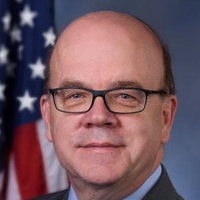
James McGovern
Representative
MA
James McGovern
Representative
MA
This bill establishes a six-year pilot program for hospitals to provide medically tailored, home-delivered meals and nutrition therapy to eligible Medicare patients upon discharge. The goal is to improve health outcomes and reduce hospital readmissions for individuals with diet-sensitive conditions who have difficulty with daily living activities. Participating hospitals will receive payment for these services, which must be provided at no out-of-pocket cost to the patient. The Secretary of Health and Human Services will evaluate the program's effectiveness using data collected from the participating sites.
This Act mandates that new passenger motor vehicles sold in the U.S. must include standard equipment capable of receiving AM broadcast radio signals.

Gus Bilirakis
Representative
FL
Gus Bilirakis
Representative
FL
The AM Radio for Every Vehicle Act of 2025 mandates that the Secretary of Transportation establish a rule requiring AM broadcast radio receivers to be installed as standard equipment in new passenger motor vehicles. This requirement aims to ensure public access to AM radio signals, which are often used for emergency alerts. The bill also directs a GAO study on the effectiveness of AM radio within the national emergency alert system compared to other technologies. Finally, the Act preempts state and local laws on this matter and includes a sunset provision eight years after enactment.
This bill amends the Social Security Act to provide Medicare coverage for FDA-approved multi-cancer early detection screening tests starting in 2028.
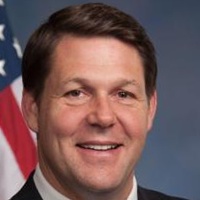
Jodey Arrington
Representative
TX
Jodey Arrington
Representative
TX
The Nancy Gardner Sewell Medicare Multi-Cancer Early Detection Screening Coverage Act amends the Social Security Act to provide Medicare Part B coverage for multi-cancer early detection screening tests starting January 1, 2028. This legislation establishes clear criteria for qualifying tests and outlines payment structures to ensure beneficiaries have access to these advanced diagnostic tools. Importantly, this coverage is designed to complement, rather than replace, existing Medicare-covered cancer screenings.
The FAMILY Act establishes a national paid family and medical leave insurance program administered by the Social Security Administration, providing benefits for caregiving related to serious health conditions or victims of violence.

Rosa DeLauro
Representative
CT
Rosa DeLauro
Representative
CT
The FAMILY Act establishes a national Paid Family and Medical Leave Insurance program administered by a new office within the Social Security Administration. This program provides monthly benefits to eligible individuals who take time off for qualified caregiving reasons, including serious health conditions or victims of violence. The Act also sets forth detailed eligibility requirements, benefit calculation formulas, and job protection guarantees for employees utilizing the leave. Finally, it creates a funding mechanism to support existing state-level paid leave programs that meet federal standards.
The TRAVEL Act of 2025 authorizes the VA to assign existing physicians as traveling doctors to provide essential healthcare services to veterans in U.S. territories and possessions, while also extending certain pension payment limits.
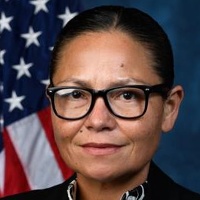
Kimberlyn King-Hinds
Representative
MP
Kimberlyn King-Hinds
Representative
MP
The Territorial Response and Access to Veterans’ Essential Lifecare (TRAVEL) Act of 2025 authorizes the Department of Veterans Affairs to assign existing physicians as traveling doctors to provide essential healthcare services in U.S. territories and possessions for up to one year. These traveling physicians will receive special relocation or retention bonuses in addition to their regular salary. Furthermore, the bill extends the expiration date for certain limits on veterans' pension payments until December 31, 2032.
This bill establishes the National Infrastructure Bank to finance major U.S. infrastructure projects while granting the Bank and its investors favorable federal tax exemptions.
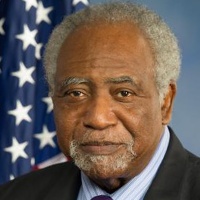
Danny Davis
Representative
IL
Danny Davis
Representative
IL
The National Infrastructure Bank Act of 2025 establishes a new, mixed-ownership federal corporation chartered to finance major infrastructure projects across the nation. This legislation authorizes the Bank to raise substantial capital and issue significant loans to spur economic growth while prioritizing projects in disadvantaged communities. Furthermore, the bill grants the Bank and its specific investors favorable tax exemptions to encourage participation and operation.
The FAIR Act of 2025 invalidates pre-dispute arbitration agreements and joint-action waivers for employment, consumer, antitrust, and civil rights claims, while preserving the right to voluntary arbitration after a dispute arises.

Henry Johnson
Representative
GA
Henry Johnson
Representative
GA
The FAIR Act of 2025 invalidates pre-dispute arbitration agreements and class action waivers for employment, consumer, antitrust, and civil rights claims. This law restores the right for individuals to pursue these disputes in court or through collective legal action. The provisions apply to all covered disputes arising on or after the date the Act is enacted.
The George Floyd Justice in Policing Act of 2025 comprehensively reforms policing by increasing accountability, mandating transparency through data collection, restricting dangerous tactics, and prohibiting sexual misconduct by officials acting under color of law.
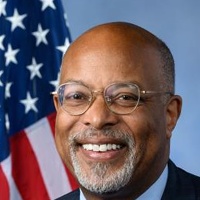
Glenn Ivey
Representative
MD
Glenn Ivey
Representative
MD
The George Floyd Justice in Policing Act of 2025 is a comprehensive bill designed to increase police accountability and transparency nationwide through federal mandates and funding incentives. It reforms standards for prosecuting civil rights violations, eliminates qualified immunity, and establishes national registries for police misconduct and use-of-force data. Furthermore, the Act bans specific dangerous police tactics like chokeholds and restricts the transfer of military equipment to local departments.
This bill mandates a GAO study on pediatric liver disease outcomes and establishes a public education program to raise awareness about early detection and living liver donation.
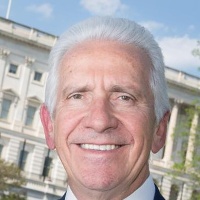
Jim Costa
Representative
CA
Jim Costa
Representative
CA
The Ian Kalvinskas Pediatric Liver Cancer Early Detection and Screening Act aims to improve outcomes for children with liver disease by initiating studies on current federal efforts and waitlist mortality. It mandates the development of a public education program to raise awareness about early liver disease signs and living liver donation. Furthermore, the bill directs an assessment of the cost-effectiveness of adding direct bilirubin testing to newborn screening panels to catch conditions like biliary atresia earlier.
This resolution honors the life and assassination of Honduran human rights defender Juan López, condemns the ongoing violence against environmental activists in the Bajo Agúan region, and urges support for investigations into his murder and broader anti-corruption efforts in Honduras.
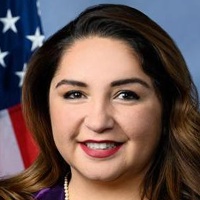
Delia Ramirez
Representative
IL
Delia Ramirez
Representative
IL
This resolution formally honors the life and tragic assassination of Honduran human rights and environmental defender Juan López. It commemorates the one-year anniversary of his murder and condemns the ongoing violence against land defenders in the Bajo Aguán region. Furthermore, the resolution supports efforts to combat corruption and impunity in Honduras, including calls for international assistance in investigating López's killing. Finally, it urges the U.S. government to increase support for Honduran civil society groups defending human rights and democracy.
The Equal Tax Act limits preferential capital gains rates for high earners, imposes deemed realization of capital gains upon gift or death, creates exclusions for inherited family farm/business gains, and places new caps and reporting requirements on various tax benefits.
Delia Ramirez
Representative
IL
Delia Ramirez
Representative
IL
The Equal Tax Act aims to increase tax fairness by limiting preferential tax rates for high earners and treating property transfers at death or as a gift as a taxable event. It introduces new rules for capital gains exclusions on inherited family farms and businesses, while also capping the use of like-kind exchanges for non-farming real estate. Finally, the Act adjusts the calculation for the Qualified Business Income deduction based on income thresholds.
This bill prohibits federal health agencies from sharing identifiable Medicaid data with U.S. Immigration and Customs Enforcement (ICE).

Sydney Kamlager-Dove
Representative
CA
Sydney Kamlager-Dove
Representative
CA
The Limiting ICE’s Nationwide Encroachment Act (LINE Act) prohibits federal health agencies, like CMS and HHS, from sharing the personally identifiable Medicaid enrollment data of individuals with U.S. Immigration and Customs Enforcement (ICE). This measure is designed to protect the private health information of Medicaid recipients from being used for immigration enforcement purposes.
This bill prohibits the Department of Housing and Urban Development from disclosing individual records to immigration enforcement agencies without explicit consent or a written request from the individual.
Juan Vargas
Representative
CA
Juan Vargas
Representative
CA
This bill prohibits the Secretary of Housing and Urban Development (HUD) from disclosing individual records to immigration enforcement agencies. HUD records are protected from sharing unless the individual provides consent or makes a written request in a language they understand. The legislation also prevents HUD from compelling public housing agencies to share these confidential records for immigration purposes.
This bill mandates detailed disclosure of plant locations, wages, and labor violations for vehicle assembly contracts and prohibits the Postal Service from purchasing new delivery vehicles until specific union neutrality agreements are enforced with the manufacturer.
Haley Stevens
Representative
MI
Haley Stevens
Representative
MI
The Union Auto Workers Job Protection Act mandates increased transparency for federal vehicle assembly contracts by requiring bidders to disclose detailed information about their plants, wages, and labor violations. It strictly controls where contract work can be performed and prohibits the Postal Service from purchasing new delivery vehicles until specific union neutrality and compliance agreements are secured with the manufacturer. In essence, the bill ties federal vehicle contracts to detailed operational disclosures and commitments regarding fair labor practices and union neutrality.
This resolution expresses the House of Representatives' disapproval of the planned WISeR Model, asserting that its expansion of prior authorization requirements will undermine beneficiary access to necessary healthcare.
Mark Pocan
Representative
WI
Mark Pocan
Representative
WI
This resolution expresses the sense of the House of Representatives opposing the implementation of the proposed Wasteful and Inappropriate Service Reduction (WISeR) Model. The House believes this model would severely undermine beneficiary access to necessary healthcare by significantly expanding prior authorization requirements in traditional Medicare. It urges the Centers for Medicare and Medicaid Services to terminate the plan due to concerns over patient access and the poor track record of private entities managing these reviews.
This constitutional amendment grants Congress and the states the power to set reasonable limits on campaign spending by individuals and entities to ensure fair elections, while explicitly protecting freedom of the press.
Mary Scanlon
Representative
PA
Mary Scanlon
Representative
PA
This proposed constitutional amendment grants Congress and the states the authority to establish reasonable limits on campaign spending by candidates and outside groups to ensure fair elections. It allows for different spending regulations for individuals versus corporations or other entities. Crucially, this new power cannot be used to restrict the freedom of the press.
This act establishes a pathway to permanent residency for certain immigrant workers who provided essential services following the September 11th terrorist attacks.
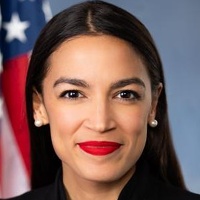
Alexandria Ocasio-Cortez
Representative
NY
Alexandria Ocasio-Cortez
Representative
NY
The 9/11 Immigrant Worker Freedom Act establishes a pathway for certain individuals who provided essential services during the rescue and cleanup efforts following the September 11th terrorist attacks to adjust their status to lawful permanent residents. This relief is available to workers and volunteers who meet specific service hour requirements at the World Trade Center, Pentagon, or Shanksville sites, or those who maintained contaminated vehicles. The bill also mandates fee waivers for eligible applicants and protects their privacy regarding public benefit usage and future immigration enforcement actions.
This bill posthumously awards a Congressional Gold Medal to honor the groundbreaking civil rights achievements of Constance Baker Motley and authorizes the production and sale of bronze duplicates.
Rosa DeLauro
Representative
CT
Rosa DeLauro
Representative
CT
This bill, the Congressional Tribute to Constance Baker Motley Act of 2025, posthumously awards the Congressional Gold Medal to the pioneering civil rights attorney and federal judge, Constance Baker Motley. The legislation recognizes her historic achievements, including her role in *Brown v. Board of Education* and her service as the first African-American woman appointed as a federal judge. The Secretary of the Treasury is authorized to strike the medal, and provisions are made for selling bronze duplicates to cover production costs.
This Act strengthens enforcement for humane animal transport and prohibits the interstate movement of unfit livestock, with an exception for veterinary care.
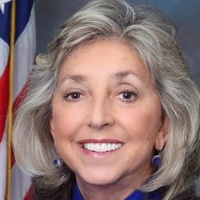
Dina Titus
Representative
NV
Dina Titus
Representative
NV
The Humane Transport of Farmed Animals Act strengthens oversight of animal transportation by establishing new inspection and investigation powers for federal agencies. It also strictly prohibits the interstate movement of livestock deemed unfit to travel, based on established international animal health standards. This ensures that only healthy and capable animals are shipped across state lines, with an exception made only for necessary veterinary care.
This Act establishes sanctions against Pakistani officials undermining democracy and human rights, while urging the U.S. government to promote democratic institutions in Pakistan until September 30, 2030.
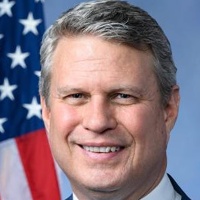
Bill Huizenga
Representative
MI
Bill Huizenga
Representative
MI
The Pakistan Freedom and Accountability Act expresses strong U.S. support for democracy and human rights in Pakistan, citing concerns over military influence and recent election interference. This legislation directs the President to identify and impose sanctions on Pakistani officials responsible for undermining democratic processes or committing serious human rights abuses. The Act emphasizes the need for civilian control over the military and sets an expiration date for its provisions in September 2030.