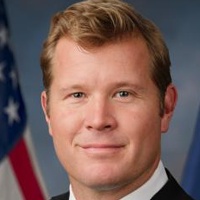
Legislative Activity
Track Tim's sponsored bills, co-sponsored legislation, and voting record
The Saving Our Veterans Lives Act of 2025 establishes a VA program to provide eligible veterans with free, U.S.-made secure firearm storage lockboxes or vouchers to help prevent veteran suicide.
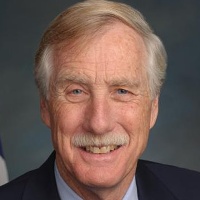
Angus King
Senator
ME
Angus King
Senator
ME
The Saving Our Veterans Lives Act of 2025 establishes a new Department of Veterans Affairs (VA) program to provide eligible veterans with free, U.S.-made, secure firearm storage items or vouchers. This initiative aims to promote safe storage practices as a suicide prevention measure without infringing on veterans' rights to own firearms. The VA must educate veterans about the program and submit annual reports to Congress detailing its implementation and reach.
The ATF Transparency Act establishes a three-day automatic approval for firearm transfer and making applications, creates an appeal process for denials, and mandates reports on NICS processing delays.
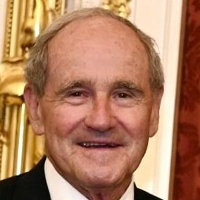
James Risch
Senator
ID
James Risch
Senator
ID
The ATF Transparency Act aims to streamline firearm transfer and registration processes by mandating a 3-business-day review period, after which applications are automatically approved unless legal requirements are not met. The bill also establishes an administrative appeal process for applicants whose transfers are denied based on federal or state law concerns, including reimbursement for legal fees upon a successful appeal. Furthermore, it requires reports on unresolved background checks and mandates an agreement between the ATF and FBI on processing future NICS inquiries.
The Northern Montana Water Security Act of 2025 ratifies a comprehensive water rights settlement for the Fort Belknap Indian Community and authorizes $250 million in federal funding to upgrade wastewater infrastructure for the Blackfeet Tribe.
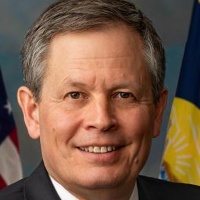
Steve Daines
Senator
MT
Steve Daines
Senator
MT
The Northern Montana Water Security Act of 2025 provides a comprehensive framework to resolve long-standing water rights claims for the Fort Belknap Indian Community while authorizing critical infrastructure investments for both the Fort Belknap and Blackfeet Reservations. This legislation secures reliable water supplies, rehabilitates aging irrigation and wastewater systems, and facilitates land transfers to support tribal economic development and public health. By settling these claims and funding essential utility projects, the act ensures long-term water stability for tribal communities and regional water users across Montana.
This joint resolution seeks to nullify the IRS rule requiring brokers to report gross proceeds from digital asset sales.
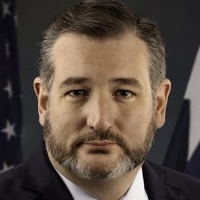
Ted Cruz
Senator
TX
Ted Cruz
Senator
TX
This joint resolution seeks to exercise congressional disapproval of the IRS rule regarding "Gross Proceeds Reporting by Brokers That Regularly Provide Services Effectuating Digital Asset Sales." If passed, the resolution would nullify the rule, ensuring it has no force or effect.
This resolution expresses Congressional opposition to imposing new performance fees on local radio stations, citing the mutually beneficial relationship between broadcasters and the music industry.
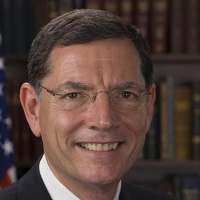
John Barrasso
Senator
WY
John Barrasso
Senator
WY
The Local Radio Freedom Act expresses Congressional opposition to imposing new performance fees on local radio stations for playing music. This resolution maintains that the current system provides essential promotional value to artists while supporting local community services. Consequently, it advocates against any new taxes or royalties that would place an undue financial burden on broadcasters and local businesses.
The "Protection of Women and Girls in Sports Act of 2025" amends Title IX to prohibit individuals born male from participating in women's and girls' athletic programs in educational institutions that receive federal funds, defining "sex" as determined at birth.
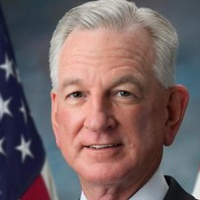
Tommy Tuberville
Senator
AL
Tommy Tuberville
Senator
AL
The "Protection of Women and Girls in Sports Act of 2025" amends Title IX to prohibit schools receiving federal funding from allowing individuals born male to participate in female athletic programs. Sex is defined as determined by reproductive biology and genetics at birth. This bill aims to ensure fair competition for women and girls in sports.
This bill prohibits FEMA from using federal funds to support the sheltering of illegal immigrants.
James Risch
Senator
ID
James Risch
Senator
ID
The "End FEMA Benefits for Illegal Immigrants Act" prohibits FEMA from providing support to non-federal entities for sheltering and related activities that alleviate overcrowding in Customs and Border Protection holding facilities. It also rescinds any remaining funds previously transferred to FEMA from Customs and Border Protection for these purposes under the Consolidated Appropriations Act of 2023 and the Further Consolidated Appropriations Act, 2024.
This bill prohibits the importation of specific Russian minerals, including platinum group metals, nickel, and copper, until Russia ceases hostilities in Ukraine.
Steve Daines
Senator
MT
Steve Daines
Senator
MT
The Stop Russian Market Manipulation Act bans the importation of specific Russian-origin minerals, including platinum group metals, nickel, and copper, into the United States. This prohibition begins 90 days after enactment and remains in effect until one year after the President certifies that Russia has ceased all fighting against Ukraine. Crucially, the President has no authority to waive this specific ban.
The "Empowering Families in Special Education Act" ensures parents are informed of their right to include knowledgeable experts in their child's IEP meetings.
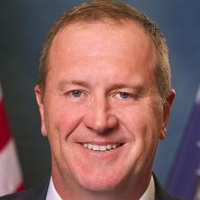
Eric Schmitt
Senator
MO
Eric Schmitt
Senator
MO
The "Empowering Families in Special Education Act" ensures that parents are informed of their right to include knowledgeable individuals, like service providers, in their child's IEP meetings. This notification must be provided before the first IEP meeting of each school year, empowering families to advocate effectively for their children's special education needs.
The "Time to Choose Act of 2025" prohibits federal agencies from contracting with consulting firms that simultaneously work for certain foreign entities that pose a risk to U.S. national security.
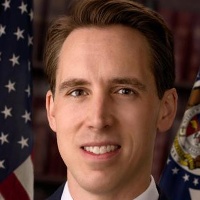
Joshua Hawley
Senator
MO
Joshua Hawley
Senator
MO
The "Time to Choose Act of 2025" prohibits federal agencies from contracting with consulting firms that simultaneously work for certain foreign entities, such as the governments of China and Russia, or face penalties. It requires firms bidding on federal contracts to certify they do not have consulting contracts with these "covered foreign entities," with exceptions allowed under national security interests. The Act also outlines penalties for firms providing false information about their foreign contracts, including contract termination and False Claims Act liabilities. This law aims to address conflicts of interest where firms may be undermining U.S. security while contracting with U.S. agencies.
This joint resolution seeks to overturn the Environmental Protection Agency’s final rule regarding National Emission Standards for Hazardous Air Pollutants for the rubber tire manufacturing industry.

Tim Scott
Senator
SC
Tim Scott
Senator
SC
This joint resolution exercises congressional authority to disapprove the Environmental Protection Agency’s rule regarding "National Emission Standards for Hazardous Air Pollutants: Rubber Tire Manufacturing." If passed, this measure would nullify the rule, rendering it without force or effect.
Prohibits Chinese nationals and entities controlled by the Chinese government from purchasing real estate near U.S. federal lands.
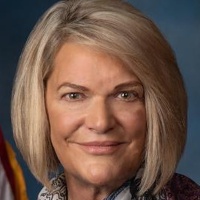
Cynthia Lummis
Senator
WY
Cynthia Lummis
Senator
WY
The "No American Land for Communist China Act" aims to safeguard U.S. national security by preventing Chinese government entities and businesses with significant Chinese government ownership from purchasing real estate near sensitive federal lands, including those managed by the Departments of Interior, Defense, Agriculture, and Energy, as well as Indian country. The President is tasked with enforcing this prohibition.
The "No Bailout for Sanctuary Cities Act" withholds certain federal funds from sanctuary jurisdictions that obstruct the sharing of immigration status information or compliance with federal detainment requests, while requiring an annual report on non-compliance.
James Risch
Senator
ID
James Risch
Senator
ID
The "No Bailout for Sanctuary Cities Act" aims to defund sanctuary jurisdictions, defined as those that obstruct the sharing of immigration status information or compliance with federal detainment requests, by making them ineligible for certain federal funds. This act requires the Department of Homeland Security to report annually to Congress, identifying non-compliant jurisdictions.
The Transportation Freedom Act aims to boost American auto manufacturing through tax incentives, roll back vehicle emission and fuel efficiency regulations, end state authority to set stricter emission standards, and set new federal standards based on technological and economic feasibility.
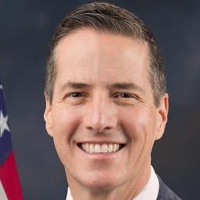
Bernie Moreno
Senator
OH
Bernie Moreno
Senator
OH
The Transportation Freedom Act aims to boost American auto manufacturing through tax incentives for companies that keep production and jobs in the U.S. while also rolling back recent vehicle emissions and fuel efficiency regulations. It restricts states' abilities to set their own emission standards and directs the EPA and DOT to establish new, flexible emissions standards based on technological and economic feasibility. This could lead to more fuel-efficient vehicles, reduced emissions, and shifts in the automotive industry.
The "Stop Dangerous Sanctuary Cities Act" aims to enhance cooperation between federal and local law enforcement on immigration matters by allowing state and local officers to act as federal agents, defines "sanctuary jurisdictions," and restricts these jurisdictions from receiving certain federal funds.
Ted Cruz
Senator
TX
Ted Cruz
Senator
TX
The "Stop Dangerous Sanctuary Cities Act" aims to enhance cooperation between federal and local law enforcement by allowing state and local officers to act as agents of the Department of Homeland Security and protecting them from liability when complying with immigration detainers. It defines "sanctuary jurisdictions" as those that restrict information sharing or compliance with federal detainment requests, and it makes these jurisdictions ineligible for certain federal grants, reallocating those funds to non-sanctuary jurisdictions. This act does not protect individuals who knowingly violate civil or constitutional rights.
This resolution designates February 15–22, 2025, as "National FFA Week" to honor the organization's role in developing future leaders and celebrate its historic milestones.

Todd Young
Senator
IN
Todd Young
Senator
IN
This resolution designates February 15–22, 2025, as "National FFA Week" to celebrate the National FFA Organization’s vital role in developing the next generation of agricultural leaders. It commemorates the 90th anniversary of the New Farmers of America and the 75th anniversary of the FFA’s Federal charter. The bill encourages nationwide participation in honoring the organization's long-standing commitment to leadership, personal growth, and career success.
The "Regional Leadership in Wildland Fire Research Act of 2025" establishes regional wildland fire research centers to improve understanding, management, and mitigation of wildland fires.
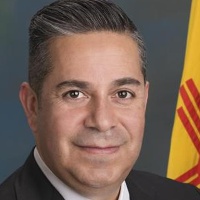
Ben Luján
Senator
NM
Ben Luján
Senator
NM
The "Regional Leadership in Wildland Fire Research Act of 2025" establishes a network of regional wildland fire research centers across the country, coordinated by a National Center Coordination Board, to improve the understanding, management, and mitigation of wildland fires. These centers will focus on research, technology development, and data sharing to support wildland fire management agencies and communities. The Act authorizes specific appropriations for the centers and the board to facilitate their operations and research activities. It also emphasizes collaboration and open access to data, ensuring that research findings are widely available to inform decision-making and improve public safety.
This bill repeals programs that fund electric vehicle charging infrastructure, including the National Electric Vehicle Infrastructure (NEVI) Formula Program, and redirects unspent funds.

Joni Ernst
Senator
IA
Joni Ernst
Senator
IA
The "Unplug the Electric Vehicle Charging Stations Programs Act" seeks to eliminate federal grant programs and funding, including the National Electric Vehicle Infrastructure (NEVI) Formula Program, dedicated to building electric vehicle charging infrastructure. This bill rescinds unspent funds allocated to these programs and prevents any future funding for such projects.
The "Reorganizing Government Act of 2025" amends Title 5 of the U.S. Code to allow for executive reorganization, including the elimination of unnecessary government operations and reduction of federal employees, while extending this authority until December 31, 2026.
Mike Lee
Senator
UT
Mike Lee
Senator
UT
The "Reorganizing Government Act of 2025" aims to streamline the executive branch by allowing for the elimination of unnecessary government operations and amending or eliminating outdated regulations. It broadens the definition of "executive department" and removes restrictions on abolishing enforcement functions through reorganization plans. The act also sets goals to reduce the number of federal employees and ensure no net increase in federal workers or expenditures as a result of reorganization, extending executive reorganization authority until December 31, 2026.
The "Death Tax Repeal Act of 2025" eliminates estate and generation-skipping transfer taxes, modifies gift tax calculations, and adjusts lifetime gift exemptions.
John Thune
Senator
SD
John Thune
Senator
SD
The "Death Tax Repeal Act of 2025" eliminates both estate and generation-skipping transfer taxes, while also modifying gift tax laws. It adjusts gift tax calculations, addresses transfers in trust, sets an initial $10,000,000 amount for calculating tentative tax, and adjusts for inflation. These changes apply to estates of decedents dying, generation-skipping transfers occurring, and gifts made on or after the enactment date of this Act.