Legislative Activity
Track Tim's sponsored bills, co-sponsored legislation, and voting record
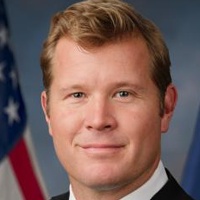
This bill permanently establishes a 7-year recovery period for the depreciation of motorsports entertainment complexes for tax purposes.

Todd Young
Senator
IN
Todd Young
Senator
IN
The Motorsports Fairness and Permanency Act of 2025 permanently establishes a 7-year recovery period for the depreciation of motorsports entertainment complexes. This legislation allows owners and operators of these facilities to continue writing off building costs significantly faster than standard commercial property. By removing the previous expiration date, the bill ensures long-term tax predictability for the motorsports industry.
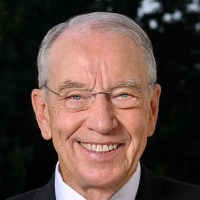
This resolution officially designates the week of May 11 through May 17, 2025, as National Police Week to honor law enforcement officers, remember those killed in the line of duty, and encourage public observance.
Charles Grassley
Senator
IA
Charles Grassley
Senator
IA
This resolution officially designates the week of May 11 through May 17, 2025, as "National Police Week." It serves to honor the valor and integrity of law enforcement officers across the nation. The resolution specifically remembers the officers killed in the line of duty during 2024 and encourages the public to observe this week to show appreciation for law enforcement personnel.
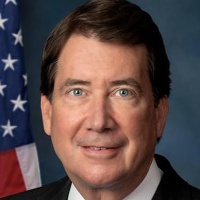
This Act prohibits payment card networks and processors from forcing firearms retailers to use a unique merchant category code for credit or debit card transactions.
Bill Hagerty
Senator
TN
Bill Hagerty
Senator
TN
The Protecting Privacy in Purchases Act prohibits payment card networks and processors from requiring firearms retailers to use a unique Merchant Category Code (MCC) that singles them out. This ensures that credit and debit card transactions for firearms and ammunition are treated the same as general retail purchases. The Attorney General is tasked with enforcing this prohibition and reporting annually to Congress on compliance efforts.
This Act mandates that health plans cover medically necessary diagnosis and treatment for congenital anomalies or birth defects affecting the eyes, ears, teeth, mouth, or jaw, starting in 2026.

Tammy Baldwin
Senator
WI
Tammy Baldwin
Senator
WI
The Ensuring Lasting Smiles Act mandates that health plans cover medically necessary diagnosis and treatment for congenital anomalies or birth defects affecting the eyes, ears, teeth, mouth, or jaw. This coverage must apply to outpatient and inpatient care, including necessary dental and orthodontic support, unless the procedure is purely cosmetic. These new requirements take effect for plan years beginning on or after January 1, 2026.
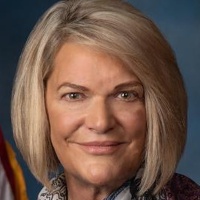
This act exempts the discharge of Forest Service-approved firefighting products used for fire control and suppression from National Pollutant Discharge Elimination System (NPDES) permit requirements.
Cynthia Lummis
Senator
WY
Cynthia Lummis
Senator
WY
The Forest Protection and Wildland Firefighter Safety Act of 2025 streamlines firefighting operations by exempting the use of approved fire retardants during wildfire suppression from standard federal water pollution discharge permits. This change ensures that necessary aerial application of Forest Service-qualified products does not require an NPDES permit. The bill focuses on removing regulatory hurdles for essential wildfire control activities.
This act prohibits the FMCSA from issuing new regulations that mandate speed limiting devices on commercial motor vehicles.
Steve Daines
Senator
MT
Steve Daines
Senator
MT
The DRIVE Act prohibits the Federal Motor Carrier Safety Administration (FMCSA) from issuing any new rules that would mandate speed limiting devices on commercial motor vehicles. This legislation prevents the federal government from setting a maximum speed cap for eighteen-wheelers through future regulations.
This joint resolution disapproves the FCC's rule intended to close the "Homework Gap" by modifying the E-Rate Program.
Ted Cruz
Senator
TX
Ted Cruz
Senator
TX
This joint resolution expresses Congress's disapproval of the Federal Communications Commission's (FCC) recent rule aimed at closing the "Homework Gap" using the E-Rate Program. By invoking the Congressional Review Act, Congress is formally rejecting the FCC's specific plan to extend E-Rate funding for student home internet access. Consequently, the FCC's rule, published on November 29, 2024, will not take effect.
This bill permanently extends a specific method for calculating business interest deduction limits and significantly increases the expensing limits for depreciable business assets starting in 2025.
John Barrasso
Senator
WY
John Barrasso
Senator
WY
The Growing America’s Small Businesses and Manufacturing Act aims to support businesses through significant tax code changes. This bill permanently extends a specific method for calculating business interest expense limitations. Additionally, it substantially increases the immediate expensing limits (Section 179) for purchasing new depreciable business assets. These provisions are designed to encourage investment and growth for small businesses and manufacturers starting in tax years beginning after December 31, 2024.
The MOMS Act establishes a federal resource website for pregnant women, expands access to prenatal/postnatal care through grants and telehealth, and allows states to enforce child support for unborn children upon the mother's request.
Katie Britt
Senator
AL
Katie Britt
Senator
AL
The MOMS Act aims to support mothers and unborn children through three main areas: establishing a federal resource website, Pregnancy.gov, to connect expecting and new mothers with local services. It also creates grant programs to fund organizations that support carrying pregnancies to term and expand access to prenatal/postnatal telehealth care. Finally, the Act mandates that states establish and enforce child support obligations on behalf of unborn children upon the mother's request.
The AVIATE Act of 2025 authorizes the VA Secretary to approve non-degree flight training courses for eligible veterans with service-connected disabilities under vocational rehabilitation programs starting August 1, 2025.
Ted Cruz
Senator
TX
Ted Cruz
Senator
TX
The AVIATE Act of 2025 authorizes the Secretary of Veterans Affairs to approve non-degree flight training courses for veterans with service-connected disabilities under vocational rehabilitation programs. This change allows veterans to receive VA-funded flight training even if the course does not lead to a traditional college degree. These provisions apply to rehabilitation programs approved on or after August 1, 2025.
The Immigration Parole Reform Act of 2025 strictly limits the granting of immigration parole to specific, case-by-case humanitarian or public benefit reasons, overhauls employment authorization for parolees, and establishes new reporting requirements.
Charles Grassley
Senator
IA
Charles Grassley
Senator
IA
The Immigration Parole Reform Act of 2025 significantly overhauls the use of immigration parole, requiring the Secretary of Homeland Security to grant it only on a strict case-by-case basis for urgent humanitarian reasons or significant public benefit. The bill narrowly defines these reasons and restricts parole from being used as a pathway to adjust status for most recipients. Furthermore, it establishes specific parole provisions for certain military family members and Cuban nationals, while also creating a mechanism for legal challenges against improper implementation.
This resolution expresses support for designating the week of May 4-10, 2025, as National Small Business Week to celebrate the vital contributions of small businesses and entrepreneurs nationwide.

Joni Ernst
Senator
IA
Joni Ernst
Senator
IA
This resolution expresses strong support for designating the week of May 4 through May 10, 2025, as National Small Business Week. It aims to celebrate the vital contributions of the over 34.5 million small businesses that support tens of millions of jobs nationwide. The bill honors the hard work and entrepreneurial spirit of small business owners in every community.
This resolution expresses support for designating May 5, 2025, as the National Day of Awareness for Missing and Murdered Indigenous Women and Girls while urging updated federal study and continued action against this crisis.
Steve Daines
Senator
MT
Steve Daines
Senator
MT
This resolution expresses support for designating May 5, 2025, as the "National Day of Awareness for Missing and Murdered Indigenous Women and Girls." It highlights the severe crisis of violence, homicide, and human trafficking disproportionately affecting American Indian and Alaska Native women and girls. The bill calls for national recognition of this day to honor victims and urges the Department of Justice to conduct an updated study on the crisis. Ultimately, it acknowledges ongoing efforts while emphasizing that more action is urgently needed to address this national tragedy.
The Retirement Savings for Americans Act of 2025 establishes a government-managed retirement savings vehicle with mandatory enrollment, Treasury matching contributions, and strict fiduciary oversight to enhance worker retirement security.

John Hickenlooper
Senator
CO
John Hickenlooper
Senator
CO
The Retirement Savings for Americans Act of 2025 establishes the American Worker Retirement Fund, a new government-managed retirement savings vehicle featuring automatic enrollment and a direct government matching contribution for workers. This system is overseen by an independent federal board tasked with setting investment policy under strict fiduciary standards to protect participant assets. The bill further incentivizes saving through a new, tiered "Government Match Tax Credit" that deposits the matching funds directly into the worker's retirement account.
This bill increases the maximum railroad track maintenance tax credit, adjusts future limits for inflation, and extends the eligibility period for claimed expenditures.

Michael Crapo
Senator
ID
Michael Crapo
Senator
ID
This bill modifies the railroad track maintenance credit by significantly increasing the maximum credit amount per mile from $\$3,500$ to $\$6,100$. It also updates the eligibility period for qualifying expenditures and mandates that the new credit limit will be adjusted for inflation starting in 2026. These changes are designed to provide greater financial support for ongoing railroad infrastructure upkeep.
This act directs federal agencies to integrate Artificial Intelligence into weather, water, and space weather forecasting to improve accuracy, timeliness, and response to extreme weather and wildfires.
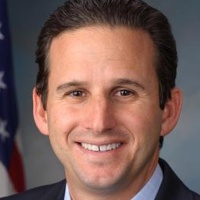
Brian Schatz
Senator
HI
Brian Schatz
Senator
HI
The TAME Extreme Weather and Wildfires Act aims to revolutionize weather, water, and space weather forecasting by integrating Artificial Intelligence (AI) into federal agencies. This legislation mandates the development of AI weather models, comprehensive training datasets, and improved risk communication to enhance forecast accuracy and timeliness. It also emphasizes maintaining traditional forecasting capabilities while fostering public-private partnerships to accelerate the adoption of these advanced tools for hazard mitigation.
This Act establishes the Department of Commerce's leadership role in developing a national strategy, best practices, and an advisory committee to promote the secure deployment and competitiveness of American blockchain technology.
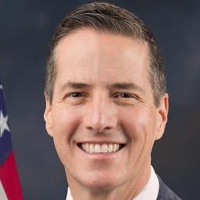
Bernie Moreno
Senator
OH
Bernie Moreno
Senator
OH
The Deploying American Blockchains Act of 2025 establishes the Department of Commerce as the lead federal agency for developing a national strategy for blockchain technology. This Act mandates the creation of the National Blockchain Deployment Advisory Committee to examine risks, promote security, and develop best practices for federal adoption. The Secretary of Commerce will advise the President and report annually to Congress on U.S. competitiveness and emerging trends in the blockchain space.
This bill strengthens federal law enforcement tools and establishes a new coordination center to combat organized retail and supply chain crime.
Charles Grassley
Senator
IA
Charles Grassley
Senator
IA
The Combating Organized Retail Crime Act aims to combat sophisticated criminal gangs engaged in large-scale retail and supply chain theft. This bill strengthens federal law by updating money laundering and stolen property statutes, including establishing a $5,000 aggregate value threshold for certain offenses. Crucially, it mandates the creation of a specialized federal Coordination Center within Homeland Security to unify efforts across all levels of law enforcement and private industry against these transnational criminal organizations.
This resolution officially designates the week of April 19 through April 27, 2025, as "National Park Week" to celebrate the history, value, and importance of the National Park System.
Steve Daines
Senator
MT
Steve Daines
Senator
MT
This resolution officially designates the week of April 19 through April 27, 2025, as "National Park Week." It recognizes the historical significance and vital mission of the National Park Service in preserving America's natural and cultural treasures. The bill encourages the public to visit, experience, and support these cherished sites during this designated week.
The PROTECT Act of 2025 mandates that the Committee on Foreign Investment in the United States (CFIUS) review and requires mandatory reporting for certain U.S. real estate investments by "foreign countries of concern" that involve establishing new facilities.
Bernie Moreno
Senator
OH
Bernie Moreno
Senator
OH
The PROTECT Act of 2025 mandates that the Committee on Foreign Investment in the United States (CFIUS) rigorously review certain greenfield and brownfield real estate investments made by foreign countries of concern. This legislation broadens the definition of a "covered transaction" to include specific U.S. property deals involving the establishment of new facilities by these foreign entities. Crucially, the bill requires mandatory filing and reporting to CFIUS for any such transaction where a country of concern holds even a 5% stake or influence over the resulting business.