Legislative Activity
Track Jefferson's sponsored bills, co-sponsored legislation, and voting record
This bill mandates increased public transparency regarding detailed Medicare spending data by HHS, requires MedPAC to conduct annual, apples-to-apples comparisons of Medicare Advantage and traditional Medicare expenditures, and updates the Trustees' annual report with categorized spending information.
Aaron Bean
Representative
FL
Aaron Bean
Representative
FL
The Apples to Apples Comparison Act of 2025 mandates greater public transparency regarding Medicare spending by requiring the Secretary of HHS to publish detailed, machine-readable expenditure data broken down by county and beneficiary type. Furthermore, the bill requires the Medicare Payment Advisory Commission (MedPAC) to annually compare the average cost of Medicare Advantage enrollees versus traditional Medicare beneficiaries, accounting for plan differences and risk factors. Finally, the Medicare Trustees must also report detailed expenditure information categorized by specific beneficiary enrollment statuses.
The GOLDEN DOME Act of 2025 establishes a comprehensive, rapidly deployable, next-generation missile defense shield by creating a powerful Program Manager, accelerating technology acquisition, and authorizing over $23 billion for integrated air, sea, land, and space defense systems.
Mark Messmer
Representative
IN
Mark Messmer
Representative
IN
The GOLDEN DOME Act of 2025 establishes a comprehensive, next-generation missile defense shield to counter rapidly evolving threats from adversaries like China and Russia. It creates a powerful, direct-reporting Program Manager with broad authority to accelerate the development, acquisition, and deployment of integrated air and missile defense systems across all domains. This funding prioritizes space-based sensors, advanced interceptors, and modernized command and control capabilities to ensure the defense of U.S. citizens against all aerial and missile attacks. The Act also includes provisions to streamline procurement processes and protect the competitive space industrial base.
The LEDGER Act mandates the establishment of a comprehensive, government-wide system to track and record the exact destination and availability period of every federal expenditure.
Mike Haridopolos
Representative
FL
Mike Haridopolos
Representative
FL
The LEDGER Act mandates the creation of a comprehensive, centralized system managed by the Secretary of the Treasury to track every expenditure made by all branches of the U.S. Government. This new system must detail exactly where federal funds are spent and how long those funds were available for obligation. The goal is to significantly enhance the traceability and transparency of government spending.
This bill mandates a report on the Polisario Front's ties to terrorism and foreign actors, and requires the Secretary of State and Treasury to determine if sanctions should be imposed against the group.
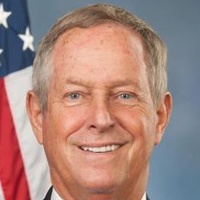
Joe Wilson
Representative
SC
Joe Wilson
Representative
SC
The Polisario Front Terrorist Designation Act mandates a comprehensive report from the Secretary of State detailing the group's foreign ties, especially concerning Iran and designated terrorist organizations. It also requires the Secretaries of State and Treasury to determine within 90 days whether the Polisario Front meets the criteria for designation as a Foreign Terrorist Organization and subsequent sanctions. The President retains the authority to waive these potential penalties if the group engages in good-faith negotiations regarding Morocco's 2007 autonomy plan for Western Sahara.
This Act mandates that online dating services notify users who have messaged an account subsequently banned for fraud, providing specific warnings and best practices.
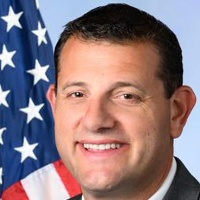
David Valadao
Representative
CA
David Valadao
Representative
CA
The Romance Scam Prevention Act mandates that online dating services notify users who have corresponded with an account subsequently banned for fraud. These notifications must include warnings about potential scams and guidance on protecting personal financial information. This legislation establishes a national standard for these alerts, enforced by the Federal Trade Commission and state attorneys general.
This bill mandates the executive branch to rapidly streamline federal processes for exploring and developing critical minerals from the U.S. seabed and in partnership with allies to secure domestic supply chains.
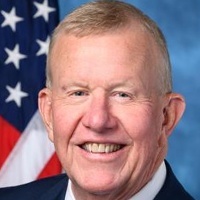
Mike Ezell
Representative
MS
Mike Ezell
Representative
MS
This bill aims to unleash America's access to critical minerals on the seabed by accelerating domestic exploration and recovery efforts. It mandates federal agencies to establish expedited processes, within 60 days, for issuing licenses and permits for mineral recovery on the Outer Continental Shelf and in international waters. The legislation seeks to secure vital supply chains for national security and energy while establishing U.S. leadership in responsible seabed resource development.
The Highway Funding Flexibility Act of 2025 redirects unspent and future federal funds originally designated for EV charging infrastructure toward traditional highway, bridge, and wildlife safety projects.
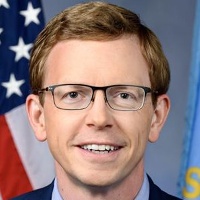
Dusty Johnson
Representative
SD
Dusty Johnson
Representative
SD
The Highway Funding Flexibility Act of 2025 redirects unspent federal funds originally designated for the National Electric Vehicle Infrastructure (NEVI) program and the Charging and Fueling Infrastructure grant program. These funds must now be used by states for traditional highway projects, bridge repair, and wildlife mitigation instead of EV charging infrastructure. The bill specifies how these redirected funds are distributed to states and clarifies that they are supplementary to existing highway funding.
The FIGHT Act of 2025 strengthens federal prohibitions against animal fighting, enhances enforcement mechanisms, and allows citizens to sue violators of animal fighting provisions.
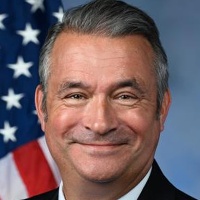
Don Bacon
Representative
NE
Don Bacon
Representative
NE
The FIGHT Act of 2025 significantly strengthens federal prohibitions against animal fighting ventures, specifically targeting the sponsorship, exhibition, and gambling associated with these events. This legislation clarifies the definition of a rooster for legal purposes and bans the interstate transport of roosters for fighting. Furthermore, it empowers private citizens to file lawsuits against violators, allowing for civil penalties and the potential seizure of property used to facilitate illegal animal fighting.
The Nuclear REFUEL Act amends the definition of a "production facility" under the Atomic Energy Act to exempt spent nuclear fuel reprocessing that does not separate plutonium from other transuranic elements.
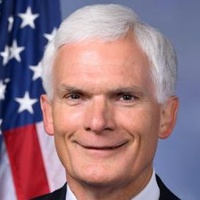
Robert Latta
Representative
OH
Robert Latta
Representative
OH
The Nuclear REFUEL Act amends the Atomic Energy Act to clarify regulations surrounding nuclear fuel processing. Specifically, it excludes the reprocessing of spent nuclear fuel from the definition of a "production facility" if the process does not separate plutonium from other transuranic elements. This change aims to streamline regulatory oversight for certain fuel recycling activities.
The COAL POWER Act repeals the Environmental Protection Agency's recent rule on emission standards for coal- and oil-fired electric utility steam generating units.
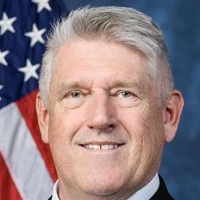
Troy Downing
Representative
MT
Troy Downing
Representative
MT
The COAL POWER Act, officially the Combating Overregulation And Limitation of Proven, Operable, Working Energy Resources Act, directly repeals a recent Environmental Protection Agency (EPA) rule concerning emission standards for coal- and oil-fired power plants. This legislation effectively nullifies the specified EPA regulation, removing its legal standing.
This resolution strongly condemns the rise in ideologically motivated attacks against Jewish individuals in the U.S., including the recent Boulder assault, and reaffirms the House's commitment to combating antisemitism and political violence.
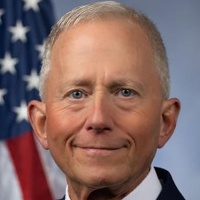
Jefferson Van Drew
Representative
NJ
Jefferson Van Drew
Representative
NJ
This resolution strongly condemns the recent rise in ideologically motivated attacks targeting Jewish individuals and institutions across the United States, including the violent assault in Boulder, Colorado. The House of Representatives reaffirms its commitment to combating antisemitism and politically motivated violence in all its forms. It calls for thorough investigation and prosecution of such incidents and urges all sectors of society to speak out against hate.
This resolution denounces the antisemitic terrorist attack in Boulder, Colorado, and calls for stronger visa vetting and enforcement against illegal immigration following the incident.
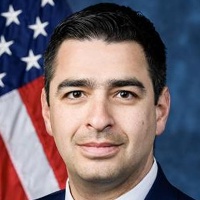
Gabe Evans
Representative
CO
Gabe Evans
Representative
CO
This resolution formally condemns the antisemitic terrorist attack in Boulder, Colorado, carried out by an individual who was in the U.S. illegally. It uses this incident to call for stricter vetting of visa applicants and the swift removal of aliens who violate their visa terms. Furthermore, the bill emphasizes the critical importance of communication between federal and local law enforcement agencies to prevent future acts of terrorism.
This Act prohibits the retirement or fuel source conversion of certain dispatchable power plants in areas deemed at high or elevated risk of electricity supply shortfalls, while providing a pathway for financial relief or exemptions under specific reliability and financial hardship criteria.

Julie Fedorchak
Representative
ND
Julie Fedorchak
Representative
ND
The Baseload Reliability Protection Act prohibits owners of certain dispatchable power plants in areas facing high or elevated risk of electricity shortages from retiring those units or switching their fuel source. Owners can seek an exemption from this ban from FERC, which must grant it if continued operation causes financial hardship or if retirement does not harm grid reliability. The Department of Energy may offer financial assistance to keep essential, money-losing plants operational.
The SKIM Act mandates stricter sentencing guidelines for credit card and identity misuse crimes and requires a report on federal and local cooperation to combat access device fraud.
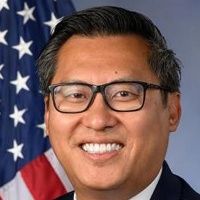
Vince Fong
Representative
CA
Vince Fong
Representative
CA
The SKIM Act, or Stopping Klepto-card and Identity Misuse Act, mandates stricter sentencing guidelines for crimes involving counterfeit or stolen credit and debit cards, ensuring a minimum offense level for such offenses. It also requires the Attorney General and Secretary of Homeland Security to report to Congress on federal and local cooperation in combating access device fraud. This legislation aims to increase penalties and improve coordination against identity and payment card misuse.
This Act establishes an automatic sequestration process to offset future discretionary or direct emergency spending approved by Congress, with specific reporting requirements for designating spending as an emergency.
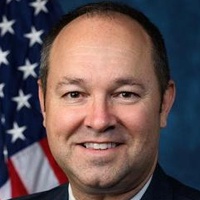
Marlin Stutzman
Representative
IN
Marlin Stutzman
Representative
IN
The Emergency Spending Accountability Act establishes automatic spending sequestration to offset future emergency appropriations approved by Congress. This system mandates multi-year spending cuts, applied only to the same category of spending (discretionary or direct) as the original emergency funds. The bill also requires detailed justifications from Congressional committees whenever emergency spending is included in legislation. Certain critical programs, including Social Security and VA benefits, are explicitly protected from these automatic cuts.
This Act prohibits the State Department and its funded entities from censoring the free speech of United States citizens and mandates notification if such censorship occurs.
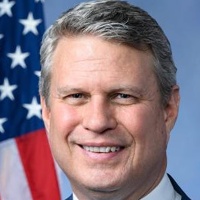
Bill Huizenga
Representative
MI
Bill Huizenga
Representative
MI
The Restoring American Freedom Act prohibits the State Department, its employees, and its funded entities from censoring the free speech of United States citizens. This legislation strictly forbids the use of federal funds to support or facilitate such censorship activities, including the creation or use of advertising blacklists. Furthermore, the Secretary of State must promptly notify Congress and the affected citizen if any censorship is discovered.
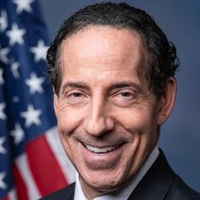
The BARK Act of 2025 shields good-faith donors of pet food and supplies from liability unless gross negligence or intentional harm is proven.
Jamie Raskin
Representative
MD
Jamie Raskin
Representative
MD
The BARK Act of 2025 aims to encourage the donation of pet food and supplies during emergencies and for charitable purposes. It provides liability protection to donors and distributing organizations against lawsuits related to the condition of donated items, provided there is no gross negligence or intentional harm. This protection applies to items that appear fit for use, even if they don't meet all commercial sales standards, provided proper disclosure and reconditioning procedures are followed.
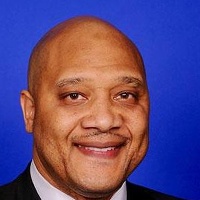
This resolution officially designates the Friday before Memorial Day as National Poppy Day to honor veterans and encourage the wearing of the poppy as a symbol of remembrance.
André Carson
Representative
IN
André Carson
Representative
IN
This resolution officially designates the Friday before Memorial Day as **National Poppy Day** to honor U.S. veterans. It recognizes the poppy as a long-standing symbol of remembrance for those who died in service, inspired by World War I. The bill encourages all citizens to wear a red poppy on this day to show appreciation for our fallen service members.
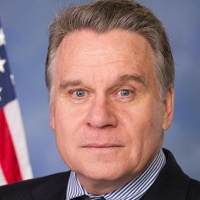
This resolution formally declares the inherent value of every human life, recognizes the *Dobbs* decision, and establishes an annual "Life Month" to support policies and resources that protect the unborn and assist new families.
Christopher Smith
Representative
NJ
Christopher Smith
Representative
NJ
This joint resolution formally establishes "Life Month" to affirm the fundamental value and inherent dignity of every human life as an unalienable right. It recognizes the Supreme Court's *Dobbs* decision and urges Congress to enact laws protecting unborn life. Furthermore, the resolution commends organizations and individuals who support pregnant women and new families.
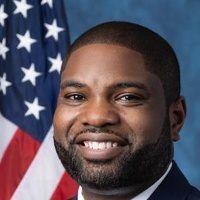
This act codifies recent executive orders into law to strengthen American nuclear energy, streamline testing, advance reactor technology, reform the NRC, and revitalize the domestic nuclear industry.
Byron Donalds
Representative
FL
Byron Donalds
Representative
FL
The Strengthening American Nuclear Energy Act officially codifies several recent Executive Orders into federal law. This action solidifies policies aimed at modernizing nuclear reactor testing, accelerating advanced nuclear technology deployment for national security, reforming the Nuclear Regulatory Commission (NRC), and revitalizing the domestic nuclear industry. Essentially, the bill makes key presidential directives regarding nuclear energy permanent law.