Legislative Activity
Track Derek's sponsored bills, co-sponsored legislation, and voting record
The UNtaxed Act prohibits the United Nations from imposing taxes or fees on U.S. citizens and companies and restricts federal funding for any UN-led global carbon tax initiatives.
August Pfluger
Representative
TX
August Pfluger
Representative
TX
The UNtaxed Act prohibits the United Nations and its affiliated bodies from imposing taxes, fees, or penalties on U.S. citizens and companies without formal Senate approval. Additionally, the bill restricts U.S. funding for any UN organization involved in the implementation or enforcement of a global carbon tax.
This bill ensures the WIC program continues to operate without interruption during any potential funding lapse in fiscal year 2026 by providing automatic funding from the Treasury and retroactively reimbursing states.
Robert Bresnahan
Representative
PA
Robert Bresnahan
Representative
PA
The Keep WIC Working Act ensures the Special Supplemental Nutrition Program for Women, Infants, and Children (WIC) continues uninterrupted during any potential funding lapse in fiscal year 2026. This bill authorizes automatic funding from the Treasury to maintain program operations if regular appropriations are delayed. It also retroactively reimburses states for any funds they used to keep WIC running during the lapse period.
This act ensures the uninterrupted funding of the Supplemental Nutrition Assistance Program (SNAP) for fiscal year 2026, even if Congress delays passing the full USDA budget.
Mariannette Miller-Meeks
Representative
IA
Mariannette Miller-Meeks
Representative
IA
The Keep SNAP Funded Act of 2025 ensures that Supplemental Nutrition Assistance Program (SNAP) benefits continue without interruption if Congress fails to pass the full Department of Agriculture budget by October 1, 2025. This legislation authorizes automatic funding from the Treasury to maintain benefit payments. Furthermore, it guarantees that any benefits missed due to a funding lapse will be paid retroactively once the bill is enacted.
The Shutdown Fairness Act guarantees pay for essential federal employees and contractors required to work during a lapse in appropriations, effective retroactively to September 30, 2025.
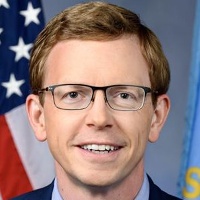
Dusty Johnson
Representative
SD
Dusty Johnson
Representative
SD
The Shutdown Fairness Act ensures that federal employees and contractors deemed essential are automatically paid for the work they perform during a lapse in appropriations, starting in fiscal year 2026. This automatic funding mechanism from the Treasury covers standard pay and benefits for excepted employees until Congress passes a full-year budget. Once regular funding is enacted, these payments are charged against the agency's final appropriation.
This bill establishes a comprehensive federal program to assess, regulate, and support the development of commercial-scale offshore aquaculture through demonstration projects, workforce training, and dedicated research centers.
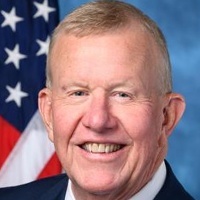
Mike Ezell
Representative
MS
Mike Ezell
Representative
MS
This bill aims to establish and support the commercial-scale offshore aquaculture industry through several key actions. It creates a centralized Office of Aquaculture to coordinate regulatory and scientific efforts and mandates demonstration projects to assess the viability and safety of ocean farming. Furthermore, the legislation invests in workforce development, establishes university Centers of Excellence, and provides grants to preserve vital working waterfronts.
This Act establishes mandatory processing deadlines for ATF applications, requires quarterly public reporting on application status, and mandates internal procedures for appeals and compliance.
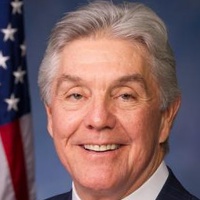
Roger Williams
Representative
TX
Roger Williams
Representative
TX
The Reducing Unnecessary Slowdowns in Handling Act establishes strict new processing deadlines for the ATF regarding general and firearm license applications. It mandates quarterly public reporting to Congress detailing application status, processing times, and reasons for delays or denials. Furthermore, the bill requires the ATF to implement internal appeal processes and streamline existing procedures to meet these new timelines without requiring additional funding.
This constitutional amendment prohibits members of Congress from receiving compensation during any period of a government shutdown.
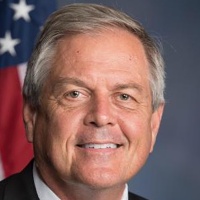
Ralph Norman
Representative
SC
Ralph Norman
Representative
SC
This proposed constitutional amendment would prohibit members of Congress from receiving any compensation for the duration of a government shutdown. If Congress fails to pass necessary funding, Senators and Representatives will not be paid until the government is fully operational again. The amendment also grants Congress the authority to enact laws to enforce this provision.
The Pray Safe Act of 2025 establishes a Department of Homeland Security Federal Clearinghouse to publish evidence-based safety and security best practices and information on federal grants for nonprofit organizations, faith-based organizations, and houses of worship.

Grace Meng
Representative
NY
Grace Meng
Representative
NY
The Pray Safe Act of 2025 establishes a Federal Clearinghouse within the Department of Homeland Security to publish evidence-based safety and security best practices for nonprofit organizations, faith-based organizations, and houses of worship. This Clearinghouse will centralize information on security recommendations and available federal grant programs to help these entities prevent and respond to threats. The Act also mandates a GAO report evaluating existing federal security grant programs for these organizations.
This Act mandates a three-notice system and public awareness campaign to ensure TRICARE beneficiaries are clearly informed about upcoming coverage transition requirements.
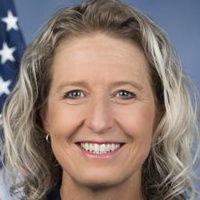
Jennifer Kiggans
Representative
VA
Jennifer Kiggans
Representative
VA
The TRICARE Transition Transparency Act of 2025 mandates that the Secretary of Defense provide TRICARE beneficiaries with proactive, multi-stage electronic notifications before coverage transition requirements take effect. This ensures beneficiaries are clearly informed about necessary actions, such as re-enrollment due to age limits. The Act also requires a public awareness campaign and annual reporting to Congress on the effectiveness of these notification efforts.
This Act automatically provides 14-day continuing appropriations for federal programs at the previous funding level until Congress passes a new budget, effective September 30, 2025.
Dusty Johnson
Representative
SD
Dusty Johnson
Representative
SD
The Eliminate Shutdowns Act establishes an automatic, 14-day continuing appropriation mechanism to keep federal programs operational if Congress fails to pass a new budget by the start of the fiscal year. This funding continues to renew every 14 days until a full appropriation is enacted, ensuring essential services remain active. The Act also includes specific budgetary rules for counting this funding and sets an effective date of September 30, 2025.
The Fraud Accountability and Recovery Act requires the President to halt foreign aid to countries that refuse to extradite fraud convicts or fail to assist in recovering U.S. federal funds stolen through fraud.
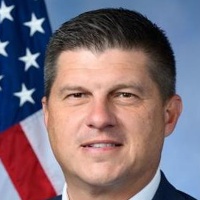
Brad Finstad
Representative
MN
Brad Finstad
Representative
MN
The Fraud Accountability and Recovery Act aims to combat large-scale fraud against the U.S. government by penalizing foreign countries that refuse to extradite convicted fraudsters or fail to assist in recovering stolen federal funds. This bill mandates the suspension of U.S. foreign assistance to non-cooperative nations, though the President retains a national security waiver. Furthermore, it requires the Secretary of State to annually report on noncompliant countries and the amount of lost U.S. funds tied to their inaction.
This resolution honors the life and legacy of Charles "Charlie" James Kirk, condemns his assassination as political violence, and calls for a renewed commitment to civil discourse and American founding principles.

Mike Johnson
Representative
LA
Mike Johnson
Representative
LA
This resolution honors the life and legacy of Charles "Charlie" James Kirk, founder of Turning Point USA. It strongly condemns his assassination as an act of political violence. The bill calls for a renewed national commitment to civil discourse and the founding principles of the United States.
The Safe Step Act mandates that group health plans using medication step therapy establish clear, timely exception processes for patients and doctors when required drugs are medically inappropriate or ineffective.
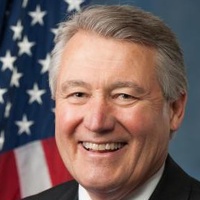
Rick Allen
Representative
GA
Rick Allen
Representative
GA
The Safe Step Act establishes mandatory, transparent exception processes for health plans that use "step therapy" protocols for prescription drugs. This ensures patients or their doctors can quickly request coverage for a prescribed medication when specific clinical criteria are met, such as previous treatment failure or risk of harm. Plans must decide on standard requests within 72 hours and urgent requests within 24 hours, and approved exceptions must last for at least one year. Furthermore, insurers must report detailed data annually on exception requests, approvals, and denials to the Secretary of Health and Human Services.
This bill establishes a mechanism to ensure the Federal Aviation Administration remains funded and operational during a lapse in appropriations by drawing from the Airport and Airway Trust Fund.
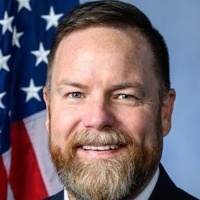
Aaron Bean
Representative
FL
Aaron Bean
Representative
FL
The Aviation Funding Stability Act of 2025 establishes a mechanism to ensure the Federal Aviation Administration (FAA) remains operational during a lapse in appropriations. If Congress fails to pass a budget, the FAA can draw from the Airport and Airway Trust Fund to continue existing programs and projects at the previous year's spending rate. This temporary funding lasts until a new budget is enacted or for a maximum of 30 days, whichever comes first. This measure aims to prevent disruptions to critical aviation services during government shutdowns.
This act eliminates federal income tax on overtime compensation earned by all workers.
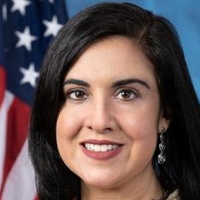
Nicole Malliotakis
Representative
NY
Nicole Malliotakis
Representative
NY
The No Tax on Overtime for All Workers Act amends the tax code to clarify and expand the definition of "qualified overtime compensation." This change ensures that overtime pay earned above a standard rate, whether mandated by the Fair Labor Standards Act or agreed upon beforehand with an employer, is treated favorably for tax purposes. The goal is to incentivize and reward workers for putting in extra hours.
This bill officially designates the historic alignment of US Highway 66 as the Route 66 National Historic Trail, managed by the National Park Service without the use of eminent domain.
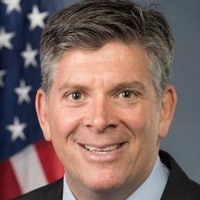
Darin LaHood
Representative
IL
Darin LaHood
Representative
IL
This bill officially designates the historic path of US Highway 66, stretching from Chicago to Santa Monica, as the Route 66 National Historic Trail. The National Park Service will manage the trail while preserving its unique character and consulting with affected Indian Tribes. Crucially, the designation prohibits the use of eminent domain for land acquisition and ensures it does not interfere with existing or future energy projects.
This resolution expresses support for and officially designates September 17, 2025, as "Constitution Day" to honor the foundational document as the 250th anniversary approaches.
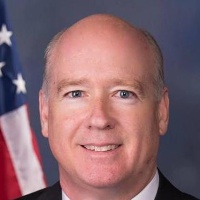
Robert Aderholt
Representative
AL
Robert Aderholt
Representative
AL
This resolution expresses strong support for and officially designates **September 17, 2025, as "Constitution Day."** It recognizes the profound historical importance of the U.S. Constitution as the nation approaches its 250th anniversary. The measure encourages all Americans to observe the day with suitable ceremonies reflecting on the freedoms and responsibilities the document grants.
This bill amends the Social Security Act to provide Medicare coverage for FDA-approved multi-cancer early detection screening tests starting in 2028.
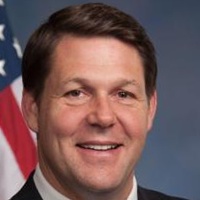
Jodey Arrington
Representative
TX
Jodey Arrington
Representative
TX
The Nancy Gardner Sewell Medicare Multi-Cancer Early Detection Screening Coverage Act amends the Social Security Act to provide Medicare Part B coverage for multi-cancer early detection screening tests starting January 1, 2028. This legislation establishes clear criteria for qualifying tests and outlines payment structures to ensure beneficiaries have access to these advanced diagnostic tools. Importantly, this coverage is designed to complement, rather than replace, existing Medicare-covered cancer screenings.
This Act mandates that new passenger motor vehicles sold in the U.S. must include standard equipment capable of receiving AM broadcast radio signals.

Gus Bilirakis
Representative
FL
Gus Bilirakis
Representative
FL
The AM Radio for Every Vehicle Act of 2025 mandates that the Secretary of Transportation establish a rule requiring AM broadcast radio receivers to be installed as standard equipment in new passenger motor vehicles. This requirement aims to ensure public access to AM radio signals, which are often used for emergency alerts. The bill also directs a GAO study on the effectiveness of AM radio within the national emergency alert system compared to other technologies. Finally, the Act preempts state and local laws on this matter and includes a sunset provision eight years after enactment.
This Act ensures the automatic continuation of pay for active duty military personnel and essential civilian support staff if Congress fails to pass a budget for fiscal year 2026.
Jennifer Kiggans
Representative
VA
Jennifer Kiggans
Representative
VA
The Pay Our Troops Act of 2026 ensures that active duty military personnel and essential civilian support staff continue to receive their pay if Congress has not yet passed the full budget for fiscal year 2026. This act provides automatic continuing appropriations from the Treasury to prevent a lapse in military salaries due to budget delays. The funding automatically terminates once a new budget or continuing resolution is passed, or on January 1, 2027, whichever comes first.