Legislative Activity
Track Terri's sponsored bills, co-sponsored legislation, and voting record
The Medicare Dental, Vision, and Hearing Benefit Act of 2025 adds comprehensive dental, vision, and hearing care, including hearing aids, to Medicare coverage starting in 2026 while also mandating the inclusion of an oral health professional on the U.S. Preventive Services Task Force.

Lloyd Doggett
Representative
TX
Lloyd Doggett
Representative
TX
The Medicare Dental, Vision, and Hearing Benefit Act of 2025 significantly expands Medicare coverage to include comprehensive dental, vision, and hearing services starting in 2026. This legislation outlines specific payment schedules, frequency limits, and coverage percentages for routine exams, procedures, eyeglasses, contact lenses, and hearing aids. Furthermore, the bill mandates the inclusion of an oral health professional on the United States Preventive Services Task Force.
The Credit for Caring Act of 2025 establishes a new, partially refundable federal income tax credit for working family caregivers covering qualified expenses exceeding \$2,000, up to a \$5,000 annual limit.

Mike Carey
Representative
OH
Mike Carey
Representative
OH
The Credit for Caring Act of 2025 establishes a new, non-refundable federal income tax credit for working family caregivers who incur significant expenses caring for a relative with long-term care needs. Eligible caregivers can claim a credit equal to 30% of qualified expenses exceeding \$2,000, up to a maximum annual credit of \$5,000. The bill specifies detailed requirements for the care recipient's needs, the types of allowable expenses, and includes income phase-out limits for claiming the benefit.
This bill allows investors to defer taxes on capital gain dividends from mutual funds when those dividends are automatically reinvested until the shares are sold or the investor passes away.

Beth Van Duyne
Representative
TX
Beth Van Duyne
Representative
TX
This bill, the Generating Retirement Ownership through Long-Term Holding Act, allows individual investors to defer paying taxes on capital gain dividends from mutual funds if those dividends are automatically reinvested into more fund shares. Taxes on these deferred gains are only due when the investor sells the shares or upon death. This provision aims to encourage long-term investment in mutual funds by providing immediate tax relief on reinvested earnings.
Lulu’s Law mandates that shark attacks be officially classified as events eligible for wireless emergency alerts to improve public safety.

Gary Palmer
Representative
AL
Gary Palmer
Representative
AL
Lulu’s Law mandates that shark attacks be officially classified as events eligible for Wireless Emergency Alerts. The legislation requires the Federal Communications Commission to update its regulations within 180 days to ensure these alerts can be issued to the public.
The Caring for Survivors Act of 2025 increases dependency and indemnity compensation for surviving spouses and lowers the required period of total disability rating before death for survivors to qualify for certain benefits.

Jahana Hayes
Representative
CT
Jahana Hayes
Representative
CT
The Caring for Survivors Act of 2025 aims to increase financial support for surviving spouses of veterans. This bill raises the monthly Dependency and Indemnity Compensation (DIC) payment rate for surviving spouses. Additionally, it lowers the required duration of total disability rating before death from ten years to five years for survivors to qualify for certain DIC benefits. If the disability period was between five and ten years, the benefit amount will be proportionally adjusted.
The Stop Comstock Act streamlines federal statutes by removing outdated and redundant language concerning "indecent" or "immoral" materials, focusing legal definitions on "obscene materials."

Becca Balint
Representative
VT
Becca Balint
Representative
VT
The Stop Comstock Act aims to modernize and streamline federal statutes concerning obscene materials. It revises several sections of federal law, including those related to crimes, transportation, and importation, by removing outdated or redundant language like "indecent" or "immoral." This legislative cleanup focuses the legal definitions to center specifically on "obscene materials."
This Act converts Transportation Security Administration (TSA) personnel to standard federal employment rules under Title 5, establishes transition protections, mandates workforce reviews, and addresses labor relations and employee safety.

Bennie Thompson
Representative
MS
Bennie Thompson
Representative
MS
The Rights for the Transportation Security Administration Workforce Act transitions TSA personnel to standard federal employment rules under Title 5 of the U.S. Code by a set date no later than December 31, 2025. This mandates the freezing of current personnel policies during the transition while protecting current employee pay and benefits. The bill also requires extensive reviews by the Comptroller General on hiring, diversity, and workplace safety, and mandates consultation with employee representatives regarding labor relations. Finally, it ensures that screening agents retain collective bargaining rights and addresses specific concerns for Federal Air Marshals.
The REDI Act allows medical and dental interns and residents to defer both principal and interest payments on their student loans while in training.

Brian Babin
Representative
TX
Brian Babin
Representative
TX
The Resident Education Deferred Interest (REDI) Act amends federal student loan regulations to provide a specific deferment for medical and dental residents. This allows borrowers currently serving in an internship or residency program to pause principal payments and prevent interest accrual on their student loans during that training period.
This act expands the Work Opportunity Tax Credit to include employers who hire qualified military spouses.

Donald Beyer
Representative
VA
Donald Beyer
Representative
VA
The Military Spouse Hiring Act amends the Internal Revenue Code to expand eligibility for the Work Opportunity Tax Credit (WOTC). This change allows employers to claim the tax credit for hiring qualified military spouses. A qualified military spouse is defined as someone certified as being married to a member of the U.S. Armed Forces.
This bill mandates that Congress must approve any sale, transfer, or disposal of federally owned property listed on the National Register of Historic Places.

Shomari Figures
Representative
AL
Shomari Figures
Representative
AL
This bill mandates that Congress must provide explicit approval before the federal government can sell, transfer, or declare any property listed on the National Register of Historic Places as surplus. This requirement applies to any land, building, structure, or site with historical significance currently owned by the United States. The process requires an agency to submit a formal notice to Congress, which must then pass a joint resolution to authorize the conveyance.
This bill grants immediate unemployment compensation eligibility to essential federal workers and servicemembers required to work during a government funding lapse.

Debbie Dingell
Representative
MI
Debbie Dingell
Representative
MI
The Pay Federal Workers and Servicemembers Act ensures that essential federal civilian and military personnel required to work during a government shutdown are immediately eligible for unemployment compensation. This provision treats these "excepted" employees as if they were separated from their jobs solely for the purpose of accessing benefits without any waiting period. This change applies to funding lapses beginning on or after March 14, 2025.
This act amends the tax code to give businesses the option to immediately deduct or amortize (spread out over at least five years) their research and experimental expenditures.

Ron Estes
Representative
KS
Ron Estes
Representative
KS
The American Innovation and R&D Competitiveness Act of 2025 revises how businesses treat research and experimental (R&E) expenditures for tax purposes. Taxpayers can now choose between immediately deducting R&E costs or amortizing them over a period of at least 60 months. This legislation also makes technical adjustments to ensure consistency between immediate deductions and claiming the research tax credit.
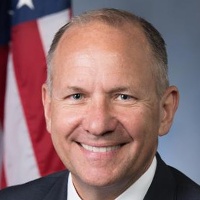
This Act expands Medicare eligibility for home health services by explicitly including the need for occupational therapy as a qualifying factor.
Lloyd Smucker
Representative
PA
Lloyd Smucker
Representative
PA
The Medicare Home Health Accessibility Act updates Medicare rules to explicitly include the need for occupational therapy as a valid basis for qualifying for home health services under both Part A and Part B. This change ensures that occupational therapy is treated equally alongside physical and speech therapy when determining eligibility for in-home care. These new provisions will take effect for services provided on or after January 1, 2026.
This resolution supports National Women and Girls HIV/AIDS Awareness Day, emphasizing the need to address the disproportionate impact of HIV/AIDS on women and girls globally through increased awareness, prevention, and access to care.

Maxine Waters
Representative
CA
Maxine Waters
Representative
CA
This resolution recognizes the ongoing impact of HIV/AIDS, particularly on women and girls, and supports increased awareness, prevention, and access to care and treatment. It emphasizes the need for targeted efforts to address vulnerabilities, reduce disparities, and promote youth-friendly health services. The resolution also encourages global efforts to combat discrimination and improve access to sexual and reproductive health services.
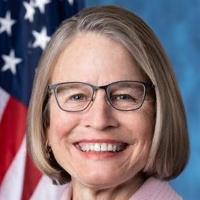
This act extends the current Medicare transition payment rates for durable medical equipment in non-competitive bidding areas until the end of 2025.
Mariannette Miller-Meeks
Representative
IA
Mariannette Miller-Meeks
Representative
IA
The DMEPOS Relief Act of 2025 extends the current Medicare transition payment rates for durable medical equipment in non-competitive bidding areas through the end of 2025. This action delays the implementation of new payment regulations until January 1, 2026. The Secretary of Health and Human Services is directed to maintain existing payment structures in these specific areas for the remainder of the year.
The MATCH IT Act of 2025 mandates the creation of national standards and data requirements to improve the accuracy of patient record matching across healthcare systems, aiming to reduce safety risks and administrative costs.

Mike Kelly
Representative
PA
Mike Kelly
Representative
PA
The MATCH IT Act of 2025 aims to significantly improve patient safety and reduce healthcare costs by establishing national standards for accurate patient identification across health systems. This bill mandates the creation of clear definitions and minimum data sets necessary to achieve a near-perfect patient match rate. Furthermore, it introduces voluntary incentives through Medicare to encourage providers to adopt these new, higher standards for linking patient records.
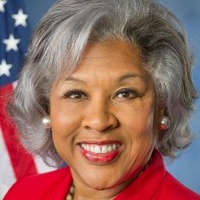
This act mandates that the U.S. Treasury must begin printing new twenty-dollar bills featuring Harriet Tubman on the front after December 31, 2028, with a preliminary design reveal by the end of 2026.
Joyce Beatty
Representative
OH
Joyce Beatty
Representative
OH
The Woman on the Twenty Act of 2025 mandates that Harriet Tubman must be featured on the front of the twenty-dollar bill. This legislation sets a firm deadline, requiring that no new $20 notes can be printed without her portrait after December 31, 2028. Furthermore, the Secretary of the Treasury must publicly reveal the preliminary design for the new note by the end of 2026.
The American Teacher Act establishes federal grants to incentivize states to set a minimum annual teacher salary of $60,000 and provide inflation adjustments for teacher pay.

Frederica Wilson
Representative
FL
Frederica Wilson
Representative
FL
The American Teacher Act aims to address critical teacher shortages by establishing federal grants to help states raise the minimum annual salary for full-time teachers to \$60,000, adjusted for inflation. States must submit sustainability plans to ensure these minimums continue after the initial four-year grant period ends. The bill also provides funds for cost-of-living adjustments and a national campaign to enhance the value and diversity of the teaching profession.
The "Mamas and Babies in Underserved Communities Act of 2025" aims to improve maternal healthcare and reduce disparities in underserved communities by providing grants to healthcare providers for expanded and enhanced services.
Maxine Waters
Representative
CA
Maxine Waters
Representative
CA
The "Mamas and Babies in Underserved Communities Act of 2025" aims to improve maternal health outcomes and reduce disparities in underserved communities by providing grants to healthcare providers. These grants will support the expansion and enhancement of maternal health services, including prenatal, postnatal care for infants, and postpartum care for mothers. Priority is given to entities serving minority, low-income, or medically underserved areas, particularly those led by community members. The act allocates necessary funds from 2026 to 2030 to facilitate these improvements.
The Richard L. Trumka Protecting the Right to Organize Act of 2025 strengthens protections for workers' rights to organize and collectively bargain by modernizing labor laws, addressing unfair labor practices, and enhancing enforcement mechanisms.
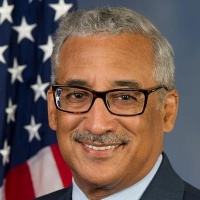
Robert Scott
Representative
VA
Robert Scott
Representative
VA
This bill, the Richard L. Trumka Protecting the Right to Organize Act of 2025, seeks to amend the National Labor Relations Act and other labor laws to strengthen protections for workers' rights to organize and collectively bargain. It aims to modernize labor regulations by clarifying definitions, addressing unfair labor practices, enhancing enforcement, and increasing transparency in labor-management relations. The bill introduces measures such as electronic voting in union elections, strengthens whistleblower protections, and mandates studies on collective bargaining practices. Ultimately, the goal is to ensure fair treatment of workers and promote equitable labor practices.