Legislative Activity
Track Chip's sponsored bills, co-sponsored legislation, and voting record
The "No Propaganda Act" prohibits federal funding for the Corporation for Public Broadcasting.
Scott Perry
Representative
PA
Scott Perry
Representative
PA
The "No Propaganda Act" prohibits the use of federal funds for the Corporation for Public Broadcasting (CPB) and prevents CPB from accepting such funds. It also rescinds any remaining funds allocated to CPB from the Consolidated Appropriations Act, 2023, and the Further Consolidated Appropriations Act, 2024.
Repeals the Impoundment Control Act of 1974, eliminating congressional oversight of presidential decisions to withhold funds.
Andrew Clyde
Representative
GA
Andrew Clyde
Representative
GA
This bill repeals the Impoundment Control Act of 1974, eliminating the requirements for the President to report to Congress on decisions to withhold or delay spending of appropriated funds. This removes the process by which Congress can approve or disapprove of these presidential actions.
The "Emergency Border Control Resolution" establishes the federal budget for fiscal year 2025, setting spending and revenue levels, and mandating House committees to propose legislative changes to reduce the deficit.
Andy Harris
Representative
MD
Andy Harris
Representative
MD
The "Emergency Border Control Resolution" establishes the federal budget for fiscal year 2025, replacing previous resolutions and setting budgetary levels through 2034. It outlines recommended levels and amounts for federal revenues, budget authority, outlays, deficits, and debt. The resolution instructs House committees to propose legislative changes to either increase or reduce the deficit by specific amounts. It also sets a policy to restore federal spending to pre-COVID-19 pandemic levels, adjusted to protect Social Security, Medicare, and debt service obligations.
Repeals a mandate requiring kill switches in cars.
Scott Perry
Representative
PA
Scott Perry
Representative
PA
The "No Kill Switches in Cars Act" repeals a section of the Infrastructure Investment and Jobs Act. The repealed section required the Department of Transportation to create a rule mandating that all new cars have advanced drunk and impaired driving prevention technology. This bill prohibits the government from requiring car manufacturers to install kill switches in vehicles.
This bill abolishes the United States Agency for International Development (USAID), redirecting its assets and responsibilities to the Secretary of State.
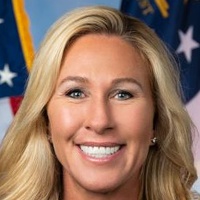
Marjorie Greene
Representative
GA
Marjorie Greene
Representative
GA
This bill proposes to eliminate the United States Agency for International Development (USAID). It would cut off all federal funding to USAID starting from the bill's enactment date. Any unspent funds previously allocated to USAID would be rescinded and transferred to the Secretary of State, along with all remaining assets and liabilities of the agency.
The BOWSER Act repeals the District of Columbia Home Rule Act, returning control to the federal government one year after enactment.
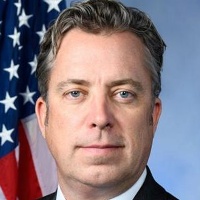
Andrew Ogles
Representative
TN
Andrew Ogles
Representative
TN
The BOWSER Act repeals the District of Columbia Home Rule Act, which currently grants a degree of self-governance to the District of Columbia. This repeal would take effect one year after the enactment of the BOWSER Act. Effectively, this would end the current form of local government in DC.
The Senior Citizens Tax Elimination Act proposes to repeal federal income taxes on Social Security benefits while ensuring the Social Security and Railroad Retirement trust funds remain fully funded.
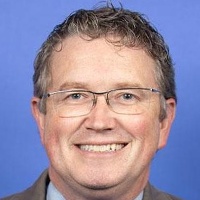
Thomas Massie
Representative
KY
Thomas Massie
Representative
KY
The Senior Citizens Tax Elimination Act proposes to repeal federal income taxes on Social Security benefits, ensuring these payments are no longer counted as gross income. To protect the financial stability of the Social Security and Railroad Retirement programs, the bill mandates automatic federal appropriations to offset any resulting revenue loss.
This proposed constitutional amendment would base the apportionment of U.S. House of Representatives seats on the number of U.S. citizens in each state rather than the total population.
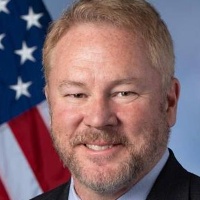
Warren Davidson
Representative
OH
Warren Davidson
Representative
OH
This proposed constitutional amendment would change how seats in the U.S. House of Representatives are apportioned among the states. Instead of using total population, the amendment mandates that representation be based solely on the number of U.S. citizens residing in each state.
The "UNPLUG EVs Act" rescinds unspent funds from electric vehicle charging and fueling grant programs and the National Electric Vehicle Infrastructure Formula Program to reduce the federal deficit.
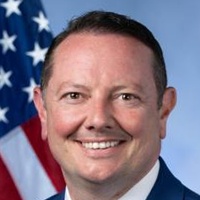
Eric Burlison
Representative
MO
Eric Burlison
Representative
MO
The "UNPLUG EVs Act" rescinds any unspent funds allocated for electric vehicle charging and fueling grants, as well as funds from the National Electric Vehicle Infrastructure Formula Program. The recovered funds will be deposited into the Treasury's general fund and used to reduce the federal deficit.
The Dismantle DEI Act of 2025 immediately rescinds federal diversity, equity, and inclusion (DEI) mandates across executive offices, contracting, grants, and education, while banning related training and imposing penalties for non-compliance.
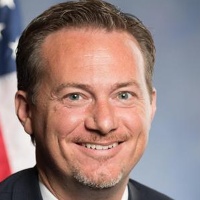
Michael Cloud
Representative
TX
Michael Cloud
Representative
TX
The Dismantle DEI Act of 2025 aims to immediately rescind diversity, equity, and inclusion (DEI) mandates across the federal government, including shutting down related offices and banning specific ideological training for federal personnel and contractors. The bill prohibits the use of federal funds for DEI activities by grant recipients and mandates that federal advisory committees cease all such practices or face termination. Furthermore, it establishes strong enforcement mechanisms, allowing individuals to sue violators and seek financial penalties for non-compliance.
The SHUSH Act removes firearm silencers from the definition of "firearms" under federal law, eliminating the associated taxes, registration requirements, and state-level restrictions.
Michael Cloud
Representative
TX
Michael Cloud
Representative
TX
The SHUSH Act (Silencers Help Us Save Hearing Act) removes firearm silencers from the definition of "firearms" under federal law, effectively eliminating the associated registration requirements, transfer taxes, and federal restrictions. The bill also preempts state and local laws that impose specific regulations on silencers and removes enhanced criminal penalties related to their use.
The RECOGNIZING Judea and Samaria Act mandates that all official United States government documents and federal laws refer to the region historically known as the "West Bank" as "Judea and Samaria."
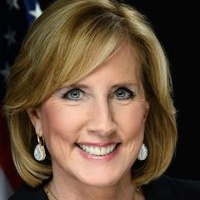
Claudia Tenney
Representative
NY
Claudia Tenney
Representative
NY
The RECOGNIZING Judea and Samaria Act mandates that the United States government officially refer to the region historically known as Judea and Samaria by those names, rather than the term "West Bank." The bill prohibits federal agencies from using the term "West Bank" in official documents and requires corresponding updates to existing U.S. laws. It includes specific exceptions for international treaty obligations and provides waiver authority for the Secretary of State.
This bill mandates the termination of the U.S. Department of Education effective December 31, 2026.
Thomas Massie
Representative
KY
Thomas Massie
Representative
KY
This bill proposes the complete termination of the United States Department of Education. If enacted, the agency would be officially dissolved on December 31, 2026.
This bill mandates federal investigations into potential violations of the partial-birth abortion ban, establishes mandatory reporting requirements for healthcare providers, and requires regular oversight reports to Congress.
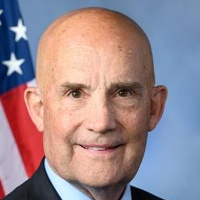
Keith Self
Representative
TX
Keith Self
Representative
TX
The Ensuring Justice for Victims of Partial-Birth Abortion Act mandates federal investigations into potential violations of the partial-birth abortion ban, including a specific inquiry into the 2022 discovery of fetal remains in Washington, D.C. The bill establishes new requirements for reporting suspected violations and mandates annual Department of Justice reporting on enforcement efforts. Additionally, it directs the Government Accountability Office to review and provide recommendations for strengthening the enforcement of existing federal abortion restrictions.
The America First Act restricts federal public benefits, housing assistance, health care, tax credits, and educational funding for various categories of non-citizens and imposes stricter verification and eligibility requirements across multiple federal programs.
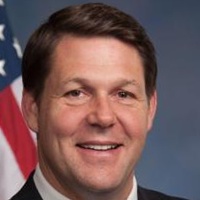
Jodey Arrington
Representative
TX
Jodey Arrington
Representative
TX
The "America First Act" proposes comprehensive changes to federal law to restrict non-citizens' access to a wide range of public benefits, including health care, housing, education, and tax credits. The legislation mandates stricter citizenship verification requirements across federal programs and imposes funding penalties on jurisdictions that do not cooperate with federal immigration enforcement. Additionally, it seeks to limit the use of federal funds by tax-exempt organizations that provide services to certain non-citizen populations.
This bill amends the Internal Revenue Code to require taxpayers to provide valid, work-authorized Social Security numbers for themselves and their qualifying children to claim the Child Tax Credit and Earned Income Tax Credit.
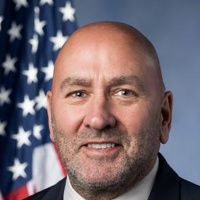
Clay Higgins
Representative
LA
Clay Higgins
Representative
LA
The Safeguarding American Workers’ Benefits Act updates eligibility requirements for the Child Tax Credit and the Earned Income Tax Credit. It mandates that taxpayers and qualifying children provide a valid Social Security number—issued to a U.S. citizen or work-authorized noncitizen—before the tax return due date to claim these benefits. These changes are set to take effect for tax years beginning after December 31, 2025.
The 287(g) Program Protection Act mandates that the Department of Homeland Security enter into immigration enforcement agreements with state and local law enforcement agencies upon request and establishes new oversight, reporting, and funding requirements for the program.
Michael Cloud
Representative
TX
Michael Cloud
Representative
TX
The 287(g) Program Protection Act mandates that the Department of Homeland Security enter into immigration enforcement agreements with any state or local law enforcement agency that requests one. The bill streamlines the approval process, protects existing agreements from arbitrary termination, and requires the Secretary to provide annual performance reports and recruitment plans to expand the program. Additionally, it establishes uniform training standards and reallocates funding to support these state and local partnerships.
The Born-Alive Abortion Survivors Protection Act requires health care practitioners to provide the same level of care to infants born alive after an abortion attempt as they would to any other newborn, mandating immediate hospitalization and imposing penalties for violations, while protecting the mother from prosecution. It also allows the mother of a child born alive to file a civil action against anyone who violated the act.
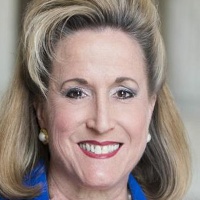
Ann Wagner
Representative
MO
Ann Wagner
Representative
MO
The "Born-Alive Abortion Survivors Protection Act" ensures that infants born alive after an abortion receive the same medical care as any other newborn, mandating immediate hospitalization and requiring healthcare practitioners to report any failures to comply. Violators face fines, imprisonment, and potential prosecution for homicide or attempted homicide, while the mother of the child cannot be prosecuted. The bill also allows the woman who had the abortion to file a civil action against anyone who violated the act. It defines abortion and attempts at abortion, and renames "Partial-Birth Abortions" to "Abortions" in relevant sections of the U.S. Code.
The National Constitutional Carry Act prohibits state and local governments from restricting the public carry of firearms by individuals who are legally eligible to possess them under federal law.
Thomas Massie
Representative
KY
Thomas Massie
Representative
KY
The National Constitutional Carry Act seeks to protect the Second Amendment right of law-abiding citizens to carry firearms in public for self-defense. The bill prohibits state and local governments from imposing criminal or civil penalties on individuals who are legally eligible to possess firearms. By overriding restrictive local regulations, the legislation aims to ensure a uniform standard for the right to bear arms across the United States.
The Birthright Citizenship Act of 2025 limits automatic birthright citizenship to children born in the U.S. to at least one parent who is a U.S. citizen, a lawful permanent resident, or an alien serving in the U.S. armed forces.
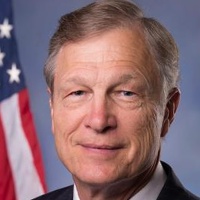
Brian Babin
Representative
TX
Brian Babin
Representative
TX
The Birthright Citizenship Act of 2025 proposes to limit automatic birthright citizenship to children born in the United States who have at least one parent who is a U.S. citizen, a lawful permanent resident, or an alien serving in the U.S. armed forces. This legislation would exclude children born to parents without legal status or those on temporary visas from receiving automatic citizenship. These changes would apply only to individuals born on or after the date of the Act's enactment.