
Legislative Activity
Track Chip's sponsored bills, co-sponsored legislation, and voting record
The Energy Freedom Act eliminates the majority of existing federal tax credits and deductions for energy efficiency, clean energy production, and related manufacturing, with most changes taking effect after December 31, 2025.
Josh Brecheen
Representative
OK
Josh Brecheen
Representative
OK
The Energy Freedom Act is a comprehensive bill focused almost entirely on repealing numerous existing tax credits and deductions related to energy efficiency, clean energy production, and alternative fuels. This legislation systematically eliminates incentives such as those for residential solar, clean vehicle purchases, advanced manufacturing, and carbon sequestration. With only one minor exception, the bill's primary effect is to remove these specific energy-related tax breaks from the Internal Revenue Code, generally taking effect for tax years beginning after December 31, 2025.
This bill significantly increases mandatory minimum prison sentences for non-citizens who commit crimes after entering the U.S. illegally or after previous removal.
Brad Knott
Representative
NC
Brad Knott
Representative
NC
The Punishing Illegal Immigrant Felons Act of 2025 significantly increases prison sentences for non-citizens who commit crimes after entering the U.S. illegally or after being previously removed. This legislation mandates substantial minimum prison terms—including an additional five years for illegal entry followed by a felony conviction and a new ten-year minimum for re-entry after deportation coupled with a crime. The bill aims to impose much harsher penalties on undocumented immigrants who commit serious offenses.
This bill removes federal tax and registration requirements for firearm silencers, preempts certain state regulations, mandates the destruction of existing federal silencer owner records, and updates related definitions and marking requirements.
Andrew Clyde
Representative
GA
Andrew Clyde
Representative
GA
The Constitutional Hearing Protection Act aims to treat firearm silencers equally under federal tax law by updating definitions and removing certain registration requirements if existing firearm laws are followed. The bill also preempts state and local governments from imposing special taxes or registration burdens on silencers. Furthermore, it mandates the destruction of existing federal records identifying silencer owners within one year of enactment.
This Act prohibits federal subsidies, tax deductions, and essential health benefit coverage for procedures related to gender transition.

Claudia Tenney
Representative
NY
Claudia Tenney
Representative
NY
This Act prohibits the use of federal funds for gender transition procedures across major public health programs, including Medicaid, CHIP for minors, and Medicare. It also removes the tax deductibility for expenses related to these procedures, defining them broadly as medical interventions intended to change physical appearance to match an identity different from biological sex. The legislation provides specific medical exceptions for conditions like Disorders of Sex Development (DSD) and life-saving care. Finally, it bans gender transition procedures from being classified as an essential health benefit under the Affordable Care Act.
This Act redefines immediate relatives for immigration, caps family-sponsored visas, and creates a new, non-work, temporary visa for parents of adult U.S. citizens.
Eli Crane
Representative
AZ
Eli Crane
Representative
AZ
The Nuclear Family Priority Act significantly restructures U.S. family-based immigration by redefining "immediate relatives" to only include spouses and children of U.S. citizens, removing parents from that top category. It also establishes a new, temporary nonimmigrant visa for parents of adult U.S. citizens, which prohibits work and public benefits. Furthermore, the bill revises the annual cap for family-sponsored visas and makes numerous technical amendments across immigration law to align with these changes.
This resolution affirms that members of Tren de Aragua constitute alien enemies perpetrating an invasion and supports the President's constitutional authority to repel this threat.

Andy Biggs
Representative
AZ
Andy Biggs
Representative
AZ
This resolution affirms Congress's agreement with the President's use of executive authority to address the threat posed by the criminal organization Tren de Aragua. It formally declares members of the group to be "alien enemies" engaged in an invasion of the United States. The bill supports the President's actions to detain and remove these individuals under the Alien Enemies Act of 1798.
This bill completely repeals the Renewable Fuel Standard program established under the Clean Air Act and makes necessary conforming amendments to related laws.
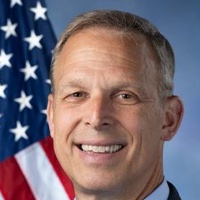
Scott Perry
Representative
PA
Scott Perry
Representative
PA
The Eliminating the RFS and Its Destructive Outcomes Act completely repeals the Renewable Fuel Standard (RFS) program established under Section 211(o) of the Clean Air Act. This legislation removes all references to the repealed standard throughout related environmental and petroleum marketing laws. In essence, the bill eliminates the federal renewable fuel mandate.
This act prohibits all federal funding for the National Public Radio (NPR) and the Public Broadcasting Service (PBS).
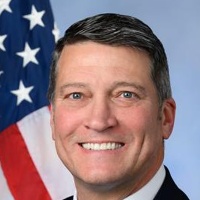
Ronny Jackson
Representative
TX
Ronny Jackson
Representative
TX
The No Partisan Radio and Partisan Broadcasting Services Act (NPR and PBS Act) prohibits all federal funding, direct or indirect, for the National Public Radio (NPR) and the Public Broadcasting Service (PBS). This measure immediately ends government financial support for these two national broadcasting entities. The restriction also applies to any successor organizations.
This act eliminates the Optional Practical Training (OPT) program, ending work authorization for F-1 visa students unless explicitly authorized by future Congressional action.

Paul Gosar
Representative
AZ
Paul Gosar
Representative
AZ
The Fairness for High-Skilled Americans Act of 2025 aims to eliminate the Optional Practical Training (OPT) program, which currently allows F-1 student visa holders to gain temporary work authorization after completing their studies. This bill removes the government's authority to grant such work permission unless explicitly authorized by a future Act of Congress.
This bill prohibits the use of federal taxpayer funds for gender transition procedures and bars federal health plans and ACA premium credits from covering such care.
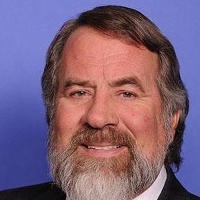
Doug LaMalfa
Representative
CA
Doug LaMalfa
Representative
CA
The End Taxpayer Funding of Gender Experimentation Act of 2025 prohibits the use of any federal funds for gender transition procedures, including those provided through federal health plans or facilities. This ban also extends to the Affordable Care Act, preventing individuals from using federal premium tax credits or cost-sharing reductions to cover plans that include such procedures. The legislation broadly defines gender transition procedures while excluding care for certain disorders of sex development and life-threatening emergencies.
This bill requires lobbyists to disclose whether they are exempt from registration under the Foreign Agents Registration Act when filing their lobbying disclosures.
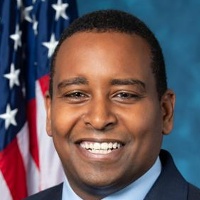
Joe Neguse
Representative
CO
Joe Neguse
Representative
CO
The Lobbying Disclosure Improvement Act mandates that lobbyists must now disclose on their registration forms whether they qualify for an exemption under the Foreign Agents Registration Act. This change enhances transparency by requiring registrants to explicitly state their status regarding representation of foreign entities.
This bill abolishes the Federal Reserve Board and Federal Reserve Banks one year after enactment, transferring assets to the Treasury and tasking the Treasury Secretary with managing outstanding liabilities.

Thomas Massie
Representative
KY
Thomas Massie
Representative
KY
The "Federal Reserve Board Abolition Act" eliminates the Federal Reserve Board and Federal Reserve Banks one year after enactment, repealing the Federal Reserve Act. During the dissolution period, the Chairman of the Federal Reserve Board will manage the winding down of affairs, and the Office of Management and Budget Director will liquidate assets to maximize returns to the Treasury. The Treasury Secretary will assume outstanding liabilities and, along with the Office of Management and Budget Director, report to Congress on the implementation of the Act.
The SAFER Voter Act lowers the minimum age to purchase a handgun or handgun ammunition from a Federal firearms licensee to 18 years old.
Thomas Massie
Representative
KY
Thomas Massie
Representative
KY
The SAFER Voter Act seeks to eliminate the age restriction that prevents individuals under 21 from purchasing handguns and handgun ammunition from licensed federal firearms dealers. This bill would amend title 18 of the United States Code, specifically sections 922(b)(1) and 922(c)(1), to allow adults 18 and over to purchase handguns.
This bill aims to restore the presumption that patent holders are entitled to a permanent injunction against patent infringers, making it easier for inventors to protect their rights.

Nathaniel Moran
Representative
TX
Nathaniel Moran
Representative
TX
The RESTORE Patent Rights Act of 2025 aims to strengthen patent protection for inventors by making it easier to obtain injunctions against patent infringers. The act establishes a legal presumption that patent holders are entitled to a permanent injunction when their patents are infringed upon. This reverses a recent trend of court decisions that have made it more difficult for patent owners to stop ongoing infringement. The bill seeks to encourage innovation, especially among individual inventors, universities, startups, and small businesses.
This bill repeals the 1991 and 2002 authorizations for the use of military force against Iraq.
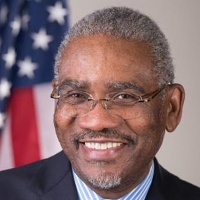
Gregory Meeks
Representative
NY
Gregory Meeks
Representative
NY
This bill repeals the 1991 Authorization for Use of Military Force Against Iraq Resolution and the 2002 Authorization for Use of Military Force Against Iraq Resolution, formally ending the legal basis for military actions in Iraq under these authorizations.
The "Make American Flags in America Act of 2025" mandates that U.S. flags displayed on Federal property or bought by Federal agencies be made entirely in the U.S., and requires a study on country-of-origin labeling enforcement for flags.
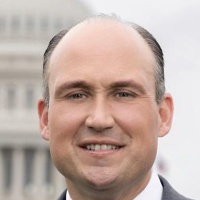
Nicholas Langworthy
Representative
NY
Nicholas Langworthy
Representative
NY
The "Make American Flags in America Act of 2025" mandates that U.S. flags displayed on Federal property or bought by Federal agencies be entirely manufactured in the U.S. using 100% U.S.-made materials, in accordance with international agreements. It also directs the Federal Trade Commission to study and report on country-of-origin labeling enforcement for U.S. flags, aiming to improve enforcement and deter violations.
The "Death Tax Repeal Act" eliminates estate and generation-skipping transfer taxes, adjusts gift tax calculations, and sets a $10,000,000 lifetime gift exemption.
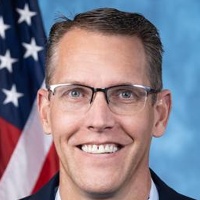
Randy Feenstra
Representative
IA
Randy Feenstra
Representative
IA
The "Death Tax Repeal Act" eliminates both estate and generation-skipping transfer taxes, effective from the date of enactment. It adjusts gift tax calculations by setting the lifetime gift exemption at $10,000,000, with inflation adjustments after 2011. The Act also includes transitional rules for applying certain sections of the Internal Revenue Code during the enactment year.
The SAFE for America Act of 2025 eliminates the diversity visa program, effective October 1, 2025.
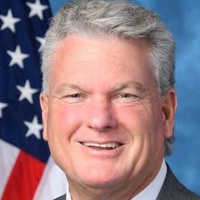
Mike Collins
Representative
GA
Mike Collins
Representative
GA
The SAFE for America Act of 2025 eliminates the Diversity Visa Program, which makes visas available to persons from countries with low rates of immigration to the United States. This is achieved through repealing subsection (c) of Section 203 of the Immigration and Nationality Act. The Act also makes corresponding technical amendments to other sections of the Immigration and Nationality Act to reflect this change. These changes would take effect beginning October 1, 2025.
Prohibits federal funding for disinformation research grants and related programs.
Thomas Massie
Representative
KY
Thomas Massie
Representative
KY
This bill prohibits federal funds from being used for disinformation research grants. It also blocks funding for Secure and Trustworthy Cyberspace grants. Additionally, the bill defunds programs within the National Science Foundation's Track F: Trust and Authenticity in Communications Systems.
The "National Right-to-Work Act" prohibits mandatory union membership as a condition of employment, protecting employees' rights to choose whether or not to join or support a labor union.
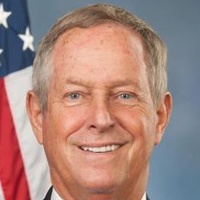
Joe Wilson
Representative
SC
Joe Wilson
Representative
SC
The "National Right-to-Work Act" amends both the National Labor Relations Act and the Railway Labor Act to protect an employee's right to choose whether or not to join or support a labor union. It eliminates the possibility of mandatory union membership or dues payments as a condition of employment, ensuring that employees cannot be forced to join or support a union against their will.