
Legislative Activity
Track Chip's sponsored bills, co-sponsored legislation, and voting record
This bill mandates the destruction of existing firearm transaction records from closed businesses and prohibits the ATF from collecting such records in the future.
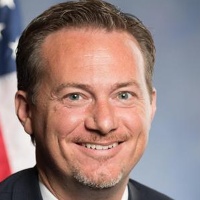
Michael Cloud
Representative
TX
Michael Cloud
Representative
TX
The "No Retaining Every Gun In a System That Restricts Your Rights Act" mandates the destruction of all firearm transaction records currently held by the ATF from discontinued businesses. Furthermore, it amends federal law to prohibit the future collection and transfer of these records to the government when a firearms business ceases operations. The bill also requires the ATF to submit a formal report to Congress confirming the number of records destroyed.
Affirms states' rights to defend against invasion, citing the influx of cartels and criminal elements across the southern border and criticizing the Biden administration's border security policies.
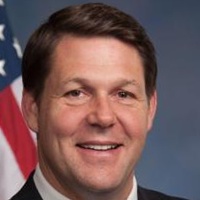
Jodey Arrington
Representative
TX
Jodey Arrington
Representative
TX
This bill asserts the constitutional right of states to defend themselves against invasion, citing the situation at the southern border from 2021-2024 as an invasion by cartels, terrorists, and criminal elements. It criticizes the Biden administration's border policies and claims the federal government failed to protect southern border states, thus empowering states to take defensive action.
This bill mandates federal reimbursement for states that have spent over $2.5 billion on border security and enforcement efforts over the preceding decade.

Dan Crenshaw
Representative
TX
Dan Crenshaw
Representative
TX
The State Border Security Reimbursement Act of 2025 mandates that the federal government reimburse states for significant expenditures made on border security and enforcement. This legislation aims to alleviate the financial burden on states that have spent over $2.5 billion on these federal responsibilities over the preceding decade. Eligible states may apply for full reimbursement of these non-federally funded costs within a specified timeframe.
The TRUST in Congress Act requires Members of Congress, their spouses, and their dependent children to place certain investment assets into qualified blind trusts to prevent conflicts of interest.
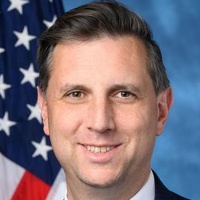
Seth Magaziner
Representative
RI
Seth Magaziner
Representative
RI
The TRUST in Congress Act requires Members of Congress, their spouses, and their dependent children to place covered financial investments into qualified blind trusts to prevent conflicts of interest. The bill establishes strict deadlines for asset transfers and mandates public certification of compliance. These measures ensure that lawmakers cannot influence or benefit from their personal investments while serving in office.
This bill proposes the full repeal of the National Firearms Act, eliminating federal taxes, registration requirements, and transfer restrictions on items such as silencers and short-barreled firearms.
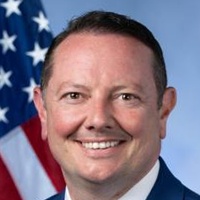
Eric Burlison
Representative
MO
Eric Burlison
Representative
MO
The "Repeal the NFA Act" proposes the complete elimination of the National Firearms Act (NFA). This legislation would remove federal taxes, registration requirements, and transfer restrictions currently imposed on items such as machine guns, short-barreled rifles, short-barreled shotguns, and silencers.
The Honor Inauguration Day Act mandates that the United States flag be flown at full staff on every presidential Inauguration Day.

Mónica De La Cruz
Representative
TX
Mónica De La Cruz
Representative
TX
The Honor Inauguration Day Act mandates that the United States flag be flown at full staff on every presidential Inauguration Day. This legislation ensures that the flag remains at its highest peak to celebrate the democratic process and the expression of the people's will, regardless of any conflicting display regulations.
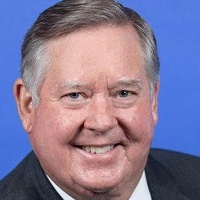
The Legal Workforce Act mandates that all U.S. employers use a phased-in electronic verification system to confirm the employment eligibility of all new and existing employees.
Ken Calvert
Representative
CA
Ken Calvert
Representative
CA
The Legal Workforce Act mandates that all U.S. employers use a new, electronic verification system to confirm the work eligibility of every new hire. This legislation replaces the existing E-Verify program with a phased-in, mandatory process that requires employers to verify both identity and work authorization for all employees. Additionally, the bill increases penalties for hiring unauthorized workers, establishes new fraud prevention measures, and preempts state laws to create a uniform national employment verification policy.
This bill officially designates the Department of Veterans Affairs community-based outpatient clinic in Lubbock, Texas, as the "General Bernie Mittemeyer VA Clinic."
Jodey Arrington
Representative
TX
Jodey Arrington
Representative
TX
This bill officially designates the Department of Veterans Affairs community-based outpatient clinic in Lubbock, Texas, as the "General Bernie Mittemeyer VA Clinic." All future federal references to this facility will reflect this new name.
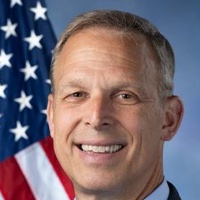
The Restoring Energy Market Freedom Act repeals thirteen federal tax credits for renewable energy, nuclear power, and advanced energy manufacturing.
Scott Perry
Representative
PA
Scott Perry
Representative
PA
The Restoring Energy Market Freedom Act proposes the repeal of thirteen federal tax credits currently supporting renewable energy, nuclear power, and advanced energy manufacturing. By eliminating these incentives and their associated direct-pay provisions, the bill aims to remove government-subsidized market interventions in the energy sector. These changes would take effect for taxable years beginning after December 31, 2024.
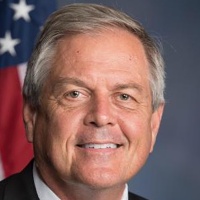
This bill proposes a constitutional amendment to limit members of the House of Representatives to three terms and Senators to two terms, with specific provisions for partial terms. Terms served before the amendment's ratification would not be counted towards these limits, and the amendment must be ratified within seven years to be valid.
Ralph Norman
Representative
SC
Ralph Norman
Representative
SC
This bill proposes a constitutional amendment to limit the number of terms a member of Congress can serve. Representatives would be limited to 3 terms and Senators to 2 terms, with specific rules for partial terms. Terms served before the amendment's ratification would not be counted. The amendment must be ratified by three-fourths of the states within seven years to be valid.
The Stopping Border Surges Act implements stricter asylum eligibility requirements, accelerates deportation timelines for unaccompanied minors, and mandates family detention to deter unauthorized border crossings.

Andy Biggs
Representative
AZ
Andy Biggs
Representative
AZ
The Stopping Border Surges Act proposes comprehensive reforms to U.S. immigration policy by tightening asylum eligibility and accelerating the processing of unaccompanied minors. The bill mandates stricter screening standards, expands detention authority for families, and limits legal protections for those seeking asylum. Ultimately, the legislation aims to deter fraudulent claims and expedite removals through more restrictive border and interior enforcement measures.
The "WHO Withdrawal Act" withdraws the United States from the World Health Organization, prohibits funding to the WHO, and repeals the act that authorized U.S. participation.
Andy Biggs
Representative
AZ
Andy Biggs
Representative
AZ
The WHO Withdrawal Act withdraws the United States from the World Health Organization (WHO) upon enactment. It also prohibits any federal funds from being used to support the WHO or any successor organization. Finally, the act repeals the Act of June 14, 1948, which previously authorized U.S. participation and funding of the WHO.
This bill repeals Obamacare and the Health Care and Education Reconciliation Act of 2010, effective October 1, 2025, and reinstates prior laws.
Andy Biggs
Representative
AZ
Andy Biggs
Representative
AZ
The "Responsible Path to Full Obamacare Repeal Act" repeals both the Patient Protection and Affordable Care Act and the Health Care and Education Reconciliation Act of 2010, effective October 1, 2025. It aims to reinstate the laws that were in place before these acts were enacted, essentially reversing all changes made by Obamacare.
The Federal Reserve Transparency Act of 2025 mandates a comprehensive audit of the Federal Reserve System by the Comptroller General, ensuring greater transparency and accountability. This act requires a detailed report to Congress with findings and recommendations, while also repealing audit limitations.

Thomas Massie
Representative
KY
Thomas Massie
Representative
KY
The Federal Reserve Transparency Act of 2025 mandates a comprehensive audit of the Federal Reserve System by the Comptroller General within one year. Following the audit, a detailed report must be submitted to Congress, including findings and recommendations. This act aims to increase transparency and accountability within the Federal Reserve System by repealing audit limitations.
The Regulations from the Executive in Need of Scrutiny (REINS) Act of 2025 increases congressional accountability by requiring federal agencies to obtain legislative approval for all "major" rules before they can take effect.

Katherine Cammack
Representative
FL
Katherine Cammack
Representative
FL
The Regulations from the Executive in Need of Scrutiny (REINS) Act of 2025 aims to increase federal regulatory accountability by requiring Congress to approve any "major" rule before it can take effect. Under this legislation, rules with a significant economic impact require a joint resolution of approval from both chambers of Congress to become law. By shifting this authority back to the legislative branch, the Act seeks to ensure greater transparency and oversight of the federal rulemaking process.
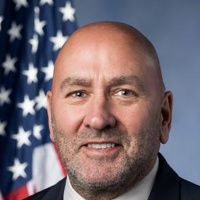
The Finish the Wall Act mandates the immediate resumption and completion of U.S.-Mexico border wall construction by September 2026 while ensuring full compliance with federal DNA collection requirements for detained individuals.
Clay Higgins
Representative
LA
Clay Higgins
Representative
LA
The "Finish the Wall Act" mandates the immediate resumption of border wall construction along the U.S.-Mexico border, requiring completion by September 30, 2026, using previously appropriated funds. The bill directs the Department of Homeland Security to execute comprehensive infrastructure and technology plans while honoring existing construction contracts. Additionally, it requires the agency to certify full compliance with federal DNA collection requirements for individuals in Customs and Border Protection custody.