Legislative Activity
Track Ralph's sponsored bills, co-sponsored legislation, and voting record
This bill proposes a constitutional amendment to limit birthright citizenship under the 14th Amendment to children born in the U.S. to parents who are U.S. citizens, lawful permanent residents, or active-duty military personnel.
Clay Fuller
Representative
GA
Clay Fuller
Representative
GA
This proposed constitutional amendment seeks to clarify and limit birthright citizenship under the 14th Amendment. It specifies that only children born in the U.S. to a citizen, national, lawful permanent resident, or active-duty service member parent would automatically receive citizenship. Congress would be empowered to enforce these new standards.
Logan's Law establishes a publicly accessible Violent Criminal Offender Database and mandates federal efforts to improve criminal record sharing between states.
Russell Fry
Representative
SC
Russell Fry
Representative
SC
Logan's Law establishes a publicly accessible **Violent Criminal Offender Database** containing federal and state records of qualifying convictions. It mandates that states receiving Byrne JAG grants must submit this conviction data or risk losing funding. Additionally, the bill requires the Attorney General to report on and recommend improvements for criminal record sharing between states and federal entities.
This act repeals the Temporary Protected Status (TPS) program, immediately ending all current TPS grants and requiring recipients to depart the U.S. within 60 days.
Andrew Clyde
Representative
GA
Andrew Clyde
Representative
GA
The Territorial Protection and Sovereignty Act immediately repeals the Temporary Protected Status (TPS) program. This action terminates all existing TPS grants upon the bill's enactment. Individuals previously granted TPS must depart the United States within 60 days.
This Act repeals the federal beneficial ownership information reporting requirements for domestic persons and entities, limiting them only to foreign individuals and foreign-connected companies, and mandates the deletion of existing domestic data.
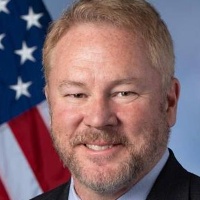
Warren Davidson
Representative
OH
Warren Davidson
Representative
OH
The Repealing Big Brother Overreach Act significantly narrows the federal beneficial ownership information reporting requirements. This legislation limits reporting obligations exclusively to foreign individuals and foreign-connected companies. Furthermore, it mandates the deletion of all previously collected data pertaining to domestic persons and entities.
This bill significantly expands the grounds for denying entry, deporting, and denying naturalization to non-citizens based on affiliations with or advocacy for communism, socialism, Marxism, or Islamic fundamentalism, while also broadening the definitions of these terms.

Chip Roy
Representative
TX
Chip Roy
Representative
TX
This bill significantly tightens U.S. immigration and naturalization laws by expanding grounds for denial of entry, deportation, and citizenship revocation. It specifically targets individuals affiliated with or advocating for communism, socialism, Chinese communism, Marxism, or Islamic fundamentalism. The legislation broadens definitions of these ideologies and removes judicial review for related determinations.
This bill removes references to "socially disadvantaged farmers and ranchers" across federal agriculture laws and prohibits the USDA from giving preference based on race or gender in its programs.
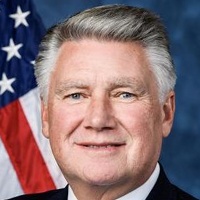
Mark Harris
Representative
NC
Mark Harris
Representative
NC
The Equal Treatment for Farmers Act amends federal agriculture laws to remove "socially disadvantaged farmers and ranchers" as a distinct category for program eligibility, set-asides, and definitions across various USDA programs. This legislation also explicitly prohibits the Department of Agriculture from giving any preference or priority based on race or gender in its programs. The bill aims to standardize eligibility criteria across farm loans, crop insurance, and conservation efforts.
This bill mandates the designation of the Council on American-Islamic Relations (CAIR) as a Specially Designated Global Terrorist, requiring the freezing of its assets and the revocation of its tax-exempt status.
Chip Roy
Representative
TX
Chip Roy
Representative
TX
The Designating Hamas Affiliates in America Act of 2026 mandates the designation of the Council on American-Islamic Relations (CAIR) as a Specially Designated Global Terrorist under Executive Order 13224. This legislation requires the freezing of all CAIR assets, prohibits transactions with the organization, and revokes its tax-exempt status. Additionally, it directs the Secretary of State and the Secretary of the Treasury to submit a formal report to Congress regarding CAIR’s eligibility for this designation.
This bill clarifies that, under Title VII of the Civil Rights Act of 1964, discrimination based on sex does not include discrimination based on gender identity.
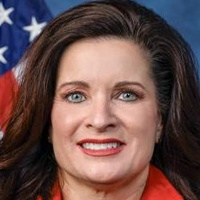
Sheri Biggs
Representative
SC
Sheri Biggs
Representative
SC
The Defending Women in the Workplace Act clarifies the interpretation of Title VII of the Civil Rights Act of 1964. It establishes that, for the purposes of federal anti-discrimination law, the terms "because of sex" or "on the basis of sex" do not include gender identity.
This bill prohibits federal agencies from banning the use of lead ammunition and tackle on federal lands and waters unless specific, evidence-based criteria and state-level coordination requirements are met.

Robert Wittman
Representative
VA
Robert Wittman
Representative
VA
The Protecting Access for Hunters and Anglers Act prevents federal agencies from banning the use of lead ammunition and tackle on federal lands and waters open to hunting and fishing. Exceptions to this rule are only permitted if specific, site-based field data proves lead is causing a wildlife population decline and the action is approved by or consistent with state wildlife policies.
The Clean Water for All Life Act establishes federal criminal penalties for providing chemical abortion drugs without a healthcare provider’s physical presence, examination, and the provision of biohazardous waste disposal materials.
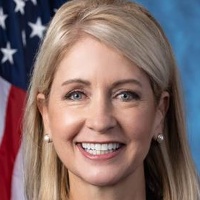
Mary Miller
Representative
IL
Mary Miller
Representative
IL
The Clean Water for All Life Act establishes a federal criminal offense for providing chemical abortion drugs without a health care provider being physically present for an examination. The bill also mandates that providers supply patients with specific medical waste disposal kits to ensure the proper handling of biological materials. Violations of these requirements are punishable by fines and imprisonment.
This act prohibits the use of federal education funds to develop or promote programs or materials for minors that contain sexually oriented material, with specific exceptions for standard science, religious texts, classic literature, and classic art.
Mary Miller
Representative
IL
Mary Miller
Representative
IL
The Stop the Sexualization of Children Act prohibits the use of federal education funds to develop or promote programs, activities, or materials for minors that include sexually oriented material. This restriction specifically targets content exposing children to nudity, stripping, or lewd dancing. The bill carves out exceptions for standard science coursework, classic literature, classic art, and major world religious texts.
The Enhanced Iran Sanctions Act of 2025 mandates broad economic and immigration sanctions on foreign individuals, entities, and financial institutions that support Iran’s nuclear, missile, drone, or terrorist activities, while specifically targeting the country's petroleum and petrochemical sectors.
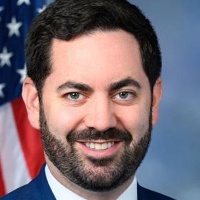
Michael Lawler
Representative
NY
Michael Lawler
Representative
NY
The Enhanced Iran Sanctions Act of 2025 strengthens U.S. policy by imposing mandatory sanctions on foreign persons and financial institutions that support Iran’s nuclear, ballistic missile, drone, and terrorist activities. The bill specifically targets Iran’s petroleum and petrochemical sectors to cut off funding for these malign programs. Additionally, it expands the State Department’s "Rewards for Justice" program to incentivize the reporting of individuals who evade these sanctions.
This bill revokes FDA approval for the abortion drug mifepristone and establishes federal liability for manufacturers against women harmed by its use.
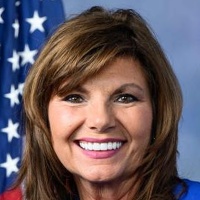
Diana Harshbarger
Representative
TN
Diana Harshbarger
Representative
TN
This bill, the Safeguarding Women from Chemical Abortion Act, immediately revokes the FDA's approval of mifepristone for terminating pregnancies. It also establishes a federal civil right of action allowing individuals harmed by the drug to sue manufacturers for damages. The legislation ensures that shipping or selling mifepristone across state lines for abortion purposes becomes a violation of federal law.
This bill prohibits federal agencies from providing funding or support for the creation or maintenance of state-level firearm ownership databases, with exceptions for records of lost or stolen weapons.

Paul Gosar
Representative
AZ
Paul Gosar
Representative
AZ
The Gun Owner Registration Information Protection Act prohibits federal agencies from providing funding or support for the creation and maintenance of state-level firearm ownership databases. This legislation ensures that federal resources cannot be used to track lawful gun owners, with a specific exception for databases tracking lost or stolen firearms.
This resolution supports designating March 29 as "Barth Syndrome Awareness Day" to raise awareness and promote research for this rare genetic disorder.
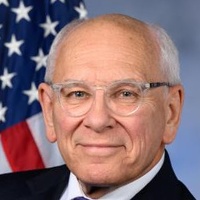
Paul Tonko
Representative
NY
Paul Tonko
Representative
NY
This resolution expresses support for designating a specific day as Barth Syndrome Awareness Day to raise public awareness of this rare genetic disorder. The goal is to encourage early diagnosis, advance research, and support the development of new treatments and cures for Barth syndrome.
This bill mandates proof of U.S. citizenship for federal voter registration and requires photo identification showing citizenship status for voting in federal elections.
Chip Roy
Representative
TX
Chip Roy
Representative
TX
The Safeguard American Voter Eligibility Act (SAVE America Act) mandates that individuals must provide documentary proof of U.S. citizenship to register to vote in federal elections. It also establishes a federal requirement for voters to present a photo ID indicating U.S. citizenship when casting a ballot in federal elections. The bill outlines specific acceptable forms of proof and requires states to implement verification programs to ensure only citizens are registered and voting.
This bill establishes federal standards for voter identification, registration, election administration, and mail-in ballot procedures for federal elections.
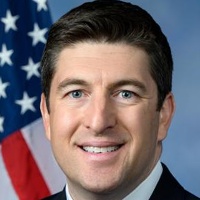
Bryan Steil
Representative
WI
Bryan Steil
Representative
WI
The Make Elections Great Again Act establishes new federal standards for voter identification, citizenship verification for registration, and statewide voter list maintenance for federal elections. It also standardizes election administration by mandating paper ballots, banning ranked-choice voting, and implementing strict new rules for requesting and returning mail-in ballots. The bill aims to increase election integrity through enhanced documentation and procedural uniformity across states.
This Act mandates that federal agencies use specific sex-based terms like "female" or "mother" instead of "birthing person" in official communications.
Sheri Biggs
Representative
SC
Sheri Biggs
Representative
SC
The Protecting Motherhood Act mandates that federal agencies use specific, sex-based terminology such as "mother," "woman," or "female" instead of the term "birthing person" in all official documents. This legislation defines the required terms to ensure consistency in federal communications regarding pregnancy and parenthood.
This act establishes the Domestic Cotton Consumption Credit to incentivize businesses to use U.S.-grown cotton through a verified supply chain with varying credit percentages based on processing location.
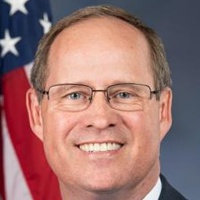
Gregory Murphy
Representative
NC
Gregory Murphy
Representative
NC
The Buying American Cotton Act of 2026 establishes the Domestic Cotton Consumption Credit to incentivize the use of U.S.-grown cotton in products sold domestically. This new business tax credit is calculated based on the volume of U.S. cotton used, the market price, and where the product was processed. The bill mandates digital tracing to verify the supply chain and offers significantly increased credit multipliers for products containing U.S.-made cotton yarn or fabric.
This bill, the SCAM Act, establishes new grounds and procedures for the government to revoke the citizenship of naturalized individuals who commit specific serious offenses or fraud within ten years of naturalization.
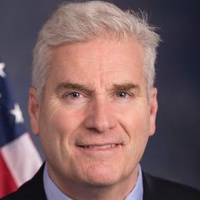
Tom Emmer
Representative
MN
Tom Emmer
Representative
MN
The SCAM Act establishes new grounds for the government to revoke the citizenship of naturalized individuals. It allows for denaturalization if a person commits fraud against the government, joins a terrorist organization, or commits an aggravated felony within ten years of naturalization. These actions are deemed proof that the individual lacked good moral character at the time they became a citizen. Revocation of citizenship under this Act is retroactive to the original date of naturalization.