Legislative Activity
Track Dave's sponsored bills, co-sponsored legislation, and voting record
This Act excludes specific VA disability payments from being counted as income when unhoused disabled veterans apply for certain housing assistance programs.
Alejandro Padilla
Senator
CA
Alejandro Padilla
Senator
CA
The Housing Unhoused Disabled Veterans Act aims to increase housing assistance eligibility for disabled veterans by excluding specific VA disability benefits from income calculations for certain housing programs. This ensures that compensation received for service-connected disabilities does not prevent veterans from qualifying for supportive housing assistance. However, these excluded benefits will still be considered when calculating the final adjusted rent amount.
This bill revises physician self-referral exemptions and lifts restrictions on the expansion of physician-owned hospitals located in rural areas.
James Lankford
Senator
OK
James Lankford
Senator
OK
The Physician Led and Rural Access to Quality Care Act revises federal physician self-referral rules to create specific exemptions for certain physician-owned hospitals located in rural areas. This legislation allows these designated "covered rural hospitals" to be exempt from general referral prohibitions. Furthermore, the bill eliminates the existing ban that prevented these physician-owned hospitals from expanding their operations.
This Act mandates that states receiving federal Medicaid funds must publicly report detailed information on all payments made to abortion providers, including the number and specifics of abortions performed.
Jim Banks
Senator
IN
Jim Banks
Senator
IN
The Abortion Funding Awareness Act of 2025 requires states to report detailed information annually regarding any federal Medicaid payments made to abortion providers. These state reports must specify payment amounts, the number of abortions performed by the provider, and the gestational age and method used for each procedure. The Secretary of HHS will then compile these state submissions into a summary report for Congress and the public.
This act modifies tax rules for certain insurance companies by preventing debt from being treated as a capital asset and extending the carryover period for specific capital losses to ten years.
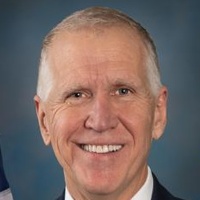
Thom Tillis
Senator
NC
Thom Tillis
Senator
NC
The Secure Family Futures Act of 2025 modifies tax rules for certain insurance companies regarding their investments and losses. Specifically, it prevents qualifying insurers from treating newly acquired debt instruments as capital assets for tax purposes. Additionally, the bill extends the carryover period for specific capital losses incurred by these companies to ten years. These changes apply only to tax years beginning after December 31, 2025.
This resolution honors the life, distinguished public service, and significant legislative contributions of the late former Louisiana Senator, John Bennett Johnston, Jr.
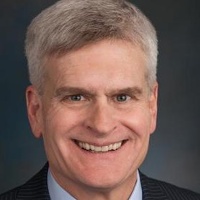
Bill Cassidy
Senator
LA
Bill Cassidy
Senator
LA
This resolution formally honors the life and extensive public service of the late Honorable John Bennett Johnston, Jr., former U.S. Senator for Louisiana. It details his career, highlighting his significant tenure on key Senate committees, particularly his leadership on energy policy. The resolution recognizes his legislative achievements benefiting Louisiana, including flood control and conservation efforts. Finally, the Senate adjourns immediately in his memory as a final tribute to his service.
The Veterans Education and Technical Skills Opportunity Act of 2025 updates the requirements for independent study programs to qualify for VA educational assistance, mandating regular instructor interaction for eligibility starting August 1, 2025.
Thom Tillis
Senator
NC
Thom Tillis
Senator
NC
The Veterans Education and Technical Skills Opportunity Act of 2025 (VETS Opportunity Act of 2025) updates how independent study programs qualify for VA educational assistance. This legislation mandates that eligible programs must feature regular and meaningful communication between students and instructors after the course begins. This clarification applies to institutions already participating in federal student financial aid programs, with the changes taking effect for terms starting on or after August 1, 2025.
The DETERRENT Act mandates increased federal and institutional transparency regarding foreign gifts and contracts for colleges, bans certain contracts with "countries of concern," and establishes strict enforcement penalties for non-compliance.
Thom Tillis
Senator
NC
Thom Tillis
Senator
NC
The DETERRENT Act significantly tightens reporting requirements for colleges and universities regarding foreign gifts and contracts, mandating public disclosure databases and imposing strict new prohibitions on agreements with "foreign countries or entities of concern." It establishes severe financial penalties and potential ineligibility for federal aid for institutions that knowingly violate these transparency and compliance rules. The bill also requires institutions to implement internal policies and designate compliance officers to manage risks associated with foreign influence.
This Act establishes the Rural Development Hospital Technical Assistance Program to provide essential operational and financial planning support to eligible rural healthcare facilities to ensure their stability and continued service.
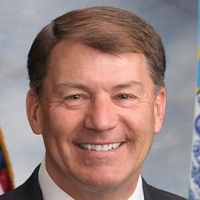
Mike Rounds
Senator
SD
Mike Rounds
Senator
SD
The Rural Development Hospital Technical Assistance Program Act of 2025 establishes a new program within the Department of Agriculture to provide crucial technical assistance to eligible rural healthcare facilities. This program aims to ensure the financial stability and operational efficiency of these hospitals, ultimately strengthening rural healthcare delivery and preventing facility closures. The Secretary of Agriculture is authorized to appropriate up to $2 million annually through fiscal year 2029 to fund these targeted services.
The BOP SCAN Mail Act mandates the Bureau of Prisons to develop and implement a strategy to digitize mail processing to interdict synthetic drugs like fentanyl entering federal correctional facilities.
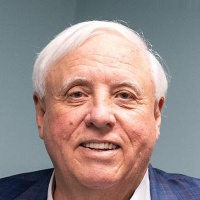
Jim Justice
Senator
WV
Jim Justice
Senator
WV
The BOP SCAN Mail Act mandates the Bureau of Prisons (BOP) to develop and implement a comprehensive strategy to stop synthetic drugs, like fentanyl, from entering federal facilities via mail. This strategy requires digitizing mail delivery so inmates receive digital copies within 24 hours, while physical mail is delivered later if cleared of contraband. The ultimate goal is to achieve 100% scanning capacity to enhance security and alleviate staffing burdens within the BOP.
This bill authorizes the minting and sale of special commemorative gold and silver coins to mark the 25th anniversary of the September 11th attacks, with all surcharges benefiting the National September 11 Memorial and Museum.

Kirsten Gillibrand
Senator
NY
Kirsten Gillibrand
Senator
NY
This Act authorizes the minting and issuance of special commemorative gold and silver coins to mark the 25th anniversary of the September 11, 2001, terrorist attacks. The coins will honor the victims, first responders, and the National September 11 Memorial and Museum. All surcharges collected from the sale of these coins must be paid directly to the National September 11 Memorial and Museum to support its operations.
The CONNECT for Health Act of 2025 permanently removes geographic barriers to Medicare telehealth, enhances program integrity through targeted oversight, and establishes new supports to improve quality and access for beneficiaries.
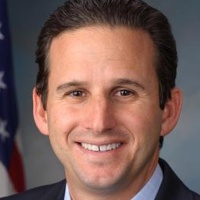
Brian Schatz
Senator
HI
Brian Schatz
Senator
HI
The CONNECT for Health Act of 2025 aims to significantly expand access to telehealth services under Medicare by permanently removing outdated geographic restrictions and broadening provider eligibility. The bill also enhances program integrity by dedicating new funding to oversight and establishing educational outreach for providers with unusual billing patterns. Finally, it mandates new resources, training, and public data reporting to ensure the quality and accessibility of virtual care for all beneficiaries.
This Act establishes a cause of action allowing covered public safety employees to sue their employers for retaliation based on exercising free speech rights on various work-related and personal topics, with specific exceptions.
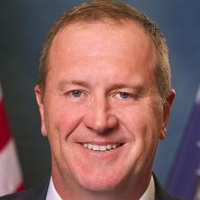
Eric Schmitt
Senator
MO
Eric Schmitt
Senator
MO
The Public Safety Free Speech Act establishes protections for covered public safety employees against employer retaliation for expressing personal views on various work-related and personal topics. This bill allows these employees to sue their employers for negative job actions, such as firing or demotion, resulting from their protected speech. However, these protections do not apply to speech made while on duty, speech advocating illegal activity, or the intentional sharing of private personal information.
This bill mandates the U.S. government to defend the right of American producers to use common names for their food, wine, and beer products in foreign markets during trade negotiations.
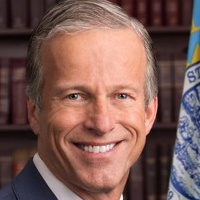
John Thune
Senator
SD
John Thune
Senator
SD
The SAFETY Act of 2025 aims to protect American producers by legally defining and safeguarding the use of common food, wine, and beer names in international trade. This legislation mandates that the government actively defend these established names during trade negotiations to prevent foreign restrictions on U.S. exports. The bill specifically excludes protected geographical indications from qualifying as common names while ensuring domestic labeling standards are respected abroad.
The Sanctioning Russia Act of 2025 imposes sweeping economic and financial penalties on the Russian Federation and its affiliates, contingent upon Russia's failure to negotiate peace with Ukraine.
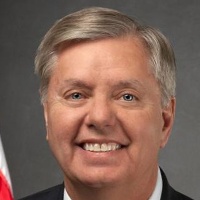
Lindsey Graham
Senator
SC
Lindsey Graham
Senator
SC
The Sanctioning Russia Act of 2025 mandates sweeping economic penalties against the Russian Federation and its affiliates for actions against Ukraine. This legislation requires the President and Treasury Secretary to impose escalating sanctions on Russian officials, financial institutions, and energy sector entities. Furthermore, the Act prohibits U.S. persons from investing in Russian debt, bans the trading of Russian securities on U.S. exchanges, and imposes a massive 500% import duty on Russian goods. Sanctions can only be terminated if Russia agrees to a verifiable peace deal with Ukraine.
This resolution honors the life, distinguished public service, and enduring legacy of former Wyoming Senator Alan K. Simpson.
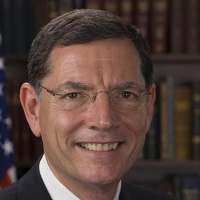
John Barrasso
Senator
WY
John Barrasso
Senator
WY
This resolution formally honors the life and distinguished public service career of the Honorable Alan K. Simpson, former U.S. Senator for Wyoming. It celebrates his extensive tenure in both state and federal government, highlighting his focus on fiscal responsibility and support for veterans. The Senate expresses its deep sorrow at his passing and directs that the day's adjournment serve as a final tribute to his memory.
This resolution expresses the Senate's view that UN Resolution 2758 only addressed UN representation and does not validate the People's Republic of China's "One China Principle" regarding Taiwan's status.
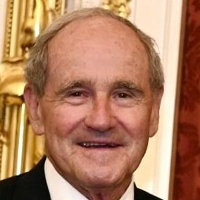
James Risch
Senator
ID
James Risch
Senator
ID
This Senate resolution clarifies that United Nations General Assembly Resolution 2758 only addressed the PRC's representation at the UN and does not endorse China's "One China Principle" regarding Taiwan's sovereignty. The resolution strongly opposes the People's Republic of China's efforts to misuse this vote to isolate Taiwan internationally. It reaffirms the U.S. position that the issue of Taiwan's final status remains unsettled and supports Taiwan's meaningful participation in global organizations.
This act prohibits federally funded colleges and universities from authorizing or supporting events that promote antisemitism, using the IHRA working definition.

Tim Scott
Senator
SC
Tim Scott
Senator
SC
The Stop Antisemitism on College Campuses Act requires colleges and universities receiving federal funding to prohibit the authorization, support, or funding of any event promoting antisemitism. To enforce this, the bill mandates that institutions adopt the International Holocaust Remembrance Alliance (IHRA) working definition of antisemitism. This ensures federal funding is contingent upon actively preventing antisemitic activities on campus.
This Act prohibits the Small Business Administration from providing financial assistance to small businesses or their associates following a final conviction for fraud related to covered federal loans or grants.

Todd Young
Senator
IN
Todd Young
Senator
IN
The Assisting Small Businesses Not Fraudsters Act prohibits the Small Business Administration (SBA) from providing financial assistance to individuals or businesses associated with someone finally convicted of fraud related to specific federal loans or grants. This measure aims to prevent those who have committed financial misconduct from receiving further government aid. The restrictions apply to the convicted individual and any small business concern where that person is an owner, officer, or key employee.
This Act limits the FCC's authority to stop state and federal correctional facilities from using approved, localized cellphone jamming systems to block contraband communications, provided they meet specific operational and notification requirements.
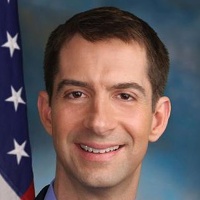
Tom Cotton
Senator
AR
Tom Cotton
Senator
AR
The Cellphone Jamming Reform Act of 2025 limits the FCC's authority to prohibit state and federal correctional facilities from using signal jamming systems within their housing areas. This legislation permits prisons to deploy jammers specifically to block communications involving contraband devices or incarcerated individuals. Any facility choosing to use this technology must adhere to strict operational rules, including location limitations and pre-approval notification to local public safety officials and the Bureau of Prisons.
The PHIT Act of 2025 allows taxpayers to treat certain qualified fitness and exercise expenses as deductible medical expenses, up to an annual limit of \$1,000 or \$2,000 for joint filers, to encourage healthier lifestyles.
John Thune
Senator
SD
John Thune
Senator
SD
The Personal Health Investment Today Act of 2025 (PHIT Act) aims to promote public health by incentivizing healthier lifestyles. This bill allows taxpayers to treat certain qualified expenses for physical activity, fitness instruction, and exercise equipment as deductible medical expenses, up to annual limits of \$1,000 or \$2,000 depending on filing status. These provisions are designed to make fitness more financially accessible for individuals and families.