
Legislative Activity
Track John's sponsored bills, co-sponsored legislation, and voting record
This bill mandates sanctions, including asset freezes and visa bans, against specific Chinese police departments, their leaders, and associated individuals operating within the United States.
Ashley Hinson
Representative
IA
Ashley Hinson
Representative
IA
The Expel Illegal Chinese Police Act of 2025 mandates the President to impose immediate sanctions, including asset freezes and visa bans, on specific Chinese police departments, their senior leaders, and individuals involved in establishing illegal Chinese police presences in the U.S. These sanctions also extend to the immediate family members of sanctioned aliens. The bill aims to block financial transactions and entry into the U.S. for those connected to the targeted PRC law enforcement bodies.
The Fair and Open Competition Act of 2025 prohibits the federal government from requiring or penalizing bidders or contractors on federally funded construction projects based on their agreement or non-agreement with labor unions.
Clay Higgins
Representative
LA
Clay Higgins
Representative
LA
The Fair and Open Competition Act of 2025 ensures fair competition on federally funded construction projects by prohibiting the government from requiring or penalizing bidders based on union agreements. This legislation aims to keep federal agencies neutral in labor relations while promoting cost savings and opening opportunities for all businesses. Exceptions to this neutrality rule are strictly limited to specific public health, safety, or national security emergencies.
This bill prohibits federal and private insurance coverage for organ transplants performed in China or involving illegally sourced organs, imposing penalties on providers who violate the ban starting in 2026.
Neal Dunn
Representative
FL
Neal Dunn
Representative
FL
The Block Organ Transplant Purchases from China Act of 2025 bans federal programs like Medicare and Medicaid, as well as private insurance, from covering organ transplants performed in China or involving organs not sourced through the U.S. network, effective January 1, 2026. Healthcare providers who knowingly perform these "prohibited organ transplants" face criminal penalties and substantial civil fines. The law aims to stop the funding and performance of transplants utilizing organs obtained through unethical or non-transparent means.
This bill prohibits U.S. funding for the Montreal Protocol and the UNFCCC until China is officially reclassified from a "developing country" under the former and added to Annex I of the latter.
Neal Dunn
Representative
FL
Neal Dunn
Representative
FL
The Ending China’s Unfair Advantage Act of 2025 seeks to halt U.S. funding for key international environmental agreements, specifically the Montreal Protocol and the UNFCCC. Funding will remain prohibited until the President certifies that China has been removed from the "developing country" status under the Protocol and formally added to Annex I of the Climate Change Convention. This legislation ties U.S. financial support for these treaties directly to China's classification within them.
The REDI Act allows medical and dental interns and residents to defer both principal and interest payments on their student loans while in training.
Brian Babin
Representative
TX
Brian Babin
Representative
TX
The Resident Education Deferred Interest (REDI) Act amends federal student loan regulations to provide a specific deferment for medical and dental residents. This allows borrowers currently serving in an internship or residency program to pause principal payments and prevent interest accrual on their student loans during that training period.
This Act establishes a federal long-term care insurance benefit under Social Security to help seniors finance extended care needs and remain at home, while also funding public education on long-term planning.
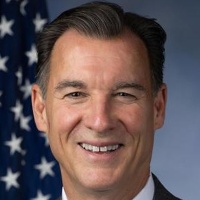
Thomas Suozzi
Representative
NY
Thomas Suozzi
Representative
NY
The Well-Being Insurance for Seniors to be at Home Act (WISH Act) establishes a new federal long-term care insurance benefit under Social Security to help seniors financially plan for extended care needs and remain in their communities. This benefit is funded through a newly created Trust Fund and is designed to supplement, not replace, personal savings and existing care options. The Act also mandates a national education campaign and requires the Social Security Administration to send personalized notices informing individuals about their potential coverage status.
This Act establishes a federally-led Joint Task Force to coordinate interagency efforts against illicit synthetic narcotics, focusing on investigation, enforcement, and countering foreign trafficking networks.
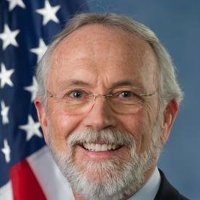
Dan Newhouse
Representative
WA
Dan Newhouse
Representative
WA
This Act establishes the Joint Task Force to Counter Illicit Synthetic Narcotics (JTFISN), a high-level body composed of representatives from key federal departments like Justice, Treasury, and Homeland Security. The JTFISN's primary mission is to lead and strategically coordinate federal efforts to disrupt the trafficking and supply chains of synthetic narcotics, with a specific focus on foreign actors like the People's Republic of China. The task force is authorized to investigate related crimes but is explicitly barred from targeting individuals solely based on personal drug use.
This Act prevents the President and the Secretary of HHS from using emergency declarations to impose gun control measures and prohibits federal disaster rules from restricting the possession or transfer of firearms, ammunition, and related accessories.
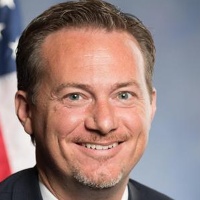
Michael Cloud
Representative
TX
Michael Cloud
Representative
TX
The Protecting the Right to Keep and Bear Arms Act of 2025 restricts the President and the Secretary of Health and Human Services from using emergency declarations to enact gun control measures. This bill specifically prevents the use of the National Emergencies Act and the Public Health Service Act for imposing new firearm restrictions. Furthermore, it amends disaster relief law to prohibit federal disaster declarations from banning the possession, sale, or transfer of firearms, ammunition, or related accessories.
This bill prohibits the Department of Homeland Security from procuring batteries from specific foreign companies with ties to adversarial nations, with exceptions for national security and research purposes.
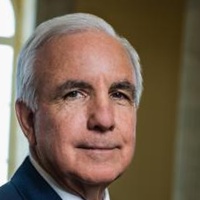
Carlos Gimenez
Representative
FL
Carlos Gimenez
Representative
FL
The "Decoupling from Foreign Adversarial Battery Dependence Act" prohibits the Department of Homeland Security from procuring batteries from specific foreign companies, primarily those with ties to China, starting in 2027. Waivers are permitted under certain conditions, such as lack of national security risk or use for research purposes, with congressional notification required. The Secretary of Homeland Security must report on the ban's impact on Department of Homeland Security operations and costs.
The SHIELD Against CCP Act establishes a working group within the Department of Homeland Security to counter threats posed by the Chinese Communist Party related to terrorism, cybersecurity, border and port security, and transportation security.
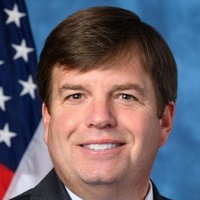
Dale Strong
Representative
AL
Dale Strong
Representative
AL
The "SHIELD Against CCP Act" establishes a working group within the Department of Homeland Security to counter threats posed by the Chinese Communist Party (CCP) related to terrorism, cybersecurity, border and port security, and transportation security. This group will examine and report on the Department's efforts, account for dedicated resources, identify policy gaps, and facilitate cooperation, while also sharing information with federal, state, and local partners. The Secretary of Homeland Security must submit annual reports to Congress for five years, assessing CCP threats and the activities of the working group. The working group will terminate seven years after its establishment.
This bill supports the stepped-up basis, which helps family farms and small businesses pass on their operations to the next generation without facing higher taxes.
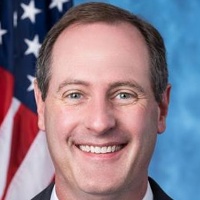
Tracey Mann
Representative
KS
Tracey Mann
Representative
KS
This bill expresses the House of Representatives' support for maintaining the stepped-up basis under section 1014 of the Internal Revenue Code, which allows inherited assets to be adjusted to their current market value, protecting family-owned farms and small businesses from increased taxes. It opposes any changes to the tax code that would negatively impact the ability of these businesses to pass their operations on to the next generation. The bill recognizes the importance of generational transfers for the continuation of family farms, ranches, agribusinesses, and small businesses.
This bill mandates an annual report assessing U.S. reliance on China for critical agricultural inputs and recommends strategies to boost domestic or allied production.
Ashley Hinson
Representative
IA
Ashley Hinson
Representative
IA
The Securing American Agriculture Act mandates an annual report from the Secretary of Agriculture detailing U.S. reliance on China for critical farming supplies like fertilizers, seeds, and veterinary drugs. This study must assess domestic production capabilities and identify supply chain vulnerabilities that China could exploit. The goal is to provide Congress with actionable recommendations for reducing dependency through onshore or nearshore production.
This act amends the tax code to give businesses the option to immediately deduct or amortize (spread out over at least five years) their research and experimental expenditures.
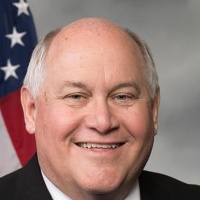
Ron Estes
Representative
KS
Ron Estes
Representative
KS
The American Innovation and R&D Competitiveness Act of 2025 revises how businesses treat research and experimental (R&E) expenditures for tax purposes. Taxpayers can now choose between immediately deducting R&E costs or amortizing them over a period of at least 60 months. This legislation also makes technical adjustments to ensure consistency between immediate deductions and claiming the research tax credit.
This resolution expresses support for designating March 6, 2025, as "Great Lakes Day" to recognize the region's vital environmental, economic, and cultural importance while committing to its ongoing protection.
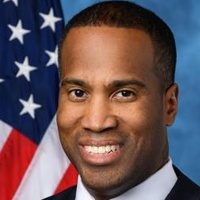
John James
Representative
MI
John James
Representative
MI
This resolution expresses support for designating March 6, 2025, as "Great Lakes Day" to recognize the region's vital importance to the environment, economy, and public health of the United States. It highlights the Great Lakes' role as a critical source of fresh water and commerce while reaffirming a commitment to their ongoing protection and restoration. Additionally, the bill designates Lake St. Clair as the "Heart of the Great Lakes" and calls for accelerated efforts to preserve these essential natural resources.
The ACRE Act of 2025 creates a federal tax exemption for qualified lenders on interest earned from loans secured by rural or agricultural real property, excluding loans to foreign adversary entities.
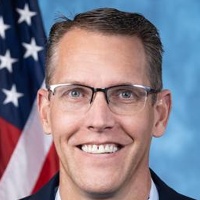
Randy Feenstra
Representative
IA
Randy Feenstra
Representative
IA
The Access to Credit for our Rural Economy Act of 2025 (ACRE Act) creates a new federal tax incentive for qualified lenders. This incentive excludes income earned from interest on loans secured by rural or agricultural real property from taxation. The goal is to encourage lending for agricultural, forestry, and certain rural home improvement purposes while prohibiting loans to foreign adversary entities.
The "Roberto Clemente Commemorative Coin Act" directs the Treasury to mint coins in 2027 honoring Roberto Clemente, with surcharges benefiting the Roberto Clemente Foundation.
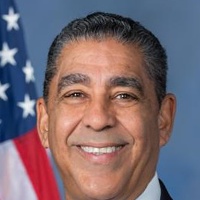
Adriano Espaillat
Representative
NY
Adriano Espaillat
Representative
NY
The Roberto Clemente Commemorative Coin Act directs the Department of Treasury to mint and issue gold, silver, and half-dollar coins in 2027 to commemorate the life and legacy of Roberto Clemente. The coins' designs will represent Clemente's life, including his baseball achievements and humanitarian work. Surcharges from the coin sales will benefit the Roberto Clemente Foundation, supporting their educational programs, youth sports initiatives, disaster relief efforts, and historic preservation projects. The Act ensures that the coin program will not incur any net cost to the United States government.
The "Federal Firearms Licensee Protection Act of 2025" increases penalties for stealing firearms from licensed dealers, manufacturers, or importers, especially during burglaries or robberies, and clarifies related definitions.
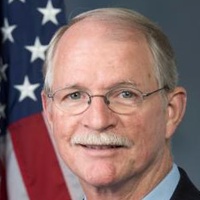
John Rutherford
Representative
FL
John Rutherford
Representative
FL
The "Federal Firearms Licensee Protection Act of 2025" increases penalties for stealing firearms from licensed dealers. It sets stricter punishments, including up to 20 years in prison, for violating laws related to firearm theft. The act also mandates minimum prison sentences of 3 years for burglaries and 5 years for robberies targeting licensed firearm businesses.
This bill modifies the definition of "qualifying single source drug" under the Social Security Act to include certain advanced drugs using genetically targeted technology for a limited time.
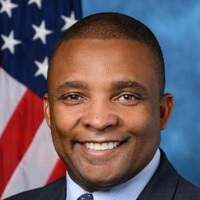
Donald Davis
Representative
NC
Donald Davis
Representative
NC
The "Maintaining Investments in New Innovation Act" amends the Social Security Act's definition of "qualifying single source drug" to include advanced drugs using genetically targeted technology. This update applies to drugs that can modify gene function, potentially impacting drug pricing and access regulations under the Act.
The "Farmland Security Act of 2025" aims to enhance transparency and oversight of foreign investment in U.S. agricultural land by increasing penalties for non-compliant shell corporations, mandating compliance audits and training, and requiring detailed reports to Congress.

Marie Gluesenkamp Perez
Representative
WA
Marie Gluesenkamp Perez
Representative
WA
The Farmland Security Act of 2025 aims to enhance transparency and oversight of foreign investment in U.S. agricultural land. It increases penalties for foreign-owned shell corporations that fail to disclose their agricultural land holdings, mandates compliance audits and training for relevant personnel, and requires the Secretary to report to Congress on key trends in foreign agricultural investment. The Act authorizes \$2,000,000 annually from 2025-2030 to support these activities.
This resolution condemns the Iranian regime’s terrorism and human rights abuses while affirming support for the Iranian people’s right to establish a democratic, secular, and non-nuclear republic.
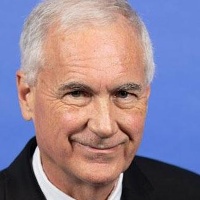
Tom McClintock
Representative
CA
Tom McClintock
Representative
CA
This resolution condemns the Iranian regime for its ongoing human rights abuses, state-sponsored terrorism, and regional instability. It expresses strong support for the Iranian people's struggle for a democratic, secular, and non-nuclear republic. Furthermore, the bill advocates for international accountability for the regime's crimes and calls for the protection of Iranian political refugees.