
Legislative Activity
Track John's sponsored bills, co-sponsored legislation, and voting record
This resolution expresses Congressional opposition to imposing new performance fees or royalties on local radio stations and businesses for broadcasting or playing music.
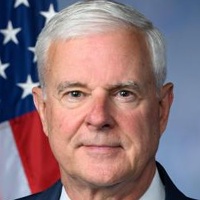
Steve Womack
Representative
AR
Steve Womack
Representative
AR
The Local Radio Freedom Act expresses Congressional opposition to imposing new performance fees, taxes, or royalties on local radio stations and businesses for playing music. It argues that the current system of free airplay provides essential promotional value to artists and that new fees would threaten the financial viability of local broadcasters and the vital community services they provide.
This Act allows schools participating in the National School Lunch Program to offer organic or non-organic whole milk alongside other options, while clarifying saturated fat accounting and restricting milk sourcing from China state-owned enterprises.
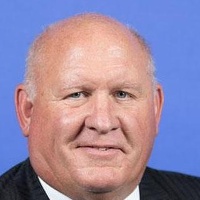
Glenn Thompson
Representative
PA
Glenn Thompson
Representative
PA
The Whole Milk for Healthy Kids Act of 2025 expands milk options available to students in the National School Lunch Program by allowing schools to offer organic or non-organic whole milk. This legislation provides greater flexibility for schools in providing fluid milk choices while maintaining accommodations for students with special dietary needs. Importantly, the saturated fat content of these offered milk options will not count toward the meal's overall saturated fat limits.
The USA Batteries Act removes lead oxide, antimony, and sulfuric acid from the list of taxable chemicals under the Superfund excise taxes to support American battery manufacturers.
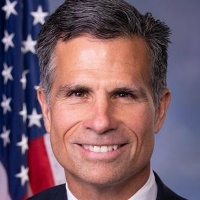
Daniel Meuser
Representative
PA
Daniel Meuser
Representative
PA
The USA Batteries Act seeks to amend Superfund excise taxes by removing lead oxide, antimony, and sulfuric acid from the list of taxable chemicals. This change aims to alleviate the tax burden on domestic battery manufacturers, ensuring fair competition with imported batteries. The Act recognizes the economic importance and high recyclability of lead batteries, which are crucial for various sectors, and emphasizes the need to support American manufacturing and jobs in the battery industry. Ultimately, the Act intends to bolster the global competitiveness of the U.S. lead battery industry by reducing raw material costs.
The "National Right-to-Work Act" prohibits mandatory union membership as a condition of employment, protecting employees' rights to choose whether or not to join or support a labor union.
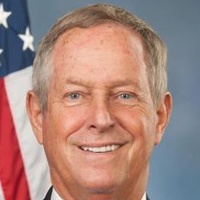
Joe Wilson
Representative
SC
Joe Wilson
Representative
SC
The "National Right-to-Work Act" amends both the National Labor Relations Act and the Railway Labor Act to protect an employee's right to choose whether or not to join or support a labor union. It eliminates the possibility of mandatory union membership or dues payments as a condition of employment, ensuring that employees cannot be forced to join or support a union against their will.
Prohibits banks and credit card companies from using specific codes that identify gun and ammunition stores.
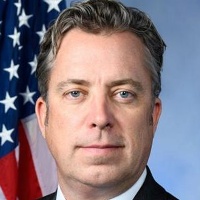
Andrew Ogles
Representative
TN
Andrew Ogles
Representative
TN
The "Protecting the Second Amendment in Financial Services Act" prevents banks and credit card companies from using specific merchant codes that would identify businesses selling firearms or ammunition. This ensures that financial institutions cannot track or discriminate against legal firearm-related transactions.
The "Stop CCP Land Act" restricts states from receiving certain federal funds if they do not prohibit covered foreign countries, including those on the State Department's Defense Trade Control Country Policies List and Russia, from purchasing agricultural land.
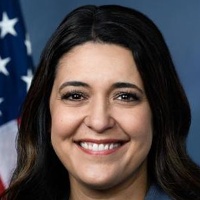
Stephanie Bice
Representative
OK
Stephanie Bice
Representative
OK
The "Stop CCP Land Act" aims to restrict states from receiving certain federal funds if they do not prohibit covered foreign countries, including those on the State Department's Defense Trade Control Country Policies List and Russia, from purchasing agricultural land. It mandates annual reporting for individuals from these countries who already own agricultural land and requires reports to Congress on improving monitoring of foreign investment in agricultural land and assessing the Act's impact on national security. This act defines "agricultural land," "foreign person," and "covered program funds" to ensure clarity in implementation.
The "National Plan for Epilepsy Act" aims to create a comprehensive national strategy to improve epilepsy prevention, diagnosis, treatment, and research through coordinated federal efforts and an advisory council.
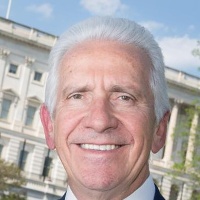
Jim Costa
Representative
CA
Jim Costa
Representative
CA
The "National Plan for Epilepsy Act" aims to address the significant impact of epilepsy by establishing a comprehensive national plan for its prevention, diagnosis, treatment, and cure. This act mandates the creation of an Advisory Council on Epilepsy Research, Care, and Services, composed of federal and non-federal experts, to evaluate and improve federally funded epilepsy efforts. The council will provide recommendations to enhance coordination, diagnosis, treatment, research, and public awareness, and reduce the financial burden of epilepsy on families. Ultimately, the act seeks to improve the lives of individuals with epilepsy and their caregivers through coordinated research, improved access to care, and enhanced public awareness.
This bill directs the Treasury Secretary to leverage U.S. influence at the International Monetary Fund to compel greater transparency and accountability regarding China’s exchange rate policies and currency market interventions.
Daniel Meuser
Representative
PA
Daniel Meuser
Representative
PA
The China Exchange Rate Transparency Act of 2025 directs the U.S. Treasury to leverage its influence within the International Monetary Fund (IMF) to demand greater transparency regarding China’s exchange rate policies and market interventions. The bill aims to hold China accountable for its lack of disclosure, which currently complicates international assessments of potential currency manipulation. These requirements remain in effect until China achieves substantial compliance or a period of seven years has elapsed.
Prohibits the use of the DeepSeek application on government devices, with exceptions for law enforcement, national security, and security research under specific conditions.
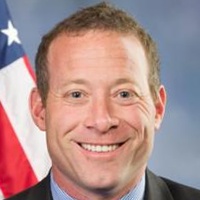
Josh Gottheimer
Representative
NJ
Josh Gottheimer
Representative
NJ
The "No DeepSeek on Government Devices Act" prohibits the use of the DeepSeek application on government devices, with exceptions for law enforcement, national security, and security research. The Office of Management and Budget is tasked with creating guidelines for executive agencies to remove DeepSeek from their information technology. Any authorized use of DeepSeek under the exceptions requires documented risk mitigation actions.
Exempts family farms and small businesses from asset considerations in need analysis for federal student aid.
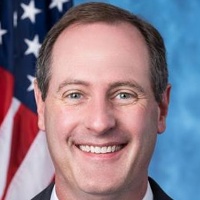
Tracey Mann
Representative
KS
Tracey Mann
Representative
KS
The "Family Farm and Small Business Exemption Act" amends the Higher Education Act of 1965 to exclude the net value of a family farm (on which the family resides) or a small business (with no more than 100 employees and owned/controlled by the family) from consideration as an asset when determining financial need for federal student aid. This change aims to make higher education more accessible for students from family farm and small business backgrounds.
The HALT Fentanyl Act permanently classifies fentanyl-related substances as Schedule I controlled substances while streamlining registration procedures for legitimate scientific research.
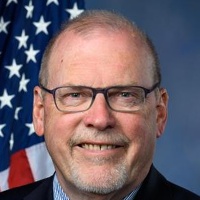
H. Griffith
Representative
VA
H. Griffith
Representative
VA
The Halt All Lethal Trafficking of Fentanyl (HALT Fentanyl) Act permanently classifies fentanyl-related substances as Schedule I controlled substances to strengthen enforcement and penalties against their trafficking. Additionally, the bill streamlines registration processes for researchers to facilitate legitimate scientific study of these substances. It also includes technical corrections and mandates updated federal rulemaking to ensure effective implementation.
This bill reaffirms the Farm Credit Administration’s status as an independent regulator and mandates that Farm Credit System institutions collect and report voluntary demographic data from small farmer loan applicants.
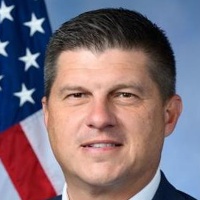
Brad Finstad
Representative
MN
Brad Finstad
Representative
MN
The Farm Credit Administration Independent Authority Act reaffirms the Farm Credit Administration’s role as the sole independent regulator of the Farm Credit System. The bill establishes a new, voluntary process for collecting and publicly reporting demographic data on small farmer loan applicants to ensure transparency while protecting borrower privacy. Additionally, it provides regulatory consistency by exempting Farm Credit System institutions from overlapping requirements under the Equal Credit Opportunity Act.
This bill authorizes E-1 treaty trader visas for nationals of the Czech Republic, provided the Czech government grants reciprocal visa status to United States citizens.
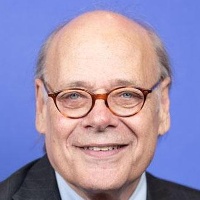
Steve Cohen
Representative
TN
Steve Cohen
Representative
TN
This bill proposes extending E-1 treaty trader visa eligibility to nationals of the Czech Republic. This status would allow qualified Czech citizens to enter the United States for substantial trade, provided the Czech government offers reciprocal visa treatment to U.S. nationals.
This bill directs the Department of Education to consider the International Holocaust Remembrance Alliance's definition of antisemitism when evaluating discrimination complaints under Title VI of the Civil Rights Act of 1964, while also protecting First Amendment rights.
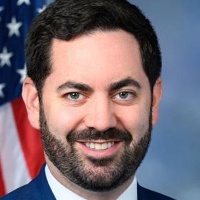
Michael Lawler
Representative
NY
Michael Lawler
Representative
NY
The Antisemitism Awareness Act of 2025 requires the Department of Education to consider the International Holocaust Remembrance Alliance's definition of antisemitism when evaluating discrimination complaints under Title VI of the Civil Rights Act of 1964, concerning race, color, and national origin. This aims to address rising antisemitism in educational settings. The Act clarifies that it does not expand the Department of Education's authority, change existing discrimination standards, reduce existing rights, or infringe upon First Amendment rights.
The Fair Access to Banking Act prohibits large financial institutions and payment networks from denying services to law-abiding businesses based on subjective, non-financial, or political criteria.
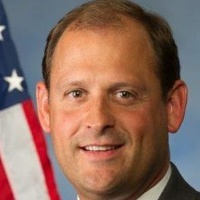
Garland Barr
Representative
KY
Garland Barr
Representative
KY
The Fair Access to Banking Act prohibits large financial institutions and payment networks from denying services to law-abiding businesses based on subjective, politically motivated, or reputational criteria. The bill mandates that financial institutions use impartial, quantitative, risk-based standards to evaluate customers rather than category-based exclusions. To ensure compliance, the legislation establishes enforcement mechanisms through federal regulators and provides a legal pathway for businesses to sue for damages if they are unfairly denied access to financial services.
The Dismantle DEI Act of 2025 immediately rescinds federal diversity, equity, and inclusion (DEI) mandates across executive offices, contracting, grants, and education, while banning related training and imposing penalties for non-compliance.
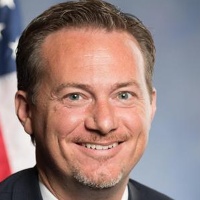
Michael Cloud
Representative
TX
Michael Cloud
Representative
TX
The Dismantle DEI Act of 2025 aims to immediately rescind diversity, equity, and inclusion (DEI) mandates across the federal government, including shutting down related offices and banning specific ideological training for federal personnel and contractors. The bill prohibits the use of federal funds for DEI activities by grant recipients and mandates that federal advisory committees cease all such practices or face termination. Furthermore, it establishes strong enforcement mechanisms, allowing individuals to sue violators and seek financial penalties for non-compliance.
This bill prohibits state and local governments from imposing special taxes, insurance requirements, or user fees as a condition for the ownership, manufacture, or transfer of firearms and ammunition.
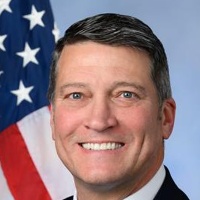
Ronny Jackson
Representative
TX
Ronny Jackson
Representative
TX
The "No User Fees for Gun Owners Act" prohibits state and local governments from imposing special taxes, insurance requirements, or user fees as a condition for owning, manufacturing, or transferring firearms and ammunition. The bill ensures that firearms are only subject to standard, generally applicable sales taxes, preventing discriminatory financial barriers to gun ownership.
The Health Out-of-Pocket Expense (HOPE) Act of 2025 establishes tax-exempt trust accounts to help eligible individuals save for and pay qualified medical expenses.
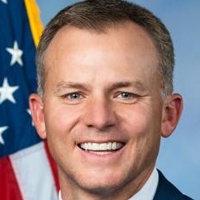
Blake Moore
Representative
UT
Blake Moore
Representative
UT
The Health Out-of-Pocket Expense (HOPE) Act of 2025 establishes tax-exempt trust accounts designed to help individuals cover qualified medical expenses. These accounts allow for tax-advantaged contributions from employers and state programs, provided the account holder meets specific eligibility and coverage requirements. Distributions used for qualified medical expenses are tax-free, while non-medical withdrawals are subject to income tax and a 30 percent penalty.
This bill provides a 6.62 percent Medicare payment increase for physicians and practitioners from April through December 2025 to help stabilize medical practices.
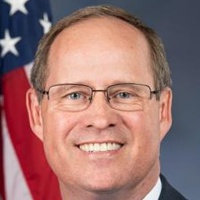
Gregory Murphy
Representative
NC
Gregory Murphy
Representative
NC
The Medicare Patient Access and Practice Stabilization Act of 2025 aims to support healthcare providers by extending Medicare payment adjustments through the end of 2025. Specifically, the bill provides a 6.62 percent payment increase for services rendered between April 1, 2025, and December 31, 2025, to help practitioners adjust to evolving Medicare payment policies.
The Educational Choice for Children Act of 2025 establishes federal tax credits for contributions to scholarship-granting organizations, providing lower- and middle-income families with financial support for K–12 educational expenses.

Adrian Smith
Representative
NE
Adrian Smith
Representative
NE
The Educational Choice for Children Act of 2025 establishes federal tax credits for individuals and corporations that contribute to scholarship-granting organizations. These organizations provide K–12 education scholarships to students from lower- and middle-income households to cover tuition, tutoring, and other qualified educational expenses. The bill also protects the autonomy of participating schools and scholarship organizations from government interference while ensuring that scholarship funds remain tax-free for recipient families.