
Legislative Activity
Track John's sponsored bills, co-sponsored legislation, and voting record
The Cyber PIVOTT Act establishes a CISA-led program providing full scholarships, internships, and skills-based training at community and technical colleges to build a qualified, service-oriented cybersecurity workforce.
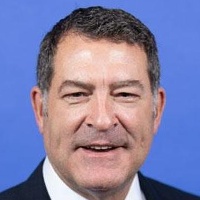
Mark Green
Representative
TN
Mark Green
Representative
TN
The Cyber PIVOTT Act establishes a CISA-led program to build a skilled cybersecurity workforce by providing full scholarships, internships, and hands-on training to students at community colleges and technical schools. Participants receive comprehensive financial support in exchange for a two-year service obligation in a cyber-related role within government or critical infrastructure. The bill aims to rapidly scale the cyber talent pipeline through partnerships with educational institutions and targeted federal recruitment initiatives.
To award a Congressional Gold Medal to the 761st Tank Battalion, the first Black soldiers to serve in an American armored unit, for their valor and crucial contributions to the Allied victory in Europe.
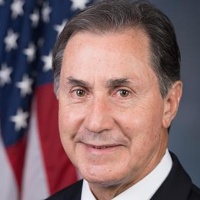
Gary Palmer
Representative
AL
Gary Palmer
Representative
AL
This bill authorizes the Speaker of the House and the President pro tempore of the Senate to award a Congressional Gold Medal to the 761st Tank Battalion, also known as the "Black Panthers," in recognition of their courageous service and crucial contributions during World War II. The medal will be given to the National Museum of African American History and Culture for display, honoring the 761st as the first Black soldiers to serve in an American armored unit and their significant role in the Allied victory in Europe. The bill also allows for the creation and sale of bronze duplicates of the medal to support the United States Mint Public Enterprise Fund.
This bill adds the Secretary of Agriculture to the Committee on Foreign Investment in the United States (CFIUS) and requires CFIUS to review agricultural land transactions, especially those involving entities from China, North Korea, Russia, or Iran.
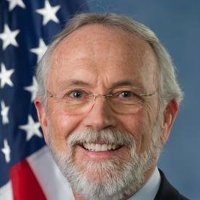
Dan Newhouse
Representative
WA
Dan Newhouse
Representative
WA
The "Protecting American Agriculture from Foreign Adversaries Act of 2025" adds the Secretary of Agriculture to the Committee on Foreign Investment in the United States (CFIUS) for agricultural matters. It mandates CFIUS review of agricultural land transactions, particularly those involving entities from China, North Korea, Russia, or Iran, to safeguard American agriculture. This ensures scrutiny of foreign investments in agricultural land and related industries, addressing potential threats to national security. The requirements for a specific country will end if that country is removed from the list of foreign adversaries in section 791.4 of title 15, Code of Federal Regulations.
Prohibits the purchase of real estate near U.S. federal lands by agents or businesses associated with the government of the People's Republic of China with 25% or more equity interest.
Dan Newhouse
Representative
WA
Dan Newhouse
Representative
WA
The "No American Land for Communist China Act" prohibits the President from allowing individuals or entities associated with the Chinese government from purchasing real estate near covered federal lands. Covered lands include those managed by the Departments of Interior, Defense, Agriculture (Forest Service), and Energy, as well as Indian country. This restriction applies to entities with at least 25% equity interest held by Chinese government-affiliated individuals or businesses. The Act defines "United States" broadly to include states, territories, and other U.S. possessions.
This resolution establishes a national goal for all students to achieve grade-level reading proficiency and encourages the implementation of intensive tutoring and public-private partnerships to combat illiteracy.
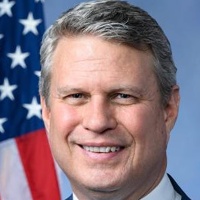
Bill Huizenga
Representative
MI
Bill Huizenga
Representative
MI
This resolution establishes a national goal for every student to achieve grade-level reading proficiency as a foundation for lifelong success. It advocates for the implementation of structured literacy curricula, intensive one-on-one tutoring for struggling students, and collaborative partnerships with private organizations to address literacy gaps in both students and adults.
The Leveling the Playing Field 2.0 Act strengthens U.S. trade laws to counteract unfair trade practices like foreign subsidies, currency manipulation, and duty evasion, ensuring fair competition for American businesses.
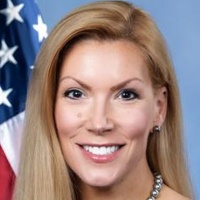
Beth Van Duyne
Representative
TX
Beth Van Duyne
Representative
TX
The Leveling the Playing Field 2.0 Act aims to strengthen U.S. trade laws by addressing unfair subsidies, currency undervaluation, duty evasion, and circumvention of trade remedies. It refines the process for handling successive trade investigations, ensuring that the International Trade Commission considers prior findings and assesses cumulative effects on domestic industries. The act also empowers authorities to counteract cost distortions in foreign countries and prevent importers from avoiding duties. Additionally, it includes provisions related to trade with Canada and Mexico and sets effective dates for new regulations.
The "Protecting Life from Chemical Abortions Act" restricts the Department of Health and Human Services (including the FDA) from reducing Risk Evaluation and Mitigation Strategy (REMS) protections for abortion drugs and mandates the collection of standardized abortion data.
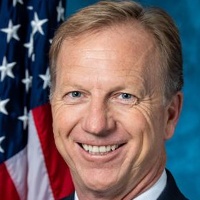
Kevin Hern
Representative
OK
Kevin Hern
Representative
OK
The "Protecting Life from Chemical Abortions Act" restricts the Department of Health and Human Services and the FDA, requiring them to enforce Risk Evaluation and Mitigation Strategy (REMS) requirements for abortion drugs, reinstate the in-person dispensing requirement, and prohibits reducing REMS protections until standardized abortion data is collected by the CDC from every state. It also defines key terms such as "abortion," "abortion drug," and "unborn child" and prohibits the HHS secretary from declaring a public health emergency with respect to abortion.
This bill authorizes the creation of a Congressional Gold Medal to honor the volunteers and communities involved with the North Platte Canteen during World War II.
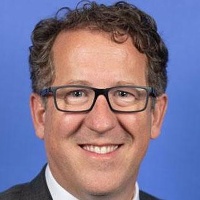
Adrian Smith
Representative
NE
Adrian Smith
Representative
NE
The North Platte Canteen Congressional Gold Medal Act recognizes and honors the volunteers and donors of the North Platte Canteen in Nebraska during World War II with a Congressional Gold Medal. This medal will be presented by the Speaker of the House and the President pro tempore of the Senate, and then displayed at the Lincoln County Historical Museum. The Act also authorizes the creation and sale of bronze duplicates of the gold medal to cover production costs, with proceeds deposited into the Mint's Public Enterprise Fund.
This House resolution clarifies that UN Resolution 2758 only addressed UN representation and does not validate the PRC's "One China Principle" regarding Taiwan's status, while supporting Taiwan's international participation.
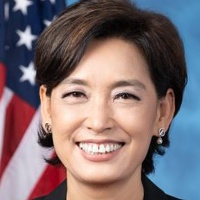
Young Kim
Representative
CA
Young Kim
Representative
CA
This resolution clarifies that United Nations General Assembly Resolution 2758 only addressed seating arrangements and does not validate the People's Republic of China's "One China Principle" regarding Taiwan's status. It asserts that the U.S. "One China Policy" is distinct from Beijing's claims and does not endorse PRC sovereignty over Taiwan. The bill strongly opposes PRC efforts to use the resolution to exclude Taiwan from international organizations and supports Taiwan's meaningful participation globally.
The "Rare Earth Magnet Security Act of 2025" introduces a tax credit for U.S. manufacturers of rare earth magnets, with increased incentives for magnets using domestically sourced materials, phasing out after 2034, and restrictions on materials from non-allied foreign nations.
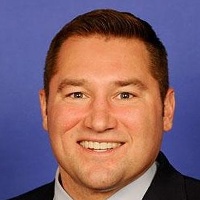
Guy Reschenthaler
Representative
PA
Guy Reschenthaler
Representative
PA
The "Rare Earth Magnet Security Act of 2025" introduces a tax credit for the production of rare earth magnets, incentivizing domestic manufacturing. The credit offers \$20 per kilogram for magnets made in the U.S. and \$30 per kilogram if 90% of the magnet's materials are U.S.-sourced. The credit phases out after 2034 and includes restrictions on sourcing materials from non-allied foreign nations, with some temporary exceptions. The act also allows manufacturers to elect to receive direct payments from the government in lieu of the tax credit.
The "Make American Flags in America Act of 2025" mandates that U.S. flags displayed on Federal property or bought by Federal agencies be made entirely in the U.S., and requires a study on country-of-origin labeling enforcement for flags.
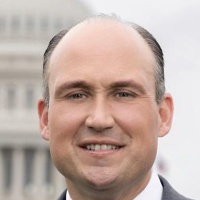
Nicholas Langworthy
Representative
NY
Nicholas Langworthy
Representative
NY
The "Make American Flags in America Act of 2025" mandates that U.S. flags displayed on Federal property or bought by Federal agencies be entirely manufactured in the U.S. using 100% U.S.-made materials, in accordance with international agreements. It also directs the Federal Trade Commission to study and report on country-of-origin labeling enforcement for U.S. flags, aiming to improve enforcement and deter violations.
This bill restricts individuals and entities associated with Iran, North Korea, China, and Russia from purchasing or leasing U.S. agricultural land and participating in USDA programs, while also enhancing reporting requirements and penalties for foreign agricultural investment.
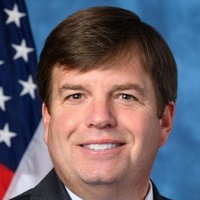
Dale Strong
Representative
AL
Dale Strong
Representative
AL
The "Protecting America's Agricultural Land from Foreign Harm Act of 2025" aims to safeguard U.S. agricultural land by prohibiting its purchase or lease by individuals or entities associated with the governments of Iran, North Korea, China, and Russia, while also preventing their participation in USDA programs. The bill expands reporting requirements under the Agricultural Foreign Investment Disclosure Act of 1978, increases penalties for violations, and mandates public online databases of foreign ownership. Additionally, it requires regular reports from the Secretary of Agriculture, the Director of National Intelligence, and the Government Accountability Office on foreign ownership and its potential risks.
Prohibits the EPA from using its Integrated Risk Information System program to create regulations, carry out enforcement, or inform air toxics assessments.
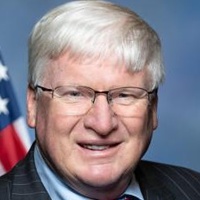
Glenn Grothman
Representative
WI
Glenn Grothman
Representative
WI
The "No Industrial Restrictions in Secret Act of 2025" or "No IRIS Act of 2025" prevents the EPA Administrator from utilizing assessments produced by the EPA's Integrated Risk Information System program. This prohibition extends to developing regulations, enforcement actions, permitting, and informing air toxics assessments.
The "Fighting Trade Cheats Act of 2025" increases penalties for customs violations, allows private parties to sue for customs fraud, and excludes violators from the importer of record program.
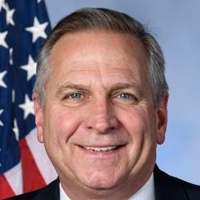
Mike Bost
Representative
IL
Mike Bost
Representative
IL
The "Fighting Trade Cheats Act of 2025" increases penalties for fraudulent and grossly negligent violations of U.S. customs laws, including banning violators and their affiliates from importing goods. It also allows private parties harmed by customs fraud to sue for damages and injunctive relief. The Act excludes those who commit fraud from participating in the importer of record program.
This resolution designates February 15–22, 2025, as "National FFA Week" to celebrate the organization's impact on agricultural education and its historic milestones.
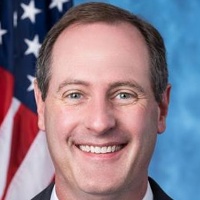
Tracey Mann
Representative
KS
Tracey Mann
Representative
KS
This resolution designates February 15–22, 2025, as "National FFA Week" to honor the National FFA Organization’s vital role in cultivating the next generation of agricultural leaders. It celebrates the organization’s commitment to personal growth and career readiness while commemorating the 90th anniversary of the New Farmers of America and the 75th anniversary of the FFA’s federal charter.
This bill prohibits the Secretary of Health and Human Services from enforcing the CMS minimum staffing standards for nursing homes published on May 10, 2024.
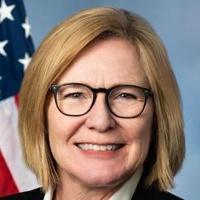
Michelle Fischbach
Representative
MN
Michelle Fischbach
Representative
MN
The Protecting America’s Seniors’ Access to Care Act prohibits the Secretary of Health and Human Services from implementing the minimum staffing level rules for nursing homes that were published by CMS on May 10, 2024. This legislation effectively blocks the enforcement of those specific staffing mandates.
This Act establishes a three-year pilot program to offer donated-fund supported hyperbaric oxygen therapy for veterans with TBI or PTSD and extends certain pension payment limits.
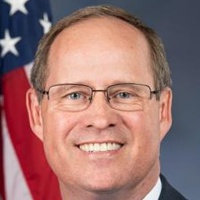
Gregory Murphy
Representative
NC
Gregory Murphy
Representative
NC
This Act establishes a three-year pilot program to provide hyperbaric oxygen therapy (HBOT) to veterans suffering from traumatic brain injury (TBI) or PTSD, funded solely through donations. It also mandates an updated Government Accountability Office (GAO) report assessing recent clinical trials on HBOT for these conditions. Finally, the bill extends the expiration date for certain limitations on veteran pension payments.
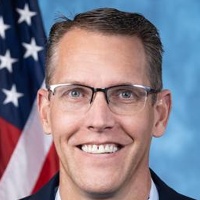
The "Death Tax Repeal Act" eliminates estate and generation-skipping transfer taxes, adjusts gift tax calculations, and sets a $10,000,000 lifetime gift exemption.
Randy Feenstra
Representative
IA
Randy Feenstra
Representative
IA
The "Death Tax Repeal Act" eliminates both estate and generation-skipping transfer taxes, effective from the date of enactment. It adjusts gift tax calculations by setting the lifetime gift exemption at $10,000,000, with inflation adjustments after 2011. The Act also includes transitional rules for applying certain sections of the Internal Revenue Code during the enactment year.
Prohibits securities exchanges from processing transactions involving securities issued by "natural asset companies" that manage land for conservation and ecological performance.
Mark Green
Representative
TN
Mark Green
Representative
TN
The "Protect America's Lands Act" prevents national securities exchanges from handling transactions of securities issued by "natural asset companies." These companies manage land for conservation and aim to enhance the value of natural assets and ecosystem services. The bill defines specific criteria for what constitutes a "natural asset company" to ensure the prohibition is appropriately applied.
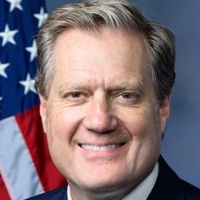
The Susan Muffley Act of 2025 ensures full pension benefits for eligible participants and beneficiaries under specific terminated pension plans, recalculating benefits, providing lump-sum payments for past-due amounts, and establishing a trust fund to cover increased benefit payments.
Michael Turner
Representative
OH
Michael Turner
Representative
OH
The Susan Muffley Act of 2025 ensures that eligible participants and beneficiaries under specific pension plans, like the Delphi and PHI retirement programs, receive their full vested benefits. It directs the Pension Benefit Guaranty Corporation (PBGC) to recalculate benefits, provide lump-sum payments for past-due amounts with interest, and establishes a trust fund within the Treasury to cover these increased payments. The act also includes provisions for the tax treatment of lump-sum payments, allowing recipients to spread the income over three years unless they elect otherwise.