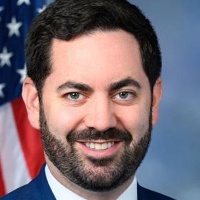
Legislative Activity
Track Michael's sponsored bills, co-sponsored legislation, and voting record
This act establishes a new federal income tax credit of up to $2,000 per qualifying child born during the tax year, with options for advance payment.
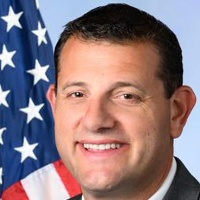
David Valadao
Representative
CA
David Valadao
Representative
CA
The Supporting Newborn Parents Act of 2026 establishes a new federal income tax credit of up to $2,000 for each qualifying child born during the tax year. This credit includes an option for parents to receive an advance payment shortly after the child's birth. The bill also streamlines the application process by collecting necessary election information directly through the Social Security application for a newborn's number.
The GUARD Act expands federal grant funding for state, local, and tribal law enforcement to investigate elder financial fraud, "pig butchering" scams, and general financial fraud, while also mandating comprehensive federal reports on scam trends and enforcement efforts.
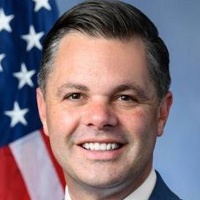
Zachary (Zach) Nunn
Representative
IA
Zachary (Zach) Nunn
Representative
IA
The GUARD Act expands the use of federal grant funds to help state, local, and tribal law enforcement investigate elder financial fraud, "pig butchering" scams, and general financial fraud. This legislation allows agencies to hire specialized staff, receive advanced training on emerging technologies, and acquire necessary investigative tools. Furthermore, the Act mandates comprehensive federal reports to Congress detailing the scope of these scams and the effectiveness of current enforcement efforts.
This bill mandates a comprehensive report detailing best practices for reducing mental health stigma and improving confidential support resources for law enforcement officers.
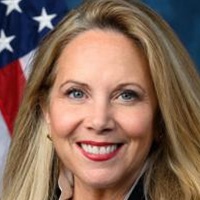
Laura Gillen
Representative
NY
Laura Gillen
Representative
NY
The Officer Wellness and Peer Support Act of 2026 mandates a comprehensive report from the Attorney General identifying best practices for improving mental health support within law enforcement. This report must focus on reducing stigma, encouraging resource utilization, and ensuring the confidentiality of services like peer counseling. The goal is to provide actionable recommendations for enhancing officer well-being across all levels of law enforcement.
This resolution supports designating May as Lyme and Tick-borne Disease Awareness Month to recognize the growing threat and call for stronger federal action to combat these illnesses.
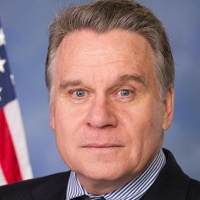
Christopher Smith
Representative
NJ
Christopher Smith
Representative
NJ
This resolution officially supports designating the month of May as "Lyme and Tick-borne Disease Awareness Month." It recognizes the significant and growing threat of Lyme disease across the United States. The bill commits to continuing efforts to raise public awareness and improve the federal response to these illnesses.
This act establishes a federal crime for knowingly approaching, threatening, or harassing a federal law enforcement officer after receiving a verbal warning to stop.
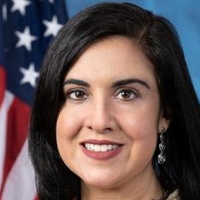
Nicole Malliotakis
Representative
NY
Nicole Malliotakis
Representative
NY
The Federal Halo Act establishes a new federal crime for obstructing federal law enforcement officers. This offense specifically targets individuals who knowingly violate a verbal warning not to approach an officer performing their duties, including remaining too close, threatening harm, or harassing the officer. Violators face significant penalties, including fines and up to five years in prison.
This bill establishes a dedicated federal transit funding set-aside for medium-sized urban areas, distributed based on their performance against benchmarks set by the largest transit cities.
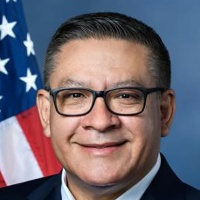
Salud Carbajal
Representative
CA
Salud Carbajal
Representative
CA
The Medium Transit Intensive Cities Authorization Act of 2026 establishes a new dedicated funding stream by setting aside 1.5% of certain federal transit formula grants for medium-sized urban areas (200,000 to 999,999 residents). This reserved funding will be distributed based on how well these cities meet or exceed performance benchmarks established by the largest urban transit systems. The goal is to incentivize efficiency by rewarding medium-sized areas that demonstrate strong transit performance across key metrics.
This resolution condemns attacks on civilians in Sudan, demands an end to external support for the warring parties, and calls for efforts to negotiate a settlement to the civil war.
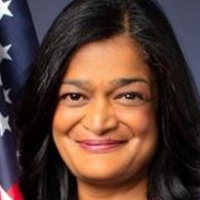
Pramila Jayapal
Representative
WA
Pramila Jayapal
Representative
WA
This resolution condemns the devastating attacks on civilians in the Sudanese civil war and calls for an immediate end to external support fueling the conflict. It urges all parties to cease hostilities and demands robust international efforts to negotiate a settlement leading to civilian-led democratic governance. The bill emphasizes the urgent need to address the massive humanitarian crisis and hold perpetrators of atrocities accountable.
This Act mandates annual suicide prevention training for VA community care providers and establishes a public list of those who complete it to enhance veteran access to specialized care.
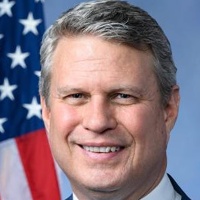
Bill Huizenga
Representative
MI
Bill Huizenga
Representative
MI
The Veterans Suicide Prevention and Care Enhancement Act of 2026 mandates annual suicide prevention training for community care providers participating in the VA program. It requires the VA to create and maintain a public "Preferred Provider List" of all trained providers to help veterans access specialized care. The Secretary must also report annually to Congress on the implementation and effectiveness of this new provider list.
This bill authorizes foreign military financing recipients to purchase defense articles and services directly from private U.S. companies, subject to State Department approval.
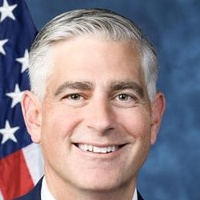
Michael Baumgartner
Representative
WA
Michael Baumgartner
Representative
WA
This bill amends the Arms Export Control Act to allow foreign military financing to be used for direct purchases of defense articles and services from private U.S. companies. This new authority requires approval from the Secretary of State and is intended to supplement, not replace, existing foreign military sales programs. The legislation mandates the creation of regulations for oversight, accountability, and compliance within 180 days of enactment.
The YALI Act of 2025 establishes and expands the Young African Leaders Initiative to invest in sub-Saharan African leaders through training, networking, and fellowships like the Mandela Washington Fellowship, while also setting up regional centers and requiring regular progress reports.
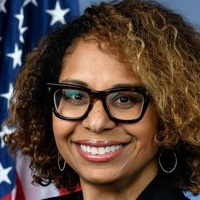
Sydney Kamlager-Dove
Representative
CA
Sydney Kamlager-Dove
Representative
CA
The YALI Act of 2025 formally establishes and expands the Young African Leaders Initiative to invest in emerging African leaders across sub-Saharan Africa. This legislation mandates the creation of professional development, training, and networking opportunities focused on business, civic engagement, and public administration. The bill specifically supports the Mandela Washington Fellowship and requires the establishment of regional leadership centers and online networks to foster ongoing engagement and U.S.-Africa ties.
The IGNITE HBCU Excellence Act authorizes competitive grants to Historically Black Colleges and Universities (HBCUs) for long-term facility improvements, technology upgrades, and infrastructure modernization, while also providing for the forgiveness of certain outstanding HBCU capital financing loans.
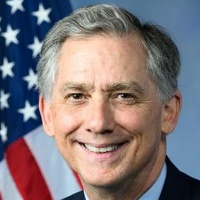
J. Hill
Representative
AR
J. Hill
Representative
AR
The IGNITE HBCU Excellence Act authorizes competitive grants to Historically Black Colleges and Universities (HBCUs) and similar institutions for long-term facility improvements, technology upgrades, and infrastructure modernization. Priority for these grants will be given to institutions demonstrating the greatest need, limited fundraising ability, and high percentages of Pell Grant recipients. The bill also mandates immediate forgiveness for certain outstanding balances on existing HBCU Capital Financing Program loans. Finally, it requires comprehensive reporting and studies to assess the program's impact and future funding needs.
This bill expands housing assistance for qualified volunteer first responders by allowing income deductions for USDA loans and making them eligible for HUD's Good Neighbor Next Door home discount program.
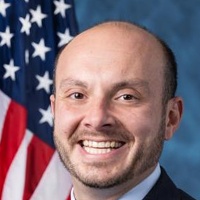
Andrew Garbarino
Representative
NY
Andrew Garbarino
Representative
NY
The Volunteer First Responder Housing Act aims to increase housing accessibility for dedicated volunteer first responders. This bill allows qualified volunteers to receive an $18,000 income deduction when applying for USDA Single Family Housing Guaranteed Loans. Furthermore, it makes these volunteers eligible for HUD's Good Neighbor Next Door Sales Program, allowing them to purchase homes at discounted prices. Eligibility requires continuous service, meeting minimum hour requirements, and holding current first responder certification.
This bill authorizes $1.8 million in annual funding from 2027 through 2031 to establish an International Military Education and Training program aimed at strengthening defense cooperation and interoperability between the United States and Greece.
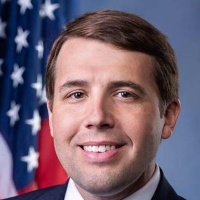
Chris Pappas
Representative
NH
Chris Pappas
Representative
NH
The U.S.-Greece Defense Cooperation Advancement Act establishes a dedicated International Military Education and Training (IMET) program to strengthen the strategic partnership between the two nations. This initiative aims to enhance military interoperability, professional development, and cooperation through authorized funding of $1.8 million annually from 2027 to 2031.
This bill affirms the strong U.S.-South Korea alliance, emphasizing its importance for security, economic growth, and shared values, while also recognizing the contributions of Korean Americans. It supports stronger ties and celebrates Korean culture.
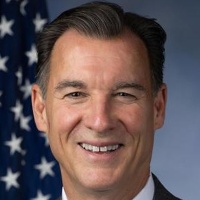
Thomas Suozzi
Representative
NY
Thomas Suozzi
Representative
NY
This bill reaffirms the strong alliance between the United States and the Republic of Korea, emphasizing its importance for security, economic growth, and shared values. It recognizes the deep economic ties, the contributions of Korean Americans, and continued commitment to the Mutual Defense Treaty. The bill also supports strengthening security, economic, and cultural bonds between the two nations, and celebrates Korean Culture-Kimchi Day.
This bill establishes the Combating Organized Retail Crime Act of 2025 to enhance federal prosecution tools against organized retail and supply chain crime and create a DHS-led coordination center to align law enforcement efforts.
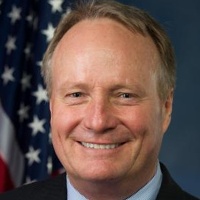
David Joyce
Representative
OH
David Joyce
Representative
OH
The Combating Organized Retail Crime Act of 2025 aims to combat sophisticated, cross-jurisdictional organized retail and supply chain theft. It achieves this by strengthening federal laws regarding money laundering and stolen property offenses, including lowering monetary thresholds for prosecution. Furthermore, the bill establishes a dedicated Center within the Department of Homeland Security to coordinate federal, state, and local enforcement efforts against these criminal organizations.
The Never Fight Alone Act expands veterans' access to community-based mental health and substance use disorder residential treatment when the VA cannot provide timely care, while also restricting the VA's ability to limit community care options.
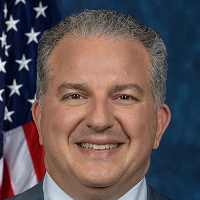
Jimmy Patronis
Representative
FL
Jimmy Patronis
Representative
FL
The Never Fight Alone Act aims to expand veterans' access to community-based mental health and substance use disorder treatment when the VA cannot provide timely residential care. It prohibits the VA from using restrictive wait times to deny eligibility for community care and ensures veterans have a choice among available care options. Furthermore, the bill mandates increased transparency through detailed reporting on community care metrics and requires Congressional approval for future changes to community care access standards.
Melanie's Law establishes a federal grant program to encourage states to expand protective orders to cover individuals related by blood or marriage to those in intimate relationships, and to protect third parties related to those individuals.
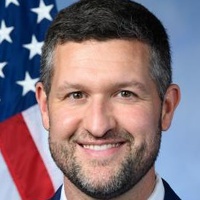
Patrick Ryan
Representative
NY
Patrick Ryan
Representative
NY
Melanie's Law establishes a federal grant program to encourage states to expand the scope of protective orders. These orders can now cover individuals related by blood or marriage to those in intimate relationships, or protect third parties related to those involved. Grants will fund training, enforcement, tracking systems, and victim services related to these expanded protective orders. The program is authorized at $200 million annually from fiscal years 2026 through 2036.
This bill establishes a categorical exclusion under NEPA for the Bureau of Land Management to conduct certain small-scale, forest thinning and fuel reduction activities to reduce wildfire risk.
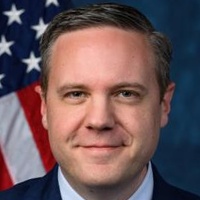
Jeff Hurd
Representative
CO
Jeff Hurd
Representative
CO
This act establishes a new categorical exclusion under the National Environmental Policy Act for the Bureau of Land Management (BLM) to streamline certain forest health and wildfire risk reduction projects. This exclusion applies to tree density modification activities on areas under 5,000 acres, such as thinning and slash removal, exempting them from standard environmental reviews. The legislation specifically excludes large-scale regeneration harvests and vegetation conversions from this streamlined process.
This bill establishes a task force to prepare for the immediate imposition of U.S. sanctions against entities supporting People's Republic of China aggression against Taiwan, while affirming existing U.S. policy.
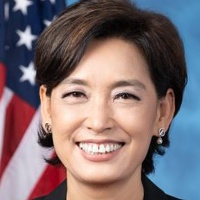
Young Kim
Representative
CA
Young Kim
Representative
CA
This bill establishes the "Deter PRC Aggression Against Taiwan Act" to prepare for immediate U.S. sanctions against entities supporting aggression toward Taiwan. It mandates the creation of an interagency task force to identify targets and develop comprehensive sanctions strategies in coordination with allies. The Act explicitly states it does not alter existing U.S. policy regarding Taiwan, ensuring any imposed sanctions require further Congressional authorization.
This resolution expresses support for designating July 15, 2026, as Glioblastoma Awareness Day to raise awareness and support research for this aggressive brain cancer.
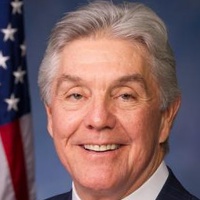
Roger Williams
Representative
TX
Roger Williams
Representative
TX
This resolution expresses support for designating July 15, 2026, as Glioblastoma Awareness Day. It aims to raise public awareness about glioblastoma, the most aggressive malignant brain tumor, and honor those affected by the disease. The bill encourages greater investment in research and collaboration to develop improved treatments and outcomes for patients.