This act establishes a federal crime for knowingly approaching, threatening, or harassing a federal law enforcement officer after receiving a verbal warning to stop.
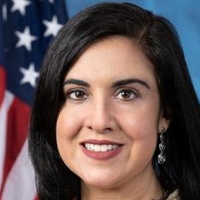
Nicole Malliotakis
Representative
NY-11
The Federal Halo Act establishes a new federal crime for obstructing federal law enforcement officers. This offense specifically targets individuals who knowingly violate a verbal warning not to approach an officer performing their duties, including remaining too close, threatening harm, or harassing the officer. Violators face significant penalties, including fines and up to five years in prison.
New 'Federal Halo Act' Criminalizes Approaching Officers, Threatens Public Observation Rights
Alright, let's talk about something that could seriously change how you interact with federal law enforcement, whether you're just walking down the street or trying to film something you think is important. This new bill, dubbed the 'Federal Halo Act,' is looking to create a whole new federal crime for what it calls 'obstructing' a federal officer. If passed, it means you could face fines or up to five years in prison for violating its rules.
The New No-Go Zone
So, what's actually in this thing? Well, Section 2 of the bill lays out the core of it. Essentially, if a federal law enforcement officer tells you verbally to back off while they're doing their job, you can’t then get within 15 feet of them with the intent to 'impede or interfere.' This isn't just about getting in the way; it's about the intent to do so. Imagine you're at a public event, and federal agents are present. If one tells you to step back, and you don't, or you get too close with what they perceive as an intent to 'impede,' you could be in serious hot water. This 15-foot rule creates a kind of invisible bubble around officers, and crossing it after a warning could land you in jail. For someone like a journalist trying to document an event, or even just a curious bystander, this could make things incredibly tricky.
Defining 'Harass' — And Its Broad Reach
Here’s where it gets really interesting, and potentially a bit concerning. The bill defines 'harass' as 'knowingly engaging in a pattern of behavior directed at a federal law enforcement officer that intentionally causes the officer substantial emotional distress and serves no legitimate purpose.' Now, 'substantial emotional distress' and 'no legitimate purpose' are pretty vague terms, right? What one person considers a legitimate purpose (like filming public servants in action) another might not. This broad definition, found in Section 2, means that actions that might seem like legitimate public observation or even just expressing dissent could be interpreted as criminal harassment. Think about it: if you're trying to hold an officer accountable, and they feel 'substantial emotional distress' from your actions, you could be facing federal charges. This could have a chilling effect on individuals engaging in protest or public observation of law enforcement activities, making people hesitant to speak up or record, even when they have a right to.
Who Benefits, Who Pays?
On one hand, this bill is clearly designed to protect federal law enforcement officers and potentially make their jobs safer by deterring direct interference. The idea is to give them clearer legal recourse if they feel threatened or obstructed. On the other hand, the general public, and especially groups like journalists or activists, could find their ability to interact with or observe federal officers significantly curtailed. The lack of clear, objective standards for 'harass' and 'impede' means that the interpretation of these new rules largely falls to the officers themselves. This isn't just a theoretical concern; vague laws often lead to disproportionate impacts on marginalized communities who already face increased scrutiny from law enforcement. It could create a situation where documenting police actions, a crucial part of public oversight, becomes a high-risk activity. So, while officers might feel more protected, everyday citizens might feel less empowered to exercise their rights in public spaces.