
Legislative Activity
Track Michael's sponsored bills, co-sponsored legislation, and voting record
This bill amends the Export Control Reform Act of 2018 to establish a ten-year statute of limitations for both civil and criminal export control violations.

Ryan Mackenzie
Representative
PA
Ryan Mackenzie
Representative
PA
This bill amends the Export Control Reform Act of 2018 to establish a ten-year statute of limitations for both civil and criminal export control violations. This ensures that authorities have up to a decade from the date of an offense to initiate enforcement actions or file criminal charges.
This bill mandates the modernization of the Bureau of Industry and Security's (BIS) information technology systems to enhance export control efficiency, supply chain visibility, and threat detection through 2030.
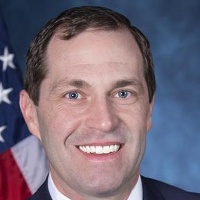
Jason Crow
Representative
CO
Jason Crow
Representative
CO
The BIS IT Modernization Act mandates a comprehensive overhaul of the Bureau of Industry and Security's (BIS) technology systems through fiscal year 2030. This modernization aims to leverage advanced tools like AI and data analysis to speed up export licensing and enhance supply chain tracking. The goal is to improve national security by better identifying and tracking entities involved in illicit trade, particularly concerning adversaries like China and Russia. Ultimately, the Act requires a unified, secure IT environment to boost efficiency and data sharing capabilities across government and industry partners.
The Export Dispute Resolution Act streamlines the interagency review process for export license applications by granting the Committee chair authority to resolve deadlocked disputes involving countries under comprehensive U.S. arms embargoes.
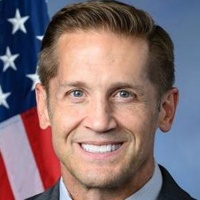
Rich McCormick
Representative
GA
Rich McCormick
Representative
GA
The Export Dispute Resolution Act streamlines the interagency review process for export license applications involving countries under comprehensive U.S. arms embargoes. It grants the Committee Chair the authority to resolve disputes when a majority vote cannot be reached, ensuring decisive action on sensitive export matters.
This Act establishes a strategy for the United States to achieve global leadership in 6G technology through diplomatic coordination, project assistance with trusted vendors, and countering unfair foreign influence in international standards bodies.

Julie Johnson
Representative
TX
Julie Johnson
Representative
TX
The USA 6G Global Leadership Act establishes the national interest in the U.S. leading the global development of 6G technology to counter unfair practices by competitors like China. The bill directs the State Department to coordinate diplomatic efforts, prioritize projects using trusted vendors in developing nations, and develop a comprehensive strategy for U.S. dominance in 6G. This legislation aims to ensure American companies compete effectively and shape international telecommunications standards.
This bill enhances the administration of export control licenses, expands the role of technical advisory committees, and mandates reviews of integrated circuit due diligence rules to safeguard U.S. technology from foreign adversaries.
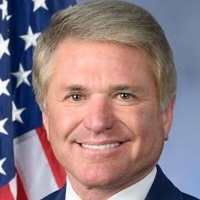
Michael McCaul
Representative
TX
Michael McCaul
Representative
TX
This bill, the Bureau of Industry and Security License Administration Enhancement Act, aims to strengthen U.S. export control processes. It mandates stricter procedures for handling certain export licenses and establishes clear standards for license denials against foreign adversaries. Furthermore, the Act expands and formalizes technical advisory committees to better inform the Commerce Department on critical and emerging technologies.
This bill establishes a license requirement for exporting digital sequences of synthetic DNA or RNA to foreign entities of concern to protect U.S. intellectual property from adversaries like China.
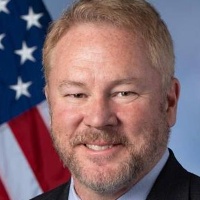
Warren Davidson
Representative
OH
Warren Davidson
Representative
OH
The Biological Intellectual Property Protection Act of 2025 aims to safeguard sensitive U.S. biotechnology by controlling the export of synthetic DNA and RNA sequences. This bill establishes a license requirement for transferring these digital sequences to foreign entities of concern, particularly those linked to adversaries like the People's Republic of China. Congress finds this action necessary to prevent intellectual property theft that supports foreign military modernization and strategic technology development.
This Act mandates a comprehensive report to Congress detailing emerging military, cyber, and political threats to the Baltic states and recommending strategies to enhance their security and U.S. partnership.
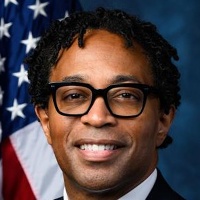
Wesley Bell
Representative
MO
Wesley Bell
Representative
MO
The Baltic Security Assessment Act of 2025 affirms the critical importance of Estonia, Latvia, and Lithuania to U.S. national security amidst Russian aggression. This bill mandates that the Secretary of State and Secretary of Defense deliver a comprehensive report to Congress detailing emerging military, cyber, and political threats to the Baltic states. The report must also recommend specific actions to enhance U.S. and NATO defense cooperation and bolster Baltic resilience.
This bill strengthens export control enforcement through enhanced authority, increased penalties, mandatory compliance programs, and expanded industry assistance.

Gabe Amo
Representative
RI
Gabe Amo
Representative
RI
The Strengthening Export Controls Compliance Act enhances the enforcement of U.S. export control laws through increased investigative authority and significantly higher penalties for violations. The bill mandates that exporters implement formal compliance programs and extends recordkeeping requirements to ten years. Furthermore, it establishes a formal voluntary disclosure program and requires increased compliance assistance and outreach from the Department of Commerce to U.S. businesses.
This bill amends export control laws to require special consideration for the first-time licensing of controlled items to a specific recipient and mandates annual reporting to Congress on these initial licenses.
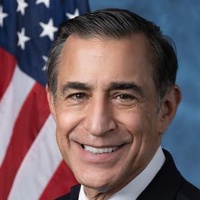
Darrell Issa
Representative
CA
Darrell Issa
Representative
CA
The Protecting American Competition Act of 2026 updates export control procedures by requiring special consideration for initial export licenses to new recipients. It mandates that the Under Secretary for Industry and Security track and report annually to Congress on these initial licenses versus subsequent applications for similar items to the same end user. This legislation aims to provide greater transparency regarding the first-time approval of controlled item exports.
This Act establishes penalties and restrictions to deter foreign adversaries from stealing proprietary, closed-source artificial intelligence models owned by U.S. entities through model extraction attacks.
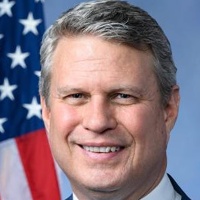
Bill Huizenga
Representative
MI
Bill Huizenga
Representative
MI
The Deterring American AI Model Theft Act of 2026 aims to protect proprietary, closed-source Artificial Intelligence models owned by U.S. entities from theft by foreign adversaries. It establishes new legal restrictions and penalties targeting "model extraction attacks" used by designated "entities of concern" to replicate advanced AI capabilities. The bill mandates government assessments, public reporting, and grants the President authority to impose sanctions against those found violating these provisions.
This Act establishes a five-year program to significantly increase the number of U.S. export control officers stationed overseas to enhance enforcement and prevent the diversion of controlled American items.

Sydney Kamlager-Dove
Representative
CA
Sydney Kamlager-Dove
Representative
CA
The Export Controls Enforcement Act addresses the critical shortage of overseas personnel responsible for verifying that controlled U.S. exports are used as intended. This bill establishes a new, five-year Export Control Officer Program to significantly increase the number of officers stationed abroad. These officers will conduct essential end-use checks, advise foreign partners, and help prevent the diversion of sensitive American technology.
This bill establishes an expedited 30-day voting process for the End-User Review Committee to modify the Entity List, strengthening the enforcement of U.S. export controls.

Ann Wagner
Representative
MO
Ann Wagner
Representative
MO
The Export Control Enforcement and Enhancement Act establishes an expedited 30-day voting process for the End-User Review Committee to modify the Entity List. This legislation empowers committee members to directly propose additions or changes to the list, ensuring timely responses to entities that pose risks to U.S. national security or foreign policy interests. By limiting the Chair's ability to override decisions, the bill promotes a more efficient and transparent framework for managing export restrictions.
This Act establishes a policy and framework for coordinating with allies to protect the global semiconductor supply chain from control by adversarial nations like the Chinese Communist Party.
Bill Huizenga
Representative
MI
Bill Huizenga
Representative
MI
The Semiconductor Technology Resilience, Integrity, and Defense Enhancement Act (STRIDE Act) aims to protect U.S. technological leadership by coordinating with allies to secure the global semiconductor supply chain against adversarial control, particularly from the Chinese Communist Party. The bill mandates the State Department to align export controls and establish trusted supplier networks with key semiconductor partners. It also outlines consequences, including enhanced export restrictions, for nations that fail to prevent technology transfer to countries of concern.
This bill establishes a temporary authority for the Bureau of Industry and Security (BIS) to hire up to 25 highly qualified external experts for five years to fill critical national security expertise gaps.
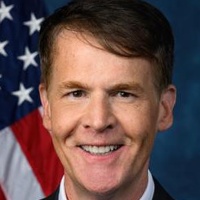
Jefferson Shreve
Representative
IN
Jefferson Shreve
Representative
IN
The BIS STRENGTH Act establishes a temporary, five-year authority for the Bureau of Industry and Security (BIS) to hire up to 25 highly qualified external experts to fill critical, hard-to-fill expertise gaps. This allows BIS to bypass standard civil service hiring rules to quickly secure specialized talent needed for national security and technology handling missions. The appointments are limited in duration, subject to a high pay cap, and require regular reporting to Congress on their impact.
The MATCH Act mandates stricter export controls on semiconductor manufacturing equipment to countries of concern and requires the U.S. to coordinate with allied nations to prevent the transfer of critical technology to adversarial entities.
Michael Baumgartner
Representative
WA
Michael Baumgartner
Representative
WA
The Multilateral Alignment of Technology Controls on Hardware (MATCH) Act aims to protect U.S. national security by restricting adversary access to advanced semiconductor manufacturing equipment. The bill mandates diplomatic efforts to align export controls with allied nations and establishes a framework to impose strict U.S. regulations if those partners fail to implement sufficient safeguards. By targeting specific entities and facilities in countries of concern, the legislation seeks to close gaps in the current export control regime and maintain America’s technological advantage.
The Safe Tracks Act mandates the Secretary of Transportation to update federal regulations, ensuring all centralized train dispatching systems comply with existing safety requirements.

Laura Gillen
Representative
NY
Laura Gillen
Representative
NY
The Safe Tracks Act mandates immediate updates to federal rail safety regulations concerning centralized train dispatching systems. This legislation requires the Secretary of Transportation to ensure that all existing and future computer-aided dispatching systems comply with established safety requirements outlined in the Code of Federal Regulations.
This bill strengthens consumer control over personal financial data by limiting institutional sharing, granting rights to access and delete information, and establishing federal standards that preempt most state privacy laws.
Bill Huizenga
Representative
MI
Bill Huizenga
Representative
MI
This bill significantly strengthens consumer control over personal financial data by limiting what financial institutions can collect and share, and granting customers the right to opt-out, view, or delete their information at any time. It also establishes federal law as the primary authority for financial data privacy, overriding most state-level protections. Furthermore, the legislation requires regulators to consider the unique compliance challenges faced by smaller financial institutions when creating new rules.
This act streamlines the application and benefit processing for farmers selling directly to consumers under major federal nutrition programs while ensuring access to modern mobile payment technology.

Hillary Scholten
Representative
MI
Hillary Scholten
Representative
MI
The Promoting Access to Local Agriculture Act of 2026 aims to make it easier for local farmers and ranchers to accept benefits from major federal nutrition programs like SNAP and WIC. It mandates the creation of a single, streamlined application process for farmers to become authorized vendors across these programs. Additionally, the bill requires the provision of modern, mobile payment technology to support direct sales at farmers markets.
This Act repeals the federal beneficial ownership information reporting requirements for domestic persons and entities, limiting them only to foreign individuals and foreign-connected companies, and mandates the deletion of existing domestic data.
Warren Davidson
Representative
OH
Warren Davidson
Representative
OH
The Repealing Big Brother Overreach Act significantly narrows the federal beneficial ownership information reporting requirements. This legislation limits reporting obligations exclusively to foreign individuals and foreign-connected companies. Furthermore, it mandates the deletion of all previously collected data pertaining to domestic persons and entities.
This bill designates April as Cancer Prevention and Early Detection Month to renew the national commitment to reducing cancer burden through increased awareness, access to screening, and preventive action.

Max Miller
Representative
OH
Max Miller
Representative
OH
This bill designates April as Cancer Prevention and Early Detection Month to renew the national commitment to reducing the burden of cancer. It aims to address gaps in screening access and promote preventive actions across all populations. The legislation encourages federal investment in early detection programs and supports advancements in lifesaving cancer innovation.