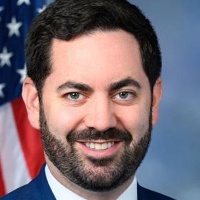
Legislative Activity
Track Michael's sponsored bills, co-sponsored legislation, and voting record
This resolution expresses support for recognizing open water lifeguards as first responders and emergency response providers.
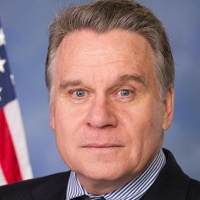
Christopher Smith
Representative
NJ
Christopher Smith
Representative
NJ
This resolution expresses strong support for open water lifeguards, recognizing their critical role as first responders and emergency response providers. It urges federal agencies to formally acknowledge the essential, lifesaving work these individuals perform, often at great personal risk. The bill calls for lifeguards to be treated as emergency responders, including eligibility for priority access to resources during public health emergencies.
This bill designates April as Cancer Prevention and Early Detection Month to renew the national commitment to reducing cancer burden through increased awareness, access to screening, and preventive action.
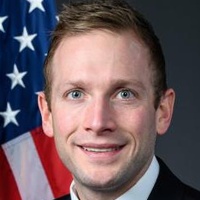
Max Miller
Representative
OH
Max Miller
Representative
OH
This bill designates April as Cancer Prevention and Early Detection Month to renew the national commitment to reducing the burden of cancer. It aims to address gaps in screening access and promote preventive actions across all populations. The legislation encourages federal investment in early detection programs and supports advancements in lifesaving cancer innovation.
The Medicare Advantage Improvement Act of 2026 mandates faster authorization decisions, stricter oversight, and aligns coverage criteria with traditional Medicare to improve timely care and accountability for Medicare Advantage plans.
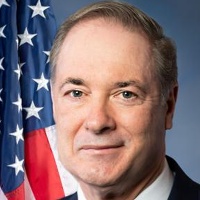
John Joyce
Representative
PA
John Joyce
Representative
PA
The Medicare Advantage Improvement Act of 2026 aims to enhance timely access to care and improve oversight for Medicare Advantage (MA) enrollees. The bill mandates faster decision-making for prior authorization requests, establishes strict compliance scoring with financial penalties for non-compliant plans, and requires MA plans to use the same medical necessity criteria as traditional Medicare. Furthermore, it protects providers by limiting retroactive denials for pre-approved services and ensuring prompt payment for those services.
This bill mandates the Secretary of Homeland Security to designate Haiti for Temporary Protected Status (TPS) until early 2029, overriding other legal requirements.
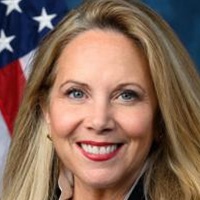
Laura Gillen
Representative
NY
Laura Gillen
Representative
NY
This bill mandates the Secretary of Homeland Security to immediately designate Haiti for Temporary Protected Status (TPS). This designation overrides other legal requirements and will remain in effect until early 2029.
This bill authorizes the Artemis Accords, establishes a Special Coordinator for the Accords within the State Department, and mandates strategies to promote U.S. leadership in civil space exploration and low-earth orbit satellite technology globally.
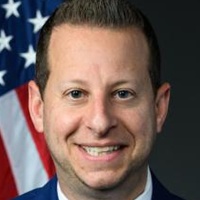
Jared Moskowitz
Representative
FL
Jared Moskowitz
Representative
FL
This bill authorizes the Artemis Accords, establishing U.S. policy to promote peaceful and responsible civil space exploration through this international framework. It creates a Special Coordinator within the State Department to expand participation in the Accords and requires regular reports to Congress on international space cooperation. Furthermore, the legislation mandates a strategy to integrate U.S. low-earth orbit satellite technology into foreign policy to advance connectivity and counter strategic competitors.
This act raises the mandatory retirement age for Foreign Service officers from 65 to 67, or to the applicable Social Security retirement age, whichever is higher.
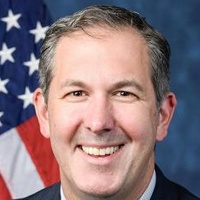
Johnny Olszewski
Representative
MD
Johnny Olszewski
Representative
MD
The Foreign Service Age and Integration and Reform (FAIR) Act of 2026 proposes to raise the mandatory retirement age for Foreign Service officers. This legislation adjusts the mandatory retirement age from 65 to 67, or to the individual's applicable Social Security retirement age, whichever is greater.
This bill establishes federal restrictions on when financial institutions can turn over certain securities, digital assets, or investment accounts to state governments under unclaimed property laws.
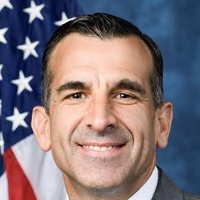
Sam Liccardo
Representative
CA
Sam Liccardo
Representative
CA
The Safeguarding Americans’ Fairly Earned Retirement Act of 2026 (SAFER Act) establishes strict new federal rules governing when financial institutions must turn over certain unclaimed assets, including securities and digital assets, to state governments. This bill mandates specific waiting periods and confirmation of death before assets belonging to individuals or entities can be escheated under state unclaimed property laws. Furthermore, it requires enhanced death record checks for accounts held by retirees before any transfer of assets occurs.
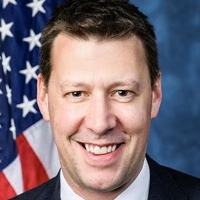
This act allows individuals to deduct all taxes and state-mandated surcharges included on their gas or electric utility bills.
Josh Riley
Representative
NY
Josh Riley
Representative
NY
This bill, the "No Taxes on Utility Bills Act," allows individuals to deduct all federal, state, and local taxes, as well as state-mandated surcharges, that are included on their gas or electric utility bills. This change amends the Internal Revenue Code to treat these specific utility charges as deductible taxes for the taxpayer.
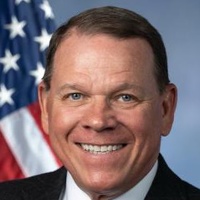
This bill mandates comprehensive safety upgrades for civilian and military aviation, focusing on collision avoidance technology, air traffic control training, and enhanced airspace transparency, particularly around high-traffic airports.
Sam Graves
Representative
MO
Sam Graves
Representative
MO
The Airspace Location and Enhanced Risk Transparency Act of 2026 mandates significant safety upgrades across both civilian and military aviation to prevent midair collisions. It requires the FAA to implement advanced collision avoidance systems and new air traffic controller training, while also compelling the Department of Defense to equip most military helicopters with transponders for increased visibility. The bill establishes new transparency measures, including public tracking of safety rule implementation and enhanced reporting on near-miss incidents, particularly around major airports like Reagan National.
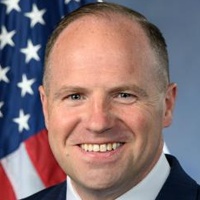
This bill officially renames the United States Postal Service facility at 1200 William Street in Buffalo, New York, as the William J. Donovan Post Office Building.
Timothy Kennedy
Representative
NY
Timothy Kennedy
Representative
NY
This bill officially renames the United States Postal Service facility located at 1200 William Street in Buffalo, New York. The facility will now be known as the William J. Donovan Post Office Building. This designation will apply to all federal references to the building.
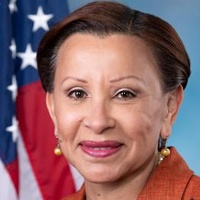
This bill authorizes a Congressional Gold Medal to honor Rabbi Michoel Ber Weissmandl for his heroic efforts to rescue Jewish people during the Holocaust.
Nydia Velázquez
Representative
NY
Nydia Velázquez
Representative
NY
This bill authorizes the presentation of a Congressional Gold Medal to Rabbi Michoel Ber Weissmandl. The award recognizes his heroic efforts to rescue Jewish people during the Holocaust, including establishing an underground group to negotiate ransoms and documenting early accounts of the atrocities. The Treasury will strike the medal, and duplicate bronze copies may be sold to cover costs.
This bill establishes the HBCU Research Capacity Act to coordinate a government-wide strategy, create a federal grant clearinghouse, and mandate agency reviews to increase research funding and infrastructure at Historically Black Colleges and Universities.
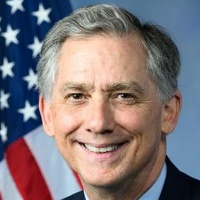
J. Hill
Representative
AR
J. Hill
Representative
AR
The HBCU Research Capacity Act aims to significantly increase federal research funding and infrastructure at Historically Black Colleges and Universities (HBCUs). It mandates the creation of a centralized Federal Clearinghouse to connect HBCUs with grant opportunities and best practices. The bill also requires federal agencies to develop strategies and report annually on concrete actions taken to boost HBCU participation in research and development.
This act establishes loan guarantees for electric generating facilities required to operate under a federal emergency order and reserves a significant portion of loan authority for such projects.
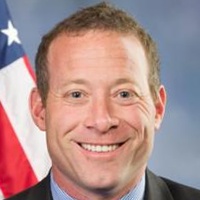
Josh Gottheimer
Representative
NJ
Josh Gottheimer
Representative
NJ
The Build More Power Act aims to strengthen the nation's energy infrastructure by making it easier for facilities ordered to operate during federal emergencies to qualify for federal loan guarantees. It reserves a significant amount of loan guarantee authority specifically for these emergency-designated projects. Additionally, the bill extends the deadlines for existing energy infrastructure loan guarantee programs and requires a report on investments in power generation upgrades.
This act transfers authority for siting interstate electric transmission facilities to FERC and establishes a new self-certification process for construction within national interest corridors.
Josh Gottheimer
Representative
NJ
Josh Gottheimer
Representative
NJ
The Grid Expansion and Reliability Act aims to streamline the construction of interstate electric transmission facilities by transferring siting authority from the Secretary of Energy to the Federal Energy Regulatory Commission (FERC). This new process allows for self-certification of projects within national interest corridors, subject to annual FERC audits and reporting to Congress on the process's effectiveness. The bill simplifies certain requirements related to landowner engagement during the authorization process.
This act establishes an interagency group to coordinate and develop categorical exclusions for energy and storage projects under the National Environmental Policy Act (NEPA).
Josh Gottheimer
Representative
NJ
Josh Gottheimer
Representative
NJ
The Commonsense Review Act establishes an interagency group, chaired by the Secretary of Energy, to standardize and create categorical exclusions under NEPA for energy-related projects. This group must adopt existing exclusions from member agencies or jointly develop new ones for transmission and battery storage projects within a year. The group will then report its actions and recommendations to Congress before dissolving.
This bill expands eligibility and flexibility for the Tree Assistance Program to better support orchardists and nursery growers in recovering from natural disasters, pests, and biennial events.
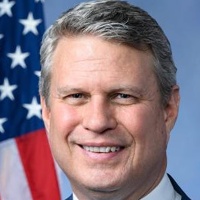
Bill Huizenga
Representative
MI
Bill Huizenga
Representative
MI
The Protecting America’s Orchardists and Nursery Tree Growers Act updates the Tree Assistance Program to provide more flexible support for growers impacted by natural disasters and pests. The bill expands eligibility criteria, streamlines the application process, and allows for greater flexibility in replanting strategies. These changes ensure that orchardists and nursery growers can recover more effectively and adapt their operations to changing environmental conditions.
The Interstate Ferry Fairness Act expands federal funding eligibility under the Ferry Boat Program to include qualifying privately owned ferry boats and terminal facilities that serve interstate routes.
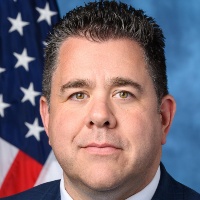
Nicolas LaLota
Representative
NY
Nicolas LaLota
Representative
NY
The Interstate Ferry Fairness Act expands the federal Ferry Boat Program to include privately owned ferry boats and terminal facilities that provide substantial public benefits. This legislation allows private operators on qualifying interstate routes to access federal construction and maintenance funding, provided they adhere to regulated fare structures. The bill aims to improve surface transportation connectivity by integrating private ferry services into the national infrastructure framework.
The Moldova Support Act of 2026 strengthens the U.S.-Moldova strategic partnership by fostering economic and energy cooperation, supporting Moldova’s European Union integration, and maintaining critical sanctions against malign actors.
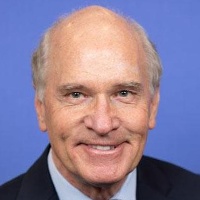
William Keating
Representative
MA
William Keating
Representative
MA
The Moldova Support Act of 2026 strengthens the U.S.-Moldova partnership by establishing an annual strategic dialogue to advance democratic, economic, and energy security goals. The bill mandates a comprehensive four-year strategy to support Moldova’s European Union accession and effectively counters malign foreign influence. Additionally, it imposes strict congressional oversight requirements for the potential lifting of existing sanctions against individuals and entities undermining Moldovan stability.
The Regulatory Review Improvement Act of 2026 mandates more rigorous economic analysis, public comment, and transparency requirements for federal agencies conducting periodic reviews of existing rules.
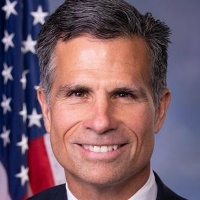
Daniel Meuser
Representative
PA
Daniel Meuser
Representative
PA
The Regulatory Review Improvement Act of 2026 enhances federal oversight by requiring agencies to conduct more rigorous, transparent reviews of existing rules. This legislation mandates public comment periods, detailed economic analyses, and stricter reporting on compliance costs and paperwork burdens. Additionally, it limits the ability of agencies to delay these periodic reviews, ensuring greater accountability in the regulatory process.
This bill establishes new federal tax credits for the production of and capital investment in facilities that manufacture qualified renewable materials from biomass.
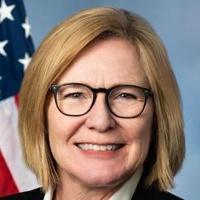
Michelle Fischbach
Representative
MN
Michelle Fischbach
Representative
MN
This bill amends the Internal Revenue Code to incentivize the domestic production of and investment in biobased renewable materials. It establishes a production tax credit of 10 cents per pound for qualified materials and a 30 percent investment tax credit for facilities dedicated to their manufacture. These measures aim to support sustainable supply chains by providing financial support for non-fuel, non-food biomass conversion projects.