Legislative Activity
Track Jim's sponsored bills, co-sponsored legislation, and voting record
This Act prohibits the EPA from enforcing the Phase 3 heavy-duty vehicle emission rules and bars future tailpipe regulations from mandating specific technologies or limiting the availability of new vehicle types.
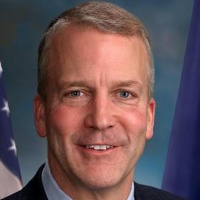
Dan Sullivan
Senator
AK
Dan Sullivan
Senator
AK
The Freedom to Haul Act of 2025 prohibits the EPA from implementing or enforcing the Phase 3 heavy-duty vehicle emission rules. Furthermore, the bill prevents the EPA from issuing tailpipe emission regulations that mandate specific technologies or limit the availability of new motor vehicles based on engine type. This ensures manufacturers retain flexibility in meeting pollution standards.
This Act prohibits states from obtaining waivers to set new vehicle emission standards that restrict the sale or use of new cars with internal combustion engines and requires the revocation of existing conflicting waivers.
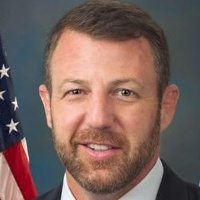
Markwayne Mullin
Senator
OK
Markwayne Mullin
Senator
OK
The Preserving Choice in Vehicle Purchases Act of 2025 amends the Clean Air Act to prohibit states from receiving waivers to set new vehicle emission standards that restrict the sale or use of new cars with internal combustion engines. This legislation invalidates any existing or future state standards that directly or indirectly limit traditional gasoline-powered vehicles. Furthermore, the bill mandates the revocation of any previously granted waivers that conflict with this new restriction.
This bill ensures that military spouses stationed overseas can receive firearms or ammunition and establishes consistent residency rules for military families under federal firearms laws.
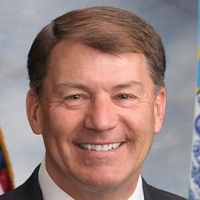
Mike Rounds
Senator
SD
Mike Rounds
Senator
SD
The Protect Our Military Families’ 2nd Amendment Rights Act ensures that spouses of active-duty service members stationed overseas can legally receive firearms or ammunition under existing federal exceptions. This legislation also standardizes how a military spouse's residency is determined for federal firearms laws, aligning it with that of the service member. The goal is to provide consistent rights and recognition for military families regarding firearm ownership, regardless of their duty station location.
This bill standardizes the 8-digit subheading number for all whiskies within the Harmonized Tariff Schedule of the United States to improve import classification and tracking.
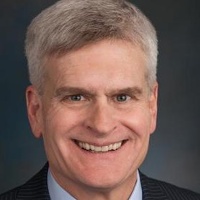
Bill Cassidy
Senator
LA
Bill Cassidy
Senator
LA
This bill amends the Harmonized Tariff Schedule of the United States to establish a uniform 8-digit subheading number for all imported whiskies. It streamlines the classification structure within Chapter 22 of the tariff schedule for duty purposes. The changes also require the USITC to add new statistical codes to better track different types of imported whiskies.
The BITCOIN Act of 2025 establishes a Strategic Bitcoin Reserve, mandates the U.S. government to purchase one million Bitcoins over five years, and protects private property rights regarding digital assets.
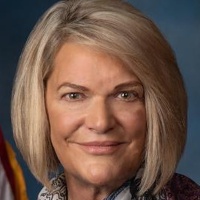
Cynthia Lummis
Senator
WY
Cynthia Lummis
Senator
WY
The BITCOIN Act of 2025 establishes a Strategic Bitcoin Reserve and mandates the U.S. government to purchase one million Bitcoins over five years to strengthen national financial standing. This legislation outlines strict security protocols for the reserve, requires public proof of holdings through cryptographic attestations, and protects private Bitcoin ownership rights. Furthermore, the Act details funding mechanisms, including adjustments to Federal Reserve surplus funds and gold certificate exchanges, to finance these acquisitions.
The Credit for Caring Act of 2025 establishes a new, non-refundable tax credit for working family caregivers based on qualified expenses paid for eligible care recipients.
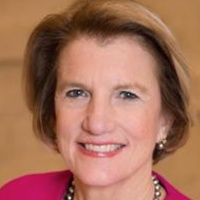
Shelley Capito
Senator
WV
Shelley Capito
Senator
WV
The Credit for Caring Act of 2025 establishes a new, non-refundable tax credit for working family caregivers who incur qualified expenses for a dependent with long-term care needs. This "Working Family Caregivers Credit" equals 30% of eligible expenses exceeding $2,000, up to a maximum annual credit of $5,000. To qualify, caregivers must have earned income over $7,500 and the care recipient must be certified by a healthcare practitioner as needing long-term care. The credit begins to phase out for taxpayers with Modified Adjusted Gross Income over $150,000 (joint filers) or $75,000 (all others).
This bill allows sellers of qualifying farmland to exclude capital gains from income if the proceeds are reinvested in an individual retirement plan, contingent upon the buyer continuing to farm the land for ten years.
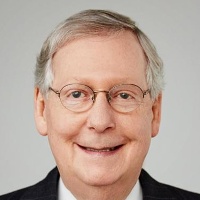
Mitch McConnell
Senator
KY
Mitch McConnell
Senator
KY
This bill proposes a new tax incentive allowing sellers of qualified farmland to exclude capital gains from their gross income if the proceeds are reinvested into an Individual Retirement Account (IRA). To qualify, the sale must be to an active farmer who agrees to a potential penalty tax if they stop farming the land within ten years. This provision also temporarily increases the annual IRA contribution limit based on the excluded gain amount.
This Act significantly expands employer childcare tax credits, increases the tax exclusion for dependent care assistance programs, and introduces a new, refundable tax credit for household and dependent care expenses.
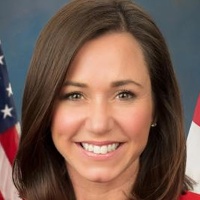
Katie Britt
Senator
AL
Katie Britt
Senator
AL
The Child Care Availability and Affordability Act aims to lower childcare costs for families and incentivize employers to offer benefits. It significantly expands the employer tax credit for providing childcare and increases the tax-free exclusion amount for employee Dependent Care Assistance Programs (DCAPs). Furthermore, the bill introduces a new, refundable tax credit for working families based on their household and dependent care expenses.
The "Protection of Women and Girls in Sports Act of 2025" amends Title IX to prohibit individuals born male from participating in women's and girls' athletic programs in educational institutions that receive federal funds, defining "sex" as determined at birth.
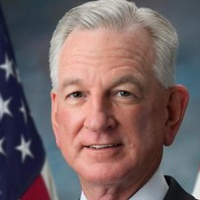
Tommy Tuberville
Senator
AL
Tommy Tuberville
Senator
AL
The "Protection of Women and Girls in Sports Act of 2025" amends Title IX to prohibit schools receiving federal funding from allowing individuals born male to participate in female athletic programs. Sex is defined as determined by reproductive biology and genetics at birth. This bill aims to ensure fair competition for women and girls in sports.
This resolution expresses Congressional opposition to imposing new performance fees on local radio stations, citing the mutually beneficial relationship between broadcasters and the music industry.
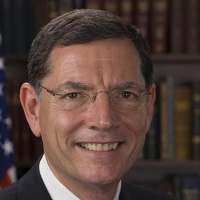
John Barrasso
Senator
WY
John Barrasso
Senator
WY
The Local Radio Freedom Act expresses Congressional opposition to imposing new performance fees on local radio stations for playing music. This resolution maintains that the current system provides essential promotional value to artists while supporting local community services. Consequently, it advocates against any new taxes or royalties that would place an undue financial burden on broadcasters and local businesses.
This bill mandates that funds reimbursed to the National Guard Bureau by states for the use of military property must be directly reinvested into the maintenance and readiness of those specific assets.
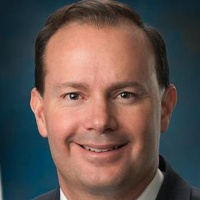
Mike Lee
Senator
UT
Mike Lee
Senator
UT
The Guarding Readiness Resources Act ensures that funds reimbursed to the National Guard Bureau by states or territories are directly returned to the specific budget account that covered the initial expense. These returned funds are strictly limited to being used for the repair, maintenance, or replacement of the military assets involved. This guarantees that reimbursement money directly supports the readiness of the equipment used by the National Guard.
Streamlines Medicaid and CHIP enrollment for out-of-state providers serving children, reducing administrative burdens and enhancing access to care.
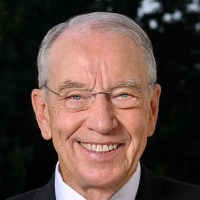
Charles Grassley
Senator
IA
Charles Grassley
Senator
IA
The "Accelerating Kids’ Access to Care Act" streamlines the Medicaid and CHIP enrollment process for out-of-state providers, allowing them to furnish services to individuals under 21 more efficiently. By reducing excessive screening and enrollment requirements, the bill aims to improve access to care for children. Enrolled providers will have a 5-year enrollment period, and the changes will take effect three years after enactment.
The "CATCH Fentanyl Act" mandates pilot programs to evaluate advanced technologies at land ports of entry for detecting fentanyl and other contraband, without additional funding.
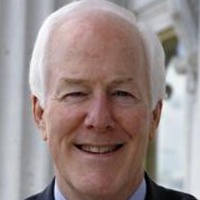
John Cornyn
Senator
TX
John Cornyn
Senator
TX
The "CATCH Fentanyl Act" mandates pilot projects to evaluate advanced technologies, including AI, for detecting contraband, illegal drugs, weapons, and human smuggling at U.S. land ports of entry. These projects aim to enhance inspection efficiency, reduce wait times, and improve existing detection equipment. The Act requires reports to Congress on the effectiveness, impacts on privacy and civil liberties, and recommendations for implementing new technologies, while forbidding new funding appropriations.
The Transportation Freedom Act aims to boost American auto manufacturing through tax incentives, roll back vehicle emission and fuel efficiency regulations, end state authority to set stricter emission standards, and set new federal standards based on technological and economic feasibility.
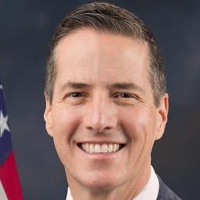
Bernie Moreno
Senator
OH
Bernie Moreno
Senator
OH
The Transportation Freedom Act aims to boost American auto manufacturing through tax incentives for companies that keep production and jobs in the U.S. while also rolling back recent vehicle emissions and fuel efficiency regulations. It restricts states' abilities to set their own emission standards and directs the EPA and DOT to establish new, flexible emissions standards based on technological and economic feasibility. This could lead to more fuel-efficient vehicles, reduced emissions, and shifts in the automotive industry.
This resolution designates February 23–March 1, 2025, as "National Fentanyl Awareness Week" to highlight the dangers of the opioid crisis and promote life-saving awareness across the United States.
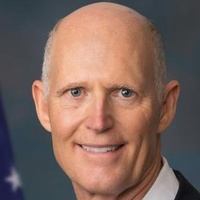
Rick Scott
Senator
FL
Rick Scott
Senator
FL
This resolution designates February 23–March 1, 2025, as "National Fentanyl Awareness Week" to highlight the devastating impact of the fentanyl crisis on American families and communities. It acknowledges the critical work of law enforcement and recovery organizations while urging the public to prioritize safety and seek help for substance use disorders.
The Leveling the Playing Field 2.0 Act strengthens U.S. trade laws to combat unfair trade practices, prevent duty evasion, and protect domestic industries.

Todd Young
Senator
IN
Todd Young
Senator
IN
The Leveling the Playing Field 2.0 Act enhances U.S. trade laws to counteract unfair trade practices by foreign countries. It strengthens the ability of the International Trade Commission to address successive instances of unfair trade, expands countervailing duty authority, and prevents duty evasion. The Act also counters currency undervaluation and sets clear guidelines for implementation and applicability.
This resolution designates February 15–22, 2025, as "National FFA Week" to honor the organization's role in developing future leaders and celebrate its historic milestones.
Todd Young
Senator
IN
Todd Young
Senator
IN
This resolution designates February 15–22, 2025, as "National FFA Week" to celebrate the National FFA Organization’s vital role in developing the next generation of agricultural leaders. It commemorates the 90th anniversary of the New Farmers of America and the 75th anniversary of the FFA’s Federal charter. The bill encourages nationwide participation in honoring the organization's long-standing commitment to leadership, personal growth, and career success.
The LEOSA Reform Act amends the Law Enforcement Officers Safety Act of 2004 and the Gun-Free School Zones Act of 1990 to expand the rights of current and retired law enforcement officers to carry concealed firearms, including in school zones and certain federal facilities, and clarifies firearms proficiency and certification standards.
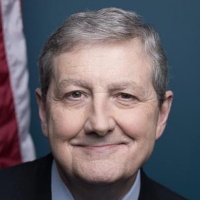
John Kennedy
Senator
LA
John Kennedy
Senator
LA
The LEOSA Reform Act amends the Gun-Free School Zones Act of 1990 to allow qualified law enforcement officers and retired officers to carry concealed firearms in school zones. It also modifies the Law Enforcement Officers Safety Act of 2004, clarifying its relationship with other federal laws, updating firearms proficiency requirements for retired officers, and including magazines in the definition of ammunition. Additionally, the Act permits qualified current and retired law enforcement officers to carry firearms in certain federal facilities.
Prohibits U.S. funding to international environmental agreements until China is no longer considered a developing country under the Montreal Protocol and is included in Annex I of the UN Framework Convention on Climate Change.
John Barrasso
Senator
WY
John Barrasso
Senator
WY
The "Ending China's Unfair Advantage Act of 2025" restricts U.S. funding to the Montreal Protocol and the UN Framework Convention on Climate Change until China is no longer considered a developing country under the Montreal Protocol and is included in Annex I of the UN Framework Convention. This bill aims to address what the Act describes as unfair advantages China receives in international environmental agreements.
This bill aims to reform the Small Business Administration's disaster loan program by increasing oversight, improving the loan application process, and ensuring equitable access to disaster assistance for small businesses and homeowners.
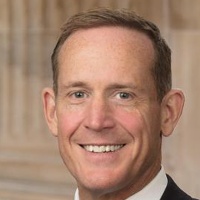
Ted Budd
Senator
NC
Ted Budd
Senator
NC
The Disaster Loan Accountability and Reform Act aims to improve the Small Business Administration's (SBA) disaster loan program by increasing oversight and accountability. It mandates regular risk assessments, enhances loan eligibility verification, and requires the SBA to develop better performance metrics. The act also seeks to streamline the loan application process and improve communication with disaster victims.