Legislative Activity
Track Ashley's sponsored bills, co-sponsored legislation, and voting record
This House resolution clarifies that UN Resolution 2758 only addressed UN representation and does not validate the PRC's "One China Principle" regarding Taiwan's status, while supporting Taiwan's international participation.
Young Kim
Representative
CA
Young Kim
Representative
CA
This resolution clarifies that United Nations General Assembly Resolution 2758 only addressed seating arrangements and does not validate the People's Republic of China's "One China Principle" regarding Taiwan's status. It asserts that the U.S. "One China Policy" is distinct from Beijing's claims and does not endorse PRC sovereignty over Taiwan. The bill strongly opposes PRC efforts to use the resolution to exclude Taiwan from international organizations and supports Taiwan's meaningful participation globally.
This bill authorizes the creation of a Congressional Gold Medal to honor the volunteers and communities involved with the North Platte Canteen during World War II.
Adrian Smith
Representative
NE
Adrian Smith
Representative
NE
The North Platte Canteen Congressional Gold Medal Act recognizes and honors the volunteers and donors of the North Platte Canteen in Nebraska during World War II with a Congressional Gold Medal. This medal will be presented by the Speaker of the House and the President pro tempore of the Senate, and then displayed at the Lincoln County Historical Museum. The Act also authorizes the creation and sale of bronze duplicates of the gold medal to cover production costs, with proceeds deposited into the Mint's Public Enterprise Fund.
This bill equalizes the negotiation period for drug price negotiations under the Drug Price Negotiation Program by extending the period for small-molecule drugs from 7 years to 11 years, matching that of biologic drugs.
Gregory Murphy
Representative
NC
Gregory Murphy
Representative
NC
This bill amends the Social Security Act to equalize the negotiation period for drug price negotiations under the Drug Price Negotiation Program. It changes the negotiation period for small-molecule drugs from 7 years to 11 years, matching the period already in place for biologic drugs. This adjustment aims to create parity in negotiation timelines between different types of medications, effective as if included in the original legislation.
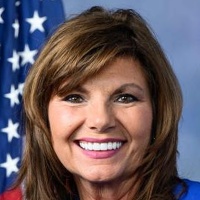
The "One Flag for All Act" would generally require only the U.S. flag to be displayed on the exterior and in public areas of federal buildings, with specific exceptions for POW/MIA flags, flags of visiting dignitaries, state flags of members of congress, armed forces flags, flags of historical significance, public safety flags, flags commemorating national observances, flags representing religious organizations during religious events at military facilities, flags representing a Federal agency, flags representing an Indian Tribe, and flags representing the State, territory, county, city, or local jurisdiction where the public building is located.
Diana Harshbarger
Representative
TN
Diana Harshbarger
Representative
TN
The "One Flag for All Act" generally prohibits the display of flags other than the U.S. flag on the exterior or in public areas of covered federal buildings. There are explicit exceptions for flags such as POW/MIA flags, state flags displayed at a Member of Congress's office, flags representing the Armed Forces, flags of historical significance, and flags representing local jurisdictions where the building is located. The bill defines "covered public buildings" broadly, including federal buildings, Senate and House buildings, military installations, and U.S. embassies and consulates.
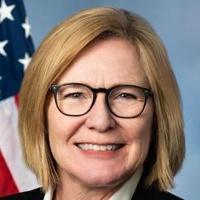
This bill prohibits the Secretary of Health and Human Services from enforcing the CMS minimum staffing standards for nursing homes published on May 10, 2024.
Michelle Fischbach
Representative
MN
Michelle Fischbach
Representative
MN
The Protecting America’s Seniors’ Access to Care Act prohibits the Secretary of Health and Human Services from implementing the minimum staffing level rules for nursing homes that were published by CMS on May 10, 2024. This legislation effectively blocks the enforcement of those specific staffing mandates.
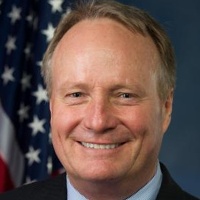
The I CAN Act removes practice and billing barriers for Nurse Practitioners, CRNAs, and CNMs across Medicare and Medicaid while increasing transparency in federal health program coverage decisions.
David Joyce
Representative
OH
David Joyce
Representative
OH
The "I CAN Act" is comprehensive legislation designed to remove existing practice and billing barriers for various Advanced Practice Registered Nurses (APRNs)—including Nurse Practitioners, CRNAs, and CNMs—within Medicare and Medicaid. It aims to expand patient access to care by allowing these qualified professionals to supervise, order, and bill for services to the full extent of their state-defined scope of practice. Furthermore, the bill enhances transparency and accountability for Medicare's local coverage decisions affecting APRN services. Overall, this act seeks to integrate APRNs more fully into federal healthcare programs, improving efficiency and service delivery.
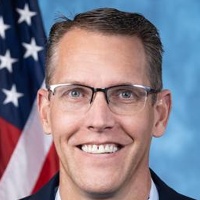
The "Death Tax Repeal Act" eliminates estate and generation-skipping transfer taxes, adjusts gift tax calculations, and sets a $10,000,000 lifetime gift exemption.
Randy Feenstra
Representative
IA
Randy Feenstra
Representative
IA
The "Death Tax Repeal Act" eliminates both estate and generation-skipping transfer taxes, effective from the date of enactment. It adjusts gift tax calculations by setting the lifetime gift exemption at $10,000,000, with inflation adjustments after 2011. The Act also includes transitional rules for applying certain sections of the Internal Revenue Code during the enactment year.
The "Fighting Trade Cheats Act of 2025" increases penalties for customs violations, allows private parties to sue for customs fraud, and excludes violators from the importer of record program.
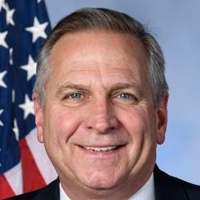
Mike Bost
Representative
IL
Mike Bost
Representative
IL
The "Fighting Trade Cheats Act of 2025" increases penalties for fraudulent and grossly negligent violations of U.S. customs laws, including banning violators and their affiliates from importing goods. It also allows private parties harmed by customs fraud to sue for damages and injunctive relief. The Act excludes those who commit fraud from participating in the importer of record program.
The United States-Israel Defense Partnership Act of 2025 bolsters defense cooperation between the U.S. and Israel through joint programs, funding increases, and extended authorities related to countering unmanned systems, anti-tunnel technology, emerging technologies, and war reserve stockpiles, while also exploring Israel's inclusion in the national technology and industrial base and assessing integrated air and missile defense in the CENTCOM region.
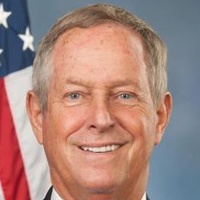
Joe Wilson
Representative
SC
Joe Wilson
Representative
SC
The United States-Israel Defense Partnership Act of 2025 seeks to bolster the defense relationship between the United States and Israel through joint initiatives and increased cooperation. It establishes programs to counter unmanned systems, extend anti-tunnel and counter-UAS cooperation, and promote collaboration in emerging technologies like AI and cybersecurity. The act also mandates the establishment of a Defense Innovation Unit office in Israel and assesses integrated air and missile defense in the U.S. Central Command region. Finally, it explores Israel's potential inclusion in the national technology and industrial base.
The "National Right-to-Work Act" prohibits mandatory union membership as a condition of employment, protecting employees' rights to choose whether or not to join or support a labor union.
Joe Wilson
Representative
SC
Joe Wilson
Representative
SC
The "National Right-to-Work Act" amends both the National Labor Relations Act and the Railway Labor Act to protect an employee's right to choose whether or not to join or support a labor union. It eliminates the possibility of mandatory union membership or dues payments as a condition of employment, ensuring that employees cannot be forced to join or support a union against their will.
This bill updates the definition of "customs waters" to align with international law, extending U.S. authority for customs enforcement to the territorial sea and contiguous zone.
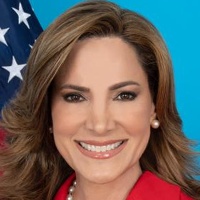
Maria Salazar
Representative
FL
Maria Salazar
Representative
FL
The "Extending Limits of U.S. Customs Waters Act" updates the definition of "customs waters" to align with international law, Presidential Proclamation 5928, and Presidential Proclamation 7219. It extends U.S. customs authority to include the territorial sea and contiguous zone, as permitted by international law. These changes will take effect the day after the Act is enacted.
The "Alternatives to PAIN Act" aims to improve Medicare Part D coverage for non-opioid pain management drugs by reducing cost-sharing and removing barriers like step therapy and prior authorization, starting in 2026.
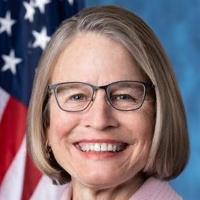
Mariannette Miller-Meeks
Representative
IA
Mariannette Miller-Meeks
Representative
IA
The "Alternatives to PAIN Act" amends Medicare Part D to improve access to non-opioid pain management drugs by waiving deductibles and ensuring they are placed on the lowest cost-sharing tier starting in 2026. The Act also prohibits the use of step therapy and prior authorization requirements for these drugs, further easing access for patients. These changes aim to provide more accessible alternatives for pain management, reducing reliance on opioids.
This Act allows schools participating in the National School Lunch Program to offer organic or non-organic whole milk alongside other options, while clarifying saturated fat accounting and restricting milk sourcing from China state-owned enterprises.
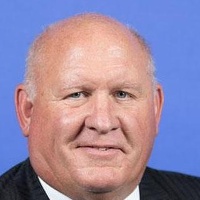
Glenn Thompson
Representative
PA
Glenn Thompson
Representative
PA
The Whole Milk for Healthy Kids Act of 2025 expands milk options available to students in the National School Lunch Program by allowing schools to offer organic or non-organic whole milk. This legislation provides greater flexibility for schools in providing fluid milk choices while maintaining accommodations for students with special dietary needs. Importantly, the saturated fat content of these offered milk options will not count toward the meal's overall saturated fat limits.
The Freight RAILCAR Act of 2025 incentivizes freight railcar modernization by establishing a tax credit for qualified newly built replacement railcars and qualified railcar modernization expenditures.
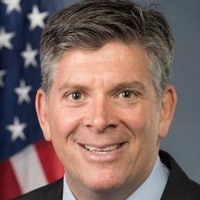
Darin LaHood
Representative
IL
Darin LaHood
Representative
IL
The "Freight RAILCAR Act of 2025" introduces a tax credit for modernizing freight railcars, encouraging investments in newer, more efficient railcars. Taxpayers can claim a credit equal to 10% of their freight railcar fleet modernization expenses, with a limit of 1,000 qualified freight railcars per year. The credit applies to railcars that increase capacity, improve fuel efficiency, or meet updated performance standards, and is available for three years after the Act's enactment. The Secretary of the Treasury is required to submit a report to Congress detailing the credit's usage and impact on railcar modernization and scrapping.
The "Doctors in our Borders Act" increases the number of Conrad 30 waivers from 30 to 100, allowing more foreign doctors to work in underserved areas of the United States.
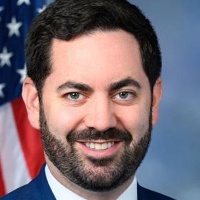
Michael Lawler
Representative
NY
Michael Lawler
Representative
NY
The "Doctors in our Borders Act" aims to increase the availability of medical care in underserved areas by raising the number of Conrad 30 waivers from 30 to 100 per state. These waivers allow international medical graduates to remain in the United States after completing their residency, provided they work in underserved communities. This expansion seeks to bring more doctors to areas with limited access to healthcare.
Prohibits the use of the DeepSeek application on government devices, with exceptions for law enforcement, national security, and security research under specific conditions.
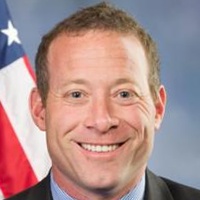
Josh Gottheimer
Representative
NJ
Josh Gottheimer
Representative
NJ
The "No DeepSeek on Government Devices Act" prohibits the use of the DeepSeek application on government devices, with exceptions for law enforcement, national security, and security research. The Office of Management and Budget is tasked with creating guidelines for executive agencies to remove DeepSeek from their information technology. Any authorized use of DeepSeek under the exceptions requires documented risk mitigation actions.
Exempts family farms and small businesses from asset considerations in need analysis for federal student aid.
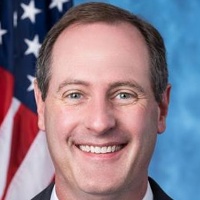
Tracey Mann
Representative
KS
Tracey Mann
Representative
KS
The "Family Farm and Small Business Exemption Act" amends the Higher Education Act of 1965 to exclude the net value of a family farm (on which the family resides) or a small business (with no more than 100 employees and owned/controlled by the family) from consideration as an asset when determining financial need for federal student aid. This change aims to make higher education more accessible for students from family farm and small business backgrounds.
The "Freedom to Invest in Tomorrow's Workforce Act" expands the use of 529 savings accounts to cover expenses related to postsecondary credentialing programs, including tuition, fees, books, supplies, equipment, and testing fees.

Robert Wittman
Representative
VA
Robert Wittman
Representative
VA
The "Freedom to Invest in Tomorrow's Workforce Act" amends Section 529 savings accounts to include expenses related to postsecondary credentialing programs. This allows 529 funds to cover costs like tuition, fees, books, supplies, and testing fees for recognized programs and credentials, as defined by the bill. These changes would apply to distributions made after the bill is enacted.
The "Agriculture Export Promotion Act of 2025" aims to boost U.S. agricultural exports by increasing funding for the Market Access Program and the Foreign Market Development Cooperator Program.
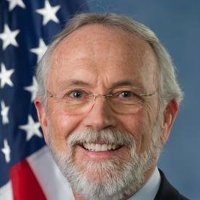
Dan Newhouse
Representative
WA
Dan Newhouse
Representative
WA
The "Agriculture Export Promotion Act of 2025" aims to bolster U.S. agricultural exports by increasing funding for the Market Access Program and the Foreign Market Development Cooperator Program. It amends the Agricultural Trade Act of 1978 to extend and significantly increase financial support for these programs through 2029. These changes seek to address the competitive disadvantage faced by U.S. producers due to increased foreign competition and the impact of inflation on static funding levels. By increasing funding, the Act strives to enhance access to foreign markets, stimulate economic growth, and create jobs within the agricultural sector.
The WARN Act directs the Comptroller General to study and report on the effectiveness of weather alert systems to improve community emergency response plans and public safety.
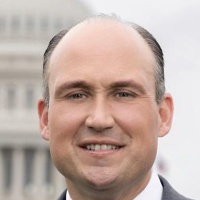
Nicholas Langworthy
Representative
NY
Nicholas Langworthy
Representative
NY
The WARN Act aims to improve community safety during weather emergencies by directing the Comptroller General to study the effectiveness of local, state, territory, and federal emergency alert systems. The study will assess alert dissemination methods, evaluate the clarity and actionability of alert content, and explore improvements to public alerting systems. A report on the study's findings will be submitted to Congress within 18 months, with the goal of enhancing emergency response plans and public safety.