
Legislative Activity
Track Ashley's sponsored bills, co-sponsored legislation, and voting record
This bill proposes a constitutional amendment to permanently set the number of Supreme Court justices at nine, requiring ratification by three-fourths of the states within seven years.

Dusty Johnson
Representative
SD
Dusty Johnson
Representative
SD
This bill proposes a constitutional amendment to fix the number of Supreme Court justices at nine. For this amendment to be valid, three-fourths of the state legislatures must ratify it within seven years of its submission.
The Birthright Citizenship Act of 2025 limits automatic birthright citizenship to children born in the U.S. to at least one parent who is a U.S. citizen, a lawful permanent resident, or an alien serving in the U.S. armed forces.
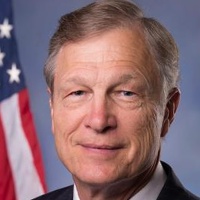
Brian Babin
Representative
TX
Brian Babin
Representative
TX
The Birthright Citizenship Act of 2025 proposes to limit automatic birthright citizenship to children born in the United States who have at least one parent who is a U.S. citizen, a lawful permanent resident, or an alien serving in the U.S. armed forces. This legislation would exclude children born to parents without legal status or those on temporary visas from receiving automatic citizenship. These changes would apply only to individuals born on or after the date of the Act's enactment.
Sarah’s Law mandates the detention of noncitizens charged with crimes resulting in death or serious bodily injury and requires the Department of Homeland Security to provide timely updates to victims or their families.

Randy Feenstra
Representative
IA
Randy Feenstra
Representative
IA
Sarah’s Law mandates the detention of noncitizens who are charged with or convicted of crimes resulting in death or serious bodily injury. The bill also requires the Department of Homeland Security to issue detainers for these individuals and provide victims or their families with timely, ongoing updates regarding the offender's immigration and custody status.
This bill amends the Immigration and Nationality Act to deem aliens convicted of or admitting to committing sex offenses, domestic violence, stalking, child abuse, or violating protection orders as inadmissible and deportable. It broadens the definition of crimes against children to include domestic violence, regardless of grant funding status.

Nancy Mace
Representative
SC
Nancy Mace
Representative
SC
The "Preventing Violence Against Women by Illegal Aliens Act" amends the Immigration and Nationality Act to deem aliens inadmissible and deportable if they have committed or admitted to acts constituting sex offenses, domestic violence, stalking, child abuse, or violating protection orders. It broadens the definition of crimes against children to include any crime constituting domestic violence.
The No Tax on Tips Act provides a federal income tax deduction of up to $25,000 for qualified cash tips and extends the FICA tax credit for employer-paid tips to include beauty service establishments.

Vern Buchanan
Representative
FL
Vern Buchanan
Representative
FL
The "No Tax on Tips Act" proposes a federal tax deduction of up to $25,000 per year for cash tips received by workers in traditionally tipped occupations. Additionally, the bill expands the existing tax credit for employer-paid Social Security taxes on tips to include beauty service establishments. These changes are designed to provide tax relief for service workers and support businesses where tipping is customary.
The Security First Act strengthens border security by increasing funding for state and local law enforcement, mandating a review of foreign terrorist organization designations for major cartels, and requiring comprehensive technology and workforce assessments.
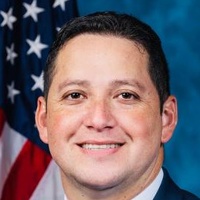
Ernest Gonzales
Representative
TX
Ernest Gonzales
Representative
TX
The Security First Act aims to strengthen U.S. border security by increasing funding for state and local law enforcement through the Operation Stonegarden grant program and a new dedicated trust fund. The bill also mandates a formal review to determine if major Mexican drug cartels and criminal gangs should be designated as foreign terrorist organizations. Additionally, it requires the Department of Homeland Security to conduct comprehensive technology needs assessments and report on its recent hiring practices to improve operational capacity.
The Qualified Immunity Act of 2025 codifies existing legal protections for law enforcement officers and their employing agencies against civil liability when constitutional rights were not clearly established at the time of the alleged violation.

Virginia Foxx
Representative
NC
Virginia Foxx
Representative
NC
The Qualified Immunity Act of 2025 codifies existing legal protections for law enforcement officers, shielding them from individual liability when their conduct does not violate clearly established law. The bill further ensures that if an officer is found not liable under these standards while acting within the scope of their employment, their employing agency is also protected from liability.
This Act directs the Secretary of the Treasury to mint commemorative coins in 2028 to honor the diverse women who served on the Home Front during World War II, with proceeds supporting the Rosie the Riveter WWII Home Front National Historical Park.

John Garamendi
Representative
CA
John Garamendi
Representative
CA
The Rosie the Riveter Commemorative Coin Act directs the Secretary of the Treasury to mint and issue a series of commemorative coins in 2028 to honor the diverse women who served on the Home Front during World War II. Proceeds from the sale of these coins will support the Rosie the Riveter Trust in its efforts to maintain the Rosie the Riveter/WWII Home Front National Historical Park and fund educational programs. This initiative ensures the legacy of these essential workers is preserved and recognized through a national numismatic program.
The States’ Education Reclamation Act of 2025 proposes the abolition of the federal Department of Education, transferring its remaining responsibilities to other agencies while providing direct, state-controlled block grants for education funding.
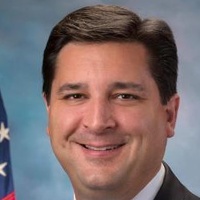
David Rouzer
Representative
NC
David Rouzer
Representative
NC
The States’ Education Reclamation Act of 2025 proposes the abolition of the federal Department of Education to return primary authority over schooling to states and local communities. The bill replaces current federal education programs with direct block grants to states, ensuring funding remains available for elementary, secondary, and postsecondary education while mandating strict fiscal accountability. Certain essential programs would be transferred to other federal agencies, and the legislation requires a formal plan for the Department’s closure.
The Laken Riley Act mandates the detention of certain undocumented immigrants charged with theft-related crimes and empowers state attorneys general to sue federal officials for failures in enforcing immigration laws.
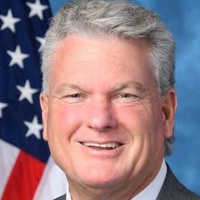
Mike Collins
Representative
GA
Mike Collins
Representative
GA
The Laken Riley Act mandates the detention of undocumented immigrants who are charged with or convicted of theft-related offenses. Additionally, the bill empowers state attorneys general to sue federal officials for failures in enforcing immigration detention, removal, and parole laws.
The Federal Employee Return to Work Act prohibits federal teleworkers from receiving annual pay adjustments and mandates that their basic pay be set to the "Rest of U.S." locality rate.

Dan Newhouse
Representative
WA
Dan Newhouse
Representative
WA
The Federal Employee Return to Work Act mandates that federal employees who telework at least one day per week are ineligible for annual pay adjustments. Additionally, the bill requires that these employees be compensated based on the "Rest of U.S." locality pay scale, regardless of their actual work location. Certain groups, including employees with disabilities and law enforcement officers, are exempt from these provisions.
The TCJA Permanency Act makes the individual tax reforms and Alternative Minimum Tax exemptions from the Tax Cuts and Jobs Act permanent, simplifying tax filing while adjusting credits, deductions, and exemptions for families and small businesses.
Vern Buchanan
Representative
FL
Vern Buchanan
Representative
FL
The TCJA Permanency Act makes the individual tax reforms of the Tax Cuts and Jobs Act permanent, including lowered income tax rates, an increased standard deduction, and an expanded Child Tax Credit. The legislation also solidifies higher exemptions for the Alternative Minimum Tax to protect more households from the parallel tax system. By locking in these provisions, the bill aims to simplify tax filing while providing long-term stability for families, small business owners, and individual taxpayers.
This bill rescinds certain unobligated funds previously appropriated to the Internal Revenue Service.

Adrian Smith
Representative
NE
Adrian Smith
Representative
NE
The Family and Small Business Taxpayer Protection Act rescinds unobligated funding previously appropriated to the Internal Revenue Service. This legislation effectively cancels these unused funds and returns them to the U.S. Treasury.
The "No Bailout for Sanctuary Cities Act" would deny certain federal funds to sanctuary jurisdictions that obstruct information sharing or detainment requests from Homeland Security regarding individuals' immigration status, while requiring an annual report on non-compliant jurisdictions.
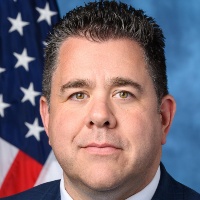
Nicolas LaLota
Representative
NY
Nicolas LaLota
Representative
NY
The "No Bailout for Sanctuary Cities Act" aims to withhold certain federal funds from state and local governments deemed "sanctuary jurisdictions" that obstruct the sharing of immigration status information or compliance with detainment requests from Homeland Security. These jurisdictions would be ineligible for federal funds intended to benefit individuals in the U.S. without legal immigration status. The Department of Homeland Security is required to report annually to the House and Senate Judiciary Committees on non-compliant states and local governments.
The FIND Act prohibits federal agencies from contracting with entities that discriminate against the firearm and ammunition industry, ensuring fair access to government contracts for these businesses. Contractors must certify they do not discriminate against firearm entities, with violations leading to contract termination.
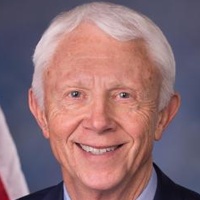
Jack Bergman
Representative
MI
Jack Bergman
Representative
MI
The FIND Act prohibits federal agencies from contracting with entities that discriminate against the firearm and ammunition industry. It requires federal contractors to certify they do not discriminate against firearm entities and prohibits them from awarding subcontracts to entities that do not provide a similar certification. Violations of these clauses will result in contract termination. The act defines "discriminate" as making judgments or refusing/limiting services based on biased criteria, rather than case-by-case evaluations, empirical data, financial risk, or legal non-compliance.
The Regulations from the Executive in Need of Scrutiny (REINS) Act of 2025 increases congressional accountability by requiring federal agencies to obtain legislative approval for all "major" rules before they can take effect.

Katherine Cammack
Representative
FL
Katherine Cammack
Representative
FL
The Regulations from the Executive in Need of Scrutiny (REINS) Act of 2025 aims to increase federal regulatory accountability by requiring Congress to approve any "major" rule before it can take effect. Under this legislation, rules with a significant economic impact require a joint resolution of approval from both chambers of Congress to become law. By shifting this authority back to the legislative branch, the Act seeks to ensure greater transparency and oversight of the federal rulemaking process.