
Legislative Activity
Track Cindy's sponsored bills, co-sponsored legislation, and voting record
This Act establishes a policy prioritizing classical and traditional architectural styles for new and renovated federal public buildings to ensure they are inspiring, respectable, and reflect American dignity.
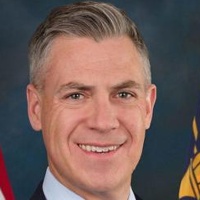
Jim Banks
Senator
IN
Jim Banks
Senator
IN
The Beautifying Federal Civic Architecture Act of 2025 establishes a national policy favoring traditional and classical architectural styles for new federal public buildings to ensure they are inspiring and command public respect. The Act mandates that the GSA prioritize these preferred styles, especially in Washington D.C., and requires significant community input in the design process. Furthermore, it sets up new GSA requirements, including specialized training and the creation of a Senior Advisor role, to enforce these architectural standards.
The Telehealth Modernization Act extends key Medicare telehealth flexibilities until 2027, extends the Acute Hospital Care at Home waiver until 2030, enhances DME program integrity, and mandates guidance for LEP telehealth access.

Tim Scott
Senator
SC
Tim Scott
Senator
SC
The Telehealth Modernization Act primarily extends key Medicare telehealth flexibilities, such as geographic and audio-only options, until September 30, 2027. The bill also extends the Acute Hospital Care at Home waiver through 2030 and mandates a comprehensive study comparing home-based and traditional hospital care. Additionally, it introduces new program integrity measures for Durable Medical Equipment (DME) and requires guidance to ensure language access for Limited English Proficiency patients utilizing telehealth.
The Safer Truckers Act of 2025 establishes new residency and work authorization requirements for obtaining a Commercial Driver's License (CDL) and mandates annual state reporting on English proficiency enforcement for commercial drivers.

Ashley Moody
Senator
FL
Ashley Moody
Senator
FL
The Safer Truckers Act of 2025 updates Commercial Driver's License (CDL) eligibility by requiring applicants to be U.S. citizens, lawful permanent residents, or authorized to work in commercial driving by USCIS. This bill also mandates that states annually report on their enforcement of English language proficiency standards for CDL holders. These measures aim to enhance safety and compliance within the commercial trucking industry.
The CLEAN DC Act completely repeals the Comprehensive Policing and Justice Reform Amendment Act of 2022, restoring previous laws.

Ted Cruz
Senator
TX
Ted Cruz
Senator
TX
The CLEAN DC Act, officially the Common-Sense Law Enforcement and Accountability Now in DC Act, seeks to completely repeal the Comprehensive Policing and Justice Reform Amendment Act of 2022. This action effectively nullifies all changes made by the 2022 Act, restoring the previous legal standards regarding policing and justice in DC.
The Equal Shot Act of 2025 prohibits the Small Business Administration from denying financial assistance to qualified firearm entities, affiliates, or trade associations solely based on their connection to the firearms industry.

James Risch
Senator
ID
James Risch
Senator
ID
The Equal Shot Act of 2025 aims to prevent discrimination against businesses within the firearms industry when applying for financial assistance from the Small Business Administration (SBA). This legislation explicitly prohibits the SBA from denying loans or guarantees solely based on an applicant's status as a firearm entity, affiliate, or trade association. The Act first establishes clear definitions for these industry participants to ensure fair and equal consideration for all qualified applicants.
This resolution designates the week of August 3 through August 9, 2025, as "National Farmers Market Week" to recognize their vital role in local economies, community health, and food access.
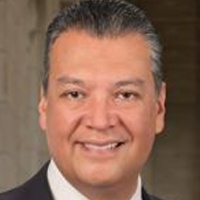
Alejandro Padilla
Senator
CA
Alejandro Padilla
Senator
CA
This resolution officially designates the week of August 3 through August 9, 2025, as "National Farmers Market Week." It aims to celebrate the vital role farmers markets play in strengthening local economies and supporting farmers across the nation. Furthermore, the resolution recognizes how these markets improve community health by increasing access to fresh food and promoting sustainable agriculture.
This resolution honors the economic and cultural contributions of small firearm manufacturers and designates August 2025 as "National Shooting Sports Month."
James Risch
Senator
ID
James Risch
Senator
ID
This resolution formally honors the significant economic and cultural contributions of small, domestic firearm manufacturers to the United States. It recognizes these businesses as vital to supporting American manufacturing, job creation, and the traditions of recreational shooting sports. Furthermore, the resolution designates August 2025 as "National Shooting Sports Month."
This act prohibits the Small Business Administration from issuing new direct 7(a) loans while requiring them to continue servicing existing ones.
Tim Scott
Senator
SC
Tim Scott
Senator
SC
The Protecting Access to Credit for Small Businesses Act prohibits the Small Business Administration (SBA) from issuing any new direct loans under its primary Section 7(a) loan program. While the SBA can no longer originate these loans directly, it must continue to manage and service any existing direct 7(a) loans. This change shifts the focus of the program away from direct government lending.
This Act mandates that hospitals and obstetric providers publicly disclose their specific policies regarding life-saving care for extremely premature infants, with non-compliance resulting in the loss of federal Medicaid and CHIP funding.
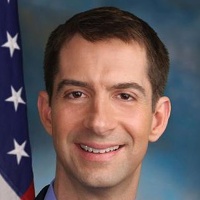
Tom Cotton
Senator
AR
Tom Cotton
Senator
AR
The Neonatal Care Transparency Act of 2025 mandates that hospitals and obstetric providers publicly disclose their specific policies regarding life-saving care for extremely premature infants, including any minimum gestational age limits. This information must also be provided to expectant parents by their doctors at their first prenatal appointment. Hospitals and providers failing to comply with these new transparency requirements risk losing federal Medicaid and CHIP funding 180 days after the Act is enacted.
The HEALING Mothers and Fathers Act amends the FMLA to allow leave for spontaneous loss of an unborn child and establishes a refundable tax credit for individuals who suffer a stillbirth.
Tom Cotton
Senator
AR
Tom Cotton
Senator
AR
The HEALING Mothers and Fathers Act amends the Family and Medical Leave Act (FMLA) to allow eligible employees to take leave following the spontaneous loss of an unborn child. It also establishes new leave entitlements for federal civil service employees experiencing such a loss. Furthermore, the Act creates a new refundable personal tax credit, equivalent to the Child Tax Credit amount, for individuals who suffer a stillbirth.
The STEM RESTART Act establishes a new grant program to help unemployed or underemployed mid-career workers return to high-demand, above-entry-level STEM jobs through structured "returnships" at small and medium-sized businesses.

Jacky Rosen
Senator
NV
Jacky Rosen
Senator
NV
The STEM RESTART Act establishes a new grant program under the Workforce Innovation and Opportunity Act (WIOA) to help unemployed or underemployed mid-career workers re-enter high-demand, above-entry-level Science, Technology, Engineering, and Math (STEM) jobs. These competitive "RESTART grants" will fund businesses to create "returnship" programs that offer on-the-job training, mentorship, and a clear path to full-time employment. The bill prioritizes programs that serve rural workers and ensures these opportunities lead to well-paying roles that supplement, rather than replace, existing staff.
This Act immediately classifies structurally similar fentanyl compounds as Schedule I controlled substances and strengthens penalties for trafficking them, while also streamlining research registration.
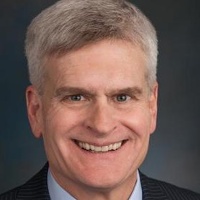
Bill Cassidy
Senator
LA
Bill Cassidy
Senator
LA
The Halt All Lethal Trafficking of Fentanyl (HALT Fentanyl) Act aims to combat the opioid crisis by immediately classifying structurally similar fentanyl-related substances as Schedule I controlled substances. The bill also streamlines the registration process for researchers working with Schedule I drugs and strengthens criminal penalties for trafficking these compounds. The Attorney General is required to issue implementing rules within six months of enactment.
This bill establishes grant programs and initiatives to expand education, training, research, and public awareness for palliative care and hospice services across the healthcare system.

Tammy Baldwin
Senator
WI
Tammy Baldwin
Senator
WI
The Palliative Care and Hospice Education and Training Act aims to significantly expand the palliative care and hospice workforce through new federal grant and award programs for education, training, and career incentives. The bill also mandates the dissemination of information about palliative care services to patients, families, and providers, while enhancing palliative care research efforts at the National Institutes of Health (NIH). Importantly, the legislation clarifies that funds cannot support activities intended to cause death, ensuring alignment with existing federal funding restrictions.
This bill authorizes the creation and sale of commemorative coins for the 2028 Los Angeles Olympic and Paralympic Games and the 2034 Salt Lake City Winter Olympic and Paralympic Games to help fund their hosting and legacy programs.
Alejandro Padilla
Senator
CA
Alejandro Padilla
Senator
CA
This Act authorizes the creation and sale of commemorative coins to celebrate the upcoming 2028 Summer Olympic and Paralympic Games in Los Angeles and the 2034 Winter Olympic and Paralympic Games in Salt Lake City. The Secretary of the Treasury is empowered to mint various denominations of gold, silver, and clad coins for each event, with designs reflecting American participation. A mandatory surcharge on each coin sold will directly fund the respective organizing committees for the Games and their legacy programs, provided the government recovers all minting costs first.
This Act establishes a federal process for trafficking survivors to seek expungement of criminal records or sentence reductions, creates a duress defense based on trafficking, and mandates reporting on the implementation of these new relief measures.

Kirsten Gillibrand
Senator
NY
Kirsten Gillibrand
Senator
NY
The Trafficking Survivors Relief Act of 2025 establishes a new federal process for trafficking survivors to seek the expungement of arrest records or the vacation of certain criminal convictions resulting from their victimization. It also creates a specific "duress" defense for defendants charged with serious federal crimes if they committed the offense while being trafficked. Furthermore, the bill mandates reporting on the use of these new relief mechanisms and clarifies that federal grants for legal aid can be used for post-conviction representation.
The FULL HOUSE Act limits the deduction of gambling losses on federal taxes to the amount of gambling winnings for that tax year, starting after December 31, 2025.

Catherine Cortez Masto
Senator
NV
Catherine Cortez Masto
Senator
NV
The FULL HOUSE Act modifies federal tax law regarding gambling losses, effective for tax years after December 31, 2025. This legislation limits the deduction of gambling losses to the amount a taxpayer has won from gambling during that same tax year. Consequently, individuals will no longer be able to use net gambling losses to offset income earned from non-gambling sources.
The SAWMILL Act establishes a USDA loan guarantee program to finance the expansion or creation of rural sawmills near federal lands designated for ecological restoration.

Jeff Merkley
Senator
OR
Jeff Merkley
Senator
OR
The SAWMILL Act establishes a new Timber Production Expansion Guaranteed Loan Program through the Department of Agriculture. This program aims to support the expansion or opening of rural sawmills and wood-processing plants. Loan guarantees are offered to facilities located near high-priority federal lands designated for ecological restoration and vegetation removal. The total value of these loan guarantees is capped at $220 million.
This bill reauthorizes and extends dedicated federal funding for Type 1 Diabetes research and diabetes programs for Native Americans through fiscal year 2027.

Susan Collins
Senator
ME
Susan Collins
Senator
ME
The Special Diabetes Program Reauthorization Act of 2025 extends critical funding for both Type 1 Diabetes research programs and diabetes programs serving Native Americans. This legislation secures specific annual appropriations of \$160 million for fiscal years 2026 and 2027, along with a transition allocation in late 2027. The bill ensures continued financial support for these vital public health initiatives through the end of 2027.
This Senate resolution expresses strong support for recent United States and Israeli military strikes aimed at degrading Iran's nuclear program and condemning its sponsorship of terrorism.
John Cornyn
Senator
TX
John Cornyn
Senator
TX
This Senate resolution expresses strong support for the recent U.S. and Israeli military strikes against Iran's nuclear and military infrastructure. It affirms that Iran must be prevented from acquiring nuclear weapons due to its history of proliferation and support for terrorism. The resolution commends the military actions taken to degrade Iran's capabilities and reaffirms the U.S. right to act decisively to ensure regional security.
This resolution honors the life, achievements, and enduring legacy of FedEx founder and transportation pioneer, Frederick W. Smith.

Marsha Blackburn
Senator
TN
Marsha Blackburn
Senator
TN
This resolution formally honors the life, achievements, and enduring legacy of Frederick W. Smith, the visionary founder of FedEx. It recognizes his pioneering role in revolutionizing global logistics and his significant contributions to entrepreneurship and community service in Memphis. The Senate passes this tribute to celebrate his remarkable career and dedication to innovation.