
Legislative Activity
Track Cindy's sponsored bills, co-sponsored legislation, and voting record
This bill mandates new electronic, transparent, and timely prior authorization requirements for Medicare Advantage plans to improve seniors' access to care.

Roger Marshall
Senator
KS
Roger Marshall
Senator
KS
The Improving Seniors’ Timely Access to Care Act of 2025 aims to modernize and increase transparency in the prior authorization process for Medicare Advantage plans. This bill mandates the adoption of electronic prior authorization systems and requires plans to publicly report detailed data on their approval, denial, and appeal rates. Furthermore, it establishes new standards to protect enrollees and grants the Secretary authority to enforce faster decision timelines for care requests.
This resolution officially designates May 17, 2025, as "Kids to Parks Day" to encourage children and families to engage in healthy outdoor recreation and appreciate public lands.

Ron Wyden
Senator
OR
Ron Wyden
Senator
OR
This resolution officially designates May 17, 2025, as "Kids to Parks Day." The goal is to encourage children and families to engage in healthy outdoor activities by visiting local, state, and national parks. It recognizes the importance of nature for youth health and education while promoting the preservation of public lands.
The Honoring Our Fallen Heroes Act of 2025 establishes a presumption that certain cancers leading to death or disability in public safety officers are the result of on-duty exposure to carcinogens.

Amy Klobuchar
Senator
MN
Amy Klobuchar
Senator
MN
The Honoring Our Fallen Heroes Act of 2025 establishes a presumption that certain cancers leading to death or disability in public safety officers were caused by on-duty exposure to recognized carcinogens. This law defines specific exposure-related cancers and sets conditions, such as five years of service, for the presumption to apply. It also updates review processes for adding new cancers to the list and grants retroactive application and filing extensions for eligible past and present claims.
This bill establishes a federally funded program to build and operate facilities for rearing and releasing sterile New World screwworm flies to control infestations in at-risk agricultural areas.

John Cornyn
Senator
TX
John Cornyn
Senator
TX
The STOP Screwworms Act authorizes the Secretary of Agriculture to establish and operate facilities for rearing and releasing sterile New World screwworm flies to control infestations. This legislation dedicates $300 million to build these modular rearing facilities in at-risk areas and mandates annual public reporting on the threat level and control efforts. The goal is to actively combat the spread of screwworm flies threatening U.S. agriculture.
The Conscience Protection Act of 2025 strengthens federal protections for healthcare entities refusing to participate in abortion and establishes new enforcement mechanisms, including the ability for affected parties to sue for damages.

James Lankford
Senator
OK
James Lankford
Senator
OK
The Conscience Protection Act of 2025 aims to strengthen protections for healthcare entities and individuals who object to participating in specific medical procedures, such as abortion, based on moral or religious beliefs. It prohibits discrimination against providers who refuse such services and significantly bolsters enforcement mechanisms within the Department of Health and Human Services. Furthermore, the Act explicitly grants individuals and affected parties the right to file private lawsuits seeking damages when these conscience protections are violated.
This resolution officially designates the week of May 11 through May 17, 2025, as National Police Week to honor law enforcement officers, remember those killed in the line of duty, and encourage public observance.

Charles Grassley
Senator
IA
Charles Grassley
Senator
IA
This resolution officially designates the week of May 11 through May 17, 2025, as "National Police Week." It serves to honor the valor and integrity of law enforcement officers across the nation. The resolution specifically remembers the officers killed in the line of duty during 2024 and encourages the public to observe this week to show appreciation for law enforcement personnel.
This Act establishes new federal requirements, including health documentation and age restrictions, for importing live dogs into the United States.
Charles Grassley
Senator
IA
Charles Grassley
Senator
IA
The Healthy Dog Importation Act establishes new federal requirements for bringing live dogs into the United States, mandating electronic health documentation, vaccinations, and permanent ID for most imports. It defines key roles like "importer" and "compensation" while outlining specific exceptions for returning pets or working dogs. The law requires the Secretary to create detailed regulations within 18 months, including establishing a central tracking database and the authority to charge necessary fees for verification.
The Vision Lab Choice Act of 2025 establishes new federal standards for vision plans, limiting contract lengths for optometrists and prohibiting plans from mandating specific labs or suppliers for doctors.

Kevin Cramer
Senator
ND
Kevin Cramer
Senator
ND
The Vision Lab Choice Act of 2025 aims to improve health care coverage under vision plans by setting limits on contract lengths between vision plans and optometrists. This bill also prevents vision plans from mandating which labs or suppliers optometrists must use for patient care. Furthermore, it clarifies state authority to enforce these new federal standards regarding vision benefit plans.
This Act prohibits payment card networks and processors from forcing firearms retailers to use a unique merchant category code for credit or debit card transactions.
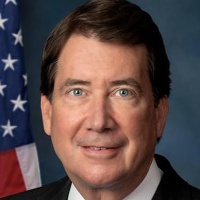
Bill Hagerty
Senator
TN
Bill Hagerty
Senator
TN
The Protecting Privacy in Purchases Act prohibits payment card networks and processors from requiring firearms retailers to use a unique Merchant Category Code (MCC) that singles them out. This ensures that credit and debit card transactions for firearms and ammunition are treated the same as general retail purchases. The Attorney General is tasked with enforcing this prohibition and reporting annually to Congress on compliance efforts.
The Mental Health Infrastructure Improvement Act of 2025 establishes federal loans and guarantees to upgrade mental health and substance use treatment facilities, while also creating a Trust Fund to support community mental health block grants.

Jeff Merkley
Senator
OR
Jeff Merkley
Senator
OR
The Mental Health Infrastructure Improvement Act of 2025 establishes a federal loan and loan guarantee program managed by HHS to finance the construction, renovation, and equipment upgrades for mental health and substance use disorder treatment facilities. Priority will be given to projects that increase bed capacity in underserved areas, with at least 25% of funds reserved for pediatric facilities. Furthermore, the bill creates a dedicated Trust Fund to hold surplus revenue from the loan program, which Congress can then appropriate as block grants for community mental health services.
The Neighborhood Homes Investment Act establishes a new federal tax credit to incentivize the construction and rehabilitation of affordable homes in low-income communities by closing the financing gap for developers.

Todd Young
Senator
IN
Todd Young
Senator
IN
The Neighborhood Homes Investment Act establishes a new federal tax credit designed to close the financing gap for building and rehabilitating homes in distressed, low-income communities. This credit incentivizes developers to construct or substantially rehabilitate qualified residences in "qualified census tracts" and sell them affordably to low-to-moderate-income homeowners. State agencies will oversee allocations, ensure affordability standards are met, and enforce repayment rules if the home is sold too quickly.
The FARMER Act of 2025 modifies federal premium support for certain whole-farm crop insurance plans, increases the government subsidy for the supplemental coverage option, and mandates a study on expanding that supplemental coverage.
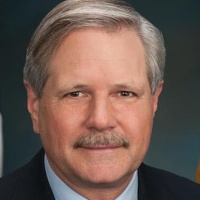
John Hoeven
Senator
ND
John Hoeven
Senator
ND
The FARMER Act of 2025 modifies federal crop insurance by increasing premium support for certain whole-farm revenue or yield protection plans. It also raises the government subsidy percentage for the Supplemental Coverage Option (SCO) and adjusts its coverage level calculations. Finally, the bill mandates a study on expanding the SCO to cover areas larger than 1,400 square miles.
This Act mandates that health plans cover medically necessary diagnosis and treatment for congenital anomalies or birth defects affecting the eyes, ears, teeth, mouth, or jaw, starting in 2026.

Tammy Baldwin
Senator
WI
Tammy Baldwin
Senator
WI
The Ensuring Lasting Smiles Act mandates that health plans cover medically necessary diagnosis and treatment for congenital anomalies or birth defects affecting the eyes, ears, teeth, mouth, or jaw. This coverage must apply to outpatient and inpatient care, including necessary dental and orthodontic support, unless the procedure is purely cosmetic. These new requirements take effect for plan years beginning on or after January 1, 2026.
This resolution affirms that the only acceptable outcome for any U.S.-Iran nuclear deal is the complete dismantling of Iran's nuclear program under strict international verification.
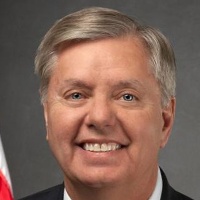
Lindsey Graham
Senator
SC
Lindsey Graham
Senator
SC
This resolution affirms the official U.S. position that the only acceptable outcome of any nuclear deal with Iran is the complete dismantlement and destruction of its entire nuclear program. It mandates that any future peaceful nuclear cooperation must require Iran to cease all domestic uranium enrichment and submit to stringent, unconditional international verification protocols. Ultimately, the bill asserts that the U.S. must never permit Iran to gain the capability to produce a nuclear weapon.
The MOMS Act establishes a federal resource website for pregnant women, expands access to prenatal/postnatal care through grants and telehealth, and allows states to enforce child support for unborn children upon the mother's request.
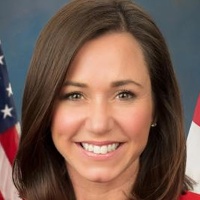
Katie Britt
Senator
AL
Katie Britt
Senator
AL
The MOMS Act aims to support mothers and unborn children through three main areas: establishing a federal resource website, Pregnancy.gov, to connect expecting and new mothers with local services. It also creates grant programs to fund organizations that support carrying pregnancies to term and expand access to prenatal/postnatal telehealth care. Finally, the Act mandates that states establish and enforce child support obligations on behalf of unborn children upon the mother's request.
The Immigration Parole Reform Act of 2025 strictly limits the granting of immigration parole to specific, case-by-case humanitarian or public benefit reasons, overhauls employment authorization for parolees, and establishes new reporting requirements.
Charles Grassley
Senator
IA
Charles Grassley
Senator
IA
The Immigration Parole Reform Act of 2025 significantly overhauls the use of immigration parole, requiring the Secretary of Homeland Security to grant it only on a strict case-by-case basis for urgent humanitarian reasons or significant public benefit. The bill narrowly defines these reasons and restricts parole from being used as a pathway to adjust status for most recipients. Furthermore, it establishes specific parole provisions for certain military family members and Cuban nationals, while also creating a mechanism for legal challenges against improper implementation.
This resolution expresses support for designating the week of May 4-10, 2025, as National Small Business Week to celebrate the vital contributions of small businesses and entrepreneurs nationwide.

Joni Ernst
Senator
IA
Joni Ernst
Senator
IA
This resolution expresses strong support for designating the week of May 4 through May 10, 2025, as National Small Business Week. It aims to celebrate the vital contributions of the over 34.5 million small businesses that support tens of millions of jobs nationwide. The bill honors the hard work and entrepreneurial spirit of small business owners in every community.
The PREEMIE Reauthorization Act of 2025 extends research funding for prematurity, mandates the establishment of an interagency working group, and commissions a comprehensive study on the costs, causes, and prevention strategies for preterm births.

Michael Bennet
Senator
CO
Michael Bennet
Senator
CO
The PREEMIE Reauthorization Act of 2025 extends critical federal research funding for preterm labor and the care of low birthweight infants through fiscal year 2029. It mandates the establishment of an interagency working group to coordinate efforts related to prematurity. Furthermore, the bill requires a comprehensive study by the National Academies on the financial costs, causes, prevention, and support opportunities related to preterm births.
This resolution officially designates April 2025 as Financial Literacy Month to promote essential personal finance education across the nation.
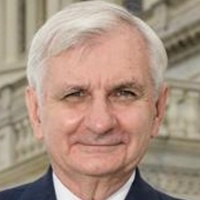
John Reed
Senator
RI
John Reed
Senator
RI
This resolution officially designates April 2025 as "Financial Literacy Month" to raise national awareness about the critical need for personal finance education. It highlights current financial struggles, such as high household debt and lack of banking access, while emphasizing that financial education leads to better economic outcomes. The resolution encourages federal, state, and local entities to observe the month with programs promoting essential skills like budgeting, saving, and debt management.
This bill increases the maximum railroad track maintenance tax credit, adjusts future limits for inflation, and extends the eligibility period for claimed expenditures.

Michael Crapo
Senator
ID
Michael Crapo
Senator
ID
This bill modifies the railroad track maintenance credit by significantly increasing the maximum credit amount per mile from $\$3,500$ to $\$6,100$. It also updates the eligibility period for qualifying expenditures and mandates that the new credit limit will be adjusted for inflation starting in 2026. These changes are designed to provide greater financial support for ongoing railroad infrastructure upkeep.