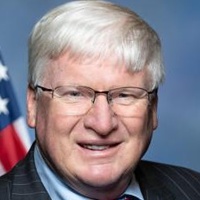
Legislative Activity
Track Glenn's sponsored bills, co-sponsored legislation, and voting record
This resolution honors the life and legacy of Charles "Charlie" James Kirk, condemns his assassination as political violence, and calls for a renewed commitment to civil discourse and American founding principles.

Mike Johnson
Representative
LA
Mike Johnson
Representative
LA
This resolution honors the life and legacy of Charles "Charlie" James Kirk, founder of Turning Point USA. It strongly condemns his assassination as an act of political violence. The bill calls for a renewed national commitment to civil discourse and the founding principles of the United States.
This Act expands integrated cross-border law enforcement operations, particularly with Canada, and enhances legal protections and cooperation mechanisms for U.S. and foreign law enforcement personnel working together internationally.
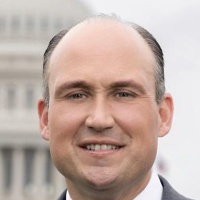
Nicholas Langworthy
Representative
NY
Nicholas Langworthy
Representative
NY
The Integrated Cross-Border Law Enforcement Operations Expansion Act encourages the Secretary of Homeland Security to enhance joint law enforcement operations with Canada across land, air, and sea borders. This legislation also grants authority to establish agreements that provide legal protections to designated foreign law enforcement officers working alongside U.S. Customs officials. Furthermore, it allows for the stationing of U.S. law enforcement personnel overseas and the acceptance of foreign personnel in the U.S. for cooperative security missions.
This proposed constitutional amendment establishes and protects the fundamental rights of parents to direct the upbringing, education, and care of their children against government interference.
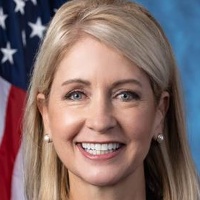
Mary Miller
Representative
IL
Mary Miller
Representative
IL
This proposed constitutional amendment seeks to explicitly establish and protect the fundamental rights of parents to direct the upbringing, education, and care of their children. It guarantees parents the right to choose educational settings, including private or home schooling, and sets a very high legal standard for government interference. The amendment further ensures these rights cannot be limited based on a child's disability status.
This bill reauthorizes and extends funding for the Special Diabetes Programs through fiscal year 2030 at \$160 million annually.

Diana DeGette
Representative
CO
Diana DeGette
Representative
CO
The Special Diabetes Program Reauthorization Act of 2025 extends critical funding for the Special Diabetes Programs supporting Type 1 diabetes research and prevention. This bill commits $160 million annually for the program from fiscal years 2026 through 2030. The legislation ensures continued support for these vital diabetes initiatives over the next five years.
The Chloe Cole Act prohibits healthcare professionals from performing chemical or surgical mutilation on minors by linking the prohibition to interstate commerce and establishes a private right of action for victims to sue.
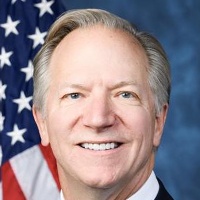
Robert Onder
Representative
MO
Robert Onder
Representative
MO
The Chloe Cole Act prohibits healthcare professionals from engaging in chemical or surgical mutilation of minors, defined as specific medical interventions intended to alter appearance or biological function related to sex. This prohibition is enforced through federal jurisdiction when interstate commerce is involved in the procedure. The bill also establishes a private right of action, allowing individuals subjected to these procedures as minors to sue participating providers, and sets strict liability standards for future violations.
This Act mandates that new passenger motor vehicles sold in the U.S. must include standard equipment capable of receiving AM broadcast radio signals.

Gus Bilirakis
Representative
FL
Gus Bilirakis
Representative
FL
The AM Radio for Every Vehicle Act of 2025 mandates that the Secretary of Transportation establish a rule requiring AM broadcast radio receivers to be installed as standard equipment in new passenger motor vehicles. This requirement aims to ensure public access to AM radio signals, which are often used for emergency alerts. The bill also directs a GAO study on the effectiveness of AM radio within the national emergency alert system compared to other technologies. Finally, the Act preempts state and local laws on this matter and includes a sunset provision eight years after enactment.
This bill mandates that any unspent funds from the Members Representational Allowance (MRA) must be returned to the U.S. Treasury to reduce the federal deficit, starting in fiscal year 2026.
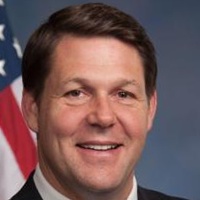
Jodey Arrington
Representative
TX
Jodey Arrington
Representative
TX
The Congressional Money Returned to America Act mandates that any unspent funds remaining in the House of Representatives' Members Representational Allowance (MRA) at the end of the fiscal year must be returned to the U.S. Treasury. This returned money will be specifically used for reducing the federal deficit or debt. This requirement takes effect starting in fiscal year 2026.
This resolution formally condemns the assassination of Charlie Kirk and reaffirms the right to peaceful assembly against political violence.
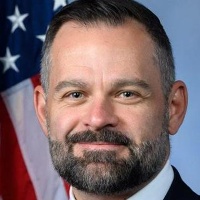
Cory Mills
Representative
FL
Cory Mills
Representative
FL
This resolution formally condemns the horrific political assassination of conservative spokesman Charlie Kirk on September 10, 2025, in Orem, Utah. It expresses deep condolences to his family and recognizes the bravery of the first responders at the scene. Ultimately, the measure reaffirms the fundamental American right to peaceful assembly and stands firmly against political violence.
This Act mandates the FAA to establish standardized procedures for collecting, analyzing, and sharing reports of Unidentified Anomalous Phenomena (UAP) while protecting reporters from punitive action.
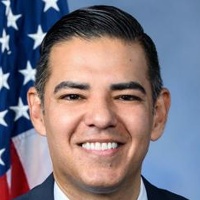
Robert Garcia
Representative
CA
Robert Garcia
Representative
CA
The Safe Airspace for Americans Act mandates the Federal Aviation Administration (FAA) to establish standardized procedures for collecting, analyzing, and sharing reports regarding Unidentified Anomalous Phenomena (UAP) from aviation personnel. This legislation aims to reduce the stigma associated with reporting UAP encounters while ensuring that such reports cannot be used punitively against reporters, except in cases of criminal activity or accidents. The FAA must coordinate with defense and intelligence agencies and protect the employment and certification status of individuals who report these sightings.
The PART Act establishes new federal requirements for marking catalytic converters, creates a grant program for VIN stamping, tightens record-keeping for used parts dealers, and increases criminal penalties for theft and trafficking of catalytic converters.
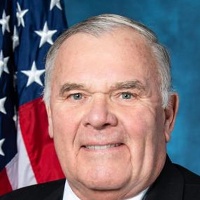
James Baird
Representative
IN
James Baird
Representative
IN
The PART Act aims to combat catalytic converter theft by requiring new vehicles to have traceable identifying markers on these parts. It establishes a federal grant program to help entities stamp identifying numbers onto existing converters. Furthermore, the bill imposes strict record-keeping requirements on businesses that buy used converters and creates new federal criminal penalties for stealing or trafficking stolen catalytic converters.
This Act limits the sharing of consumer reports requested in connection with a residential mortgage loan to prevent unauthorized access to homebuyers' sensitive financial information.
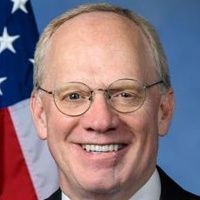
John Rose
Representative
TN
John Rose
Representative
TN
The Homebuyers Privacy Protection Act limits how consumer reporting agencies can share a consumer's report when it is requested in connection with a residential mortgage loan. Reports can only be shared with entities directly involved in the consumer's current mortgage or those providing a firm offer of credit or insurance. The Act also mandates a study by the GAO regarding the use and impact of "trigger leads" derived from credit checks.
This Act mandates parental consent for any school action supporting a student's gender identity different from their biological sex, tying compliance to federal education funding and allowing parents to sue for violations.
Mary Miller
Representative
IL
Mary Miller
Representative
IL
The Empower Parents to Protect their Kids Act mandates that schools receiving federal funding must obtain explicit parental consent before taking any action supporting a student's gender transition that differs from their biological sex. This legislation prohibits school staff from encouraging students to keep secrets from parents regarding gender identity or from hiding information about a student's transition plans. Parents are granted the right to sue schools directly for violations of these parental notification and consent requirements.
The FEMA Act of 2025 establishes FEMA as an independent, cabinet-level agency and enacts sweeping reforms across public assistance, individual aid, and mitigation programs to speed up recovery and increase transparency.
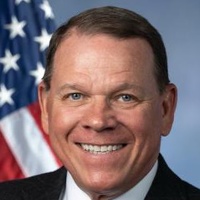
Sam Graves
Representative
MO
Sam Graves
Representative
MO
The FEMA Act of 2025 establishes the Federal Emergency Management Agency (FEMA) as an independent, cabinet-level agency to lead a unified, all-hazards approach to national emergency management. The bill enacts sweeping reforms across Public Assistance, Individual Assistance, and Mitigation programs to accelerate recovery, streamline funding, and reduce bureaucratic hurdles for disaster survivors and communities. Furthermore, it mandates significant new transparency measures, including public data reporting and GAO oversight, to ensure accountability for federal disaster spending.
The GRACE Act prohibits federal education funding for schools or agencies with vaccination requirements unless they provide an unconditional religious exemption without requiring documentation.
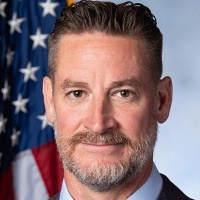
W. Steube
Representative
FL
W. Steube
Representative
FL
The GRACE Act prohibits federal education funding for any school or agency that mandates vaccinations unless they provide a religious exemption based solely on an individual's stated sincerely held religious beliefs. This exemption cannot require any proof or documentation to support the religious objection. Consequently, institutions requiring documentation for religious vaccine exemptions risk losing federal education funds.
The Safety and Opportunity for Girls Act of 2025 amends Title IX to define sex based on biological reproductive capacity and ensures schools can maintain sex-segregated facilities and programs without jeopardizing federal funding.
Mary Miller
Representative
IL
Mary Miller
Representative
IL
The Safety and Opportunity for Girls Act of 2025 amends Title IX to define "female" and "male" based on biological reproductive capacity. This legislation explicitly permits schools to maintain sex-segregated facilities, programs, and activities without jeopardizing their federal funding. It ensures that schools retain the authority to separate spaces based on biological sex.
This Act mandates that states recognize the professional licenses of recently discharged veterans and their spouses for the same scope of practice upon relocation.
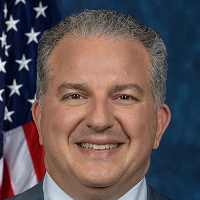
Jimmy Patronis
Representative
FL
Jimmy Patronis
Representative
FL
The Veteran and Spouse Licensing Flexibility Act of 2025 aims to streamline the process for military families transitioning to civilian life. This bill mandates that states must recognize the professional licenses of veterans and their spouses for a period following the veteran's discharge or release. New states must grant immediate temporary licenses while processing the application, ensuring continuity of practice. Applicants must provide proof of service and attest to being in good standing across all previously held licenses.
This act mandates that the Veterans Health Administration expand its informed consent requirements to specifically cover the prescription of antipsychotics, stimulants, antidepressants, anxiolytics, and narcotics.
Gus Bilirakis
Representative
FL
Gus Bilirakis
Representative
FL
The Written Informed Consent Act mandates that the Veterans Health Administration (VHA) expand its informed consent directives to specifically cover several classes of medications, including antipsychotics, stimulants, antidepressants, anxiolytics, and narcotics. This ensures veterans receive a thorough understanding of these prescribed drugs. The Secretary of Veterans Affairs must update VHA Directive 1005 to reflect these expanded requirements.
This resolution honors the life and legacy of Dr. Edwin J. Feulner, recognizing his lifelong commitment to the conservative movement and his significant contributions to the country, including founding The Heritage Foundation.
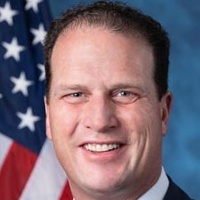
August Pfluger
Representative
TX
August Pfluger
Representative
TX
This resolution honors the life and legacy of Dr. Edwin J. Feulner, recognizing his lifelong commitment to the conservative movement. It specifically commends his foundational work in establishing the Heritage Foundation and his significant influence on national policy. The House of Representatives expresses its condolences to his family and respectfully suggests he be awarded the Presidential Medal of Freedom posthumously.
The PRIME Act exempts custom slaughter facilities from federal inspection requirements for meat distributed only within the state where it was processed, provided they comply with state law.
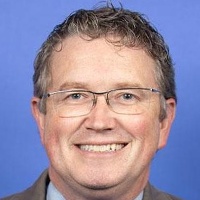
Thomas Massie
Representative
KY
Thomas Massie
Representative
KY
The PRIME Act, or Processing Revival and Intrastate Meat Exemption Act, exempts custom slaughter facilities from federal inspection requirements for meat that is processed and sold only within the state of origin. To qualify, facilities must comply with all applicable state laws regarding slaughter and preparation. This legislation ensures that states retain the authority to enforce their own, potentially stricter, regulations on local meat processing.
This bill seeks to revoke the federal charter of the National Education Association (NEA) and impose strict new operational, financial, and political restrictions on the organization due to its perceived political agenda and actions.
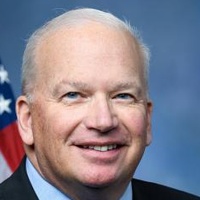
Scott Fitzgerald
Representative
WI
Scott Fitzgerald
Representative
WI
This bill, the STUDENT Act, seeks to fundamentally alter the federal charter and operations of the National Education Association (NEA). It imposes strict new requirements on the organization's political activities, membership dues collection from government employees, and governance structure. Furthermore, the Act prohibits the NEA and its affiliates from engaging in strikes or promoting specific controversial ideological beliefs within schools.