Legislative Activity
Track Mike's sponsored bills, co-sponsored legislation, and voting record
This resolution initiates impeachment proceedings against U.S. District Judge Paul A. Engelmayer for alleged high crimes, misdemeanors, and judicial misconduct.
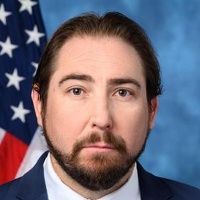
Eli Crane
Representative
AZ
Eli Crane
Representative
AZ
This resolution initiates impeachment proceedings against United States District Judge Paul A. Engelmayer for high crimes and misdemeanors. The bill alleges that Judge Engelmayer abused his judicial authority and demonstrated political bias through specific rulings that restricted executive branch access to Department of the Treasury data. Consequently, the resolution seeks his removal from office for violating his oath and compromising the impartiality of the judiciary.
This bill eliminates grant programs and rescinds funding for electric vehicle charging infrastructure, including the National Electric Vehicle Infrastructure (NEVI) Formula Program.
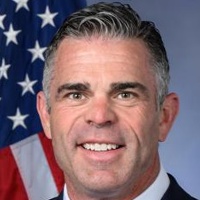
Tony Wied
Representative
WI
Tony Wied
Representative
WI
The "Unplug the Electric Vehicle Charging Stations Program Act" eliminates grant programs for charging and fueling infrastructure, specifically repealing the National Electric Vehicle Infrastructure (NEVI) Formula Program. This includes rescinding unspent funds and terminating the program entirely upon enactment. The bill amends sections of the Infrastructure Investment and Jobs Act and title 23 of the United States Code to remove references to the grant programs.
The "Make American Flags in America Act of 2025" mandates that U.S. flags displayed on Federal property or bought by Federal agencies be made entirely in the U.S., and requires a study on country-of-origin labeling enforcement for flags.
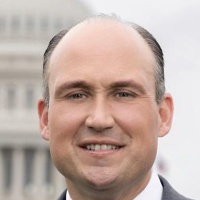
Nicholas Langworthy
Representative
NY
Nicholas Langworthy
Representative
NY
The "Make American Flags in America Act of 2025" mandates that U.S. flags displayed on Federal property or bought by Federal agencies be entirely manufactured in the U.S. using 100% U.S.-made materials, in accordance with international agreements. It also directs the Federal Trade Commission to study and report on country-of-origin labeling enforcement for U.S. flags, aiming to improve enforcement and deter violations.
Prohibits securities exchanges from processing transactions involving securities issued by "natural asset companies" that manage land for conservation and ecological performance.
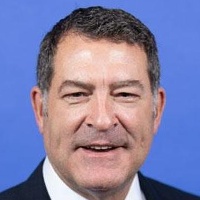
Mark Green
Representative
TN
Mark Green
Representative
TN
The "Protect America's Lands Act" prevents national securities exchanges from handling transactions of securities issued by "natural asset companies." These companies manage land for conservation and aim to enhance the value of natural assets and ecosystem services. The bill defines specific criteria for what constitutes a "natural asset company" to ensure the prohibition is appropriately applied.
The "Death Tax Repeal Act" eliminates estate and generation-skipping transfer taxes, adjusts gift tax calculations, and sets a $10,000,000 lifetime gift exemption.
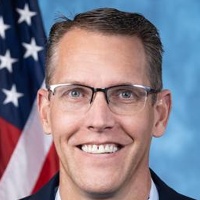
Randy Feenstra
Representative
IA
Randy Feenstra
Representative
IA
The "Death Tax Repeal Act" eliminates both estate and generation-skipping transfer taxes, effective from the date of enactment. It adjusts gift tax calculations by setting the lifetime gift exemption at $10,000,000, with inflation adjustments after 2011. The Act also includes transitional rules for applying certain sections of the Internal Revenue Code during the enactment year.
This resolution expresses Congressional opposition to imposing new performance fees or royalties on local radio stations and businesses for broadcasting or playing music.
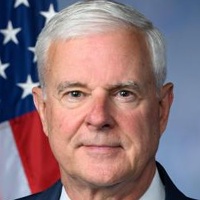
Steve Womack
Representative
AR
Steve Womack
Representative
AR
The Local Radio Freedom Act expresses Congressional opposition to imposing new performance fees, taxes, or royalties on local radio stations and businesses for playing music. It argues that the current system of free airplay provides essential promotional value to artists and that new fees would threaten the financial viability of local broadcasters and the vital community services they provide.
The "More Homes on the Market Act" increases the tax exclusion for profit from the sale of a primary residence, incentivizing homeowners to sell and increasing housing supply.
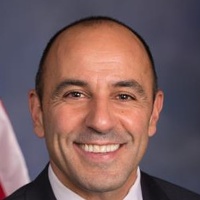
Jimmy Panetta
Representative
CA
Jimmy Panetta
Representative
CA
The "More Homes on the Market Act" increases the tax exclusion for profit from the sale of a primary residence, raising it to $500,000 for single filers and $1,000,000 for married couples filing jointly. These amounts will be adjusted for inflation starting in 2025. This change encourages homeowners to sell their properties, thereby increasing the availability of homes on the market.
The "Collision Avoidance Systems Act of 2025" mandates the Department of Transportation to update safety standards to allow and set performance standards for pulsating brake lights on vehicles to help prevent rear-end collisions.
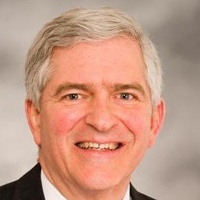
Daniel Webster
Representative
FL
Daniel Webster
Representative
FL
The "Collision Avoidance Systems Act of 2025" permits and sets performance standards for pulsating light systems on vehicles to help prevent rear-end collisions. It mandates the Secretary of Transportation to update Federal Motor Vehicle Safety Standard Number 108 within 180 days to include these systems. The bill defines a pulsating light system as a high-mounted stop lamp that pulses rapidly up to 4 times within 1.2 seconds upon braking before converting to a continuous light.
This Act allows schools participating in the National School Lunch Program to offer organic or non-organic whole milk alongside other options, while clarifying saturated fat accounting and restricting milk sourcing from China state-owned enterprises.
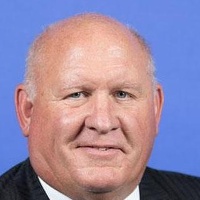
Glenn Thompson
Representative
PA
Glenn Thompson
Representative
PA
The Whole Milk for Healthy Kids Act of 2025 expands milk options available to students in the National School Lunch Program by allowing schools to offer organic or non-organic whole milk. This legislation provides greater flexibility for schools in providing fluid milk choices while maintaining accommodations for students with special dietary needs. Importantly, the saturated fat content of these offered milk options will not count toward the meal's overall saturated fat limits.
The "National Right-to-Work Act" prohibits mandatory union membership as a condition of employment, protecting employees' rights to choose whether or not to join or support a labor union.
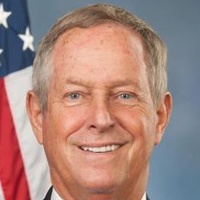
Joe Wilson
Representative
SC
Joe Wilson
Representative
SC
The "National Right-to-Work Act" amends both the National Labor Relations Act and the Railway Labor Act to protect an employee's right to choose whether or not to join or support a labor union. It eliminates the possibility of mandatory union membership or dues payments as a condition of employment, ensuring that employees cannot be forced to join or support a union against their will.
The "No More Funding for NPR Act of 2025" prohibits federal funding to National Public Radio, with exceptions for FEMA disaster response and urgent public safety information.
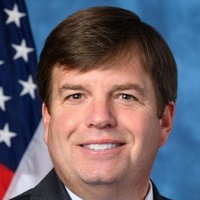
Dale Strong
Representative
AL
Dale Strong
Representative
AL
The "No More Funding for NPR Act of 2025" prohibits any direct or indirect federal funding to National Public Radio (NPR), including through public broadcast stations, with exceptions only for FEMA disaster response and urgent public safety information dissemination. It also rescinds any unspent federal funds allocated to NPR for fiscal years 2025 and 2026.
Mandates the disclosure of third parties entitled to payment from civil action settlements or judgments to ensure transparency.
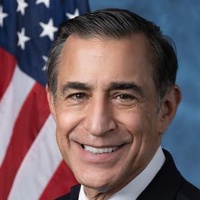
Darrell Issa
Representative
CA
Darrell Issa
Representative
CA
The Litigation Transparency Act of 2025 requires parties in civil actions to disclose the identity of any third party entitled to payment contingent on the outcome of the case, along with the relevant agreements. This disclosure aims to increase transparency in civil litigation by revealing who financially benefits from the lawsuit's outcome. Certain payments, such as loan repayments and attorney's fees, are exempt from this disclosure requirement. The Act applies to both ongoing and future court cases.
The "Freedom to Invest in Tomorrow's Workforce Act" expands the use of 529 savings accounts to cover expenses related to postsecondary credentialing programs, including tuition, fees, books, supplies, equipment, and testing fees.
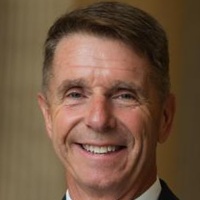
Robert Wittman
Representative
VA
Robert Wittman
Representative
VA
The "Freedom to Invest in Tomorrow's Workforce Act" amends Section 529 savings accounts to include expenses related to postsecondary credentialing programs. This allows 529 funds to cover costs like tuition, fees, books, supplies, and testing fees for recognized programs and credentials, as defined by the bill. These changes would apply to distributions made after the bill is enacted.
Exempts family farms and small businesses from asset considerations in need analysis for federal student aid.
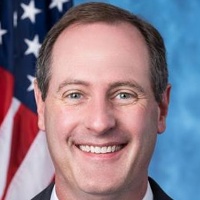
Tracey Mann
Representative
KS
Tracey Mann
Representative
KS
The "Family Farm and Small Business Exemption Act" amends the Higher Education Act of 1965 to exclude the net value of a family farm (on which the family resides) or a small business (with no more than 100 employees and owned/controlled by the family) from consideration as an asset when determining financial need for federal student aid. This change aims to make higher education more accessible for students from family farm and small business backgrounds.
The "UNPLUG EVs Act" rescinds unspent funds from electric vehicle charging and fueling grant programs and the National Electric Vehicle Infrastructure Formula Program to reduce the federal deficit.
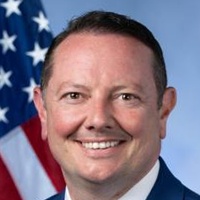
Eric Burlison
Representative
MO
Eric Burlison
Representative
MO
The "UNPLUG EVs Act" rescinds any unspent funds allocated for electric vehicle charging and fueling grants, as well as funds from the National Electric Vehicle Infrastructure Formula Program. The recovered funds will be deposited into the Treasury's general fund and used to reduce the federal deficit.
The BOWSER Act repeals the District of Columbia Home Rule Act, returning control to the federal government one year after enactment.
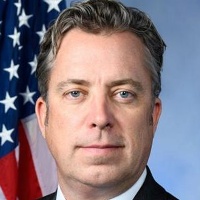
Andrew Ogles
Representative
TN
Andrew Ogles
Representative
TN
The BOWSER Act repeals the District of Columbia Home Rule Act, which currently grants a degree of self-governance to the District of Columbia. This repeal would take effect one year after the enactment of the BOWSER Act. Effectively, this would end the current form of local government in DC.
The CARTEL Act of 2025 mandates U.S. Customs and Border Protection to publish monthly operational statistics and requires the Secretary of Homeland Security to report annually to Congress on foreign terrorist organizations and transnational criminal organizations attempting to infiltrate the U.S.
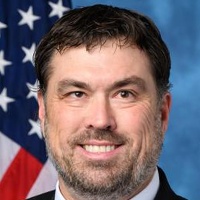
Morgan Luttrell
Representative
TX
Morgan Luttrell
Representative
TX
The CARTEL Act of 2025 mandates U.S. Customs and Border Protection to publish detailed monthly reports on various border security operational statistics, including alien encounters, drug seizures, and terrorist watchlist matches. It also requires the Secretary of Homeland Security to submit an annual report to Congress assessing attempts by foreign terrorist organizations and transnational criminal organizations to infiltrate the United States.
The Fair Access to Banking Act prohibits large financial institutions and payment networks from denying services to law-abiding businesses based on subjective, non-financial, or political criteria.
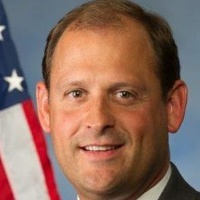
Garland Barr
Representative
KY
Garland Barr
Representative
KY
The Fair Access to Banking Act prohibits large financial institutions and payment networks from denying services to law-abiding businesses based on subjective, politically motivated, or reputational criteria. The bill mandates that financial institutions use impartial, quantitative, risk-based standards to evaluate customers rather than category-based exclusions. To ensure compliance, the legislation establishes enforcement mechanisms through federal regulators and provides a legal pathway for businesses to sue for damages if they are unfairly denied access to financial services.
This bill mandates the formal abolishment of the United States Agency for International Development (USAID) and transfers its remaining assets and responsibilities to the Secretary of State.
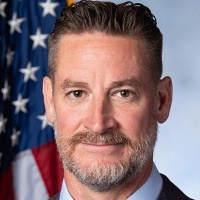
W. Steube
Representative
FL
W. Steube
Representative
FL
This bill mandates the immediate abolishment of the United States Agency for International Development (USAID) and prohibits the use of federal funds for its operations. It rescinds all unobligated agency funds and transfers all remaining assets and liabilities to the Secretary of State.
This bill requires the Congressional Budget Office and the Joint Committee on Taxation to include debt servicing costs in their official cost estimates for proposed legislation.
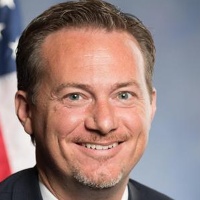
Michael Cloud
Representative
TX
Michael Cloud
Representative
TX
The Cost Estimates Improvement Act requires the Congressional Budget Office (CBO) and the Joint Committee on Taxation (JCT) to include the impact of debt servicing costs in their official legislative cost estimates. This legislation aims to provide a more comprehensive view of the long-term fiscal consequences of proposed federal spending and tax policies.