Legislative Activity
Track Mike's sponsored bills, co-sponsored legislation, and voting record
This bill mandates the reinstatement of cancelled mineral leases and streamlines the regulatory review process for mining operations within the Superior National Forest in Minnesota.
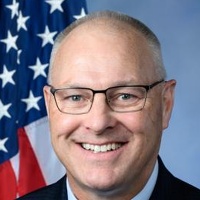
Pete Stauber
Representative
MN
Pete Stauber
Representative
MN
The Superior National Forest Restoration Act of 2025 seeks to reopen federal lands in Minnesota to mineral leasing by rescinding previous withdrawal orders and mandating the reissuance of cancelled mineral leases. The bill also establishes strict 18-month timelines for the federal government to complete environmental and regulatory reviews for new mine plans. Additionally, it directs the immediate issuance of preference right leases for previously rejected applications to facilitate mineral exploration and development.
The Dismantle DEI Act of 2025 immediately rescinds federal diversity, equity, and inclusion (DEI) mandates across executive offices, contracting, grants, and education, while banning related training and imposing penalties for non-compliance.
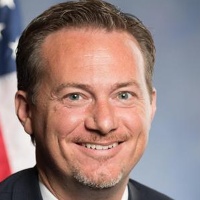
Michael Cloud
Representative
TX
Michael Cloud
Representative
TX
The Dismantle DEI Act of 2025 aims to immediately rescind diversity, equity, and inclusion (DEI) mandates across the federal government, including shutting down related offices and banning specific ideological training for federal personnel and contractors. The bill prohibits the use of federal funds for DEI activities by grant recipients and mandates that federal advisory committees cease all such practices or face termination. Furthermore, it establishes strong enforcement mechanisms, allowing individuals to sue violators and seek financial penalties for non-compliance.
The Stop the Censorship Act amends Section 230 to limit liability protections for online platforms, restricting their ability to remove content unless it is unlawful while preserving tools that allow users to filter their own experience.

Paul Gosar
Representative
AZ
Paul Gosar
Representative
AZ
The Stop the Censorship Act amends Section 230 to limit the liability protections of online service providers, restricting their ability to unilaterally remove content to only that which is unlawful. While narrowing provider-initiated censorship, the bill preserves immunity for platforms that provide users with the tools to personally filter and curate their own online experience.
This bill prohibits state and local governments from imposing special taxes, insurance requirements, or user fees as a condition for the ownership, manufacture, or transfer of firearms and ammunition.
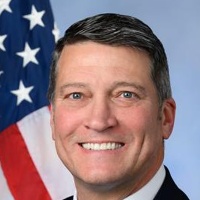
Ronny Jackson
Representative
TX
Ronny Jackson
Representative
TX
The "No User Fees for Gun Owners Act" prohibits state and local governments from imposing special taxes, insurance requirements, or user fees as a condition for owning, manufacturing, or transferring firearms and ammunition. The bill ensures that firearms are only subject to standard, generally applicable sales taxes, preventing discriminatory financial barriers to gun ownership.
The Educational Choice for Children Act of 2025 establishes federal tax credits for contributions to scholarship-granting organizations, providing lower- and middle-income families with financial support for K–12 educational expenses.

Adrian Smith
Representative
NE
Adrian Smith
Representative
NE
The Educational Choice for Children Act of 2025 establishes federal tax credits for individuals and corporations that contribute to scholarship-granting organizations. These organizations provide K–12 education scholarships to students from lower- and middle-income households to cover tuition, tutoring, and other qualified educational expenses. The bill also protects the autonomy of participating schools and scholarship organizations from government interference while ensuring that scholarship funds remain tax-free for recipient families.
The SHUSH Act removes firearm silencers from the definition of "firearms" under federal law, eliminating the associated taxes, registration requirements, and state-level restrictions.
Michael Cloud
Representative
TX
Michael Cloud
Representative
TX
The SHUSH Act (Silencers Help Us Save Hearing Act) removes firearm silencers from the definition of "firearms" under federal law, effectively eliminating the associated registration requirements, transfer taxes, and federal restrictions. The bill also preempts state and local laws that impose specific regulations on silencers and removes enhanced criminal penalties related to their use.
This bill mandates the termination of the U.S. Department of Education effective December 31, 2026.
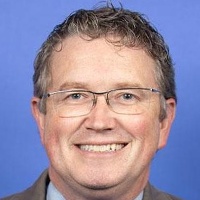
Thomas Massie
Representative
KY
Thomas Massie
Representative
KY
This bill proposes the complete termination of the United States Department of Education. If enacted, the agency would be officially dissolved on December 31, 2026.
The PROTECTS Act of 2025 prohibits the use of federal funds for gender transition surgeries, hormone therapies, and puberty blockers for minors, with specific medical exceptions.
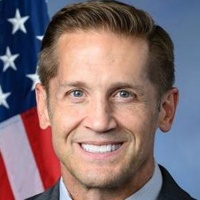
Rich McCormick
Representative
GA
Rich McCormick
Representative
GA
The PROTECTS Act of 2025 prohibits the use of federal funds to provide, refer, or reimburse gender transition procedures—including surgeries, hormone therapies, and puberty blockers—for individuals under the age of 18. The bill includes specific exceptions for medically necessary treatments related to genetic disorders of sex development or other physical health conditions.
The United States Reciprocal Trade Act authorizes the President to impose reciprocal tariffs on foreign goods when trading partners maintain higher tariff or nontariff barriers than those applied by the United States.
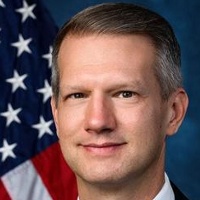
Riley Moore
Representative
WV
Riley Moore
Representative
WV
The United States Reciprocal Trade Act empowers the President to impose reciprocal tariffs on foreign goods when trading partners maintain significantly higher tariffs or nontariff barriers than those applied by the U.S. This legislation aims to address trade imbalances and protect American producers by providing the executive branch with tools to negotiate fairer market access. The Act includes requirements for congressional consultation and public notice, while also establishing a process for Congress to disapprove specific tariff actions.
The Life at Conception Act declares that the constitutional right to life begins at the moment of fertilization and applies to every member of the species *homo sapiens* at all stages of development.
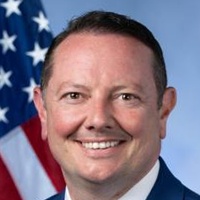
Eric Burlison
Representative
MO
Eric Burlison
Representative
MO
The Life at Conception Act declares that the constitutional right to life begins at the moment of fertilization, defining all human beings as persons from that point forward. The bill establishes legal personhood for every member of the species *homo sapiens* at all stages of development. Additionally, it explicitly prohibits the prosecution of any woman for the death of her unborn child.
The Green Tape Elimination Act of 2025 exempts hazardous fuel reduction activities on federal land from key environmental reviews and regulations for 10 years to expedite wildfire prevention efforts.
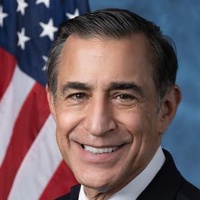
Darrell Issa
Representative
CA
Darrell Issa
Representative
CA
The Green Tape Elimination Act of 2025 aims to accelerate wildfire prevention by exempting hazardous fuel reduction activities on federal land from key environmental reviews and regulations, including NEPA and the Endangered Species Act, for a 10-year period. Additionally, the bill amends the Clean Air Act to exclude air quality data resulting from these fuel reduction activities from regulatory compliance determinations.
The Born-Alive Abortion Survivors Protection Act requires health care practitioners to provide the same level of care to infants born alive after an abortion attempt as they would to any other newborn, mandating immediate hospitalization and imposing penalties for violations, while protecting the mother from prosecution. It also allows the mother of a child born alive to file a civil action against anyone who violated the act.
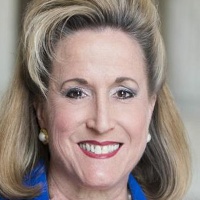
Ann Wagner
Representative
MO
Ann Wagner
Representative
MO
The "Born-Alive Abortion Survivors Protection Act" ensures that infants born alive after an abortion receive the same medical care as any other newborn, mandating immediate hospitalization and requiring healthcare practitioners to report any failures to comply. Violators face fines, imprisonment, and potential prosecution for homicide or attempted homicide, while the mother of the child cannot be prosecuted. The bill also allows the woman who had the abortion to file a civil action against anyone who violated the act. It defines abortion and attempts at abortion, and renames "Partial-Birth Abortions" to "Abortions" in relevant sections of the U.S. Code.
The "Fix Our Forests Act" aims to reduce wildfire risks, improve forest health, and support communities by focusing on landscape-scale restoration, protecting wildland-urban interface areas, and enhancing transparency and technology in forest management. It also establishes a casualty assistance program for wildland firefighters and their families.
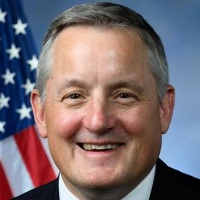
Bruce Westerman
Representative
AR
Bruce Westerman
Representative
AR
The "Fix Our Forests Act" aims to improve forest management and wildfire resilience through landscape-scale restoration, community protection in wildland-urban interfaces, and enhanced transparency and technology. It establishes programs for wildfire risk reduction, reforestation, and biochar development, while also focusing on restoring white oak populations and supporting the families of firefighters. The act streamlines project approvals, encourages collaboration, and implements litigation reforms to expedite forest management activities. Additionally, it creates a casualty assistance program for firefighters and support personnel who are seriously injured, become ill, or die while on duty.
The Regulation Decimation Act mandates that federal agencies repeal ten existing regulations for every new rule issued, while requiring that the costs of any new major rule be offset by the repeal of existing ones.
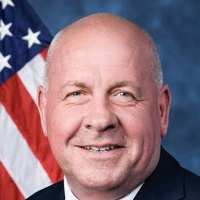
David Taylor
Representative
OH
David Taylor
Representative
OH
The Regulation Decimation Act mandates that federal agencies repeal ten existing regulations for every new rule they issue. For major rules, agencies must also ensure that the cost of the new regulation is offset by the cost savings of the repealed rules. Additionally, the bill requires agencies to conduct comprehensive reviews to identify and eliminate outdated or ineffective regulatory requirements.
The Main Street Tax Certainty Act makes the 20% pass-through business income deduction permanent by removing its scheduled expiration after 2025.
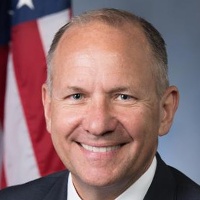
Lloyd Smucker
Representative
PA
Lloyd Smucker
Representative
PA
The Main Street Tax Certainty Act makes the 20% pass-through business income deduction permanent. By removing the current 2025 expiration date, this legislation ensures long-term tax relief for owners of qualified pass-through entities.
The bill condemns a sermon given at the National Prayer Service on January 21, 2025, believing it was political activism.
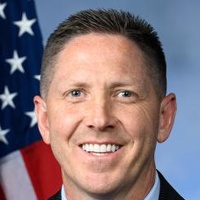
Josh Brecheen
Representative
OK
Josh Brecheen
Representative
OK
This bill expresses the House of Representatives' belief that a sermon given at the National Prayer Service on January 21, 2025, was an act of political activism. The bill condemns the message delivered by the Right Reverend Mariann Edgar Budde during the service.
The National Constitutional Carry Act prohibits state and local governments from restricting the public carry of firearms by individuals who are legally eligible to possess them under federal law.
Thomas Massie
Representative
KY
Thomas Massie
Representative
KY
The National Constitutional Carry Act seeks to protect the Second Amendment right of law-abiding citizens to carry firearms in public for self-defense. The bill prohibits state and local governments from imposing criminal or civil penalties on individuals who are legally eligible to possess firearms. By overriding restrictive local regulations, the legislation aims to ensure a uniform standard for the right to bear arms across the United States.
The Reining In Federal Licensing Enforcement (RIFLE) Act of 2025 reforms federal firearms licensing by establishing graduated penalty structures, enhancing due process protections for dealers, and limiting the Attorney General's authority in enforcement and revocation proceedings.
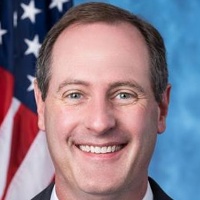
Tracey Mann
Representative
KS
Tracey Mann
Representative
KS
The Reining In Federal Licensing Enforcement (RIFLE) Act of 2025 reforms the federal firearms licensing system by establishing a graduated penalty structure that distinguishes between unintentional and willful violations. The bill mandates increased procedural protections for licensees, including expanded notice requirements, opportunities to cure violations, and the right to formal administrative hearings and judicial review. Additionally, it sets stricter standards for proving "willful" violations, provides a 90-day window for inventory liquidation upon license termination, and requires the Attorney General to establish formal, public standards for inspections and enforcement actions.
This bill proposes a constitutional amendment to permanently set the number of Supreme Court justices at nine, requiring ratification by three-fourths of the states within seven years.
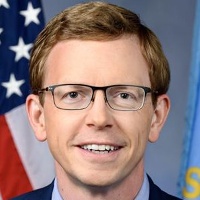
Dusty Johnson
Representative
SD
Dusty Johnson
Representative
SD
This bill proposes a constitutional amendment to fix the number of Supreme Court justices at nine. For this amendment to be valid, three-fourths of the state legislatures must ratify it within seven years of its submission.
The PARTS Act of 2025 amends the definition of "firearm silencer" and "firearm muffler" to include certain parts and devices used to diminish the sound of a firearm.
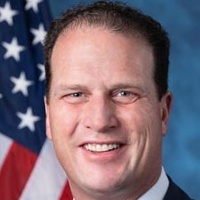
August Pfluger
Representative
TX
August Pfluger
Representative
TX
The "Protecting Americans Right To Silence Act of 2025" or the "PARTS Act of 2025" amends the definition of "firearm silencer" and "firearm muffler" under federal law. The updated definition includes any device designed to silence or muffle a portable firearm, whether attached directly or through other devices. It also includes the primary housing or structure for sound-reduction components of such devices.