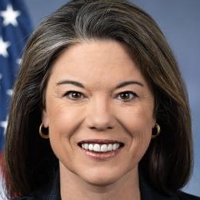
Legislative Activity
Track Angie's sponsored bills, co-sponsored legislation, and voting record
This resolution expresses the House's commitment to defending the Fourteenth Amendment's guarantees of birthright citizenship, due process, and equal protection for all Americans.
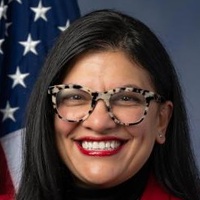
Rashida Tlaib
Representative
MI
Rashida Tlaib
Representative
MI
This resolution expresses the sense of the House that the United States must recommit to defending the rights guaranteed by the Fourteenth Amendment. It affirms the Amendment as the foundation of multiracial democracy, ensuring birthright citizenship, due process, and equal protection under the law. The bill directs Congress to oppose any action that weakens these constitutional guarantees. Ultimately, it calls for upholding the promise of freedom and equality for all Americans.
This bill establishes mandatory minimum humanitarian standards for health screening, water, sanitation, food, and shelter for all individuals in ICE and CBP custody.
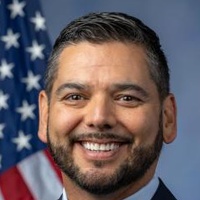
Raul Ruiz
Representative
CA
Raul Ruiz
Representative
CA
The Humanitarian Standards for Individuals in ICE and CBP Custody Act establishes minimum standards for health screening, nutrition, sanitation, and shelter for individuals detained by ICE and CBP. This bill mandates specific protocols for medical care, facility conditions, and personnel training to ensure humane treatment. It also requires regular inspections and public reporting on compliance and sexual abuse complaints.
This Act ensures federal employees and certain contractors are paid during any government shutdown in fiscal year 2026 and prohibits workforce reductions during such funding gaps.
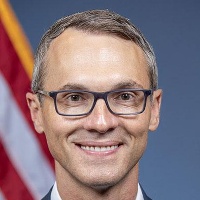
James Walkinshaw
Representative
VA
James Walkinshaw
Representative
VA
The True Shutdown Fairness Act ensures that federal employees and certain contract employees receive their full pay and benefits during any government shutdown in fiscal year 2026. It also mandates retroactive contract price adjustments to compensate contractors for costs incurred during previous shutdowns. Furthermore, the bill prohibits federal agencies from implementing workforce reductions or placing employees on extended administrative leave during funding lapses.
This bill supports designating 2026 as the International Year of the Woman Farmer to recognize the critical role of women in agriculture.

Chellie Pingree
Representative
ME
Chellie Pingree
Representative
ME
This bill officially designates 2026 as the "International Year of the Woman Farmer" to recognize and honor the vital contributions of women in U.S. agriculture. It encourages citizens to celebrate the impact of these women on the food system and empowers women to pursue leadership roles in the field.
This bill seeks to disapprove and nullify the Department of Veterans Affairs' final rule regarding "Reproductive Health Services."
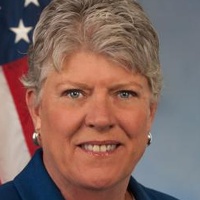
Julia Brownley
Representative
CA
Julia Brownley
Representative
CA
This resolution seeks to disapprove the Department of Veterans Affairs' final rule concerning "Reproductive Health Services" issued in September 2024. If enacted, this disapproval, made under the Congressional Review Act, would prevent the VA rule from taking legal effect.
This bill mandates the removal of U.S. Armed Forces from Venezuela unless explicitly authorized by Congress.
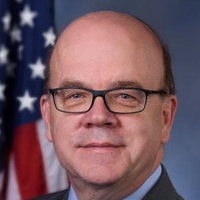
James McGovern
Representative
MA
James McGovern
Representative
MA
This bill mandates the President to withdraw all United States Armed Forces from Venezuela. This action is required unless Congress has formally declared war or passed specific legislation authorizing the use of military force in that country.
This bill supports designating May 2025 as Renewable Fuels Month and establishes a council to develop legislative solutions for the renewable fuels industry, focusing on E15, refinery capacity, and the Renewable Fuel Standard.
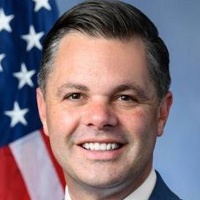
Zachary (Zach) Nunn
Representative
IA
Zachary (Zach) Nunn
Representative
IA
This bill expresses support for designating May 2025 as Renewable Fuels Month to highlight the benefits of renewable fuels, such as reducing carbon emissions and supporting rural economies. It also establishes the E15 Rural Domestic Energy Council to develop legislative solutions addressing challenges in the renewable fuels sector. The Council is tasked with investigating key areas like E15 sales and the Renewable Fuel Standard, with recommendations due to Congress by early 2026.
This bill establishes a statutory definition for "essential health system" based on financial criteria related to serving Medicaid and low-income patients, and requires MACPAC to create an index and report on these hospitals.
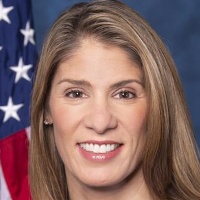
Lori Trahan
Representative
MA
Lori Trahan
Representative
MA
This bill establishes a statutory definition for an "essential health system" based on the volume of care provided to low-income and Medicaid patients. It requires the Secretary of Health and Human Services to designate qualifying hospitals for a five-year period. Furthermore, the bill mandates MACPAC to create an annual index ranking all relevant hospitals based on these financial criteria and to review payment policies supporting these essential systems.
The PATH to Education Act establishes grants to improve public transit access for students attending community colleges, minority-serving institutions, Head Start programs, and other eligible schools.

Maggie Goodlander
Representative
NH
Maggie Goodlander
Representative
NH
The PATH to Education Act establishes a new federal grant program to improve public transit access for students attending community colleges, technical schools, and Head Start programs. These grants will fund projects like adding new routes or increasing service frequency to better connect students with their educational institutions. Priority will be given to partnerships serving institutions with a high percentage of Pell Grant recipients.
This Act prohibits the federal government from taking investigative, regulatory, or enforcement actions against persons or entities if those actions are substantially motivated by the target's constitutionally protected speech or political participation.
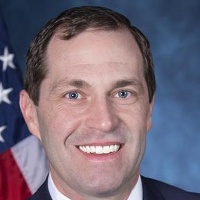
Jason Crow
Representative
CO
Jason Crow
Representative
CO
The No Political Enemies Act prohibits the federal government from initiating investigative, regulatory, or enforcement actions against individuals or entities if those actions are substantially motivated by the person's constitutionally protected speech or political participation. The bill establishes an affirmative defense for defendants facing such politically motivated actions and allows covered persons to sue federal officials for damages or seek injunctions against targeting based on protected speech. Furthermore, it mandates regular reporting from the Department of Justice to Congress regarding sensitive investigations and prosecutions.
This bill mandates the National Science Foundation to develop and implement a plan for ongoing data collection and analysis regarding the skilled technical workforce.
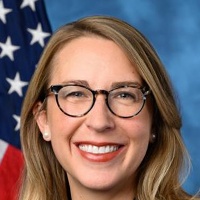
Hillary Scholten
Representative
MI
Hillary Scholten
Representative
MI
This bill amends the Research and Development, Competition, and Innovation Act to mandate the National Science Foundation to develop a plan for ongoing data collection and analysis concerning the skilled technical workforce. The plan, submitted to Congress every two years, will establish the necessary capabilities within the National Center for Science and Engineering Statistics. This action aims to improve understanding and tracking of this critical workforce segment.
This bill impeaches Secretary of Homeland Security Kristi Lynn Arnold Noem for high crimes and misdemeanors, citing willful refusal to comply with oversight law, violating the Impoundment Control Act, directing unlawful ICE misconduct, and misusing federal funds for personal gain.
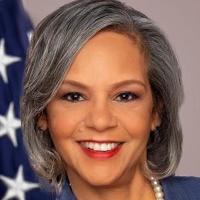
Robin Kelly
Representative
IL
Robin Kelly
Representative
IL
This resolution initiates impeachment proceedings against Secretary of Homeland Security Kristi Lynn Arnold Noem for high crimes and misdemeanors. The articles of impeachment charge her with willfully refusing to comply with Congressional oversight laws and violating the Impoundment Control Act by improperly withholding funds. Further articles allege she directed widespread misconduct by ICE agents that violated federal law and constitutional rights, and misused taxpayer funds for personal gain through improper contracting.
This Act establishes federal minimum salary and wage floors for school paraprofessionals and support staff, providing federal funding to help states meet these new pay standards within four years.
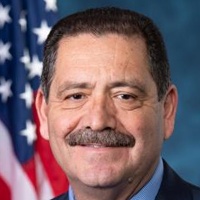
Jesús García
Representative
IL
Jesús García
Representative
IL
The Pay Paraprofessionals and Support Staff Act establishes minimum federal salary and wage floors for school support staff, requiring states to implement higher state-level standards. It authorizes significant federal funding through grants to help states and local districts meet these new pay requirements within four years. States must prioritize funding distribution to districts serving high numbers of low-income students to ensure compliance with the mandated pay increases.
This bill delays the implementation of certain 2026 amendments to the hemp production provisions of the Agricultural Marketing Act of 1946 by extending the current delay period from one year to three years.
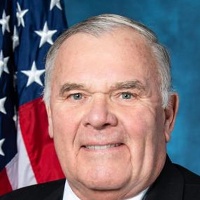
James Baird
Representative
IN
James Baird
Representative
IN
This bill, the Hemp Planting Predictability Act, seeks to amend the Agriculture Appropriations Act of 2026. Specifically, it delays the implementation of recent amendments affecting hemp production under the Agricultural Marketing Act of 1946. The delay for these changes is extended from one year to three years.
This bill modifies deposits into the Crime Victims Fund by excluding certain False Claims Act recoveries and mandates an Inspector General audit of the Fund's sustainability.
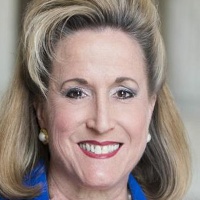
Ann Wagner
Representative
MO
Ann Wagner
Representative
MO
This bill amends the Victims of Crime Act of 1984 to temporarily exclude certain False Claims Act recoveries from being deposited into the Crime Victims Fund through fiscal year 2029. It also mandates a comprehensive audit by the Department of Justice Inspector General on the Fund's sustainability and the impact of recent legislative changes. The resulting report will provide recommendations for improving the Fund's effectiveness and oversight.
This bill delays the implementation of amendments to the hemp production provisions of the Agricultural Marketing Act of 1946 for three years.
James Baird
Representative
IN
James Baird
Representative
IN
This bill proposes to delay the implementation of recent amendments affecting hemp production under the Agricultural Marketing Act of 1946. Specifically, it extends the current delay period for these changes from one year to three years.
This resolution recognizes the 15th anniversary of the 2011 Tucson shooting, honoring the victims, survivors, and the ongoing advocacy of Gabby Giffords.
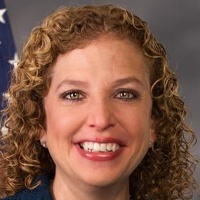
Debbie Wasserman Schultz
Representative
FL
Debbie Wasserman Schultz
Representative
FL
This resolution commemorates the 15th anniversary of the tragic January 8, 2011, Tucson shooting, honoring the six lives lost and the thirteen injured. It specifically commends the courage and ongoing advocacy of gun violence survivor and former Congresswoman Gabby Giffords. The resolution also recognizes the resilience of the community and reaffirms a commitment to ending political violence.
This bill mandates regular federal reporting on the air quality, water usage, and electricity consumption impacts of data centers across the United States.

Robert Menendez
Representative
NJ
Robert Menendez
Representative
NJ
The Data Center Transparency Act establishes new federal reporting requirements to monitor the environmental and energy impacts of data centers across the United States. This legislation mandates regular reports from the EPA detailing data center water consumption, reuse, and pollution discharge, as well as reports from the EIA on total electricity consumption broken down by state. These measures aim to provide transparency regarding how data centers affect local air quality, water resources, and household energy costs.
The American Affordability Act of 2025 is a comprehensive bill designed to lower costs for families through expanded housing assistance, clean energy tax credits, monthly child payments, education relief, and enhanced healthcare subsidies.
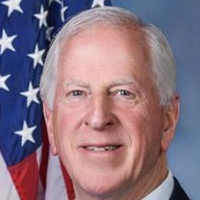
Mike Thompson
Representative
CA
Mike Thompson
Representative
CA
The American Affordability Act of 2025 is a comprehensive bill designed to lower costs across five key areas: housing, energy, family care, education, and healthcare. It achieves this by expanding tax credits for housing construction and homebuyers, extending incentives for clean energy manufacturing and consumer adoption, replacing the Child Tax Credit with larger monthly payments, making higher education expenses more affordable, and permanently expanding subsidies to lower health insurance premiums for millions. Overall, the legislation aims to provide direct financial relief and increase access to essential services for American families and workers.
This bill mandates the U.S. Postal Service to create a public, searchable website detailing temporary post office closures, reasons, and alternative services.
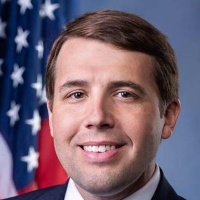
Chris Pappas
Representative
NH
Chris Pappas
Representative
NH
The Postal Suspension Transparency Act requires the U.S. Postal Service to create a public, searchable website detailing temporary post office closures due to emergencies. This site must provide essential information for each affected location, including the reason for closure, alternative services, and the nearest operating facility. The goal is to ensure the public has timely and accessible information when their local post office is temporarily suspended.