Legislative Activity
Track Michael's sponsored bills, co-sponsored legislation, and voting record
The Healthy SNAP Act of 2025 restricts the purchase of non-nutritious items like soft drinks and sweets with SNAP benefits while directing the USDA to prioritize healthier food options through regular scientific review.
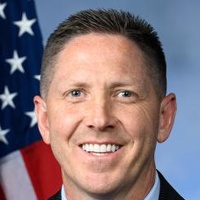
Josh Brecheen
Representative
OK
Josh Brecheen
Representative
OK
The Healthy SNAP Act of 2025 aims to improve the nutritional quality of the Supplemental Nutrition Assistance Program by restricting the purchase of items like soft drinks, candy, and desserts. The bill mandates that the Secretary of Agriculture establish and periodically update a list of eligible foods based on current nutrition science and public health standards. Additionally, it allows for state-led, culturally appropriate food substitutions that meet established nutritional requirements.
The SHOW UP Act of 2025 mandates that executive agencies revert to pre-pandemic telework policies and requires rigorous certification before any future expansion of remote work.

James Comer
Representative
KY
James Comer
Representative
KY
The SHOW UP Act of 2025 requires executive agencies to revert their telework policies to pre-pandemic levels by December 31, 2019. Any future expansion of telework must be supported by a comprehensive impact study and certified by the Office of Personnel Management to ensure it improves mission performance and reduces agency costs.
The No Welfare for the Wealthy Act of 2025 amends the Food and Nutrition Act to strictly enforce income and resource eligibility requirements for food assistance benefits.

Ben Cline
Representative
VA
Ben Cline
Representative
VA
The "No Welfare for the Wealthy Act of 2025" amends the Food and Nutrition Act of 2008 to strictly enforce income and resource eligibility requirements for food assistance benefits. By closing existing loopholes, the bill ensures that program resources are reserved for households that meet established financial criteria. These changes will take effect one year following the date of enactment.
This bill prohibits federal funding for the United Nations’ iVerify platform and any other international initiatives that label or censor speech as misinformation, disinformation, or malinformation.
Ben Cline
Representative
VA
Ben Cline
Representative
VA
The End U.N. Censorship Act prohibits the use of federal funds to support the United Nations' iVerify platform or any other international initiatives that label or monitor speech as misinformation, disinformation, or malinformation. The bill further mandates that any funds withheld under these restrictions be permanently rescinded and returned to the U.S. Treasury.
The Regulation Reduction Act of 2025 mandates that federal agencies repeal at least three existing regulations for every new rule issued, ensuring that the costs of new major rules are fully offset by the elimination of previous ones.
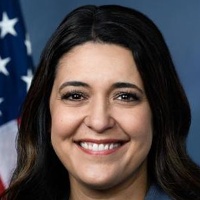
Stephanie Bice
Representative
OK
Stephanie Bice
Representative
OK
The Regulation Reduction Act of 2025 mandates that federal agencies repeal at least three existing regulations before issuing any new rule. For major rules, the legislation further requires that the cost of the new regulation be offset by the cost savings of the repealed rules. Additionally, the bill directs agencies to conduct a comprehensive review to identify and eliminate outdated, duplicative, or ineffective regulatory burdens.
This bill prohibits Title X federal funding for entities that perform abortions, with specific exceptions for cases of rape, incest, or life-endangerment.

Virginia Foxx
Representative
NC
Virginia Foxx
Representative
NC
The Title X Abortion Provider Prohibition Act amends the Public Health Service Act to prohibit Title X federal funding for entities that perform abortions, with specific exceptions for cases of rape, incest, or life-endangerment. The bill also establishes new annual reporting requirements for the Secretary of Health and Human Services regarding the distribution of these grants and the performance of permitted abortions.
The Border Safety and Security Act of 2025 authorizes the Secretary of Homeland Security to suspend the entry of inadmissible aliens at U.S. borders when detention capacity is unavailable or operational control is compromised.

Chip Roy
Representative
TX
Chip Roy
Representative
TX
The Border Safety and Security Act of 2025 authorizes the Secretary of Homeland Security to suspend the entry of inadmissible aliens at U.S. borders to maintain operational control. It mandates a suspension of entry whenever the government lacks the capacity to properly detain or monitor these individuals. Additionally, the bill empowers state attorneys general to sue the federal government to enforce these border security requirements.
This bill designates the United States Postal Service facility located at 107 North Hoyne Avenue in Fritch, Texas, as the "Chief Zeb Smith Post Office."
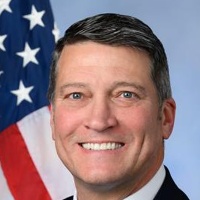
Ronny Jackson
Representative
TX
Ronny Jackson
Representative
TX
This bill designates the United States Postal Service facility located at 107 North Hoyne Avenue in Fritch, Texas, as the "Chief Zeb Smith Post Office." All official references to this facility will henceforth bear this name in honor of Chief Zeb Smith.
This bill officially designates the Department of Veterans Affairs community-based outpatient clinic in Lubbock, Texas, as the "General Bernie Mittemeyer VA Clinic."
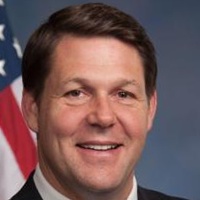
Jodey Arrington
Representative
TX
Jodey Arrington
Representative
TX
This bill officially designates the Department of Veterans Affairs community-based outpatient clinic in Lubbock, Texas, as the "General Bernie Mittemeyer VA Clinic." All future federal references to this facility will reflect this new name.
The Sunset Chevron Act mandates a systematic review and staggered expiration of federal rules previously upheld under the *Chevron* deference doctrine.
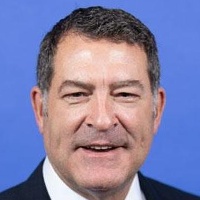
Mark Green
Representative
TN
Mark Green
Representative
TN
The Sunset Chevron Act mandates that the Government Accountability Office identify and catalog federal rules previously upheld under the *Chevron* deference doctrine. The bill establishes a rolling expiration schedule for these rules, effectively sunsetting them over time unless reauthorized. Additionally, it streamlines the Congressional review process, allowing Congress to disapprove these specific rules without being restricted by standard legislative deadlines.
The REMAIN in Mexico Act of 2025 mandates the implementation of the Migrant Protection Protocols, requiring asylum seekers to wait in Mexico while their claims are processed.
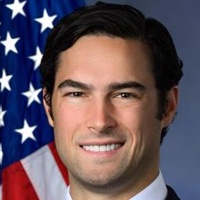
Brandon Gill
Representative
TX
Brandon Gill
Representative
TX
The REMAIN in Mexico Act of 2025 mandates that the Secretary of Homeland Security reinstate the Migrant Protection Protocols (MPP). This legislation requires that asylum seekers be returned to Mexico to await their U.S. immigration proceedings, effectively codifying the 2019 policy guidance into law.
The Legal Workforce Act mandates that all U.S. employers use a phased-in electronic verification system to confirm the employment eligibility of all new and existing employees.
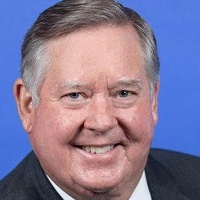
Ken Calvert
Representative
CA
Ken Calvert
Representative
CA
The Legal Workforce Act mandates that all U.S. employers use a new, electronic verification system to confirm the work eligibility of every new hire. This legislation replaces the existing E-Verify program with a phased-in, mandatory process that requires employers to verify both identity and work authorization for all employees. Additionally, the bill increases penalties for hiring unauthorized workers, establishes new fraud prevention measures, and preempts state laws to create a uniform national employment verification policy.
This bill mandates the formal abolishment of the Bureau of Alcohol, Tobacco, Firearms and Explosives (ATF).
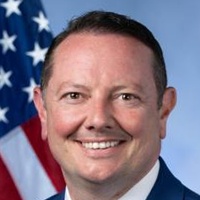
Eric Burlison
Representative
MO
Eric Burlison
Representative
MO
The Abolish the ATF Act is a legislative proposal that mandates the immediate dissolution of the Bureau of Alcohol, Tobacco, Firearms and Explosives. This bill seeks to formally terminate the agency and eliminate its federal oversight functions.
This bill proposes a constitutional amendment to limit members of the House of Representatives to three terms and Senators to two terms, with specific provisions for partial terms. Terms served before the amendment's ratification would not be counted towards these limits, and the amendment must be ratified within seven years to be valid.
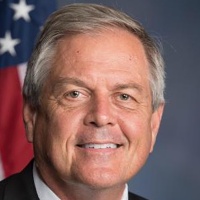
Ralph Norman
Representative
SC
Ralph Norman
Representative
SC
This bill proposes a constitutional amendment to limit the number of terms a member of Congress can serve. Representatives would be limited to 3 terms and Senators to 2 terms, with specific rules for partial terms. Terms served before the amendment's ratification would not be counted. The amendment must be ratified by three-fourths of the states within seven years to be valid.
The Federal Reserve Transparency Act of 2025 mandates a comprehensive audit of the Federal Reserve System by the Comptroller General, ensuring greater transparency and accountability. This act requires a detailed report to Congress with findings and recommendations, while also repealing audit limitations.
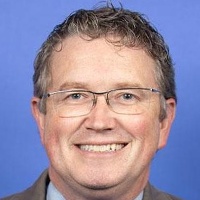
Thomas Massie
Representative
KY
Thomas Massie
Representative
KY
The Federal Reserve Transparency Act of 2025 mandates a comprehensive audit of the Federal Reserve System by the Comptroller General within one year. Following the audit, a detailed report must be submitted to Congress, including findings and recommendations. This act aims to increase transparency and accountability within the Federal Reserve System by repealing audit limitations.
The Regulations from the Executive in Need of Scrutiny (REINS) Act of 2025 increases congressional accountability by requiring federal agencies to obtain legislative approval for all "major" rules before they can take effect.
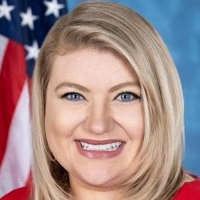
Katherine Cammack
Representative
FL
Katherine Cammack
Representative
FL
The Regulations from the Executive in Need of Scrutiny (REINS) Act of 2025 aims to increase federal regulatory accountability by requiring Congress to approve any "major" rule before it can take effect. Under this legislation, rules with a significant economic impact require a joint resolution of approval from both chambers of Congress to become law. By shifting this authority back to the legislative branch, the Act seeks to ensure greater transparency and oversight of the federal rulemaking process.
The First Amendment Accountability Act allows individuals to sue federal executive branch employees for civil damages when their First Amendment rights are violated under color of federal authority.
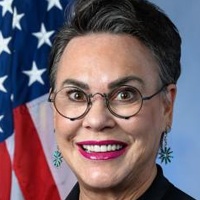
Harriet Hageman
Representative
WY
Harriet Hageman
Representative
WY
The First Amendment Accountability Act empowers individuals to sue federal executive branch employees for violating their First Amendment rights while acting under federal authority. This legislation allows victims to seek monetary damages and legal remedies, while explicitly excluding internal federal employment disputes from its scope. Additionally, it provides for the recovery of attorney’s fees for successful plaintiffs to ensure greater accountability for government actions.
The Stopping Border Surges Act implements stricter asylum eligibility requirements, accelerates deportation timelines for unaccompanied minors, and mandates family detention to deter unauthorized border crossings.

Andy Biggs
Representative
AZ
Andy Biggs
Representative
AZ
The Stopping Border Surges Act proposes comprehensive reforms to U.S. immigration policy by tightening asylum eligibility and accelerating the processing of unaccompanied minors. The bill mandates stricter screening standards, expands detention authority for families, and limits legal protections for those seeking asylum. Ultimately, the legislation aims to deter fraudulent claims and expedite removals through more restrictive border and interior enforcement measures.
The FIND Act prohibits federal agencies from contracting with entities that discriminate against the firearm and ammunition industry, ensuring fair access to government contracts for these businesses. Contractors must certify they do not discriminate against firearm entities, with violations leading to contract termination.
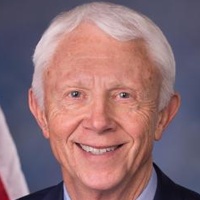
Jack Bergman
Representative
MI
Jack Bergman
Representative
MI
The FIND Act prohibits federal agencies from contracting with entities that discriminate against the firearm and ammunition industry. It requires federal contractors to certify they do not discriminate against firearm entities and prohibits them from awarding subcontracts to entities that do not provide a similar certification. Violations of these clauses will result in contract termination. The act defines "discriminate" as making judgments or refusing/limiting services based on biased criteria, rather than case-by-case evaluations, empirical data, financial risk, or legal non-compliance.
This bill proposes a constitutional amendment to mandate a balanced federal budget, requiring spending justification from each government agency, and setting limits on total outlays with exceptions only during times of war or other national emergencies.
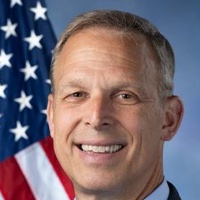
Scott Perry
Representative
PA
Scott Perry
Representative
PA
This bill proposes a constitutional amendment to mandate a balanced federal budget, limiting total government spending and requiring justification for each agency's funding requests. It sets spending caps tied to the GDP, necessitates supermajority votes to raise the debt limit or increase revenue, and empowers Congress to enforce these rules. Exceptions are allowed during declared wars or other national emergencies with congressional approval. The amendment would take effect once the budget is balanced or ten years after ratification.