Legislative Activity
Track Judy's sponsored bills, co-sponsored legislation, and voting record
The Child Care for Every Community Act establishes a national framework to guarantee universal access to high-quality, regulated early learning programs with mandated national standards and comparable pay for staff.
Mikie Sherrill
Representative
NJ
Mikie Sherrill
Representative
NJ
The Child Care for Every Community Act establishes a national framework to guarantee universal access to high-quality, regulated child care and early learning programs for every young child. It mandates federal standards for quality, ensures child care staff receive pay comparable to K-12 employees, and requires local coordination with school systems. Furthermore, the bill protects existing state funding levels and caps family fees based on income.
This Act provides appropriations and mandates contract price adjustments to compensate federal contractor employees for losses incurred due to funding lapses or government shutdowns.
Ayanna Pressley
Representative
MA
Ayanna Pressley
Representative
MA
The Fair Pay for Federal Contractors Act of 2025 ensures that employees of federal contractors are compensated for losses incurred due to government funding lapses or shutdowns. It requires federal agencies to adjust existing contracts to cover reasonable costs associated with furloughs, pay cuts, or mandatory leave taken by contractor employees. The bill appropriates necessary funds to cover these contract price adjustments and mandates public reporting on the compensation provided.
This Act prohibits the Department of Veterans Affairs from discriminating against veterans based on gender identity in healthcare, ensuring access to medically necessary treatments like those for gender dysphoria.
Timothy Kennedy
Representative
NY
Timothy Kennedy
Representative
NY
The Veterans Healthcare Equality Act of 2025 explicitly prohibits the Department of Veterans Affairs (VA) from discriminating against veterans based on gender identity when providing healthcare services. This law mandates that the VA must furnish medically necessary treatments, including those for gender dysphoria, prescribed by a healthcare provider. Furthermore, the VA Secretary is required to provide regular updates to Congress regarding the implementation of these non-discrimination protections.
This resolution expresses the House's support for World Contraception Day and outlines the importance of ensuring equitable, comprehensive, and affordable access to contraception both domestically and globally.
Nydia Velázquez
Representative
NY
Nydia Velázquez
Representative
NY
This resolution expresses the House of Representatives' strong support for recognizing "World Contraception Day" and emphasizes the critical importance of accessible and affordable contraception for public health, economic stability, and individual autonomy. It highlights existing disparities in access, particularly for marginalized communities, and calls for policy actions to ensure universal access to the full range of FDA-approved contraceptive methods. The bill ultimately advocates for strengthening federal programs that support family planning both domestically and globally.
This resolution expresses support for National Public Lands Day, encouraging Americans to visit public lands on the fee-free day to recognize their cultural and economic value.
Dina Titus
Representative
NV
Dina Titus
Representative
NV
This resolution officially expresses support for National Public Lands Day, recognizing the vast spiritual, cultural, and economic value of America's public lands. It encourages all citizens to visit these lands on the designated fee-free day. The measure highlights the significant acreage managed by various federal agencies that support recreation and the national economy.
This bill ensures that essential, furloughed federal employees receive unemployment compensation during government shutdowns in fiscal years 2026 or 2027, with the federal government reimbursing states for all paid benefits and administrative costs.
Sarah Elfreth
Representative
MD
Sarah Elfreth
Representative
MD
The Help Federal Employees During Shutdowns Act (Help FEDS Act) ensures that essential, non-paid federal employees working during a government shutdown can receive state unemployment compensation for the weeks they are actively working. This legislation mandates that the federal government fully reimburse states for all benefits paid out, plus administrative costs, directly from the Unemployment Trust Fund. Any employee who receives retroactive pay for a period they were also paid unemployment must repay those benefits to the state.
This bill prohibits the removal of Federal employees during a lapse in discretionary appropriations, ensuring job security for civil servants during government shutdowns.
Johnny Olszewski
Representative
MD
Johnny Olszewski
Representative
MD
This bill prohibits federal agencies from removing civil service employees during any lapse in discretionary appropriations, commonly known as a government shutdown. If an employee is terminated in violation of this rule during a shutdown, they will have the option to be reinstated with full back pay once funding resumes. This measure aims to protect federal workers from job loss caused by budget impasses.
This bill provides emergency funding to ensure the continuation of key Small Business Administration loan programs for 30 days during a government shutdown in fiscal year 2026.
Herbert Conaway
Representative
NJ
Herbert Conaway
Representative
NJ
The Funding Small Businesses During Shutdown Act ensures that critical Small Business Administration (SBA) loan servicing programs can continue operating for 30 days during a government shutdown in fiscal year 2026. This legislation allocates specific funds to cover the salaries and operating costs necessary to maintain key SBA loan functions. The goal is to prevent disruptions to small business lending support during a lapse in appropriations.
This resolution supports designating a week in September 2025 as National Hazing Awareness Week to promote comprehensive prevention efforts against hazing on college campuses.
Lucy McBath
Representative
GA
Lucy McBath
Representative
GA
This resolution supports the designation of a National Hazing Awareness Week to highlight the serious and often tragic issue of hazing on college campuses. It builds upon existing federal law by emphasizing the need for comprehensive, ongoing prevention education for students, staff, and faculty. Ultimately, the bill encourages nationwide action to promote awareness and prevent hazing incidents.
This Act establishes federal grants to fund comprehensive, trauma-informed mental health services and support programs in schools for students facing significant challenges.
Andrea Salinas
Representative
OR
Andrea Salinas
Representative
OR
The Mental Health Services for Students Act of 2025 establishes a new federal program to provide comprehensive, trauma-informed mental health services and supports in schools through grants and contracts. These funds will support partnerships to implement awareness campaigns, staff training on trauma and suicide risk, and direct student and family treatment. The Secretary must ensure equitable distribution of funding, which is capped at \$2 million per award, with Congress authorized to appropriate \$300 million annually for the initial years.
**Katie Meyer's Law mandates that colleges receiving federal funding must offer students accused of misconduct the option of having a trained adviser present during disciplinary proceedings.**
Julia Brownley
Representative
CA
Julia Brownley
Representative
CA
Katie Meyer's Law mandates that colleges and universities receiving federal funding must provide students accused of code of conduct violations the option to have a trained adviser assist them through the disciplinary process. Students can choose their own adviser or request an independent one provided by the institution. Additionally, the bill updates campus security reporting requirements to include incidents of suicide.
This resolution condemns using federal regulatory power or litigation to suppress lawful political speech critical of a party or the President, warning against authoritarianism.
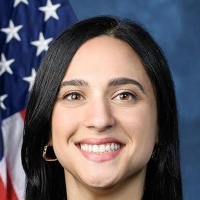
Yassamin Ansari
Representative
AZ
Yassamin Ansari
Representative
AZ
This resolution strongly condemns attempts to use federal regulatory power or litigation to suppress lawful speech critical of a political party or the President. It reaffirms the fundamental importance of the First Amendment and warns that such actions resemble tactics used by authoritarian regimes. The bill urges government agencies to protect free expression and ensure accountability, not political censorship.
This resolution formally recognizes the historical significance of the Vietnamese Heritage Flag as a symbol of freedom and democracy for the Vietnamese-American community.
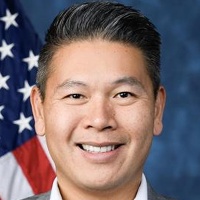
Derek Tran
Representative
CA
Derek Tran
Representative
CA
This resolution formally recognizes the historical significance of the yellow flag with three red stripes as the former flag of the Republic of Vietnam. Congress acknowledges this flag as a powerful symbol of freedom and democracy for the Vietnamese-American community. The bill affirms the flag's importance to those who fled communism and their enduring commitment to democratic values.
This joint resolution directs the President to remove U.S. Armed Forces from hostilities against certain designated groups and states unless Congress authorizes the use of force, while preserving the right to self-defense.
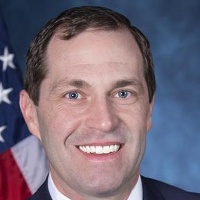
Jason Crow
Representative
CO
Jason Crow
Representative
CO
This joint resolution directs the President to remove U.S. Armed Forces from hostilities initiated after February 20, 2025, against designated terrorist groups or drug trafficking organizations without prior Congressional authorization. It asserts Congress's constitutional power to declare war and finds recent military strikes against vessels lacked proper justification. The bill allows for continued use of forces for self-defense or authorized counternarcotics support, but explicitly states drug trafficking alone does not constitute an armed attack.
This bill mandates that federally funded higher education institutions update their harassment policies to explicitly cover technology-facilitated harassment and establishes a competitive grant program to fund anti-harassment initiatives.
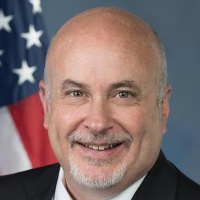
Mark Pocan
Representative
WI
Mark Pocan
Representative
WI
The Tyler Clementi Higher Education Anti-Harassment Act of 2025 mandates that colleges receiving federal funds update their policies to explicitly prohibit and detail procedures for addressing harassment based on protected characteristics, including technology-facilitated abuse. The bill also establishes a competitive grant program, funded up to $50 million annually, to support campus efforts in harassment prevention, training, and support services. This legislation adds new requirements without superseding existing civil rights protections.
The Redistricting Reform Act of 2025 mandates the use of independent, nonpartisan commissions to draw fair congressional maps based on strict criteria, while establishing federal court oversight and administrative procedures to ensure compliance.
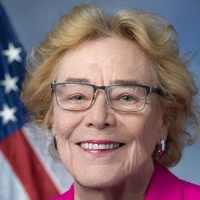
Zoe Lofgren
Representative
CA
Zoe Lofgren
Representative
CA
The Redistricting Reform Act of 2025 fundamentally overhauls congressional map-drawing by mandating the use of independent, non-partisan commissions in every state. This legislation establishes strict, prioritized criteria for map creation, explicitly banning partisan manipulation and requiring maps to prioritize community representation over political advantage. Furthermore, it sets firm deadlines for map enactment and establishes clear federal court procedures to intervene if states fail to adopt a lawful plan. Overall, the bill aims to ensure fairer congressional representation by removing map-drawing authority from state legislatures.
The Preparing And Retaining All (PARA) Educators Act establishes a federal grant program to help states fund local efforts aimed at recruiting, retaining, and credentialing school paraprofessionals, prioritizing high-need and low-income districts.
Lucy McBath
Representative
GA
Lucy McBath
Representative
GA
The Preparing And Retaining All (PARA) Educators Act establishes a new federal grant program to help states recruit and retain school paraprofessionals. Funds will be distributed to states based on their existing Title I allocations to support local districts. States must use these competitive subgrants to improve paraprofessional wages, offer professional development, and support credentialing, prioritizing high-need and rural schools. The law requires annual reporting on compensation improvements and retention efforts.
This Act conditions eligibility for Edward Byrne Memorial Justice Assistance Grants on prohibiting firearm transfers with licensed dealers identified by the ATF as frequently selling guns used quickly in crimes.
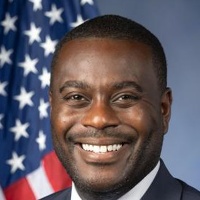
Gabe Amo
Representative
RI
Gabe Amo
Representative
RI
The Responsible Retirement of Law Enforcement Firearms Act of 2025 (RRLEF Act) amends the Edward Byrne Memorial Justice Assistance Grant Program to require state and local agencies to cease firearm transfers with licensed dealers flagged by the ATF. Dealers are placed on a restricted list if a significant number of their traced firearms show a "short time-to-crime." Furthermore, the Act mandates increased public disclosure of firearm tracing data by the ATF, removing previous statutory restrictions on making this information public.
The Michelle Alyssa Go Act revises the Medicaid definition of an "institution for mental diseases" to allow federal funding for smaller mental health facilities (36 beds or less) that meet specific federal quality standards.

Dan Goldman
Representative
NY
Dan Goldman
Representative
NY
The Michelle Alyssa Go Act revises the definition of an "institution for mental diseases" under Medicaid to allow federal funding for smaller facilities. Specifically, it excludes mental health facilities with 36 beds or fewer from the IMD exclusion if they meet specific, evidence-based quality standards set by the Secretary of Health and Human Services. This change aims to increase access to care by making smaller, qualified treatment centers eligible for Medicaid reimbursement.
The PAAF Act grants automatic U.S. citizenship to certain internationally adopted individuals who meet specific residency and age requirements, clarifying and expanding existing pathways to citizenship.
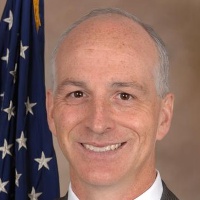
Adam Smith
Representative
WA
Adam Smith
Representative
WA
The Protect Adoptees and American Families Act (PAAF Act) aims to ensure that certain internationally adopted individuals automatically become U.S. citizens. This bill clarifies the requirements for automatic citizenship, particularly for adoptees who were physically present in the U.S. before turning 18. It also provides a pathway to citizenship for eligible adoptees residing abroad upon their legal entry into the United States.