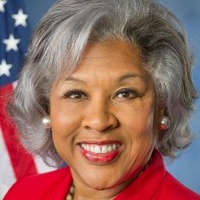
Legislative Activity
Track Joyce's sponsored bills, co-sponsored legislation, and voting record
This constitutional amendment grants Congress and the states the authority to regulate campaign contributions and expenditures, and to establish public financing systems for political campaigns.
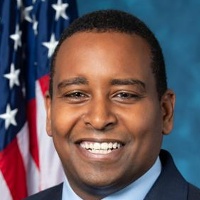
Joe Neguse
Representative
CO
Joe Neguse
Representative
CO
This constitutional amendment seeks to grant Congress and the states the authority to regulate contributions and expenditures in political campaigns. It specifically allows for the establishment of public financing systems to offset the influence of private money in elections. The amendment ensures that any regulations enacted must not infringe upon the freedom of the press.
The FAMILY Act establishes a national paid family and medical leave insurance program administered by the Social Security Administration, providing benefits for caregiving related to serious health conditions or victims of violence.

Rosa DeLauro
Representative
CT
Rosa DeLauro
Representative
CT
The FAMILY Act establishes a national Paid Family and Medical Leave Insurance program administered by a new office within the Social Security Administration. This program provides monthly benefits to eligible individuals who take time off for qualified caregiving reasons, including serious health conditions or victims of violence. The Act also sets forth detailed eligibility requirements, benefit calculation formulas, and job protection guarantees for employees utilizing the leave. Finally, it creates a funding mechanism to support existing state-level paid leave programs that meet federal standards.
This resolution recognizes the vital contributions of medical research, particularly NIH-funded work, to public health and the economy, while designating September 15-19, 2025, as "Medical Research Week."
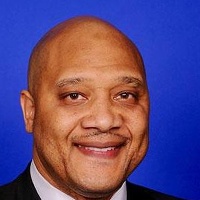
André Carson
Representative
IN
André Carson
Representative
IN
This resolution officially recognizes the vital contributions of medical research to public health and economic growth across the nation. It specifically designates September 15 through September 19, 2025, as "Medical Research Week." The bill emphasizes the critical role of sustained federal funding, particularly for the National Institutes of Health (NIH), in driving life-saving discoveries and ensuring national health security. It encourages public appreciation for the scientists and institutions conducting this essential work.
This Act mandates the President to review specific Azerbaijani officials for potential U.S. sanctions based on findings of human rights abuses, forced displacement, and mistreatment of detainees.
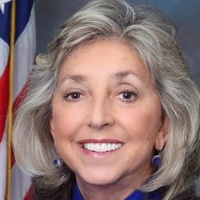
Dina Titus
Representative
NV
Dina Titus
Representative
NV
The Azerbaijan Sanctions Review Act of 2025 mandates the President to review specific Azerbaijani government and military officials for potential U.S. sanctions. This review is prompted by Congressional findings detailing severe human rights abuses, including the forced displacement from Nagorno-Karabakh and the alleged war crimes committed by Azerbaijani forces. The President must report to Congress within 180 days on whether these individuals meet the criteria for sanctions under existing human rights and anti-corruption laws. This action aims to address ongoing abuses and the detention of political figures and prisoners of war.
The George Floyd Justice in Policing Act of 2025 comprehensively reforms policing by increasing accountability, mandating transparency through data collection, restricting dangerous tactics, and prohibiting sexual misconduct by officials acting under color of law.
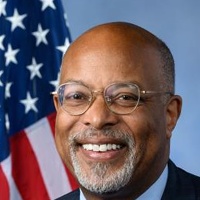
Glenn Ivey
Representative
MD
Glenn Ivey
Representative
MD
The George Floyd Justice in Policing Act of 2025 is a comprehensive bill designed to increase police accountability and transparency nationwide through federal mandates and funding incentives. It reforms standards for prosecuting civil rights violations, eliminates qualified immunity, and establishes national registries for police misconduct and use-of-force data. Furthermore, the Act bans specific dangerous police tactics like chokeholds and restricts the transfer of military equipment to local departments.
This bill posthumously awards a Congressional Gold Medal to honor the groundbreaking civil rights achievements of Constance Baker Motley and authorizes the production and sale of bronze duplicates.
Rosa DeLauro
Representative
CT
Rosa DeLauro
Representative
CT
This bill, the Congressional Tribute to Constance Baker Motley Act of 2025, posthumously awards the Congressional Gold Medal to the pioneering civil rights attorney and federal judge, Constance Baker Motley. The legislation recognizes her historic achievements, including her role in *Brown v. Board of Education* and her service as the first African-American woman appointed as a federal judge. The Secretary of the Treasury is authorized to strike the medal, and provisions are made for selling bronze duplicates to cover production costs.
The RESULTS Act reforms how Medicare determines payment rates for clinical diagnostic laboratory tests by mandating the use of comprehensive, real-world private payor claims data collected from an independent entity.
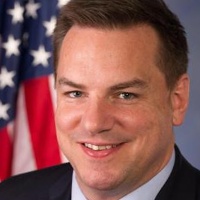
Richard Hudson
Representative
NC
Richard Hudson
Representative
NC
The Reforming and Enhancing Sustainable Updates to Laboratory Testing Services Act of 2025 (RESULTS Act) aims to improve Medicare payment rates for clinical lab tests by mandating the collection of more accurate, real-world payment data directly from large, independent private insurance claims databases. This legislation updates definitions, collection timelines, and calculation methods to ensure Medicare payments for widely available tests reflect current market rates. It also establishes default payment rules if sufficient private payor data cannot be secured.
This Act limits the sharing of consumer reports requested in connection with a residential mortgage loan to prevent unauthorized access to homebuyers' sensitive financial information.
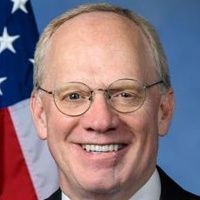
John Rose
Representative
TN
John Rose
Representative
TN
The Homebuyers Privacy Protection Act limits how consumer reporting agencies can share a consumer's report when it is requested in connection with a residential mortgage loan. Reports can only be shared with entities directly involved in the consumer's current mortgage or those providing a firm offer of credit or insurance. The Act also mandates a study by the GAO regarding the use and impact of "trigger leads" derived from credit checks.
This Act allocates \$2.165 billion in dedicated funding for the CDC's National Center for HIV, Viral Hepatitis, STD, and Tuberculosis Prevention for the 2026 fiscal year.

Maxine Waters
Representative
CA
Maxine Waters
Representative
CA
The HIV Prevention Now Act secures **\$2.165 billion** in dedicated funding for the CDC's National Center for HIV, Viral Hepatitis, STD, and Tuberculosis Prevention for Fiscal Year 2026. This appropriation is specifically earmarked to support the center's prevention programs and activities. This funding is supplemental to, and cannot be transferred from, other existing appropriations.
The PrEP and PEP are Prevention Act mandates no-cost coverage for HIV prevention services, including FDA-approved drugs, testing, and counseling, across private insurance, Medicare, Medicaid, CHIP, and the Federal Employees Health Benefits Program.
Maxine Waters
Representative
CA
Maxine Waters
Representative
CA
The PrEP and PEP are Prevention Act mandates that essential HIV prevention services, including FDA-approved medications like PrEP and PEP, must be covered at no cost to the patient across private insurance, Medicare, Medicaid, CHIP, and the Federal Employees Health Benefits program. This law eliminates financial barriers such as deductibles, copays, and prior authorization requirements for these preventive treatments and necessary related care. The goal is to ensure universal, barrier-free access to critical HIV prevention tools.
This bill invalidates predispute arbitration agreements for age discrimination disputes, allowing older Americans to choose litigation over mandatory arbitration.
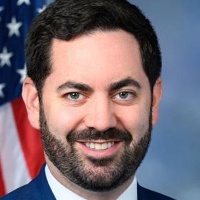
Michael Lawler
Representative
NY
Michael Lawler
Representative
NY
The Protecting Older Americans Act of 2025 amends federal law to address arbitration agreements concerning age discrimination disputes involving individuals aged 40 and older. This bill invalidates predispute arbitration agreements and joint-action waivers if the older individual chooses to pursue litigation under existing federal, tribal, or state law. Furthermore, courts, not arbitrators, are designated to decide the applicability, validity, and enforceability of these arbitration agreements for age discrimination claims.
This Act expands funding, streamlines requirements, and establishes new grant programs to increase the availability and training of service coordinators across various federally assisted housing programs and makes service coordinator employment eligible for Public Service Loan Forgiveness.
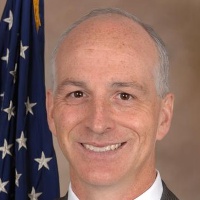
Adam Smith
Representative
WA
Adam Smith
Representative
WA
The Expanding Service Coordinators Act of 2025 aims to bolster support for residents in federally assisted housing by expanding and funding service coordinator programs across various housing types. It establishes new competitive grant programs through HUD and HRSA, mandates training requirements for existing coordinators, and ensures funding authorization through 2030. Furthermore, the bill expands eligibility for Public Service Loan Forgiveness to include service coordinator roles.
This resolution officially establishes August 20th as Original Slavery Remembrance Day to recognize the history of slavery, honor those who fought against it, and acknowledge its lasting effects.
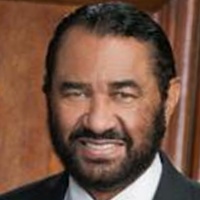
Al Green
Representative
TX
Al Green
Representative
TX
This resolution officially establishes August 20th as **Original Slavery Remembrance Day** to formally recognize and condemn the history of slavery in the U.S. and globally. It commemorates the lives of enslaved people, honors historical figures who fought for freedom, and acknowledges the lasting effects of slavery on contemporary society. The resolution requests the President to issue a proclamation calling for appropriate national observance of this day.
This resolution expresses support for designating August 17, 2025, as "Marcus Garvey Recognition Day" to honor his significant contributions to Black history and economic self-reliance.
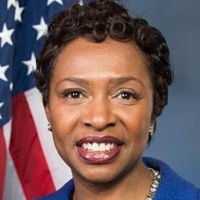
Yvette Clarke
Representative
NY
Yvette Clarke
Representative
NY
This resolution expresses strong support for the President to officially designate August 17, 2025, as "Marcus Garvey Recognition Day." It highlights Marcus Garvey's historical significance as the leader of the largest African-American movement and his dedication to Black economic self-reliance. The designation seeks to formally honor his enduring legacy following his posthumous pardon.
This resolution terminates the President's declared crime emergency in the District of Columbia, asserting that the emergency is unwarranted and the legal basis for federal MPD control is flawed.
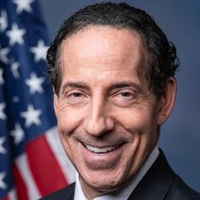
Jamie Raskin
Representative
MD
Jamie Raskin
Representative
MD
This resolution terminates the President's August 11, 2025, declaration of a crime emergency in the District of Columbia. Congress asserts that the President lacks the legal authority under the D.C. Home Rule Act to take operational control of the Metropolitan Police Department. Furthermore, the bill notes that local violent crime rates have been declining significantly.
This resolution formally states Congress's commitment to upholding the current retirement ages for Social Security and Medicare, affirming the President's promise not to raise them.

Marcy Kaptur
Representative
OH
Marcy Kaptur
Representative
OH
This resolution formally affirms Congress's commitment to maintaining the current retirement ages for Social Security and Medicare benefits. It declares that raising the eligibility age would constitute an unfair cut to the earned benefits of current and future retirees. The measure highlights the reliance of millions on these programs and rejects any proposals to push back access to earned retirement security and healthcare.
The Keep Seniors Fed Act amends the Food and Nutrition Act of 2008 to include Title II Social Security payments when calculating eligibility for food assistance benefits.
Jill Tokuda
Representative
HI
Jill Tokuda
Representative
HI
The Keep Seniors Fed Act makes technical amendments to the Food and Nutrition Act of 2008 regarding how income is calculated for food assistance eligibility. Specifically, it mandates that income received under Title II of the Social Security Act must now be counted when determining eligibility for benefits. These changes will take effect 90 days after the bill is signed into law.
This Act establishes a multi-sector Task Force, led by the Treasury Secretary, to study, recommend strategies for, and report on preventing evolving electronic payment scams.
Zachary (Zach) Nunn
Representative
IA
Zachary (Zach) Nunn
Representative
IA
The Taskforce for Recognizing and Averting Payment Scams Act (TRAPS Act) establishes a new Task Force led by the Secretary of the Treasury. This diverse group, including federal agencies, industry experts, and consumer advocates, will study evolving payment scams. The Task Force is charged with developing cross-sector prevention strategies and submitting comprehensive recommendations for new laws and improved coordination to combat these fraudulent activities.
The Ending Homelessness Act of 2025 expands housing vouchers into an entitlement program, prohibits source-of-income discrimination, and provides dedicated funding streams to address unmet needs and align health and housing services.
Maxine Waters
Representative
CA
Maxine Waters
Representative
CA
The Ending Homelessness Act of 2025 aims to significantly reduce homelessness by making housing choice vouchers an entitlement program starting in 2029 and immediately expanding the voucher supply for extremely low-income families. The bill also prohibits housing discrimination based on source of income and establishes new, dedicated funding streams for emergency relief and supportive services under the McKinney-Vento Act. Finally, it repeals certain ineligibility criteria for housing assistance and sets priorities for funding based on local policies that encourage affordable housing and decriminalize homelessness.
This bill authorizes the creation and awarding of a Congressional Gold Medal to collectively honor Africans and their descendants enslaved in the United States from 1619 to 1865 for their immense economic contributions.
Al Green
Representative
TX
Al Green
Representative
TX
This bill authorizes Congress to award a collective Congressional Gold Medal to Africans and their descendants enslaved in the United States from 1619 to 1865, recognizing their immense, unpaid contributions to the nation's economy. The medal will be designed by the Secretary of the Treasury and permanently housed at the Smithsonian's National Museum of African-American History and Culture. The legislation also permits the sale of bronze duplicate medals to cover production costs.