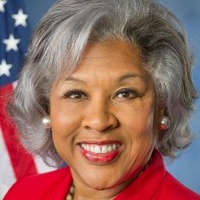
Legislative Activity
Track Joyce's sponsored bills, co-sponsored legislation, and voting record
This Act eliminates the legal doctrine of qualified immunity, making it easier to sue government officials for violating constitutional rights.
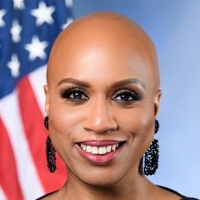
Ayanna Pressley
Representative
MA
Ayanna Pressley
Representative
MA
The Ending Qualified Immunity Act aims to restore accountability for government officials who violate constitutional rights. This bill eliminates the legal doctrine of qualified immunity, which currently shields officials from liability unless their actions violated a "clearly established" right. By removing this defense, the Act makes it easier for individuals to sue state and local officials for misconduct.
The Strength in Diversity Act of 2025 authorizes competitive grants to states and districts to develop and implement plans that reduce racial and economic isolation in public schools.
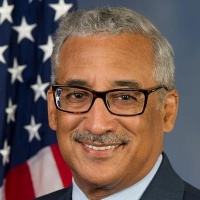
Robert Scott
Representative
VA
Robert Scott
Representative
VA
The Strength in Diversity Act of 2025 establishes a competitive grant program to help states and districts address racial isolation and concentrated poverty in public schools. Funds will support the creation and implementation of plans designed to increase racial and economic diversity within covered schools. The law emphasizes performance measurement focused on both student outcomes and diversity metrics, while explicitly prohibiting federal control over local educational decisions.
The Fit to Serve Act prohibits discrimination against service members and recruits in the Armed Forces based on their gender identity.
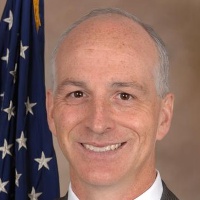
Adam Smith
Representative
WA
Adam Smith
Representative
WA
The Fit to Serve Act prohibits the U.S. Armed Forces from discriminating against service members based on their gender identity. This means military branches cannot set different standards, involuntarily discharge personnel, or deny medically necessary healthcare due to a service member's gender identity. The bill ensures equal opportunity for joining, serving, and receiving care regardless of one's internal sense of self.
This bill prohibits high-ranking government officials and their families from trading, profiting from, or controlling digital assets while in office to prevent conflicts of interest.

Maxine Waters
Representative
CA
Maxine Waters
Representative
CA
The Stop TRUMP in Crypto Act of 2025 prohibits covered government officials and their immediate families from trading, owning, or profiting from digital assets while in office. This legislation specifically bans insider trading of crypto and prevents officials from using intermediaries or complex ownership structures to bypass these restrictions. The Act aims to eliminate conflicts of interest by ensuring high-ranking officials cannot benefit financially from involvement with cryptocurrencies.
The Real Education and Access for Healthy Youth Act of 2025 establishes federal grant programs to fund comprehensive, evidence-informed, and culturally responsive sex education and youth-friendly sexual health services, prioritizing underserved communities.
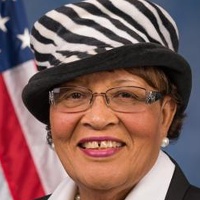
Alma Adams
Representative
NC
Alma Adams
Representative
NC
The Real Education and Access for Healthy Youth Act of 2025 aims to establish comprehensive, evidence-based, and culturally responsive sex education and health services for young people aged 10 to 29. The bill creates competitive grant programs to fund sex education in K-12 schools and higher education, support educator training, and improve access to youth-friendly sexual health services, especially for underserved communities. It explicitly mandates that all funded programs must be medically accurate, inclusive of all identities, and centered on principles of consent and reproductive justice. The Act authorizes $100 million annually and repeals prior funding streams dedicated to abstinence-only education.
This Act establishes mandatory ethics codes, recusal standards, and enhanced financial disclosure requirements for Supreme Court Justices and federal judges.

Henry Johnson
Representative
GA
Henry Johnson
Representative
GA
The Supreme Court Ethics, Recusal, and Transparency Act of 2025 establishes a mandatory, public code of conduct and a formal complaint process for Supreme Court Justices, modeled after procedures for lower federal judges. The bill also institutes stricter disclosure requirements for gifts and financial ties, and mandates judicial disqualification in cases involving recent lobbying contact or significant financial relationships with involved parties. Furthermore, it creates new review panels for disqualification motions and requires parties and *amici* to disclose financial supporters connected to the case.
This bill posthumously awards a Congressional Gold Medal to Henrietta Lacks to recognize the monumental contributions of her immortal HeLa cells to science and medicine.
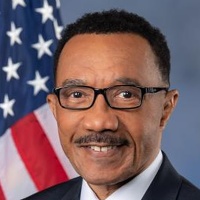
Kweisi Mfume
Representative
MD
Kweisi Mfume
Representative
MD
This bill, the Henrietta Lacks Congressional Gold Medal Act, posthumously awards a Congressional Gold Medal to Henrietta Lacks to recognize her foundational contributions to science and medicine through her immortal HeLa cells. The legislation directs the Secretary of the Treasury to strike the medal, which will ultimately be housed at the Smithsonian Institution. Furthermore, the Act authorizes the creation and sale of bronze duplicates to cover production costs.
This Act establishes a new federal grant program to provide operating support for high-quality public transit that prioritizes service improvements in underserved communities, while also increasing the federal share for rural transit operating costs.
Henry Johnson
Representative
GA
Henry Johnson
Representative
GA
The Stronger Communities through Better Transit Act establishes a new federal grant program to provide operating support for high-quality public transit services. This funding is specifically targeted to improve mobility and environmental outcomes, with a requirement that the majority of funds benefit underserved communities or areas of persistent poverty. The Act also increases the federal share for rural transit operating assistance up to 80%.
This Act amends budget control laws to reinforce Congress's exclusive power of the purse, clarify when funds can be withheld, and establish legal remedies, including private lawsuits, for improper impoundments.
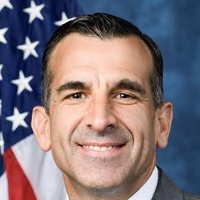
Sam Liccardo
Representative
CA
Sam Liccardo
Representative
CA
The Protecting Our Constitution and Communities Act aims to reassert Congress's exclusive constitutional authority over federal spending by clarifying that the President cannot unilaterally withhold appropriated funds. It strengthens the Comptroller General's oversight role and establishes new legal avenues for private citizens and governments to sue for damages if funds are improperly impounded. Furthermore, the bill tightens the definition of budgetary "contingencies" and ensures that judicial review of these spending disputes remains robust.
This Act reinstates and extends the ability for taxpayers to deduct personal casualty losses from unexpected events like crimes, scams, and disasters without previous limitations.
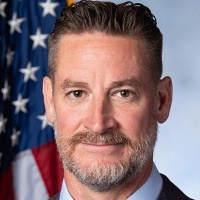
W. Steube
Representative
FL
W. Steube
Representative
FL
The Tax Relief for Victims of Crimes, Scams, and Disasters Act reinstates and removes limitations on the federal income tax deduction for personal casualty losses resulting from unexpected events like fires or floods. This legislation also extends the deadline for taxpayers to file claims for refunds related to these casualty loss deductions for past tax years. These changes apply to tax years beginning after December 31, 2017.
This Act prohibits charging different prices for substantially similar consumer products or services based solely on the buyer's gender.
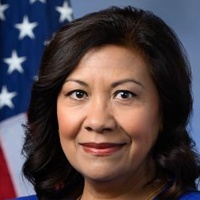
Norma Torres
Representative
CA
Norma Torres
Representative
CA
The Pink Tax Repeal Act prohibits businesses from charging different prices for substantially similar consumer products or services based solely on the buyer's gender. This legislation empowers the Federal Trade Commission (FTC) to enforce the ban as an unfair business practice. State Attorneys General are also authorized to file lawsuits to stop violations and seek restitution for affected residents.
This bill prohibits the use of federal funds to implement Executive Order 14160, which sought to limit birthright citizenship guaranteed by the Fourteenth Amendment.
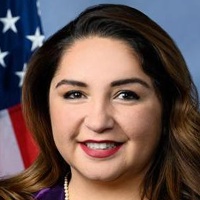
Delia Ramirez
Representative
IL
Delia Ramirez
Representative
IL
The Born in the USA Act of 2025 declares that Executive Order 14160, which attempted to restrict birthright citizenship, is unconstitutional and contrary to the 14th Amendment. This Act prohibits the use of any federal funds to implement or enforce that Executive Order. It affirms the established constitutional right to birthright citizenship for nearly everyone born on U.S. soil.
This Act mandates that health plans cover medically necessary treatment for congenital anomalies or birth defects affecting the eyes, ears, teeth, mouth, or jaw to restore normal function and appearance.
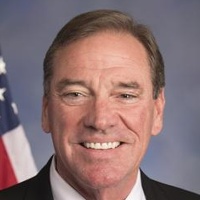
Neal Dunn
Representative
FL
Neal Dunn
Representative
FL
The Ensuring Lasting Smiles Act mandates that group health plans and insurance policies provide comprehensive coverage for medically necessary treatment related to congenital anomalies or birth defects affecting the eyes, ears, teeth, mouth, or jaw. This coverage must include services needed to restore normal function and appearance, including necessary dental and orthodontic support. Plans must apply cost-sharing rules no more restrictive than those for other medical benefits, excluding purely cosmetic procedures.
This Act prohibits the advertising and provision of paid conversion therapy intended to change an individual's sexual orientation or gender identity, empowering the FTC and State Attorneys General to enforce these prohibitions.
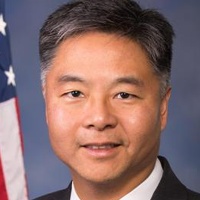
Ted Lieu
Representative
CA
Ted Lieu
Representative
CA
The Therapeutic Fraud Prevention Act of 2025 declares that practices attempting to change an individual's sexual orientation or gender identity for payment constitute an unfair and deceptive business practice. Citing professional consensus on the ineffectiveness and harm of such "conversion therapy," the bill prohibits its provision and advertising. Enforcement authority is granted to the Federal Trade Commission (FTC), and the law allows both the U.S. Attorney General and State Attorneys General to file civil actions against violators.
This Act restricts law enforcement from using intercepted communications or compelled records containing reproductive or sexual health information to investigate or prosecute individuals seeking or providing related care.
Ted Lieu
Representative
CA
Ted Lieu
Representative
CA
The Reproductive Data Privacy and Protection Act restricts law enforcement from using intercepted communications or compelled records that contain reproductive or sexual health information to investigate or prosecute individuals seeking or providing related care. This bill mandates specific sworn statements in wiretap applications and court orders, and in demands for electronic records, affirming that sensitive health details will not be used for such purposes. The Act broadly defines reproductive and sexual health information to ensure comprehensive protection.
The International Financial Institution Improvements Act of 2025 mandates greater transparency, accountability, and specific policy advocacy for U.S. engagement with global financial institutions like the World Bank and IMF, while also authorizing capital increases for certain development banks.
Maxine Waters
Representative
CA
Maxine Waters
Representative
CA
The International Financial Institution Improvements Act of 2025 aims to increase transparency and accountability in U.S. engagement with the World Bank, IMF, and other multilateral development banks. It mandates clearer public reporting, requires consultation with civil society organizations on lending decisions, and directs U.S. representatives to advocate for stronger human rights, anti-corruption, and climate-related policies. The bill also authorizes increased U.S. financial commitments to development funds focused on Africa and Europe, contingent upon future Congressional appropriations.
This act establishes research grants and training programs to develop and implement PFAS-free, next-generation turnout gear to protect firefighters from occupational illness and injury.

Debbie Dingell
Representative
MI
Debbie Dingell
Representative
MI
The PFAS Alternatives Act aims to protect firefighters by funding research and development for next-generation turnout gear that eliminates harmful PFAS chemicals. The bill establishes grants through NIOSH to create safer, PFAS-free protective equipment and separate funding for training programs on the proper care of this new gear. Ultimately, this legislation seeks to reduce occupational illness and injury among fire and EMS personnel.
This act establishes a grant program through the NSF to boost the participation and retention of women, underrepresented minorities, and people with disabilities in STEM fields.
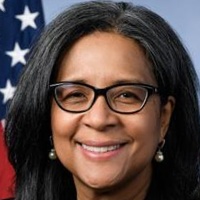
Marilyn Strickland
Representative
WA
Marilyn Strickland
Representative
WA
The Women and Underrepresented Minorities in STEM Booster Act of 2025 establishes a new grant program managed by the National Science Foundation. This program is designed to increase the participation and retention of women, underrepresented minorities, and people with disabilities in science, technology, engineering, and math (STEM) fields. Funds will support activities such as mentoring, internships, and outreach aimed at addressing documented gaps in STEM education and the workforce. Congress has authorized $15 million annually for this initiative from 2026 through 2030.
This bill bans the manufacture, sale, and transfer of specific semiautomatic assault weapons and large-capacity ammunition feeding devices while grandfathering existing possessions and establishing new transfer requirements.
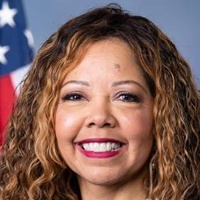
Lucy McBath
Representative
GA
Lucy McBath
Representative
GA
The Assault Weapons Ban of 2025 comprehensively defines and bans the manufacture, sale, and transfer of specific semiautomatic assault weapons and large capacity ammunition feeding devices. The bill grandfathers existing weapons but imposes new requirements for their secure storage and mandates dealer involvement for future private transfers. It also allows federal grant money to be used by states for buy-back programs targeting these banned items.
The Fresh Start Act of 2025 ties federal gun violence prevention grants to states implementing automatic criminal record expungement laws and requires detailed annual reporting on the process broken down by demographics.
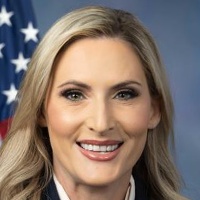
Laurel Lee
Representative
FL
Laurel Lee
Representative
FL
The Fresh Start Act of 2025 incentivizes states to adopt automatic criminal record expungement laws by tying them to federal gun violence prevention grants. This legislation requires states receiving these funds to automatically clear or seal eligible criminal records without requiring individual action or payment of outstanding fees. Recipients must also annually report detailed data on the process, broken down by race, ethnicity, and gender, which the Attorney General will then make public.