Legislation
The EAGLES Act of 2025 codifies and expands the National Threat Assessment Center to prevent targeted violence through research, training, and multidisciplinary collaboration, particularly in schools.
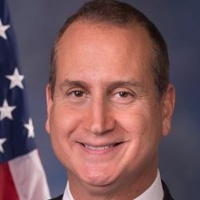
Mario Diaz-Balart
Representative
FL
Mario Diaz-Balart
Representative
FL
The EAGLES Act of 2025 codifies and expands the National Threat Assessment Center within the Secret Service to focus on preventing targeted violence through research, training, and information sharing. It establishes a national program on targeted school violence prevention, mandating research, training courses, and coordination among various departments and agencies. The Act authorizes \$10 million annually from 2026 to 2030 for these activities, emphasizing early intervention and support for individuals exhibiting concerning behavior, while explicitly prohibiting the use of funds for firearms training. This act aims to standardize threat assessment and prevention practices at all levels, ensuring a proactive and comprehensive approach to school safety.
The "Repeal CFPB Act" aims to eliminate the Consumer Financial Protection Bureau and revert to pre-2010 financial regulations.
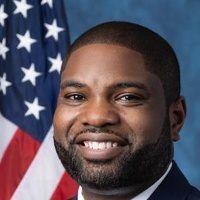
Byron Donalds
Representative
FL
Byron Donalds
Representative
FL
The "Repeal CFPB Act" aims to eliminate the Consumer Financial Protection Bureau (CFPB) by repealing the Consumer Financial Protection Act of 2010. This action would effectively reverse all changes and removals made by the 2010 Act, restoring the legal framework as it existed before the CFPB's creation.
Prohibits federal funding for the FDA's rule on laboratory developed tests.
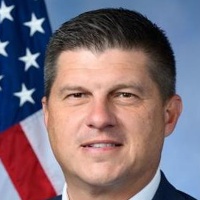
Brad Finstad
Representative
MN
Brad Finstad
Representative
MN
This bill prohibits the use of federal funds to implement or enforce the Food and Drug Administration's final rule regarding the regulation of laboratory developed tests as medical devices.
Establishes a Digital Economy and Cybersecurity Board of Advisors to advise the NTIA on cybersecurity best practices and policies to promote economic growth and secure information networks.
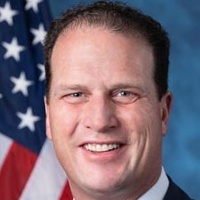
August Pfluger
Representative
TX
August Pfluger
Representative
TX
The "Digital Economy Cybersecurity Advisory Act of 2025" establishes a Digital Economy and Cybersecurity Board of Advisors within the NTIA. The board will advise the Assistant Secretary on cybersecurity best practices, policies, and strategies to secure information and communication networks while promoting economic growth and innovation. The board will consist of cybersecurity experts from various sectors, ensuring balanced representation and prohibiting lobbyists. The board is set to terminate four years after the enactment of the act.
The America Works Act of 2025 amends the Food and Nutrition Act of 2008 to modify exemptions from work requirements for SNAP benefits and allows waivers in high-unemployment areas.
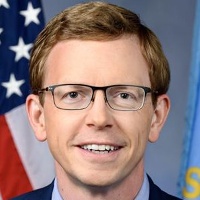
Dusty Johnson
Representative
SD
Dusty Johnson
Representative
SD
The America Works Act of 2025 amends the Food and Nutrition Act of 2008 to provide exemptions from work requirements for specific individuals, including those under 18 or over 65, medically unfit individuals, and parents of young children. It also allows the Secretary to waive certain requirements in counties with high unemployment rates, based on state agency requests. Additionally, the act removes a subsection from the Fiscal Responsibility Act of 2023.
The "Delivering for Rural Seniors Act of 2025" establishes a pilot program providing grants to states for home delivery of commodities to low-income elderly people, especially in rural areas, from 2026-2028.
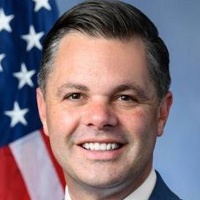
Zachary (Zach) Nunn
Representative
IA
Zachary (Zach) Nunn
Representative
IA
The "Delivering for Rural Seniors Act of 2025" aims to improve food access for low-income elderly individuals in rural areas by establishing a pilot program for home delivery of commodities. The program will award grants to state agencies, prioritizing those serving rural areas, to cover costs associated with transportation, staffing, and outreach. This act authorizes $10 million annually from 2026 to 2028 for these initiatives.
Extends federal death benefits to retired law enforcement officers who die or are disabled from targeted attacks related to their service.
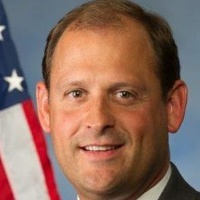
Garland Barr
Representative
KY
Garland Barr
Representative
KY
The "Chief Herbert D. Proffitt Act of 2025" amends the Omnibus Crime Control and Safe Streets Act of 1968 to extend death benefits to retired law enforcement officers who die or are disabled from targeted attacks due to their service. The bill applies retroactively to pending matters before the Bureau of Justice Assistance, or those filed/accruing after the enactment date, with exceptions for actions against retired law enforcement officers that occurred on or after August 28, 2012.
The "Erie Canal Bicentennial Commemorative Coin Act" directs the Treasury to mint coins in 2026 commemorating the Erie Canal, with surcharges benefiting the Erie Canalway Heritage Fund, Inc.

Claudia Tenney
Representative
NY
Claudia Tenney
Representative
NY
The "Erie Canal Bicentennial Commemorative Coin Act" directs the Department of Treasury to mint and issue gold, silver, and half-dollar coins to commemorate the bicentennial of the Erie Canal. These coins, which are legal tender, will be available in uncirculated and proof qualities for one year beginning January 1, 2026. Surcharges from the sale of these coins will be paid to the Erie Canalway Heritage Fund, Inc. to support the Erie Canalway National Heritage Corridor.
The Federal Infrastructure Bank Act of 2025 establishes a national infrastructure bank to provide financial support for infrastructure projects across the U.S., with a focus on revenue-generating projects and rural development.

Daniel Webster
Representative
FL
Daniel Webster
Representative
FL
The Federal Infrastructure Bank Act of 2025 establishes a Federal Infrastructure Bank to provide financial support for infrastructure projects across the U.S. by offering loans, equity investments, and loan guarantees to eligible entities. A Federal Infrastructure Bank Holding Company will be established to oversee the Bank, and the Federal Reserve will regulate both entities. The Holding Company and the Bank are exempt from most taxes, and investors in the Holding Company can receive a tax credit. The act prioritizes revenue-generating projects and rural infrastructure development, while prohibiting funding for projects connected to specific foreign entities.
The "Rural Historic Tax Credit Improvement Act" enhances the rehabilitation tax credit for historic buildings in rural areas, offering increased credit percentages for both affordable housing and other projects, while also enabling the transfer of these credits.
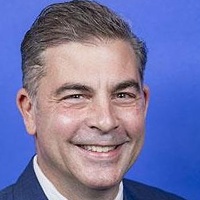
Mike Carey
Representative
OH
Mike Carey
Representative
OH
The "Rural Historic Tax Credit Improvement Act" enhances the rehabilitation credit for historic buildings in rural areas, offering increased credit percentages for both affordable housing and other projects. It allows taxpayers to transfer these credits and removes the basis adjustment, aiming to incentivize the revitalization of rural communities through historic preservation. The bill defines specific criteria for "applicable rural projects" and "affordable housing projects" and introduces recapture rules for non-compliance with affordable housing requirements. These provisions apply to properties placed in service after December 31, 2025.
This bill adds the Secretary of Agriculture to the Committee on Foreign Investment in the United States (CFIUS) and requires CFIUS to review agricultural land transactions, especially those involving entities from China, North Korea, Russia, or Iran.
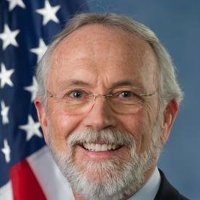
Dan Newhouse
Representative
WA
Dan Newhouse
Representative
WA
The "Protecting American Agriculture from Foreign Adversaries Act of 2025" adds the Secretary of Agriculture to the Committee on Foreign Investment in the United States (CFIUS) for agricultural matters. It mandates CFIUS review of agricultural land transactions, particularly those involving entities from China, North Korea, Russia, or Iran, to safeguard American agriculture. This ensures scrutiny of foreign investments in agricultural land and related industries, addressing potential threats to national security. The requirements for a specific country will end if that country is removed from the list of foreign adversaries in section 791.4 of title 15, Code of Federal Regulations.
The PREVENT DIABETES Act expands access to the Medicare Diabetes Prevention Program by allowing virtual-only providers to participate and serve beneficiaries across state lines from 2026-2030.

Diana DeGette
Representative
CO
Diana DeGette
Representative
CO
The PREVENT DIABETES Act aims to expand access to the Medicare Diabetes Prevention Program (MDPP) by allowing entities to participate solely through online services from January 1, 2026, through December 31, 2030. It requires the Secretary of Health and Human Services to update regulations by January 1, 2026, to accommodate virtual suppliers, ensuring they meet MDPP enrollment conditions. This act also ensures that these entities will not be denied claim payments for online MDPP services solely because the beneficiary was in a different state when the services were provided and places no limit on the number of times an individual may enroll in the MDPP.
The PLO and PA Terror Payments Accountability Act of 2025 imposes sanctions on foreign individuals, entities, and financial institutions that support terrorism through the Palestine Liberation Organization (PLO) and Palestinian Authority (PA) compensation systems.
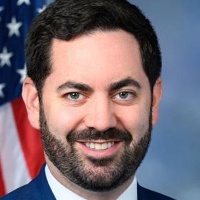
Michael Lawler
Representative
NY
Michael Lawler
Representative
NY
The PLO and PA Terror Payments Accountability Act of 2025 aims to hold the Palestine Liberation Organization (PLO) and Palestinian Authority (PA) accountable for providing payments to terrorists and their families by mandating the President to impose sanctions on foreign individuals, entities, and financial institutions involved in facilitating these payments. These sanctions include blocking property, visa restrictions, and prohibiting U.S. bank accounts for foreign financial institutions. The Act will be terminated once the Secretary of State certifies that the PLO and PA have ceased these payments.
Eric's Law mandates a new jury for death penalty considerations if the initial jury can't reach a unanimous decision, and prohibits the death penalty if a second jury also fails to reach unanimity.
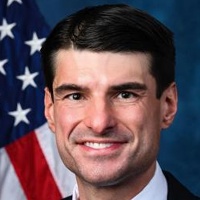
Robert Bresnahan
Representative
PA
Robert Bresnahan
Representative
PA
Eric's Law addresses instances where a jury is unable to reach a unanimous decision regarding sentencing in death penalty cases. It mandates that the court impanel a new jury to determine sentencing. Should the second jury also fail to reach a unanimous agreement, the court is required to impose a sentence other than death.
The "Gun Trafficker Detection Act" mandates reporting lost or stolen firearms, establishes penalties for violations, and enhances data management and background check systems.
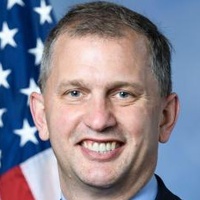
Sean Casten
Representative
IL
Sean Casten
Representative
IL
The Gun Trafficker Detection Act requires non-licensed firearm owners to report lost or stolen firearms to the Attorney General and local law enforcement within 48 hours, and it mandates the Attorney General to establish a web-based portal for such reporting. States must allocate a portion of their grant funding to manage data on lost or stolen firearms. The act also establishes penalties for failing to report or for falsely reporting the loss or theft of a firearm, and it updates the national criminal background check system accordingly.
This bill prohibits the U.S. Army Corps of Engineers from issuing a permit for the Delta Conveyance Project, a proposed water diversion tunnel in California's Sacramento-San Joaquin Delta.
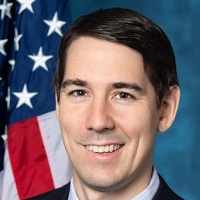
Josh Harder
Representative
CA
Josh Harder
Representative
CA
The "Stop the Delta Tunnel Act" prohibits the U.S. Army Corps of Engineers from issuing a permit for the Delta Conveyance Project, a proposed water diversion project in California's Sacramento-San Joaquin Delta. This effectively halts the project as it is currently designed.
Renames the U.S. Postal Service facility at 28 East Airy Street in Norristown, Pennsylvania, as the "Charles L. Blockson Post Office Building".

Madeleine Dean
Representative
PA
Madeleine Dean
Representative
PA
This bill designates the United States Postal Service facility located at 28 East Airy Street in Norristown, Pennsylvania, as the "Charles L. Blockson Post Office Building." Any reference to this facility in any document will now refer to it as the Charles L. Blockson Post Office Building.
The "Farm and Food Cybersecurity Act of 2025" mandates regular risk assessments of cybersecurity threats to the agriculture and food sector and requires annual simulation exercises to enhance food security and cyber resilience.
Brad Finstad
Representative
MN
Brad Finstad
Representative
MN
The Farm and Food Cybersecurity Act of 2025 aims to bolster the cybersecurity of the agriculture and food critical infrastructure sector by requiring the Secretary of Agriculture to conduct regular risk assessments of cybersecurity threats and vulnerabilities. It also mandates annual cross-sector crisis simulation exercises to assess preparedness, identify gaps, and improve coordination in the food supply chain. These exercises will involve government and private sector entities, with reports submitted to Congress to enhance cybersecurity and resilience in the agriculture and food sector. Finally, the Act authorizes $1,000,000 per fiscal year from 2026 through 2030 to carry out the simulation exercises.
The Poverty Line Act of 2025 updates the calculation of the federal poverty line to more accurately reflect the cost of basic needs and regional variations in cost of living, expanding eligibility for federal assistance programs.
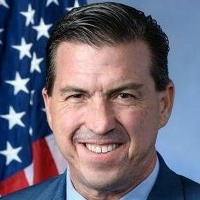
Kevin Mullin
Representative
CA
Kevin Mullin
Representative
CA
The Poverty Line Act of 2025 updates the calculation of the federal poverty line to more accurately reflect the true costs of basic needs such as housing, childcare, and healthcare, while also accounting for geographic variations and household spending norms. This updated calculation aims to expand eligibility for federal assistance programs. The Act requires regular evaluations and adjustments to the poverty line, ensuring it keeps pace with economic changes and accurately reflects the needs of households striving for economic mobility. It also mandates a report to Congress on necessary updates to federal laws and regulations that rely on the poverty line for program eligibility.
Mandates resident advocates in VA domiciliary facilities and state veterans' homes to represent residents' interests and handle grievances.
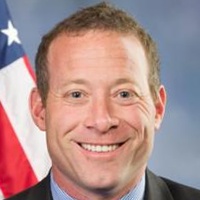
Josh Gottheimer
Representative
NJ
Josh Gottheimer
Representative
NJ
This bill mandates that all Department of Veterans Affairs domiciliary facilities and State homes must have resident advocates. These advocates will serve as liaisons for veterans, addressing complaints and escalating them to higher authorities when necessary. The goal is to ensure veterans' concerns are heard and addressed effectively within these facilities.