Legislation
The Pell Grant Sustainability Act indexes Federal Pell Grants to inflation to help keep up with the rising costs of college for lower-income students.
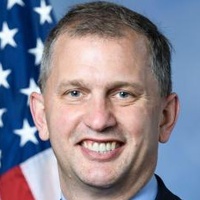
Sean Casten
Representative
IL
Sean Casten
Representative
IL
The Pell Grant Sustainability Act aims to increase the buying power of Pell Grants for lower-income students. It indexes the maximum Pell Grant award to inflation, starting with a \$1,060 increase for the 2024-2025 award year, and adjusts it annually based on the Consumer Price Index. This adjustment is added to the maximum Pell Grant specified in the latest appropriation act, ensuring Pell Grants keep pace with rising education costs. The bill also extends provisions of the Higher Education Act related to Pell Grants indefinitely.
The "PROTECT Student Athletes Act" prohibits betting on individual student-athlete performances in college sports to protect their well-being and the integrity of the games.
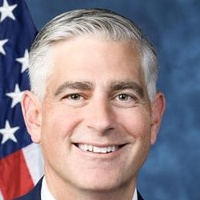
Michael Baumgartner
Representative
WA
Michael Baumgartner
Representative
WA
The "PROTECT Student Athletes Act" seeks to ban betting on individual college athlete's performance during games, known as "covered prop bets," to protect their well-being and the integrity of college sports. It asserts that sports betting's impact on interstate commerce necessitates federal regulation. The Federal Trade Commission (FTC) is empowered to enforce the Act.
The POLE Act withholds federal election administration funds from states that do not allow local governments to hold local elections in odd-numbered years, beginning in fiscal year 2027.
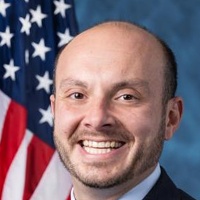
Andrew Garbarino
Representative
NY
Andrew Garbarino
Representative
NY
The POLE Act aims to protect local elections by ensuring they are held in odd-numbered years to increase focus on local candidates and issues. Starting in fiscal year 2027, states that do not allow local governments to hold elections for local offices in odd-numbered years will be prohibited from receiving federal funds for election administration. This act supports the idea that local governance is crucial and that voters should be well-informed about local representatives.
The "Family Building FEHB Fairness Act" would expand federal employee health benefits to include fertility treatments like IVF and genetic testing.

Gerald Connolly
Representative
VA
Gerald Connolly
Representative
VA
The "Family Building FEHB Fairness Act" amends title 5 of the United States Code to include fertility treatment benefits to federal employee health benefits. Fertility treatments include: preservation of eggs, sperm, or embryos; artificial insemination; assisted reproductive technology; genetic testing of embryos; fertility medications; gamete donation; and other related services. These changes will take effect one year after the enactment of the Act.
The "Postal Processing Protection Act" would require the USPS to meet specific requirements before closing or consolidating any facility that supports a post office.
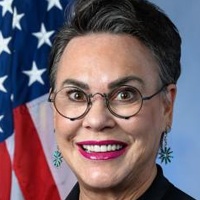
Harriet Hageman
Representative
WY
Harriet Hageman
Representative
WY
The Postal Processing Protection Act amends title 39 of the United States Code to include any Postal Service owned or operated acceptance, processing, shipping, delivery, or distribution facility that supports one or more post offices. This change broadens the scope of facilities subject to specific requirements when the Postal Service considers closing or consolidating them.
The "Social Security for Americans Reform Act of 2025" aims to prevent fraud and misuse by requiring the Department of Homeland Security to notify the Social Security Administration of changes in immigration status and limits Social Security benefits for non-U.S. citizens or nationals.
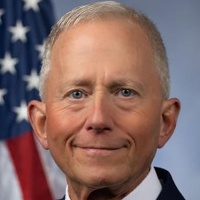
Jefferson Van Drew
Representative
NJ
Jefferson Van Drew
Representative
NJ
The "Social Security for Americans Reform Act of 2025" aims to prevent non-citizens from receiving Social Security benefits by requiring the Department of Homeland Security to notify the Social Security Administration of changes in immigration status. It also mandates an annual report to Congress detailing these notifications and their impact on preventing fraud. This act limits access to various Social Security benefits, including old-age, survivors, disability insurance, Medicare, Medicaid, SSI, and other related assistance programs, for non-U.S. citizens or nationals.
The "Taxpayer Funds Oversight and Accountability Act" enhances financial management and oversight in federal agencies by updating CFO responsibilities, mandating 4-year government-wide financial management plans, and requiring rigorous audits of internal controls.
Gerald Connolly
Representative
VA
Gerald Connolly
Representative
VA
The Taxpayer Funds Oversight and Accountability Act enhances financial management and transparency in federal agencies by updating the duties of Chief Financial Officers (CFOs) to include stronger oversight of financial reporting and internal controls. It replaces the government-wide 5-year financial management plan with a 4-year plan, requiring detailed strategies for improving financial management systems and workforce development. The Act also mandates annual financial management status reports to Congress and the Comptroller General, along with rigorous audits of internal controls to ensure effective financial management across the government.
The bill mandates fair-value accounting for federal credit programs, requiring the Congressional Budget Office and the Office of Management and Budget to provide fair-value estimates for loan and loan guarantee programs to ensure budget compliance and transparency.
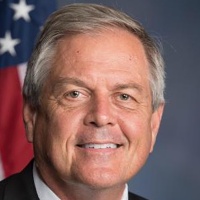
Ralph Norman
Representative
SC
Ralph Norman
Representative
SC
The "Fair-Value Accounting and Budget Act" mandates the use of fair-value estimates, in addition to credit reform estimates, for all federal loan and loan guarantee programs by the Congressional Budget Office (CBO). It requires the CBO to include both fair-value and credit reform estimates in its annual budget and economic outlook. Additionally, the Office of Management and Budget (OMB) must submit an annual report to Congress on fair-value estimates of federal credit programs. Both CBO and OMB are required to use the Government Accounting Standards Board's definition of "fair value" in their estimates.
Removes federal immunity for COVID-19 vaccine manufacturers, allowing individuals to sue for vaccine-related losses, while preserving access to existing compensation programs.

Chip Roy
Representative
TX
Chip Roy
Representative
TX
The LIABLE Act removes federal immunity and liability limitations for COVID-19 vaccine manufacturers, allowing individuals to sue for losses caused by the vaccines. Individuals can still seek compensation through existing federal programs, and doing so does not prevent civil action. This applies to any COVID-19 vaccine licensed or authorized by the FDA and is retroactive.
The "PAR Act" removes restrictions on using bond proceeds for private or commercial golf courses and country clubs.
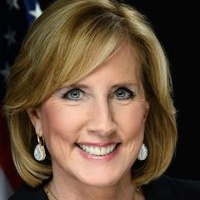
Claudia Tenney
Representative
NY
Claudia Tenney
Representative
NY
The "Parity for Athletic Recreation Act" or "PAR Act" removes the restriction that prohibits bond proceeds from being used for private or commercial golf courses and country clubs. This change applies to bonds issued after the enactment of this Act. Additionally, it affects the empowerment zone employment credit and applies to empowerment zone businesses and opportunity zones.
The GRAIN DRY Act amends the Food, Conservation, and Energy Act of 2008 to allow agricultural producers to construct or upgrade storage facilities for propane used for agricultural production.
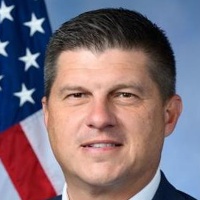
Brad Finstad
Representative
MN
Brad Finstad
Representative
MN
The GRAIN DRY Act amends the Food, Conservation, and Energy Act of 2008 to allow agricultural producers to construct or upgrade storage facilities for propane used in agricultural production. This expansion of the USDA's Farm Storage Facility Loan Program aims to support the infrastructure needs of farmers.
The "Bureau of Land Management Mineral Spacing Act" streamlines oil and gas drilling on private land with limited federal subsurface mineral rights, reducing federal permitting requirements and environmental reviews.
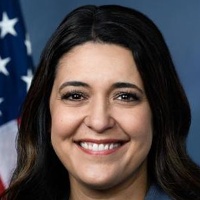
Stephanie Bice
Representative
OK
Stephanie Bice
Representative
OK
The "Bureau of Land Management Mineral Spacing Act" amends the Mineral Leasing Act to streamline oil and gas activities on non-federal surface land where the U.S. owns less than 50% of subsurface mineral rights, by removing the need for a federal drilling permit if a state permit is submitted. This exemption aims to reduce federal oversight and expedite energy resource development, but does not apply to Indian lands or alter royalty obligations. The Secretary of the Interior retains authority for audits, inspections, and royalty collection.
Extends preferential trade treatment for certain apparel imports from Haiti and restores eligibility for specific articles under the Caribbean Basin Economic Recovery Act until September 30, 2035.
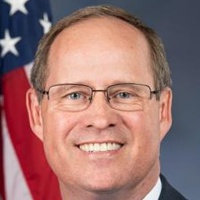
Gregory Murphy
Representative
NC
Gregory Murphy
Representative
NC
The Haiti Economic Lift Program Extension Act of 2025 extends preferential trade treatment to Haiti under the Caribbean Basin Economic Recovery Act until September 30, 2035. It clarifies eligibility for apparel articles containing U.S. fabric and restores preferential treatment for certain articles that were previously eligible. The Act aims to promote economic development in Haiti through trade benefits.
The "Rare Earth Magnet Security Act of 2025" introduces a tax credit for U.S. manufacturers of rare earth magnets, with increased incentives for magnets using domestically sourced materials, phasing out after 2034, and restrictions on materials from non-allied foreign nations.
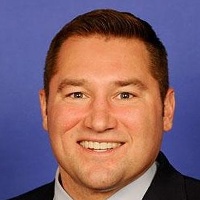
Guy Reschenthaler
Representative
PA
Guy Reschenthaler
Representative
PA
The "Rare Earth Magnet Security Act of 2025" introduces a tax credit for the production of rare earth magnets, incentivizing domestic manufacturing. The credit offers \$20 per kilogram for magnets made in the U.S. and \$30 per kilogram if 90% of the magnet's materials are U.S.-sourced. The credit phases out after 2034 and includes restrictions on sourcing materials from non-allied foreign nations, with some temporary exceptions. The act also allows manufacturers to elect to receive direct payments from the government in lieu of the tax credit.
The "Protect the West Act of 2025" establishes funding and programs for ecological restoration and wildfire risk reduction projects in the Western United States through grants, partnerships, and a new advisory council.
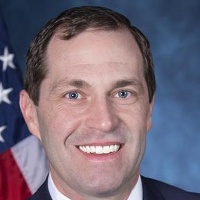
Jason Crow
Representative
CO
Jason Crow
Representative
CO
The "Protect the West Act of 2025" establishes an Outdoor and Watershed Restoration Fund and related grant and partnership programs to support restoration and resilience projects on both Federal and non-Federal lands. This act prioritizes wildfire risk reduction, habitat improvement, and job creation in resource-dependent communities. It also establishes a Restoration Fund Advisory Council to advise the Secretary of Agriculture on fund distribution and project prioritization. The act allocates $60 billion to these efforts, emphasizing collaboration, scientific rigor, and community involvement.
The "Aquatic Biodiversity Preservation Act of 2025" establishes a program to sequence and make publicly available the genomes of aquatic species, enhancing conservation and management efforts.
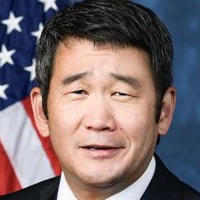
Dave Min
Representative
CA
Dave Min
Representative
CA
The "Aquatic Biodiversity Preservation Act of 2025" establishes a program, managed by the Secretary of Commerce, for sequencing aquatic species genomes to improve conservation and management efforts. It directs the Secretary to work with various entities to collect, sequence, and make genomic data publicly available, while providing funding and assistance. Tribal governments determine whether and when to release data. The act authorizes $2,000,000 annually from 2025-2031 for program implementation.
The "One Seat Ride Act" mandates a study on the feasibility and impact of single-seat commuter rail trips, focusing on economic, logistical, and quality-of-life factors, with a report due to Congress within a year.
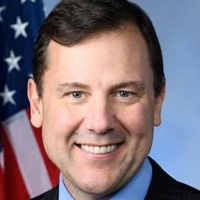
Thomas Kean
Representative
NJ
Thomas Kean
Representative
NJ
The One Seat Ride Act requires the Secretary of Transportation to conduct a study on the benefits and challenges of commuter rail systems that allow passengers to travel without transfers. The study will analyze economic, logistical, and quality-of-life factors, and will include a cost-benefit analysis of single-seat trips on New Jersey Transit's Raritan Valley line. A report on the study's findings must be submitted to the House and Senate Transportation Committees within one year.
The DEFUND Act of 2025 terminates U.S. membership in the United Nations and affiliated organizations, prohibits funding and participation in UN activities, and revokes diplomatic immunity for UN personnel.
Chip Roy
Representative
TX
Chip Roy
Representative
TX
The DEFUND Act of 2025 terminates U.S. membership in the United Nations and all affiliated organizations, repeals existing acts that enable U.S. participation, and prohibits future funding or involvement in UN activities, including peacekeeping operations and conventions. It also revokes diplomatic immunity for UN personnel within the U.S. and requires the Secretary of State to notify the UN of these changes. The bill further prevents the U.S. from reentering the UN without Senate approval and a guaranteed right to withdraw.
This bill ensures that Native American patients are not held liable for the cost of purchased/referred healthcare and mandates reimbursements for past out-of-pocket expenses.
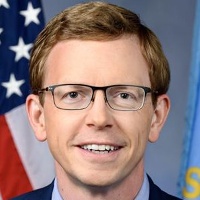
Dusty Johnson
Representative
SD
Dusty Johnson
Representative
SD
The "Purchased and Referred Care Improvement Act of 2025" ensures that Native American patients are not liable for the cost of purchased/referred care, and mandates a process for reimbursing patients who have already paid for such services. It updates the Indian Health Care Improvement Act by replacing the term "contract health service" with "purchased/referred care" to modernize the language used in the Act. These changes aim to streamline the payment process and reduce the financial burden on patients.
The Public Safety Employer-Employee Cooperation Act establishes collective bargaining rights for public safety officers nationwide, ensuring fair labor practices and cooperation between employers and employees.
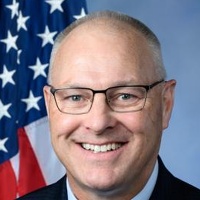
Pete Stauber
Representative
MN
Pete Stauber
Representative
MN
The Public Safety Employer-Employee Cooperation Act establishes a framework for collective bargaining rights for public safety officers (law enforcement, firefighters, and emergency medical services personnel) at the state level. It directs the Federal Labor Relations Authority to determine if states substantially protect these rights, and if not, the Authority will establish collective bargaining procedures. The Act aims to promote cooperation between public safety employers and employees while respecting existing state laws and prohibiting strikes and lockouts. This law does not override state laws that provide similar or stronger protections for public safety officers.