Legislation
Cameron's Law incentivizes pharmaceutical companies to develop treatments for rare diseases by increasing the orphan drug tax credit from 25% to 50%.
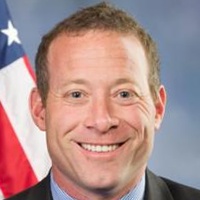
Josh Gottheimer
Representative
NJ
Josh Gottheimer
Representative
NJ
Cameron's Law amends the Internal Revenue Code of 1986 to increase the orphan drug tax credit from 25% to 50%. This change aims to incentivize the development of treatments for rare diseases by offering greater financial support to companies through enhanced tax benefits. The adjusted tax credit will be effective for taxable years starting after the enactment of this law.
This bill eliminates grant programs and rescinds funding for electric vehicle charging infrastructure, including the National Electric Vehicle Infrastructure (NEVI) Formula Program.
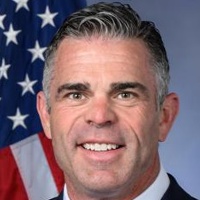
Tony Wied
Representative
WI
Tony Wied
Representative
WI
The "Unplug the Electric Vehicle Charging Stations Program Act" eliminates grant programs for charging and fueling infrastructure, specifically repealing the National Electric Vehicle Infrastructure (NEVI) Formula Program. This includes rescinding unspent funds and terminating the program entirely upon enactment. The bill amends sections of the Infrastructure Investment and Jobs Act and title 23 of the United States Code to remove references to the grant programs.
This bill exempts certain wireless infrastructure upgrades from environmental and historical review, streamlining deployment.
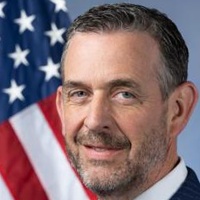
Michael Rulli
Representative
OH
Michael Rulli
Representative
OH
The "Wireless Broadband Competition and Efficient Deployment Act" aims to streamline the deployment of wireless broadband infrastructure by exempting certain collocation projects from extensive environmental and historical reviews under the National Environmental Policy Act and the National Historic Preservation Act. This exemption applies to projects that involve mounting, installing, or modifying wireless service facilities on existing infrastructure, provided they require FCC approval. The goal is to accelerate the expansion of wireless services, including commercial mobile data, by reducing regulatory hurdles for infrastructure upgrades.
This bill requires the FAA to collaborate with the National Academies to produce a report detailing the health impacts of air traffic noise and pollution.
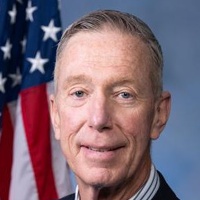
Stephen Lynch
Representative
MA
Stephen Lynch
Representative
MA
The "Air Traffic Noise and Pollution Expert Consensus Act of 2025" directs the FAA to collaborate with the National Academies to study and report on the health impacts of air traffic noise and pollution. This report will consolidate current scientific knowledge and be delivered to key government officials and congressional committees.
Prohibits the EPA from using its Integrated Risk Information System program to create regulations, carry out enforcement, or inform air toxics assessments.
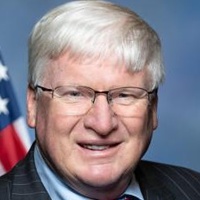
Glenn Grothman
Representative
WI
Glenn Grothman
Representative
WI
The "No Industrial Restrictions in Secret Act of 2025" or "No IRIS Act of 2025" prevents the EPA Administrator from utilizing assessments produced by the EPA's Integrated Risk Information System program. This prohibition extends to developing regulations, enforcement actions, permitting, and informing air toxics assessments.
The "SBA Disaster Transparency Act" mandates the Small Business Administration to publicly post reports on disaster assistance submitted to Congress on its website.
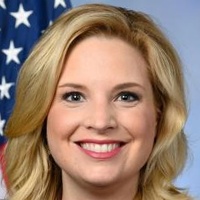
Ashley Hinson
Representative
IA
Ashley Hinson
Representative
IA
The SBA Disaster Transparency Act requires the Small Business Administration (SBA) to publish reports related to disaster assistance on its website. This ensures transparency by making information accessible to the public after the reports are submitted to Representatives.
The "End FEMA Benefits for Illegal Immigrants Act" terminates FEMA's program that funds shelter services for individuals awaiting immigration processing and redirects unspent funds.
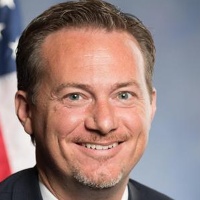
Michael Cloud
Representative
TX
Michael Cloud
Representative
TX
The "End FEMA Benefits for Illegal Immigrants Act" terminates FEMA's program that funds shelters and services for migrants, which aimed to reduce overcrowding in Customs and Border Protection facilities. It also rescinds any remaining funds allocated to FEMA from previous appropriations acts that were intended for Customs and Border Protection operations.
The "Due Process Continuity of Care Act" enables states to provide Medicaid coverage for individuals awaiting charges in medical institutions and supports states in planning and expanding healthcare access for this population.
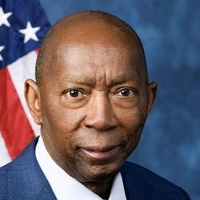
Sylvester Turner
Representative
TX
Sylvester Turner
Representative
TX
The "Due Process Continuity of Care Act" aims to provide Medicaid coverage for individuals in custody awaiting charges in a medical institution, removing the existing inmate limitation on benefits. It authorizes the Secretary to award planning grants to states to support providing Medicaid assistance to eligible individuals and to prepare an application that meets specific requirements. The Act requires states to develop plans for assessing health treatment needs, increasing healthcare provider participation, and ensuring quality of care for patients in custody. It allocates $50,000,000 for these planning grants.
The "Death Tax Repeal Act" eliminates estate and generation-skipping transfer taxes, adjusts gift tax calculations, and sets a $10,000,000 lifetime gift exemption.
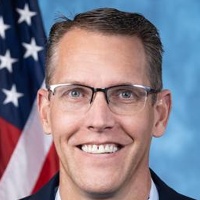
Randy Feenstra
Representative
IA
Randy Feenstra
Representative
IA
The "Death Tax Repeal Act" eliminates both estate and generation-skipping transfer taxes, effective from the date of enactment. It adjusts gift tax calculations by setting the lifetime gift exemption at $10,000,000, with inflation adjustments after 2011. The Act also includes transitional rules for applying certain sections of the Internal Revenue Code during the enactment year.
The "Dismantling Investments in Violation of Ethical Standards through Trusts Act" prohibits senior federal employees, their spouses, and dependent children from owning or trading specific financial instruments, with exceptions for diversified investments and penalties for violations, to ensure ethical compliance.
Michael Cloud
Representative
TX
Michael Cloud
Representative
TX
The "Dismantling Investments in Violation of Ethical Standards through Trusts Act" prohibits senior federal employees, their spouses, and dependent children from owning or trading specific financial instruments like stocks and commodities, with exceptions for diversified investment funds and U.S. Treasury securities. Violators will face financial penalties, including disgorgement of profits and civil fines, and must annually certify their compliance. The Act also mandates a GAO audit and provides additional resources to the Office of Government Ethics for enforcement.
The "Public Health Funding Restoration Act" fully funds the Prevention and Public Health Fund at $2,000,000,000 annually to support public health programs and disease prevention.

Doris Matsui
Representative
CA
Doris Matsui
Representative
CA
The "Public Health Funding Restoration Act" aims to fully fund the Prevention and Public Health Fund at $2,000,000,000 annually beginning in 2026. This will restore investments in crucial public health programs focused on preventing diseases, injuries, and chronic conditions. By ensuring consistent funding, the act seeks to improve healthcare, quality of life, and preparedness for future health crises.
This bill requires covered agencies to more thoroughly consider and justify the impact of their regulations on small businesses, including potential credit costs, and explain why the size and resources of these entities should not influence the rule if alternatives aren't adopted.
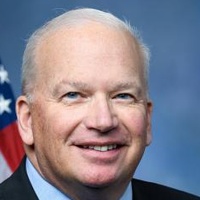
Scott Fitzgerald
Representative
WI
Scott Fitzgerald
Representative
WI
The "Making the CFPB Accountable to Small Businesses Act of 2025" requires covered agencies to consider the impact of proposed rules on small entities and provide detailed justifications if alternatives aren't adopted. It also requires agencies to describe steps taken to minimize credit costs for small entities.
The "Broadband Buildout Accountability Act" shields the Broadband Equity, Access, and Deployment Program from FOIA requests, excluding standard public information requirements.
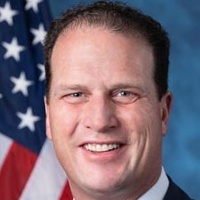
August Pfluger
Representative
TX
August Pfluger
Representative
TX
The Broadband Buildout Accountability Act exempts the Broadband Equity, Access, and Deployment Program from the Freedom of Information Act (FOIA), with one specific exception. This exception pertains to 5 U.S. Code § 552, suggesting a limited allowance for information disclosure under specific circumstances within the program.
The Security Clearance Review Act mandates FBI Director review and Congressional notification for security clearances of political appointees and special government employees in the Executive Office of the President.
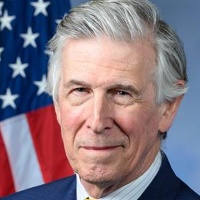
Donald Beyer
Representative
VA
Donald Beyer
Representative
VA
The Security Clearance Review Act mandates that the FBI Director, rather than other entities, is responsible for granting security clearances and access to classified information for political appointees and special government employees within the Executive Office of the President. The Act requires the FBI Director to notify the President and Congress when a security clearance is denied, suspended, or revoked. If the President overrides the FBI Director's decision, they must provide an explanation to relevant Congressional committees. This ensures accountability and transparency in security clearance determinations within the Executive Office.
The American Dream and Promise Act of 2025 provides a pathway to permanent residency for eligible individuals who came to the U.S. as children, or who have Temporary Protected Status (TPS) or Deferred Enforced Departure (DED) status.
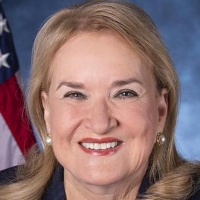
Sylvia Garcia
Representative
TX
Sylvia Garcia
Representative
TX
The American Dream and Promise Act of 2025 provides a pathway to permanent residency for eligible individuals who entered the United States as children and those with Temporary Protected Status (TPS) or Deferred Enforced Departure (DED). Title I, the Dream Act of 2025, establishes conditional permanent residency for eligible individuals who entered the U.S. as children. Title II, the American Promise Act of 2025, allows the Secretary of Homeland Security or the Attorney General to grant permanent resident status to eligible individuals from TPS or DED countries. Title III outlines general provisions, such as background checks, application processes, and fee exemptions, applicable to all seeking to adjust their status under this Act.
The "One Flag for All Act" would generally require only the U.S. flag to be displayed on the exterior and in public areas of federal buildings, with specific exceptions for POW/MIA flags, flags of visiting dignitaries, state flags of members of congress, armed forces flags, flags of historical significance, public safety flags, flags commemorating national observances, flags representing religious organizations during religious events at military facilities, flags representing a Federal agency, flags representing an Indian Tribe, and flags representing the State, territory, county, city, or local jurisdiction where the public building is located.
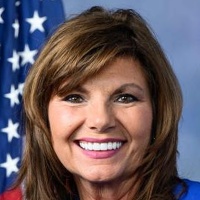
Diana Harshbarger
Representative
TN
Diana Harshbarger
Representative
TN
The "One Flag for All Act" generally prohibits the display of flags other than the U.S. flag on the exterior or in public areas of covered federal buildings. There are explicit exceptions for flags such as POW/MIA flags, state flags displayed at a Member of Congress's office, flags representing the Armed Forces, flags of historical significance, and flags representing local jurisdictions where the building is located. The bill defines "covered public buildings" broadly, including federal buildings, Senate and House buildings, military installations, and U.S. embassies and consulates.
The MEME Act prohibits elected and high-ranking federal officials, as well as their families, from using their positions for personal financial gain by promoting or benefiting from financial instruments like stocks, commodities, and digital assets, with penalties including fines, imprisonment, and civil lawsuits.
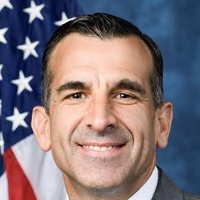
Sam Liccardo
Representative
CA
Sam Liccardo
Representative
CA
The MEME Act prohibits elected and other high-ranking federal officials, as well as their families, from promoting financial assets, including securities, commodities, and digital assets, for personal gain. It allows the Attorney General, private parties, and others to sue violators. Violators may face civil penalties up to $250,000, be required to return profits to the Treasury, and may face criminal penalties including fines and imprisonment. The Act aims to prevent public officials from using their positions for personal financial benefit, addressing bribery, insider trading, and corrupt foreign influence.
The "Know Your Rates Act" increases transparency in utility billing by requiring electric and gas companies to provide consumers with detailed usage information and notifications about bill changes and consumption patterns.
Josh Gottheimer
Representative
NJ
Josh Gottheimer
Representative
NJ
The "Know Your Rates Act" amends the Public Utility Regulatory Policies Act of 1978, mandating that electric and gas utilities provide consumers with more detailed billing information, including comparisons to previous periods and notifications regarding energy consumption. Consumers will receive notifications if their energy usage exceeds prior usage and allows consumers to set a threshold for notifications when their bill reaches a specific dollar amount. This act applies to utilities receiving federal funding, as determined by the Commission.
To award a Congressional Gold Medal to the 761st Tank Battalion, the first Black soldiers to serve in an American armored unit, for their valor and crucial contributions to the Allied victory in Europe.
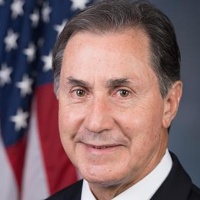
Gary Palmer
Representative
AL
Gary Palmer
Representative
AL
This bill authorizes the Speaker of the House and the President pro tempore of the Senate to award a Congressional Gold Medal to the 761st Tank Battalion, also known as the "Black Panthers," in recognition of their courageous service and crucial contributions during World War II. The medal will be given to the National Museum of African American History and Culture for display, honoring the 761st as the first Black soldiers to serve in an American armored unit and their significant role in the Allied victory in Europe. The bill also allows for the creation and sale of bronze duplicates of the medal to support the United States Mint Public Enterprise Fund.
The LEASH DOGE Act mandates transparency and oversight of the Department of Government Efficiency (DOGE) by requiring detailed reports on employees, activities, and funding changes, with restrictions on fund usage for non-compliance.
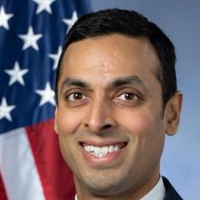
Suhas Subramanyam
Representative
VA
Suhas Subramanyam
Representative
VA
The LEASH DOGE Act mandates transparency and oversight of the Department of Government Efficiency (DOGE) by requiring detailed reports on employees, activities, and potential conflicts of interest to be submitted to Congress and made public. It sets a deadline of March 31, 2025, for DOGE to comply with these requirements, or face restrictions on the use of funds, including those allocated to DOGE Agency Teams. This act ensures accountability and provides the public with accessible information regarding DOGE's operations and impact on government programs.