Legislation
This Act updates Medicare coverage and payment rules for home infusion therapy starting in 2026 to ensure continued patient access, clarify covered services, and adjust supplier reimbursement.
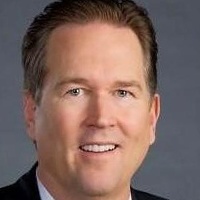
Vern Buchanan
Representative
FL
Vern Buchanan
Representative
FL
The Preserving Patient Access to Home Infusion Act updates Medicare coverage and payment rules for home infusion therapy starting in 2026 to ensure continued patient access. The bill explicitly adds pharmacy services to covered home infusion care and clarifies payment calculations for suppliers, including transitional rules based on infusion hours. Furthermore, it expands who can establish and review patient care plans to include nurse practitioners and physician assistants. Finally, the Act modifies definitions and payment rules for certain non-pump infusion drugs and stops separate Medicare payment for specific disposable supplies when infusion therapy is already being reimbursed.
This Act expands eligibility for certain SNAP benefits for veterans based on specific disability ratings or pension status, effective October 1, 2030.
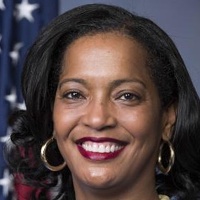
Jahana Hayes
Representative
CT
Jahana Hayes
Representative
CT
The Feed Hungry Veterans Act of 2025 expands eligibility for certain food assistance benefits for veterans. It updates the criteria for veterans based on service-connected disability ratings and adds specific categories of disabled or pensioned veterans who will now qualify. These changes are scheduled to take effect on October 1, 2030.
This bill requires the Coast Guard to retain enlisted members with 18 or more, but less than 20, years of service until they qualify for retirement, with specific provisions for Reserve members.
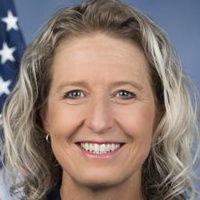
Jennifer Kiggans
Representative
VA
Jennifer Kiggans
Representative
VA
This bill amends federal law to require the Coast Guard to retain certain enlisted members who have served 18 or more, but less than 20, years of service. It prevents the involuntary separation or non-reenlistment of these long-serving members until they reach 20 years of service for retirement eligibility. This provision applies to both Regular and Reserve enlisted personnel serving on active duty.
This bill authorizes a dedicated Cerebral Palsy Research Program within the CDC to advance understanding, diagnosis, and treatment for the most common lifelong childhood movement disorder.

Steve Cohen
Representative
TN
Steve Cohen
Representative
TN
The Cerebral Palsy Research Program Authorization Act of 2025 establishes a dedicated research program for cerebral palsy (CP) within the CDC. This program will focus on improving diagnosis, treatment, prevention, and understanding the public health impact of CP. The Act authorizes $5 million annually from 2026 through 2031 to fund these critical research efforts.
This bill mandates a study and report on the effectiveness of home cardiorespiratory monitors for preventing sudden unexpected infant death (SUID) and provides recommendations for insurance coverage.
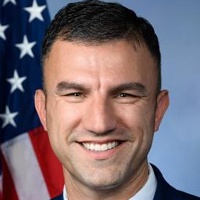
Rudy Yakym
Representative
IN
Rudy Yakym
Representative
IN
The Baby Observation Act mandates that the Secretary of Health and Human Services conduct a comprehensive study on the effectiveness of home cardiorespiratory monitors in preventing sudden unexpected infant death (SUID). The resulting report must detail the monitors' performance, suggest new infant care practices, and provide recommendations on criteria for insurance coverage. This aims to determine if these vital sign monitors warrant broader health insurance reimbursement.
This bill establishes a new process for taxpayers to receive refunds for previously paid federal excise tax on certain indelibly dyed fuels that were actually exempt from the tax.
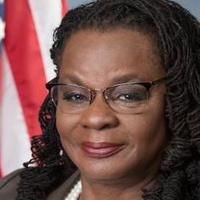
Gwen Moore
Representative
WI
Gwen Moore
Representative
WI
This bill amends the Internal Revenue Code to establish a new process for taxpayers to receive refunds for taxes previously paid on certain indelibly dyed fuels that are actually exempt from that tax. Specifically, it adds a new section allowing the Secretary to repay the tax paid on eligible dyed diesel fuel or kerosene that qualified for an exemption under existing law. These provisions apply to fuel removed from a terminal 180 days after the Act is enacted.
This bill increases the tax-free limit for length of service award program payments to $\$1,000$ and clarifies that these awards qualify for the exclusion.

Claudia Tenney
Representative
NY
Claudia Tenney
Representative
NY
The No Tax on Length of Service Award Programs Act significantly increases the tax-free exclusion limit for qualified payments from $\$50$ to $\$1,000$. This legislation also explicitly clarifies that payments received through length of service award programs qualify as "qualified payments" for tax purposes. These changes apply to awards granted after the date the Act becomes law.
This Act extends medical care coverage, enhances employment and transition support, and mandates studies on retirement and reemployment for veteran caregivers.
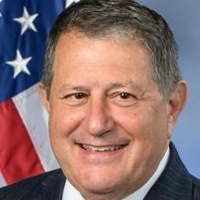
Joseph Morelle
Representative
NY
Joseph Morelle
Representative
NY
The Veteran Caregiver Reeducation, Reemployment, and Retirement Act aims to support family caregivers as they transition out of their roles. This bill extends medical care coverage for 180 days post-designation and mandates job assistance, including fee reimbursement and access to training resources. Furthermore, it requires the VA to study the feasibility of establishing retirement savings options and creating "returnship" programs for former caregivers.
The SIGN Pardons Act mandates that the President must personally affix their signature to every pardon or reprieve issued.
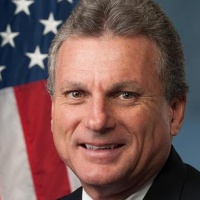
Earl Carter
Representative
GA
Earl Carter
Representative
GA
The SIGN Pardons Act mandates that the President must personally affix their signature to every pardon or reprieve issued, as permitted under the U.S. Constitution. This legislation explicitly prohibits the delegation of this final signing authority.
The Safe Routes Act of 2025 exempts certain logging trucks hauling raw forest products from federal vehicle weight limits within a 150-air-mile radius, provided they adhere to existing state weight tolerances.
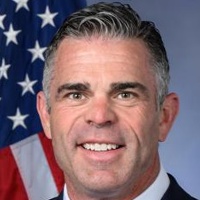
Tony Wied
Representative
WI
Tony Wied
Representative
WI
The Safe Routes Act of 2025 grants the Secretary the authority to waive federal vehicle weight limits for covered logging vehicles transporting raw forest products. This exemption applies only when these trucks operate within 150 air miles on the Interstate system and adhere to existing state-level weight tolerances for such materials. Essentially, the bill allows logging trucks to operate under established state rules rather than stricter federal limits for short hauls.
This bill restores protections to prevent private health insurance plans from discriminating against dialysis patients with End-Stage Renal Disease (ESRD) or shifting their treatment costs unfairly onto Medicare.
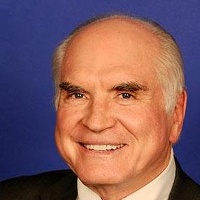
Mike Kelly
Representative
PA
Mike Kelly
Representative
PA
The Restore Protections for Dialysis Patients Act aims to prevent private health insurance plans from discriminating against patients with End-Stage Renal Disease (ESRD). This legislation clarifies that plans cannot offer worse benefits or unfairly limit coverage for dialysis treatments compared to other medical services. Furthermore, it stops these plans from shifting the primary financial responsibility for ESRD care onto Medicare. The bill maintains existing rules ensuring fair treatment while preserving a health plan's ability to select its network of dialysis providers.
This bill amends the Internal Revenue Code to increase the asset threshold for taxable REIT subsidiaries from 20 to 25 percent, effective for tax years beginning after December 31, 2025.
Mike Kelly
Representative
PA
Mike Kelly
Representative
PA
This bill amends the Internal Revenue Code to restore and modify the asset test for Real Estate Investment Trust (REIT) taxable REIT subsidiaries (TRSs). Specifically, it increases the allowable percentage for certain assets held by a TRS from 20 percent to 25 percent. This change will take effect for tax years beginning after December 31, 2025.
This act establishes a pilot grant program through the EPA to fund infrastructure projects that specifically improve recycling access in underserved communities.
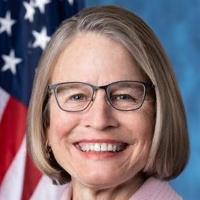
Mariannette Miller-Meeks
Representative
IA
Mariannette Miller-Meeks
Representative
IA
The Recycling Infrastructure and Accessibility Act of 2025 establishes a new EPA pilot grant program to improve recycling access, focusing specifically on underserved communities. These competitive grants will fund infrastructure projects, such as building transfer stations or expanding curbside service, using a "hub-and-spoke" model. Priority is given to projects located far from existing materials recovery facilities, with grants ranging from $\$500,000$ to $\$15$ million.
The Air America Act of 2025 authorizes one-time monetary awards to former Air America employees or their survivors for service supporting the CIA between 1950 and 1976.
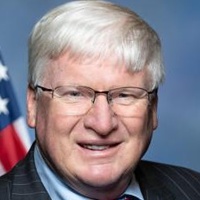
Glenn Grothman
Representative
WI
Glenn Grothman
Representative
WI
The Air America Act of 2025 recognizes the sacrifices of former Air America employees who served the U.S. Government between 1950 and 1976. This Act authorizes a one-time monetary award, up to $40,000 plus potential additional amounts, for qualifying service members or their survivors. The CIA Director is responsible for administering these payments, which are capped at a total of $60 million, and establishing the application procedures. Decisions made by the Director regarding these awards are final and not subject to judicial review.
This bill extends funding for the High Intensity Drug Trafficking Areas (HIDTA) Program through 2031 and mandates the integration of proven, efficient anti-drug strategies into its operations.
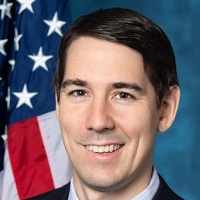
Josh Harder
Representative
CA
Josh Harder
Representative
CA
The Ending Drug Trafficking in Our Communities Act extends critical funding for the High Intensity Drug Trafficking Areas (HIDTA) Program through fiscal year 2031. This legislation also mandates that the Director of the Office of National Drug Control Policy actively identify and implement promising, evidence-based practices to improve drug trafficking investigations and inter-agency information sharing. The goal is to ensure the HIDTA program utilizes the most effective strategies nationwide to combat drug trafficking.
The Spectrum Coordination Act mandates greater public transparency regarding the coordination process between the FCC and federal agencies when making decisions about radio spectrum usage.
Troy Balderson
Representative
OH
Troy Balderson
Representative
OH
The Spectrum Coordination Act aims to improve transparency in how the Federal Communications Commission (FCC) manages radio spectrum allocations that affect federal agencies. It mandates that the Commerce Department publicly file details regarding federal agency concerns when the FCC proposes changes to spectrum usage. Furthermore, the FCC must publish a summary explaining how those concerns were addressed when issuing a final rule. Finally, the FCC and NTIA must periodically update their existing coordination agreement.
The Save Our Forests Act of 2025 mandates the immediate hiring and reinstatement of Forest Service personnel and ensures the continuation of authorized projects funded under existing public land acts.

Mark Kelly
Senator
AZ
Mark Kelly
Senator
AZ
The Save Our Forests Act of 2025 aims to strengthen the management of our national forests by immediately boosting Forest Service staffing levels. This legislation mandates the hiring of new personnel and the reinstatement of employees dismissed between January 20 and February 25, 2025. Furthermore, it ensures the continuation of authorized Forest Service projects funded under existing major conservation and infrastructure laws.
This Act establishes a system to prohibit federal agencies from awarding grants for the same purpose to applicants who have already received or are applying for duplicative funding, while also requiring the creation of a tracking system and a report on using AI to prevent waste.
Stephanie Bice
Representative
OK
Stephanie Bice
Representative
OK
The Duplicative Grant Consolidation Act aims to prevent federal agencies from awarding grants to applicants who are already funded for the exact same project, with an exception for colleges and universities. It mandates the creation of a centralized electronic tracking system managed by the OMB to flag potential double-funding across agencies. Furthermore, the bill requires a report on the feasibility of using artificial intelligence to enhance the identification of duplicative or fraudulent grant applications.
This bill amends the Workforce Innovation and Opportunity Act to explicitly integrate and study entrepreneurial skills development programs within workforce training and service delivery.
Rick Allen
Representative
GA
Rick Allen
Representative
GA
This bill amends the Workforce Innovation and Opportunity Act to formally integrate entrepreneurial skills development into workforce planning and service delivery. It requires state and local boards to include entrepreneurship training and microenterprise services when planning activities and offering required services. Furthermore, the legislation mandates a comprehensive three-year study to evaluate the outcomes and best practices of entrepreneurial skills development programs nationwide.
This bill mandates that veterans' disability compensation, dependency and indemnity compensation, and clothing allowance rates increase starting December 1, 2025, by the same percentage as the Social Security cost-of-living adjustment for that year.
Morgan Luttrell
Representative
TX
Morgan Luttrell
Representative
TX
The Veterans’ Compensation Cost-of-Living Adjustment Act of 2025 mandates an increase in disability compensation and dependency and indemnity compensation (DIC) rates for veterans and survivors. This increase, effective December 1, 2025, will match the percentage increase applied to Social Security benefits for that year. The bill also requires the VA to publish the adjusted rates according to the Social Security Administration's COLA announcement schedule.