Legislation
This resolution recognizes the 80th anniversary of the Fulbright Program and celebrates its enduring impact on international diplomacy, education, and cultural exchange.
J. Hill
Representative
AR
J. Hill
Representative
AR
This resolution recognizes the 80th anniversary of the Fulbright Program, celebrating its legacy of promoting international goodwill through educational and cultural exchange. It highlights the program's significant global impact and its role in advancing U.S. foreign policy and national security. Furthermore, the bill encourages continued congressional support for these exchanges and honors the achievements of Fulbright alumni worldwide.
This resolution recognizes Overdose Awareness Day and reaffirms the House’s commitment to advancing bipartisan policies that combat the opioid crisis through prevention, treatment, and recovery support.
Lori Trahan
Representative
MA
Lori Trahan
Representative
MA
This resolution formally recognizes Overdose Awareness Day and reaffirms the House of Representatives' commitment to addressing the opioid crisis. It emphasizes treating substance use disorder as a chronic health issue while pledging to advance bipartisan policies focused on prevention, treatment, harm reduction, and recovery.
The Consumer Financial Protection Accountability and Reform Act of 2026 seeks to increase the CFPB’s transparency and accountability by restructuring its funding, refining its enforcement and rulemaking standards, and establishing clearer regulatory oversight for financial institutions and consumer products.
Garland Barr
Representative
KY
Garland Barr
Representative
KY
The Consumer Financial Protection Accountability and Reform Act of 2026 seeks to restructure the Consumer Financial Protection Bureau (CFPB) by bringing it under congressional appropriations and establishing more rigorous oversight and transparency requirements. The bill introduces stricter standards for enforcement actions, clarifies definitions of abusive practices, and provides new regulatory frameworks for emerging financial products like earned wage access. Additionally, it adjusts supervisory thresholds and limits the Bureau’s ability to use market-monitoring data for enforcement, aiming to increase procedural fairness for both financial institutions and consumers.
This resolution congratulates the University of Oklahoma Sooners baseball team on winning the 2026 Men's College World Series and securing their third national championship.
Tom Cole
Representative
OK
Tom Cole
Representative
OK
This resolution congratulates the University of Oklahoma Sooners baseball team on winning their third NCAA national championship at the 2026 Men's College World Series. It honors the team’s historic, record-breaking postseason run and recognizes the exceptional contributions of the players, coaching staff, and the university community.
The Advancing Botanical Drug Development Act of 2026 establishes a 12-year market exclusivity period for FDA-approved botanical drugs to incentivize innovation and the development of multi-target therapies for chronic diseases.
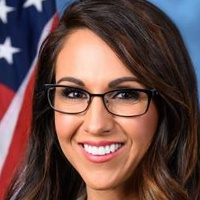
Lauren Boebert
Representative
CO
Lauren Boebert
Representative
CO
The Advancing Botanical Drug Development Act of 2026 aims to accelerate the development of innovative, multi-target botanical therapies for complex chronic and age-related diseases. To encourage investment in this field, the bill establishes a 12-year period of market exclusivity for FDA-approved botanical drugs. This legislation seeks to promote biomedical innovation while ensuring that these treatments meet the same rigorous safety and effectiveness standards as other regulated pharmaceuticals.
The Water Authority Cybersecurity Protection Act extends and increases funding for the Drinking Water Infrastructure Risk and Resilience Program to bolster cybersecurity and technical assistance for water systems.
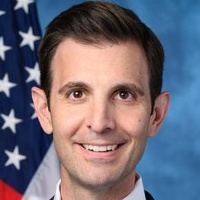
Chris Deluzio
Representative
PA
Chris Deluzio
Representative
PA
The Water Authority Cybersecurity Protection Act strengthens the security of our nation's water systems by extending and doubling the funding for the Drinking Water Infrastructure Risk and Resilience Program through 2029. This legislation increases support for technical assistance and grants, specifically prioritizing resources for small water systems to improve their cybersecurity defenses.
This bill allows prior active duty service as a regular member of the Armed Forces to count toward reducing the retirement eligibility age for reserve component members.
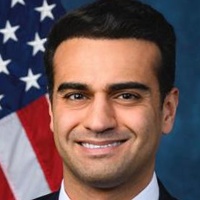
Abraham Hamadeh
Representative
AZ
Abraham Hamadeh
Representative
AZ
This bill amends federal law to allow prior active duty service as a regular member of the Armed Forces to count toward reducing the retirement eligibility age for reserve component members. By broadening the criteria for service credit, the legislation ensures more equitable retirement benefits for those with prior active duty experience. These changes apply retroactively to qualifying service performed after January 28, 2008.
The SHIELD Act prohibits schools receiving federal funds from allowing abortion providers to distribute information about abortion or related services to students on school grounds or virtual platforms.
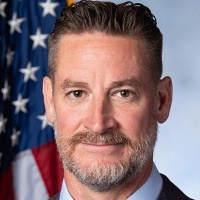
W. Steube
Representative
FL
W. Steube
Representative
FL
The School Health and Instructional Environment Limits and Disclosure (SHIELD) Act prohibits schools that receive federal funding from allowing abortion providers to distribute information about abortion or related services to students. This restriction applies to both physical school grounds and virtual platforms operated by local educational agencies.
The Protect America from CARB Act of 2026 requires the EPA to obtain formal concurrence from four federal cabinet secretaries before granting state-level emissions waivers or authorizations.
James Gallagher
Representative
CA
James Gallagher
Representative
CA
The Protect America from CARB Act of 2026 amends the Clean Air Act to require the EPA to obtain formal concurrence from four federal cabinet secretaries before granting state emissions standards waivers. This legislation ensures that the Departments of Agriculture, Energy, Interior, and Transportation have oversight authority regarding state-level emissions authorizations. The new requirement applies to all waiver requests submitted on or after the date of the Act's enactment.
This bill amends the Export-Import Bank Act of 1945 to revise quorum requirements and expiration terms for the Bank’s temporary Board of Directors.
Michael Lawler
Representative
NY
Michael Lawler
Representative
NY
The EXIM Bank Continuity in Competitiveness Act modifies quorum requirements for the Export-Import Bank’s Board of Directors to ensure continued operational stability. The bill reduces the threshold for establishing a temporary Board and clarifies the conditions under which that temporary authority expires. These changes are set to take effect on December 31, 2026.
This bill establishes a Workforce Development Innovation Fund to provide competitive grants for evidence-based programs that improve employment outcomes and training services.
Josh Harder
Representative
CA
Josh Harder
Representative
CA
The Better Jobs through Evidence and Innovation Act establishes a Workforce Development Innovation Fund to support the implementation and scaling of evidence-based employment and training programs. By providing competitive grants to eligible entities, the bill aims to improve participant earnings and employment outcomes through rigorous, third-party evaluations. This initiative prioritizes cost-effective, innovative solutions to help individuals overcome barriers to employment, particularly in underserved and rural communities.
This bill authorizes the Secretary of the Army to convey land at Fort Bragg to the State of North Carolina for the construction of a veterans' State home.
Richard Hudson
Representative
NC
Richard Hudson
Representative
NC
This bill authorizes the Secretary of the Army to transfer approximately 20 acres of land at Fort Bragg to the State of North Carolina for the construction of a veterans' State home. The State is responsible for all costs associated with the land conveyance. The property is subject to a reversionary clause, ensuring it must be used exclusively for veterans' home purposes or ownership will return to the United States.
The Common Cents Act ends the production of one-cent coins for general circulation and establishes standardized rounding procedures for cash transactions.

Lisa McClain
Representative
MI
Lisa McClain
Representative
MI
The Common Cents Act mandates the end of routine one-cent coin production while authorizing new material specifications for five-cent coins. To facilitate this transition, the bill establishes voluntary guidelines for rounding cash transactions to the nearest five-cent increment. Additionally, it requires the Federal Reserve to develop a strategic plan to manage coin distribution and provides a framework for the Treasury to discontinue other circulating coins in the future.
The Freedom to Home Distill Act exempts small-scale, personal-use home distilling from federal excise taxes, registration requirements, and associated penalties.
Diana Harshbarger
Representative
TN
Diana Harshbarger
Representative
TN
The Freedom to Home Distill Act seeks to legalize the production of distilled spirits for personal or family use by exempting home distilleries from federal excise taxes and registration requirements. The bill establishes clear production limits for households and mandates safety standards for distilling equipment. These provisions are set to take effect for spirits produced and equipment sold after December 31, 2026.
The American Mariner Tax Fairness Act allows U.S. merchant mariners working on qualifying vessels in foreign trade to treat their earned income as foreign earned income for tax purposes.
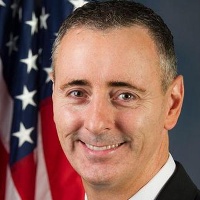
Brian Fitzpatrick
Representative
PA
Brian Fitzpatrick
Representative
PA
The American Mariner Tax Fairness Act allows U.S. merchant mariners to treat income earned while working on qualifying U.S.-flagged vessels in foreign trade as foreign earned income. This change provides tax relief by extending specific foreign earned income exclusions to mariners who meet defined employment and vessel requirements.
The MANNARINO Act mandates that states prohibit the sale of flavored or scented nitrous oxide products to receive federal health grants, while providing exemptions for legitimate medical, industrial, and culinary uses.
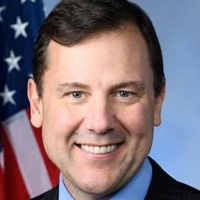
Thomas Kean
Representative
NJ
Thomas Kean
Representative
NJ
The MANNARINO Act aims to curb the recreational abuse of nitrous oxide by requiring states to prohibit the sale of flavored or scented nitrous oxide products. To ensure compliance, states that fail to enforce these restrictions face a potential reduction in federal public health grant funding. The legislation provides clear exemptions for legitimate medical, dental, veterinary, industrial, and commercial food-service uses.
The Vet CENTERS for Mental Health Act of 2026 mandates that the Department of Veterans Affairs establish and maintain a minimum number of Vet Centers in every state based on geographic size and veteran population.
Thomas Kean
Representative
NJ
Thomas Kean
Representative
NJ
The Vet CENTERS for Mental Health Act of 2026 mandates that the Department of Veterans Affairs ensure every state meets a minimum threshold of Vet Centers based on land area and veteran population. This legislation aims to improve accessibility by requiring the establishment of additional centers or outstations to guarantee that veterans nationwide have consistent, reliable access to mental health resources.
This resolution sets the procedural terms for House consideration of legislation regarding mineral production, North Atlantic right whale regulations, the condemnation of socialism, higher education funding related to Israel boycotts, and Supreme Court composition.
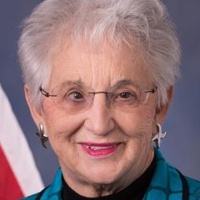
Virginia Foxx
Representative
NC
Virginia Foxx
Representative
NC
This resolution establishes the procedural framework for the House of Representatives to debate and vote on several key legislative items. These include bills regarding mineral production, North Atlantic right whale regulations, and the eligibility of higher education institutions for federal funding based on their policies toward Israel. Additionally, the resolution provides for the consideration of a measure condemning socialism and sets debate parameters for a proposed constitutional amendment concerning the size of the Supreme Court.
The Veterans Housing Opportunity Act establishes a pilot program to recapture and reallocate underutilized HUD-VASH housing vouchers to ensure more homeless or at-risk veterans receive essential rental assistance.
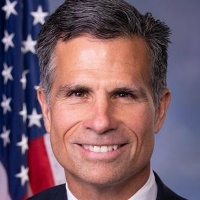
Daniel Meuser
Representative
PA
Daniel Meuser
Representative
PA
The Veterans Housing Opportunity Act establishes a five-year pilot program to improve the efficiency of HUD-VASH voucher distribution. By recapturing and reallocating chronically underutilized vouchers, the program ensures that housing assistance is more effectively directed toward veterans who are homeless or at risk of homelessness.
The CEDS Act requires comprehensive economic development strategies to include plans for increasing access to affordable, quality care services, such as child care and elder care.
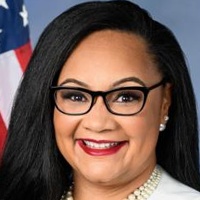
Nikema Williams
Representative
GA
Nikema Williams
Representative
GA
The Care is an Economic Development Strategy (CEDS) Act mandates that regional economic development plans incorporate strategies to increase access to affordable, quality care services. By integrating child care, early childhood education, disability support, and elder care into economic planning, the bill aims to strengthen the workforce and local economies. The Secretary of Commerce will provide implementation guidance to ensure these essential services are prioritized in future development strategies.