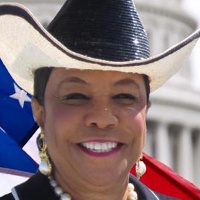
Legislative Activity
Track Frederica's sponsored bills, co-sponsored legislation, and voting record
The Lainie Jones Comprehensive Cancer Survivorship Act of 2026 establishes a framework for improving cancer survivorship care through enhanced planning, payment models, employment assistance, grant programs, and expanded Medicaid coverage for transitions and fertility services.
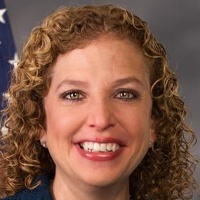
Debbie Wasserman Schultz
Representative
FL
Debbie Wasserman Schultz
Representative
FL
The Lainie Jones Comprehensive Cancer Survivorship Act of 2026 aims to improve the full spectrum of care for cancer survivors, from diagnosis through the remainder of life. The bill establishes an Office of Cancer Survivorship, mandates Medicare coverage for care planning, and creates programs to support employment and comprehensive survivorship services. It also requires Medicaid to cover essential transition services for childhood cancer survivors and mandates fertility preservation coverage for all cancer patients.
This bill establishes a national resource center to train faith communities and service providers on preventing and responding to domestic violence, sexual assault, and stalking, while also creating model state legislation to address religious divorce denial.
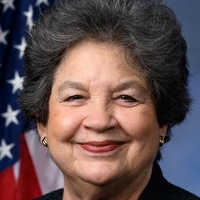
Lois Frankel
Representative
FL
Lois Frankel
Representative
FL
The Supporting Survivors from Faith-based Communities Act establishes a national resource center to improve how faith communities and service providers respond to victims of domestic violence, sexual assault, and stalking who have a faith or spiritual background. This center will provide education and training to strengthen prevention efforts and ensure victim safety and autonomy remain the highest priority. The bill also directs the Attorney General to create model state legislation addressing religious divorce denial.
This resolution affirms that U.S. policy on mifepristone access must respect over 25 years of scientific evidence proving its safety and ensure equitable access based on the best available science.

Diana DeGette
Representative
CO
Diana DeGette
Representative
CO
This resolution expresses the sense of the House that policies governing access to mifepristone for medication abortion must be based on over 25 years of proven safety and effectiveness data. It affirms that access to this time-sensitive care should be equitable, transparent, and guided by the best available, peer-reviewed science, not political interference. The bill supports the FDA's authority to regulate based on evidence, including telemedicine and pharmacy dispensing.
This bill affirms the strong U.S.-South Korea alliance, emphasizing its importance for security, economic growth, and shared values, while also recognizing the contributions of Korean Americans. It supports stronger ties and celebrates Korean culture.
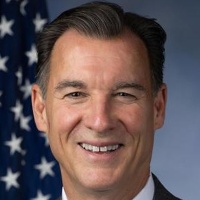
Thomas Suozzi
Representative
NY
Thomas Suozzi
Representative
NY
This bill reaffirms the strong alliance between the United States and the Republic of Korea, emphasizing its importance for security, economic growth, and shared values. It recognizes the deep economic ties, the contributions of Korean Americans, and continued commitment to the Mutual Defense Treaty. The bill also supports strengthening security, economic, and cultural bonds between the two nations, and celebrates Korean Culture-Kimchi Day.
This act establishes universal free breakfast and lunch programs in schools, eliminates meal debt, and updates poverty metrics across various federal education and nutrition programs.

Ilhan Omar
Representative
MN
Ilhan Omar
Representative
MN
The Universal School Meals Program Act of 2026 establishes permanent, universal free breakfast and lunch programs for all enrolled students at participating schools, eliminating income tests and meal debt collection. The bill significantly updates federal funding mechanisms by replacing reliance on free and reduced-price lunch data with new measures for identifying economically disadvantaged students across various education and social programs. Furthermore, it expands access to summer and afterschool meals while making technical amendments across several federal education and nutrition laws.
This Act establishes a fund administered by a Special Master to compensate law enforcement officers injured or killed while defending the U.S. Capitol on January 6, 2021.
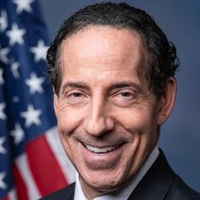
Jamie Raskin
Representative
MD
Jamie Raskin
Representative
MD
This Act establishes the January 6th Law Enforcement Heroes Compensation Fund to provide financial compensation for injuries and deaths sustained by law enforcement officers defending the U.S. Capitol on January 6, 2021. The program will be administered by a Special Master appointed by the Attorney General, who will review claims for economic and noneconomic losses. The bill also mandates an additional, guaranteed payment for all eligible officers, funded in part by certain government settlement amounts related to the attack. Determinations made by the Special Master regarding compensation are final and not subject to judicial review.
This bill establishes the Combating Organized Retail Crime Act of 2025 to enhance federal prosecution tools against organized retail and supply chain crime and create a DHS-led coordination center to align law enforcement efforts.
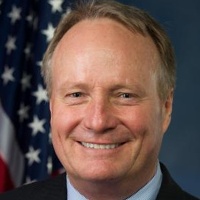
David Joyce
Representative
OH
David Joyce
Representative
OH
The Combating Organized Retail Crime Act of 2025 aims to combat sophisticated, cross-jurisdictional organized retail and supply chain theft. It achieves this by strengthening federal laws regarding money laundering and stolen property offenses, including lowering monetary thresholds for prosecution. Furthermore, the bill establishes a dedicated Center within the Department of Homeland Security to coordinate federal, state, and local enforcement efforts against these criminal organizations.
This bill prohibits the use of "Buy Now, Pay Later" loans for the purchase of specified semiautomatic assault weapons, imposing significant penalties for violations.
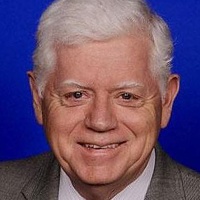
John Larson
Representative
CT
John Larson
Representative
CT
This bill, the Assault Weapon Financing Accountability Act, prohibits the use of "Buy Now, Pay Later" loans for the purchase of semiautomatic assault weapons. It makes it illegal for lenders to issue these loans and for gun dealers to knowingly accept them for these specific firearm sales. Violations carry a significant civil penalty of $100,000 per offense.
This resolution recognizes National Postpartum Awareness Week for Communities of Color to highlight and address the disproportionate maternal health crisis and disparities faced by women of color during the postpartum period.
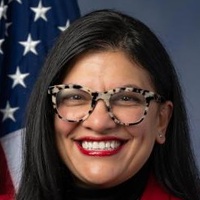
Rashida Tlaib
Representative
MI
Rashida Tlaib
Representative
MI
This resolution officially recognizes the week of May 3-9, 2026, as "National Postpartum Awareness Week for Communities of Color." It highlights the disproportionate maternal health crisis faced by communities of color and the critical need for respectful, culturally competent postpartum care. The bill supports efforts to eliminate racial disparities in maternal health outcomes by improving access to necessary resources and mental health services.
This act repeals Executive Order 14399 and cancels related contracts and funding.
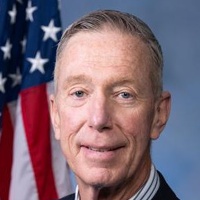
Stephen Lynch
Representative
MA
Stephen Lynch
Representative
MA
The Vote by Mail Protection Act of 2026 officially establishes its name and immediately repeals Executive Order 14399. This action cancels any existing contracts made under that order and prohibits the use of agency funds to support its related activities.
This bill mandates that health insurance plans, including Medicaid and CHIP, must cover the cost of self-measured blood pressure monitoring devices for pregnant and postpartum individuals to safeguard against eclampsia risk.
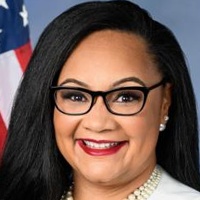
Nikema Williams
Representative
GA
Nikema Williams
Representative
GA
The Blood Pressure MATTERS Act mandates that health insurance plans, including Medicaid and CHIP, must cover self-measured blood pressure monitoring devices for pregnant and postpartum individuals without any out-of-pocket costs. This ensures access to vital monitoring tools for up to 12 months postpartum to help safeguard against eclampsia risk. The law requires devices to meet specific FDA and AMA validation standards.
This resolution designates the week of May 4 through May 8, 2026, as Teacher Appreciation Week while recognizing the critical role and priorities of the nation's public school teachers.
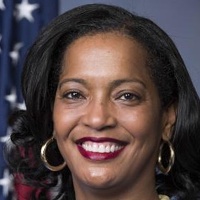
Jahana Hayes
Representative
CT
Jahana Hayes
Representative
CT
This resolution officially designates the week of May 4 through May 8, 2026, as Teacher Appreciation Week. It recognizes the vital role of public school teachers and highlights their key priorities, including support for existing federal protections and funding. Furthermore, the bill encourages leaders to engage directly with teachers to ensure their expertise informs education policy.
This bill establishes the CARES Hotline Act to create a national, 24/7 hotline providing emotional support, resources, and referrals for caregivers of individuals with developmental disabilities.

Robert Menendez
Representative
NJ
Robert Menendez
Representative
NJ
The Caregiver Access to Resources and Emotional Support Hotline Act (CARES Hotline Act) establishes a national, 24/7, toll-free hotline for caregivers of individuals with developmental disabilities. This hotline will provide emotional support, brief intervention, and referrals to mental health and local support resources. The Department of Health and Human Services is tasked with establishing and maintaining this vital service, supported by authorized funding through 2032.
This Act establishes the Language Access Board to create standards and enforce requirements ensuring individuals with limited English proficiency can meaningfully access federal programs and services.
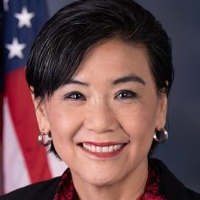
Judy Chu
Representative
CA
Judy Chu
Representative
CA
The Language Access Board Act of 2026 establishes a framework to ensure individuals with limited English proficiency (LEP) can meaningfully access federal programs and services. It creates a 32-member Language Access Board responsible for setting and enforcing language access standards across federal agencies. The Act mandates that federal agencies make public-facing materials accessible to LEP individuals, comparable to those provided to English speakers. Finally, the Board is empowered to investigate violations, develop corrective action plans, and report on compliance to Congress.
This bill nullifies three specific Department of State rules regarding foreign assistance, effectively voiding their implementation and preventing enforcement of similar future policies.

Grace Meng
Representative
NY
Grace Meng
Representative
NY
This Act nullifies three specific Department of State rules concerning foreign assistance, effectively treating them as if they never existed. It prohibits any federal agency from implementing or enforcing these rules, or any substantially similar future policies. The legislation aims to prevent the enforcement of rules related to "Protecting Life," "Discriminatory Equity Ideology," and "Gender Ideology" in foreign aid.
This bill mandates stricter federal and state regulation of utility rate-setting by establishing lower return-on-equity ranges and banning numerous non-operational costs from being passed on to consumers.
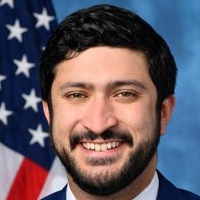
Gregorio Casar
Representative
TX
Gregorio Casar
Representative
TX
The Lowering Utility Bills Act aims to reduce consumer energy costs by establishing stricter federal and state guidelines for how electric transmission providers and investor-owned utilities calculate their allowed rate of return. The bill mandates using the lowest reasonable return on equity based on market data and explicitly bans passing numerous lobbying, administrative, and political expenses onto customers. Furthermore, it requires utilities to prioritize lower-cost, grid-enhancing technologies when planning new capital expenditures.
This Act establishes a phased-in increase of the federal minimum wage, ultimately tying it to two-thirds of the national median hourly wage while also reforming wages for tipped workers, youth workers, and incarcerated workers, and phasing out subminimum wages for workers with disabilities.
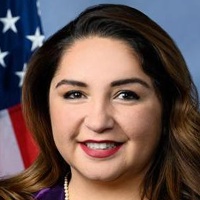
Delia Ramirez
Representative
IL
Delia Ramirez
Representative
IL
The Living Wage For All Act establishes a phased increase of the federal minimum wage, ultimately aiming to tie it to two-thirds of the national median hourly wage. It creates differentiated wage schedules, requiring large corporations to reach higher minimums sooner than other employers. Furthermore, the bill phases out subminimum wages for tipped workers and workers with disabilities, and extends federal wage protections to incarcerated workers.
The Long-Term Care Workforce Support Act aims to significantly improve the pay, training, working conditions, and stability of the direct care workforce through federal funding, new labor protections, and national compensation strategies.

Debbie Dingell
Representative
MI
Debbie Dingell
Representative
MI
The Long-Term Care Workforce Support Act aims to significantly improve the lives of direct care professionals by increasing their pay, benefits, and training opportunities through federal funding and grants. The bill establishes new labor protections, including fair scheduling, paid sick leave, and workplace violence prevention plans. Ultimately, this legislation seeks to stabilize the essential long-term care workforce to ensure better quality care for older adults and people with disabilities.
This bill authorizes increased federal funding for IDEA Parts C and Section 619 programs to restore per-child support for early intervention and preschool special education services.
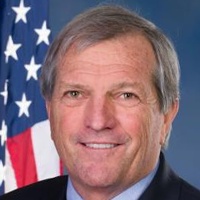
Mark DeSaulnier
Representative
CA
Mark DeSaulnier
Representative
CA
The Funding Early Childhood is the Right IDEA Act aims to restore critical federal funding for early intervention services (Part C) and preschool special education programs (Section 619) under the Individuals with Disabilities Education Act (IDEA). This legislation recognizes that high-quality early services significantly benefit children with disabilities and their families. The bill authorizes specific increased appropriations for both Part C and Section 619 programs through fiscal year 2031.
This bill prohibits the Department of Homeland Security from establishing or operating any new immigration detention models, such as converting warehouses or using tent systems.
Rashida Tlaib
Representative
MI
Rashida Tlaib
Representative
MI
This bill prohibits the Department of Homeland Security (DHS) from establishing or operating any new models of immigration detention facilities, such as converting warehouses or using temporary structures. It specifically bans entering into new contracts for these alternative detention setups. Furthermore, any funds already allocated for these new models must be transferred to support services like affordable housing and healthcare.