
Legislative Activity
Track Frederica's sponsored bills, co-sponsored legislation, and voting record
Allows Members of the House of Representatives, Delegates, and the Resident Commissioner to designate a proxy to vote on their behalf in the House, in committee, and in the Committee of the Whole for a period of 12 weeks following the birth of a child or in the event of a pregnancy-related serious medical condition.

Brittany Pettersen
Representative
CO
Brittany Pettersen
Representative
CO
The "Proxy Voting for New Parents Resolution" allows Members of the House, Delegates, and the Resident Commissioner who have recently given birth or whose spouse has given birth to designate another Member to vote on their behalf in the House, in committee, and in the Committee of the Whole for a period of 12 weeks. This proxy voting authority can begin before the birth if a doctor advises that the pregnancy presents a serious medical condition or that she is unable to travel safely. The resolution outlines specific procedures for designating, changing, and revoking proxy designations, ensuring transparency and adherence to instructions. Members whose votes are cast by proxy will not be counted for quorum purposes.
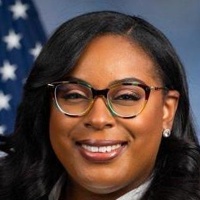
The Amputation Reduction and Compassion (ARC) Act of 2025 aims to reduce preventable amputations by establishing a national peripheral artery disease (PAD) education program and mandating cost-free PAD screening for at-risk Medicare and Medicaid beneficiaries.
LaMonica McIver
Representative
NJ
LaMonica McIver
Representative
NJ
The Amputation Reduction and Compassion (ARC) Act of 2025 aims to reduce avoidable amputations caused by peripheral artery disease (PAD) through increased public awareness and improved access to care. The bill establishes a national PAD education program and mandates that Medicare and Medicaid cover essential screening tests for at-risk beneficiaries with no out-of-pocket costs. Additionally, it directs the development of clinical quality measures and launches a pilot program to improve early detection and treatment, ultimately prioritizing limb preservation over amputation.
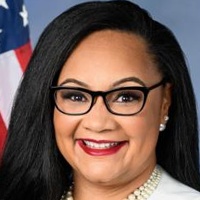
This bill honors the life, achievements, and legacy of President Jimmy Carter, recognizing his dedication to public service, human rights, and global peace. It acknowledges his lasting impact as a leader and statesman.
Nikema Williams
Representative
GA
Nikema Williams
Representative
GA
This bill honors the life, achievements, and legacy of Jimmy Carter, recognizing his service as a naval officer, farmer, state senator, Governor, and President. It also acknowledges his post-presidency work promoting peace, democracy, and human rights through the Carter Center, as well as his dedication to Habitat for Humanity. The bill expresses condolences to his family upon his passing and celebrates his lasting impact as a leader and statesman.
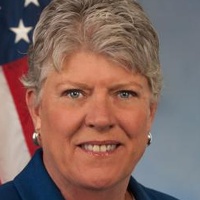
This bill mandates a comprehensive GAO study and report on the quality and accessibility of menopause care within the VA, requiring the Department to develop a strategic plan to implement necessary improvements.
Julia Brownley
Representative
CA
Julia Brownley
Representative
CA
The Improving Menopause Care for Veterans Act of 2025 mandates a comprehensive GAO study to evaluate the quality, accessibility, and effectiveness of menopause-related care provided by the Department of Veterans Affairs. Following this assessment, the VA is required to develop a strategic plan to implement improvements and address gaps in care. This legislation aims to ensure veterans receive high-quality, informed support throughout all stages of menopause.
The "Dental Care for Veterans Act" expands dental care benefits for veterans, phasing in eligibility over four years to mirror the provision of other medical services within the Department of Veterans Affairs.
Julia Brownley
Representative
CA
Julia Brownley
Representative
CA
The Dental Care for Veterans Act aims to improve veterans' access to dental care by integrating it more closely with other medical services provided by the Department of Veterans Affairs. This bill removes specific limitations and updates existing code to allow the Secretary to provide comprehensive dental care, including dentures and appliances. The implementation of these expanded benefits will be phased in over four years, prioritizing veterans based on existing eligibility criteria. Additionally, the bill makes necessary clerical updates to reflect these changes in the U.S. Code.
The Washington, D.C. Admission Act provides for the admission of the State of Washington, Douglass Commonwealth into the Union while establishing a reduced federal Capital district and outlining the legal framework for the transition.

Eleanor Norton
Representative
DC
Eleanor Norton
Representative
DC
The Washington, D.C. Admission Act proposes admitting the State of Washington, Douglass Commonwealth into the Union, while maintaining a reduced federal district to serve as the nation’s capital. The bill establishes a comprehensive framework for the transition, including the election of congressional representatives, the transfer of local government authority, and the gradual shift of federal responsibilities to the new state. This legislation aims to grant D.C. residents full voting representation in Congress while ensuring the continued security and operation of the federal seat of government.
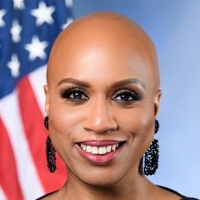
Establishes a commission to study the history and impact of slavery and discrimination against African Americans from 1619 to the present and to develop proposals for reparations, including recommending appropriate remedies and educating the public on the commission's findings. The commission will submit its findings to Congress within 18 months of its first official meeting.
Ayanna Pressley
Representative
MA
Ayanna Pressley
Representative
MA
The "Commission to Study and Develop Reparation Proposals for African Americans Act" establishes a commission to examine the history of slavery and discrimination in the United States from 1619 to the present. The commission will study the lingering negative effects of these injustices on living African Americans and U.S. society, and recommend appropriate remedies, including how to educate the American public on its findings to promote racial healing and understanding. The commission will submit a written report of its findings and recommendations to Congress within 18 months of its first official meeting, and the act authorizes the appropriation of $20,000,000 to implement the provisions of this act.