This bill establishes a national resource center to train faith communities and service providers on preventing and responding to domestic violence, sexual assault, and stalking, while also creating model state legislation to address religious divorce denial.
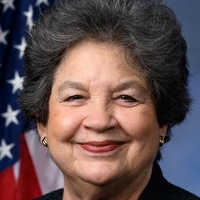
Lois Frankel
Representative
FL-22
The Supporting Survivors from Faith-based Communities Act establishes a national resource center to improve how faith communities and service providers respond to victims of domestic violence, sexual assault, and stalking who have a faith or spiritual background. This center will provide education and training to strengthen prevention efforts and ensure victim safety and autonomy remain the highest priority. The bill also directs the Attorney General to create model state legislation addressing religious divorce denial.
New Bill Funds Resource Center for Faith Communities to Combat Domestic Violence, Sexual Assault
Alright, let's talk about something that hits close to home for way too many people: domestic violence and sexual assault. This new piece of legislation, the 'Supporting Survivors from Faith-based Communities Act,' is stepping in to help faith communities become a stronger line of defense and support for survivors. Think of it as building a specialized support network where it’s often needed most.
The Faith Factor in Healing
So, what's the big idea here? The bill kicks off by pointing out that a huge chunk of Americans experience violence from an intimate partner at some point. And for many of these folks, especially in underserved communities, their faith and spiritual life are central. The problem? While faith communities can be a massive source of strength, many victim support programs often miss the religious or spiritual side of healing. This bill aims to bridge that gap, recognizing that spiritual resilience is a real thing for survivors.
Building a National Hub for Support
At its core, this bill sets up a national resource center. This isn't just any center; it's specifically designed to help faith communities prevent and respond to domestic violence, dating violence, sexual assault, and stalking. The Attorney General, through the Office on Violence Against Women, can award grants to a 'consortium of eligible entities' to run this center. What's an 'eligible entity'? It's a faith-based nonprofit or a culturally specific organization with a proven track record of providing trauma-informed, victim-centered training. Crucially, these groups must not prioritize things like 'family cohesion, marriage, privacy, opposition to divorce, or sexual purity over victim safety and autonomy.' That's a key detail right there – victim safety comes first, no exceptions.
This center will be a powerhouse for education, training, and technical assistance. It's meant to help everyone from faith leaders to victim service providers, law enforcement, and even courts. The goal is to improve how they all respond to 'victims with faith' – essentially, anyone who identifies with a faith or spiritual tradition, regardless of how active they are in a formal institution. For example, it could mean training a local pastor to recognize signs of abuse and refer someone to a secular service, or teaching a shelter how to accommodate dietary needs or prayer times for residents of different faiths.
Tackling 'Religious Divorce Denial'
Here’s a provision that really stands out: the bill directs the Attorney General to create model state legislation specifically addressing 'religious divorce denial.' This is a heavy one. It's when a religious leader or institution refuses to cooperate in a religious divorce process, effectively trapping a victim in a marriage even after a civil divorce. Imagine getting out of a civil marriage, but religiously, you're still bound, which can have huge social and emotional consequences. This model legislation would aim to tackle that, keeping in mind relevant religious laws and cultural practices while staying constitutional. It's a complex area, but a necessary one to address for true autonomy.
What This Means for You
If you or someone you know relies on a faith community for support, this bill could mean more informed and sensitive help is on the way. For faith leaders, it offers resources to better serve their congregations in times of crisis, moving beyond traditional roles to actively prevent and respond to violence. For victim service providers, it means better tools to understand and cater to the unique needs of survivors from diverse faith backgrounds, including dealing with 'spiritual abuse' – the manipulation of religion to control or justify violence. Funding for this initiative is authorized at $2,000,000 annually from 2027 through 2031, with strict rules that funds can't be used for proselytizing or promoting any specific religious viewpoint. It's all about support, not conversion.
While the bill is clear that victim safety and autonomy are paramount, and it explicitly bars groups that prioritize other factors over that safety, the real-world success will depend on how these consortia are formed and overseen. Ensuring that the 'victim advisory working group' – which must include actual survivors and be compensated for their time – is genuinely independent will be crucial for the center's effectiveness. This bill is a significant step towards ensuring that faith communities can be a safe haven and a pathway to healing, rather than another hurdle, for survivors.